
United Airlines to Resume San Francisco–Tel Aviv Flights in March 2027, Boosting US-Israel Connectivity
United Airlines announced this week that it will resume direct flights between San Francisco International Airport (SFO) and Ben-Gurion Airport (TLV) starting March 28, 2027, marking another significant step in the gradual restoration of transatlantic and transpacific air links between the United St
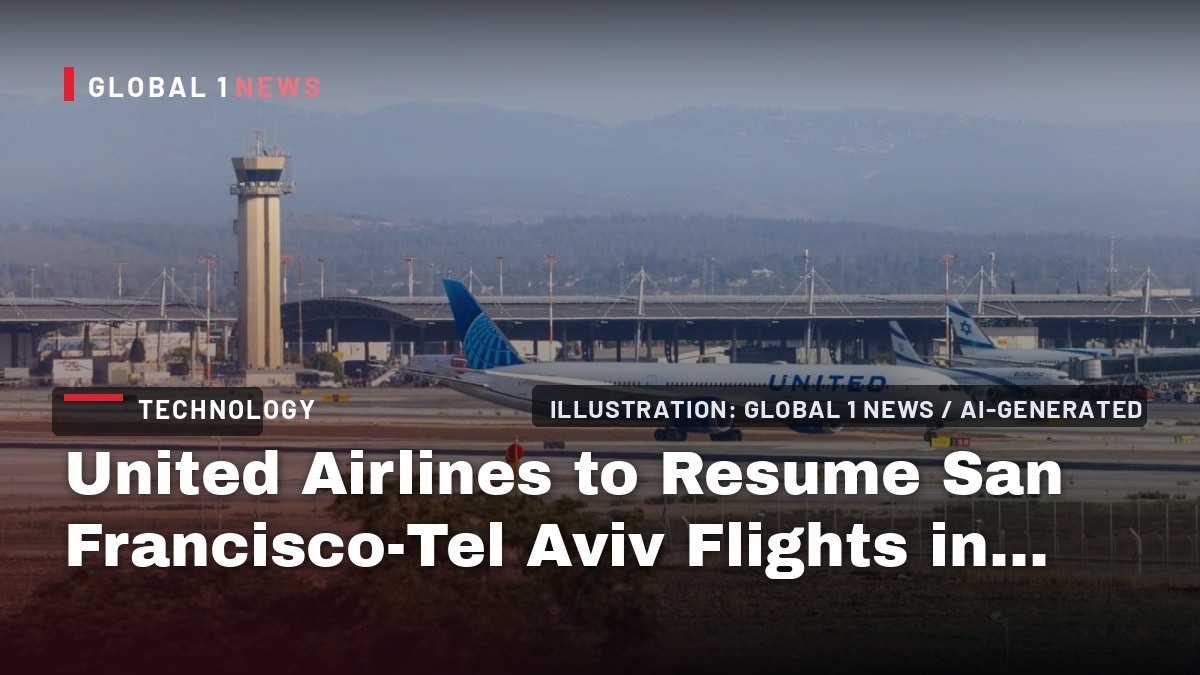
United Airlines announced this week that it will resume direct flights between San Francisco International Airport (SFO) and Ben-Gurion Airport (TLV) starting March 28, 2027, marking another significant step in the gradual restoration of transatlantic and transpacific air links between the United States and Israel. The carrier will operate the route three times per week, and in a statement, the airline touted that the service will offer the "highest frequency of business class seats between the two cities of any airline." The announcement comes as Israel's aviation sector continues its measured recovery following the suspension of many US-bound flights earlier this year amid regional security operations.
The San Francisco route is the latest addition to United's Israeli network, which already includes direct flights from Tel Aviv to Newark Liberty International Airport (EWR), Chicago O'Hare International Airport (ORD), and Washington Dulles International Airport (IAD). For Israeli travelers, tech executives, and the broader innovation economy, the resumption of a West Coast link is particularly significant, given the deep ties between Silicon Valley and Israel's startup ecosystem. The flight will restore a critical artery for business travel, investment meetings, and the flow of talent between two of the world's most dynamic technology hubs.
By Hannah Berg, Staff Writer
A Long-Awaited Return to the West Coast
The San Francisco–Tel Aviv route was among the casualties of the operational pause that began in February, when United suspended flights to and from Israel following the start of operations Roaring Lion and Epic Fury. Those operations, which involved significant regional security escalations, prompted most major international carriers to halt or reduce service to Ben-Gurion Airport. For months, travelers seeking direct connections between Israel and the US West Coast were forced to route through European hubs or East Coast gateways, adding hours to already lengthy journeys. The March 2027 start date is notable for its specificity, suggesting that United is planning well ahead and signaling confidence in a stable security environment by that time. The airline's decision to commit to a concrete date, rather than a vague "subject to conditions" timeline, reflects a broader trend among US carriers that have been gradually rebuilding their Israeli networks over the past several months. The announcement also comes on the heels of media reports earlier this month indicating that United is preparing to resume two daily Newark–Tel Aviv flights starting September 8, a move that would significantly increase capacity on one of the busiest US-Israel corridors.United's Expanding Israeli Network
Beyond the new San Francisco service, United's current and planned operations to Israel paint a picture of a carrier deeply invested in the market. The airline already maintains direct connections from Tel Aviv to Newark, Chicago, and Washington, and the addition of San Francisco will give it four US gateways serving Israel. This breadth is unusual among US carriers and positions United as a dominant player in the transatlantic and transpacific Israel market. The three-times-weekly frequency on the SFO-TLV route is modest compared to the daily or near-daily service on East Coast routes, but it is strategically important. San Francisco serves as a major hub for United's transpacific network, and the flight will likely cater not only to point-to-point travelers between Israel and Northern California but also to passengers connecting from Asia, Australia, and the broader Pacific Rim. For Israeli startups seeking investors from Silicon Valley, or for American tech companies scouting Israeli innovation, the direct link removes a significant logistical barrier.Business Class Capacity and the Premium Travel Market
United's claim that the new route will offer the "highest frequency of business class seats between the two cities of any airline" is a pointed competitive statement. The premium cabin market on US-Israel routes has historically been strong, driven by business travelers, venture capitalists, and government officials. By emphasizing business class availability, United is signaling that it sees the San Francisco–Tel Aviv corridor as a premium business route, not just a leisure destination. The aircraft type for the SFO-TLV service has not been specified in the announcement, but United's recent fleet developments may offer clues. The airline this week debuted its "Born to Explore" Airbus A321XLR at an event at Newark Liberty International Airport, a long-range narrowbody aircraft designed for transatlantic and mid-range routes. While the A321XLR is not typically configured for ultra-long-haul flights like San Francisco–Tel Aviv, its introduction at Newark suggests United is modernizing its fleet for increased flexibility on international routes. The San Francisco service will likely be operated by a widebody aircraft, such as the Boeing 777 or 787 Dreamliner, both of which are staples of United's long-haul fleet.Context: The February Suspension and Gradual Recovery
To understand the significance of this announcement, it is essential to recall the circumstances that led to the suspension. In February, when operations Roaring Lion and Epic Fury began, United was among the first carriers to suspend flights to Israel, citing safety concerns for crew and passengers. The decision was widely expected, as regional tensions escalated and other major airlines followed suit. For several weeks, Ben-Gurion Airport operated with a drastically reduced international schedule, and travelers faced significant uncertainty. The recovery has been gradual and uneven. Some carriers returned quickly, while others waited for clearer security assessments. United's phased approach—first resuming Newark service in September, then announcing San Francisco for March 2027—reflects a cautious but forward-looking strategy. The airline is clearly betting that the security situation will stabilize sufficiently to support a robust schedule by early 2027, and its willingness to announce a specific date suggests confidence in that assessment.Implications for Israel's Economy and Tech Sector
For Israel's economy, the resumption of direct flights from San Francisco is more than a convenience; it is an economic lifeline. The Bay Area is home to a disproportionate share of global venture capital, and Israeli startups have long relied on Silicon Valley for funding, partnerships, and market access. The lack of a direct flight between SFO and TLV over the past year has been a recurring complaint among business travelers, who have had to endure layovers in Frankfurt, London, or New York, adding six to ten hours to each journey. The return of this route is expected to facilitate more frequent in-person meetings, which remain crucial in the high-trust world of venture capital and technology partnerships. It also signals to the global business community that Israel is open for business and that the security environment is conducive to normal commercial activity. For Israeli airlines and other carriers, United's commitment to the market is a positive indicator, suggesting that demand for US-Israel travel remains strong despite the disruptions of the past year.Broader US-Israel Aviation Landscape
United is not alone in rebuilding its Israeli network. Other US carriers, including Delta and American Airlines, have also been gradually restoring services, though their schedules remain below pre-crisis levels. The competitive dynamics are shifting, with United emerging as the most aggressive US carrier in the Israeli market. Its four US gateways—Newark, Chicago, Washington, and now San Francisco—give it a geographic reach that rivals and potentially exceeds that of its competitors. The addition of San Francisco also has geopolitical undertones. The US-Israel relationship remains a cornerstone of both countries' foreign policies, and aviation connectivity is often seen as a proxy for the strength of bilateral ties. A robust flight schedule facilitates not only business and tourism but also diplomatic exchanges, academic collaboration, and cultural connections. United's investment in the Israeli market is therefore a tangible expression of the broader US-Israel partnership.United's Global Expansion Announcements
The San Francisco–Tel Aviv announcement was part of a broader set of route expansions unveiled by United this week. The airline also announced new services between Los Angeles and Osaka, Japan; Washington and Milan, Italy; and Denver and Paris, France. These additions reflect United's strategy of expanding its international footprint across multiple regions, from Asia to Europe to the Middle East. At the Newark event where the A321XLR was debuted, United's Senior Vice President of Global Network Planning and Alliances, Patrick Quayle, framed the expansions as part of a larger vision. "We aim to have a destination on our route map for every traveler, at every stage of their lives," Quayle said. "Whether it's a business trip, a dream honeymoon, a bucket-list adventure, or a trip home to see family, we're making the world feel smaller and connecting cultures at a scale no other airline in the world can match." He added that United has added flights to nearly 60 new international cities in the last decade, building a network with "the breadth and reach to set travel trends."What Travelers Can Expect
For passengers, the resumption of the San Francisco–Tel Aviv route will bring back a familiar and highly valued service. The flight is expected to be popular not only with business travelers but also with Israeli expatriates living on the West Coast, as well as American tourists and Jewish community members visiting Israel. The three-times-weekly schedule, while not daily, provides a reasonable cadence for most travel needs, and connections through San Francisco will open up the broader US West Coast and Pacific markets. Travelers should note that the March 28, 2027 start date is still more than a year away, and schedules are subject to change based on security conditions and operational factors. United has not yet specified the exact aircraft or onboard configuration for the route, but given the emphasis on business class capacity, passengers can expect a premium-heavy layout. Booking is expected to open in the coming months, and early demand is likely to be strong given the pent-up need for direct West Coast connectivity.Looking Ahead: A Normalizing Aviation Sector
The announcement is a clear sign that Israel's aviation sector is moving toward normalization. While the security situation remains fluid, the willingness of major international carriers to commit to specific future dates suggests a growing confidence in the medium-term outlook. For Israeli travelers, the return of United's San Francisco service is a welcome development that will make the world feel smaller again—a sentiment that resonates deeply in a country that has long relied on air travel for its global connections. As the March 2027 launch date approaches, industry observers will be watching closely to see whether other carriers follow suit with additional West Coast routes, and whether United expands its Israeli network further. For now, the announcement is a positive data point in the ongoing recovery of US-Israel aviation, and a reminder that even in turbulent times, the ties between the two countries remain strong and resilient.This article was produced with AI-assisted research and editorial support. Sources: The Jerusalem Post.
What's Your Reaction?
 Like
0
Like
0
 Dislike
0
Dislike
0
 Love
0
Love
0
 Funny
0
Funny
0
 Wow
0
Wow
0
 Sad
0
Sad
0
 Angry
0
Angry
0

Hannah Berg
Israel Correspondent at Global1.News. Based in Tel Aviv, covering Israeli politics, security, technology, and society. Provides balanced, deeply-sourced reporting on one of the most closely-watched regions in the world.















Comments (0)