
Turkiye cracks down on Israel-linked int’l fraud network, detains 175 suspects
Turkish authorities launched a sweeping crackdown on an alleged Israel‑linked fraud network on 18 September 2026, detaining 175 individuals in coordinated raids across Istanbul and the western province of Muğla.
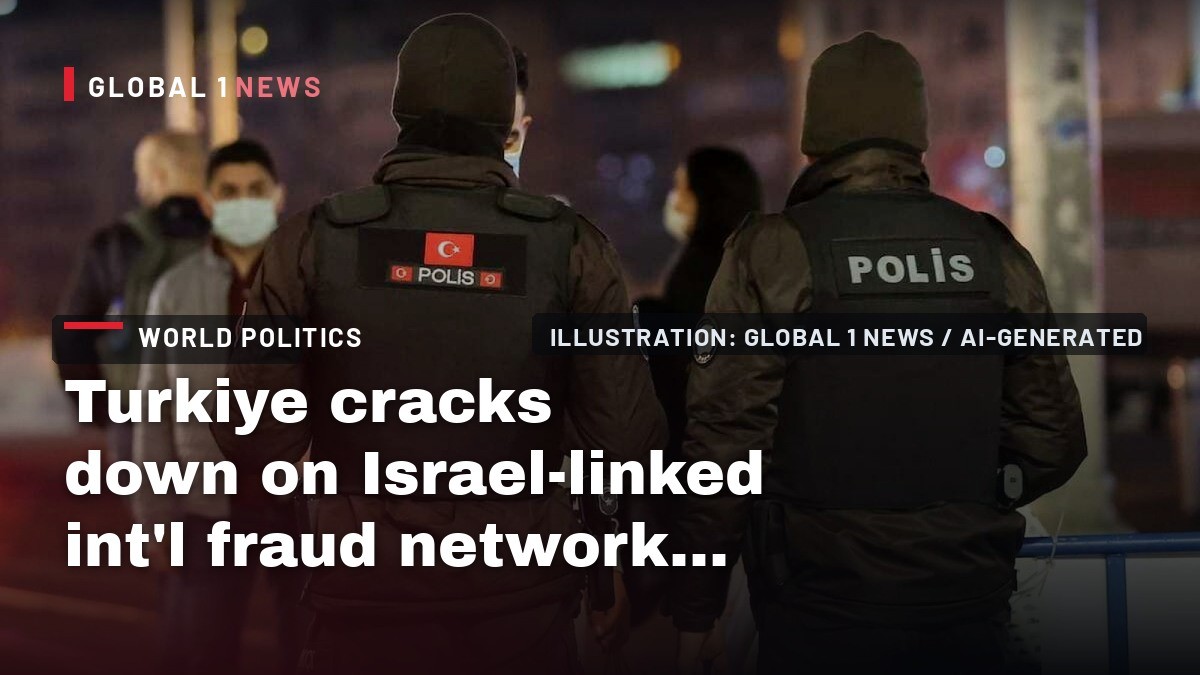
Turkish authorities launched a sweeping crackdown on an alleged Israel‑linked fraud network on 18 September 2026, detaining 175 individuals in coordinated raids across Istanbul and the western province of Muğla. The operation, announced by Justice Minister Akin Gürlek on the social media platform X, targeted a web of call centres and companies that had lured foreign investors with promises of high returns from foreign‑exchange and cryptocurrency schemes. The scale of the bust—286 addresses, 28 companies, 42 call centres and 239 suspects—highlights both the transnational reach of the fraud and the growing concern that such schemes may be used to finance illicit activities, including terrorism.
Scope of the operation and the suspects detained
The raids, carried out at 5 a.m. local time, focused on 286 locations in Istanbul and Muğla. By 10 a.m., police had detained 175 of the 239 suspects identified in the investigations. The remaining suspects were still being pursued, according to Gürsel. The operation was a joint effort involving the Istanbul Chief Public Prosecutor’s Office, the National Intelligence Organization’s regional directorate, the Department of Combating Organized Crime, the Istanbul Police Cybercrime Branch, and Interpol units that assisted in gathering victim complaints.
Justice Minister Gürlek emphasized that the investigations uncovered a sophisticated network that used multilingual customer representatives to recruit victims across multiple continents. The suspects were alleged to have operated call centres that advertised investment opportunities on social media and the internet, promising unusually high returns to foreign nationals. The coordinated nature of the raids, involving dozens of agencies, underscores the Turkish authorities’ determination to dismantle what they describe as an “international fraud network” with links to Israel.
How the fraud scheme operated
According to the findings presented by the Istanbul Chief Public Prosecutor’s Office, the fraudsters set up call centres that acted as front‑end recruiters. Victims were directed to investment platforms that were allegedly controlled by the suspects. On these platforms, fabricated profit figures were displayed to encourage further deposits. When victims attempted to withdraw their funds, they were met with additional demands—such as “account blockage” fees or alleged “taxes”—that forced them to send more money.
The money collected was then transferred to bank accounts and cryptocurrency wallets abroad. The scheme’s reliance on both traditional banking channels and digital currencies allowed the perpetrators to move funds quickly and obscure the trail, complicating efforts by law‑enforcement agencies to trace the proceeds.
Financial magnitude and international reach
The investigation revealed a transaction volume of approximately 13 billion Turkish liras—equivalent to about $266.4 million—over a two‑year period. These funds were believed to have covered office expenses and salary payments for the network’s operators. Victims spanned Europe, the Far East and Africa, indicating that the fraudsters deliberately targeted foreign nationals, exploiting the global appetite for high‑yield investment opportunities.
Analyses by Turkey’s Financial Crimes Investigation Board, combined with intelligence gathered by the National Intelligence Organization and victim complaints submitted through Interpol, pointed to Israeli individuals as predominant owners and ultimate beneficiaries of the companies involved. While the report does not specify the exact identities of these owners, the emphasis on Israeli links has added a diplomatic dimension to the case, raising questions about cross‑border financial oversight.
Legal framework and the fight against money‑laundering
The operation was coordinated by the Istanbul Chief Public Prosecutor’s Office’s Bureau for Investigating Terror Financing and Money Laundering Crimes. This bureau’s involvement signals that Turkish authorities view the fraud not merely as a commercial crime but as a potential conduit for financing terrorism or other illicit activities. By linking the scheme to terror‑financing statutes, prosecutors can pursue harsher penalties and seize assets under anti‑money‑laundering legislation.
In addition to the domestic agencies, the Department of Combating Organized Crime and the Istanbul Police Cybercrime Branch played key roles in tracing digital footprints and dismantling the online advertising channels used by the fraudsters. Their collaboration with Interpol demonstrates the importance of international cooperation in tackling transnational financial crimes that cross jurisdictional boundaries.
Human impact: victims’ stories and the cost of deception
Hundreds of victim complaints were collected through Interpol, revealing the personal devastation caused by the scheme. Many victims reported losing life savings after being persuaded to invest in what appeared to be legitimate forex or cryptocurrency platforms. The promise of high returns, often presented in the victims’ native languages, created a false sense of security that the fraudsters exploited.
When victims attempted to withdraw their funds, they encountered repeated demands for additional payments, a tactic that trapped them in a cycle of debt and desperation. The emotional toll—marked by anxiety, loss of trust, and financial ruin—underscores the broader human cost of such scams, which extend far beyond the monetary losses recorded by authorities.
International implications and diplomatic sensitivities
The identification of Israeli individuals as predominant owners has added a diplomatic layer to the case. While the Turkish government has not disclosed the names of those linked to Israel, the emphasis on these connections may influence bilateral relations, especially given the broader regional tensions surrounding Israeli operations in neighboring states. The Turkish Foreign Ministry’s recent comments on Israeli strikes in Syria, which they claim indirectly benefit extremist groups, further illustrate the complex political backdrop against which this financial crime is being pursued.
By foregrounding the Israeli link, Turkish officials may be signaling a broader intent to curb perceived foreign influence in the country’s financial sector. However, the focus on nationality also raises concerns about potential stigmatization of individuals based on their citizenship, a point that human‑rights observers will likely monitor closely.
Looking ahead: enforcement, prevention and the need for stronger safeguards
The 2026 crackdown demonstrates Turkey’s willingness to employ a multi‑agency approach to dismantle sophisticated fraud networks. Yet, the persistence of such schemes suggests that more robust preventive measures are needed. Strengthening consumer education about the risks of high‑yield investment promises, improving cross‑border information sharing, and enhancing regulatory oversight of call‑centre operations could reduce the pool of vulnerable victims.
Moreover, the case highlights the importance of international cooperation. Interpol’s involvement was crucial in gathering victim complaints and facilitating coordination across borders. Continued collaboration with foreign law‑enforcement agencies, especially those in countries where victims reside, will be essential to track the flow of illicit funds and hold perpetrators accountable, regardless of where they are based.
As the investigation proceeds and additional suspects are apprehended, the Turkish authorities’ handling of this case will be closely watched by both human‑rights advocates and the international community. The balance between robust law‑enforcement action and the protection of individual rights—particularly in a context where nationality becomes a focal point—will shape the narrative of justice in the aftermath of this massive fraud bust.
This article was produced with AI-assisted research and editorial support. Reporting is based on the source material cited below. Sources: Middle East Monitor; middleeastmonitor.com; Global1.News (20 September 2026).
By Fatima Al-Rashid, Staff Writer
What's Your Reaction?
 Like
0
Like
0
 Dislike
0
Dislike
0
 Love
0
Love
0
 Funny
0
Funny
0
 Wow
0
Wow
0
 Sad
0
Sad
0
 Angry
0
Angry
0

Gulf/MENA Correspondent at Global1.News. Based in Doha, covering Gulf politics, energy markets, diplomacy, and development across the Middle East and North Africa. Tracks the economic transformation of the Gulf states.














Comments (0)