
Turkish attorney makes history as 3-cushion billiards world champ
In the intricate tapestry of Turkey’s sporting narrative, the triumph of Güzin Müjde Karakaşlı at the 2026 Women’s Three‑Cushion Billiards World Championship in France stands out as a vivid illustration of personal ambition intersecting with national symbolism.
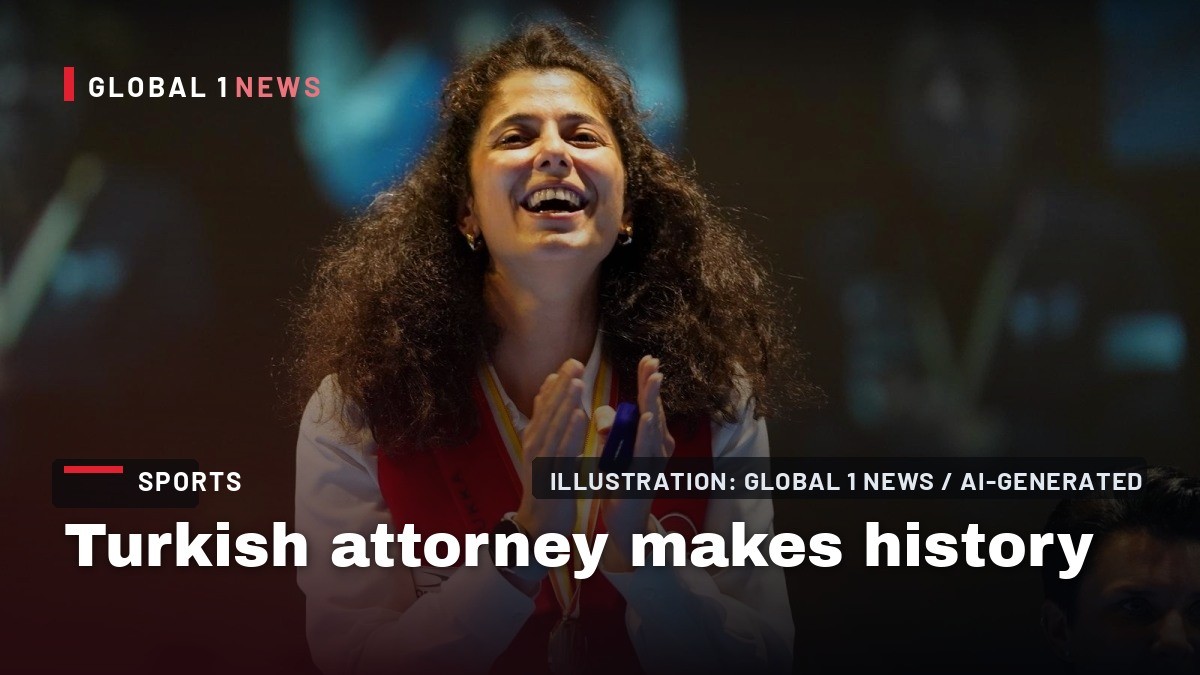
In the intricate tapestry of Turkey’s sporting narrative, the triumph of Güzin Müjde Karakaşlı at the 2026 Women’s Three‑Cushion Billiards World Championship in France stands out as a vivid illustration of personal ambition intersecting with national symbolism. While the victory itself—a 30‑18 defeat of Dutch contender Karina Jetten—marks the first individual world title for a Turkish woman in the discipline, its resonance extends beyond the table. It reflects a broader pattern in which Turkish athletes leverage success in niche sports to reinforce a sense of modern national identity, especially as the country seeks to balance its traditional sporting heritage with aspirations for greater global visibility.
From the Courtroom to the Billiard Table: Parallel Disciplines
Karakaşlı’s own description of her dual career underscores the analytical rigor that underpins both law and three‑cushion billiards. She likens the precision required in legal reasoning to the “mathematical approach” essential at the table, emphasizing that each arena demands “the highest level of reasoning.” This self‑portrayal aligns with a growing trend among Turkish professionals who pursue elite sport alongside demanding careers, positioning themselves as exemplars of disciplined multitasking—a narrative that resonates with a society that values educational attainment and professional achievement.
The attorney’s reflection on strategy—knowing “when to attack and when to defend, read the situation and choose the right strategy and the optimum tools”—mirrors the tactical calculations that dominate modern Turkish foreign policy, where timing and calibrated responses are paramount. By framing her sporting success through the lens of legal strategy, Karakaşlı subtly reinforces a cultural archetype of the “strategic thinker,” a figure celebrated both on the diplomatic front and in the realm of sport.
Historical Roots: A Family of Sport and the Semih Saygıner Legacy
Karakaşlı’s recollection of watching Turkish billiards legend Semih Saygıner defeat Belgian icon Raymond Ceulemans as a child provides a poignant link between past national heroes and contemporary breakthroughs. Saygıner’s fame, built on technical mastery and international victories, has long served as a benchmark for Turkish excellence in cue sports. By invoking this memory, Karakaşlı situates her own achievement within a lineage of Turkish billiards prowess, suggesting a continuity that bolsters national pride.
The broader sporting environment in her household—parents who met on a volleyball court and a home where “sport was constantly watched and discussed”—reflects the embedded cultural value placed on athletic participation. This familial backdrop, coupled with exposure to high‑profile matches, likely cultivated the competitive mindset that propelled her to the world stage, illustrating how early exposure to sport can seed future elite performance.
The Technical Challenge: Microscopic Margins and Mental Fortitude
Three‑cushion billiards, a discipline defined by its exacting precision, demands an almost forensic level of concentration. Karakaşlı describes the table’s dimensions—142 by 284 centimeters—and the “billions of possibilities” that arise within each shot. With only 40 seconds to decide on variables such as thickness, spin, collision angle, and shot strength, the player must execute a decision matrix that leaves virtually no room for error.
Beyond the physical execution, Karakaşlı emphasizes the psychological dimension: “You have to be completely in the moment,” she says, noting the tension of “the world in your mind and arms.” This dual focus on technical exactness and mental presence underscores the sport’s capacity to develop cognitive resilience—a trait that resonates with Turkey’s broader emphasis on mental toughness in both military and civilian spheres.
Gender Barriers and the Symbolic Weight of the Title
Karakaşlı’s victory carries a potent gender narrative. As the first Turkish woman to claim a world title in billiards, she frames the medal as a collective emblem: “The medal is around my neck, but I believe the meaning it carries belongs to all of us.” Her articulation that “gender barriers are mostly not barriers that we create ourselves” suggests an understanding that systemic obstacles are external, and that personal achievement can help dismantle them.
She explicitly hopes her triumph will serve as “a gift and an inspiration to all of Türkiye, especially young girls.” By linking her personal success to broader societal change, Karakaşlı contributes to an emerging discourse in Turkey where female athletes are increasingly positioned as agents of cultural transformation, challenging traditional gender norms and expanding the scope of women’s participation in public life.
Institutional Support and the Role of the Turkish Billiards Federation
The immediate reaction of Ersan Ercan, president of the Turkish Billiards Federation, underscores the institutional significance of Karakaşlı’s win. Ercan’s comment that she “brought home the last missing trophy in our museum” highlights how national sporting bodies view such victories as completing a collective trophy cabinet, thereby cementing Turkey’s status in the international billiards community.
Karakaşlı’s acknowledgment of her preparation team—Berceste Şeber and Prof. Dr. Nurullah Genç—illustrates the collaborative infrastructure behind elite performance. This network of coaches and mentors reflects a growing professionalization within Turkish cue sports, where systematic training and scientific support are becoming integral to achieving world‑class results.
Future Ambitions: Defending the Title and Pursuing Olympic Inclusion
Looking ahead, Karakaşlı states her immediate goal is to defend her world title, a commitment that signals a shift from singular achievement to sustained dominance. More ambitiously, she aspires to translate her success into Olympic participation, noting that billiards is “recognized by the International Olympic Committee and remains a candidate for inclusion in the Olympic program.” Her desire to “represent Türkiye in women’s billiards at the Olympics and pursue the gold medal” aligns with Turkey’s broader strategy of leveraging niche sports to broaden its Olympic medal prospects.
Should billiards gain Olympic status, Karakaşlı’s profile—bolstered by her legal acumen, media visibility, and symbolic role as a trailblazer for Turkish women—could position her as a flagship athlete for the nation’s Olympic campaign. This potential trajectory underscores how individual sporting milestones can intersect with national policy objectives, especially as Turkey seeks to diversify its sporting portfolio on the world stage.
This article was produced with AI-assisted research and editorial support. Reporting is based on the source material cited below. Sources: Daily Sabah Middle East; dailysabah.com; Global1.News (26 September 2026).
By Malik Hassan, Staff Writer
What's Your Reaction?
 Like
0
Like
0
 Dislike
0
Dislike
0
 Love
0
Love
0
 Funny
0
Funny
0
 Wow
0
Wow
0
 Sad
0
Sad
0
 Angry
0
Angry
0

Middle East Correspondent at Global1.News. Based in Beirut, covering politics, conflict, energy, and society across the Middle East. Brings context and depth to a region often reduced to headlines.













Comments (0)