
Turkey Advances Landmark Law for PKK Returns from Iraq and Syria
Turkey's parliament advances landmark terror-free Türkiye legislation letting disarmed PKK members return from Iraq, Syria and Europe under deferred sentences, a historic step toward ending a four-decade insurgency.
Turkey Advances Landmark Law for PKK Returns from Iraq and Syria
Ankara, Türkiye – August 7, 2026 — The Turkish Parliament is moving swiftly on legislation that could reshape security dynamics across southeastern Türkiye, northern Iraq and parts of Syria.
Historical Context of the Four-Decade Conflict
The PKK launched its armed campaign against Turkey in 1984, resulting in more than 40,000 deaths over four decades. A previous peace effort between 2013 and 2015 collapsed amid renewed violence, leaving thousands displaced in southeastern Turkey and northern Iraq. The current initiative follows the PKK's May 2025 announcement of dissolution and the subsequent weapons ceremony in the Qandil Mountains, marking the first credible step toward ending the insurgency since the failed talks a decade earlier.
The four-decade conflict shaped Turkish security doctrine through successive military operations in the Qandil Mountains and along the Syrian border, involving coordination between the Turkish Armed Forces and the National Intelligence Organization. Earlier attempts at dialogue referenced Abdullah Öcalan’s 2013 Newroz message but ultimately produced limited disarmament before violence resumed in 2015. Displacement figures from that period reached several hundred thousand civilians across southeastern provinces, straining municipal resources and local governance structures.
Regional actors including the Kurdistan Regional Government in Erbil maintained cautious engagement during prior ceasefires, balancing economic ties with Turkey against pressure from Baghdad and Tehran. The 2025 dissolution decision alters these calculations by removing a persistent source of cross-border friction that previously complicated energy transit agreements and joint counter-terrorism frameworks.
International observers have noted that the collapse of the 2013-2015 process coincided with broader Middle East instability following the rise of ISIS, which indirectly affected Kurdish political dynamics in both Iraq and Syria. The current framework therefore builds on lessons from that era while incorporating verification mechanisms tied to the National Security Council.
Details of the 12-Article Framework Bill
The Bill on Strengthening National Solidarity and Social Cohesion was submitted to parliament on August 5, 2026. Turkey's Justice Committee began debating the draft on August 7, with the General Assembly scheduled to consider approval on August 9. The legislation establishes procedures for returns only after the National Security Council, chaired by the president, formally declares the PKK fully dismantled. Justice Minister Akın Gürlek stated that implementation remains conditional on this verification step.
The bill’s conditional structure reflects institutional caution developed after the 2015 breakdown, requiring explicit National Security Council certification before any return procedures activate. This sequencing protects domestic political support by linking implementation directly to demonstrated PKK compliance rather than unilateral gestures.
Parliamentary timelines indicate the Justice Committee review will examine procedural safeguards for returnees, including judicial oversight and coordination protocols between the Ministries of Justice, Interior and National Defense. Such inter-ministerial mechanisms aim to prevent administrative bottlenecks observed during earlier reintegration attempts in the 2000s.
Legal experts within Turkey have highlighted that deferred sentences under the framework apply only after individual assessments, distinguishing the current approach from blanket amnesties that proved politically contentious in previous decades.
Return Mechanisms Through Diplomatic Channels
PKK members based in Iraq will submit applications via Turkish diplomatic missions, primarily targeting those in the Qandil Mountains. Similar procedures apply in Syria, where the group's Syrian offshoot maintains presence, and across Europe through embassies and consulates. The Ministries of Foreign Affairs and National Defense, together with the National Intelligence Organization, will coordinate processing. Returnees must appear before a court, after which sentences may be deferred if no direct involvement in terrorist acts is established.
Turkish diplomatic facilities in Erbil and Baghdad are expected to handle the bulk of Iraqi applications, leveraging existing consular infrastructure developed for trade and energy cooperation with the Kurdistan Regional Government. This channel reduces reliance on informal cross-border contacts that characterized earlier return attempts.
In Syria, coordination through Turkish missions in third countries may become necessary given limited direct access, affecting timelines for members affiliated with the Syrian offshoot. European embassies will process smaller numbers, primarily individuals who left Turkey during the 1990s or early 2000s.
The National Intelligence Organization’s role in vetting ensures that weapons surrender records compiled by MIT align with individual declarations, creating a cross-checked database intended to prevent discrepancies that undermined prior monitoring efforts.
Exclusions, Monitoring and Weapons Surrender
The law excludes approximately 250 founding members, including Fehman Hüseyin, Murat Karayılan, Cemil Bayık, Duran Kalkan and Bese Hozat. Combined with individuals convicted of murder, nearly 1,000 people fall outside its scope. MIT has compiled a full inventory of PKK weapons and equipment, including drones, satellite systems and paramotors, which must be surrendered. A monitoring board under the Interior Ministry and MIT will track returnees, with immediate intervention if renewed links to criminal activity appear.
The weapons inventory compiled by MIT includes detailed serial numbers and storage locations, providing a baseline for verification teams operating under the Interior Ministry monitoring board. This technical preparation addresses gaps identified after the 2015 process when incomplete disarmament contributed to renewed clashes.
Monitoring protocols will integrate existing provincial security structures in southeastern Turkey, allowing rapid response to any reported violations without creating new bureaucratic layers. The board’s composition ensures intelligence continuity between MIT and Interior Ministry field units.
Exclusion criteria for founding members and those convicted of murder reflect political calculations aimed at maintaining broad public support, consistent with the 91 percent approval figures cited by Justice Minister Akın Gürlek.
Public Support and the Diyarbakır Mothers
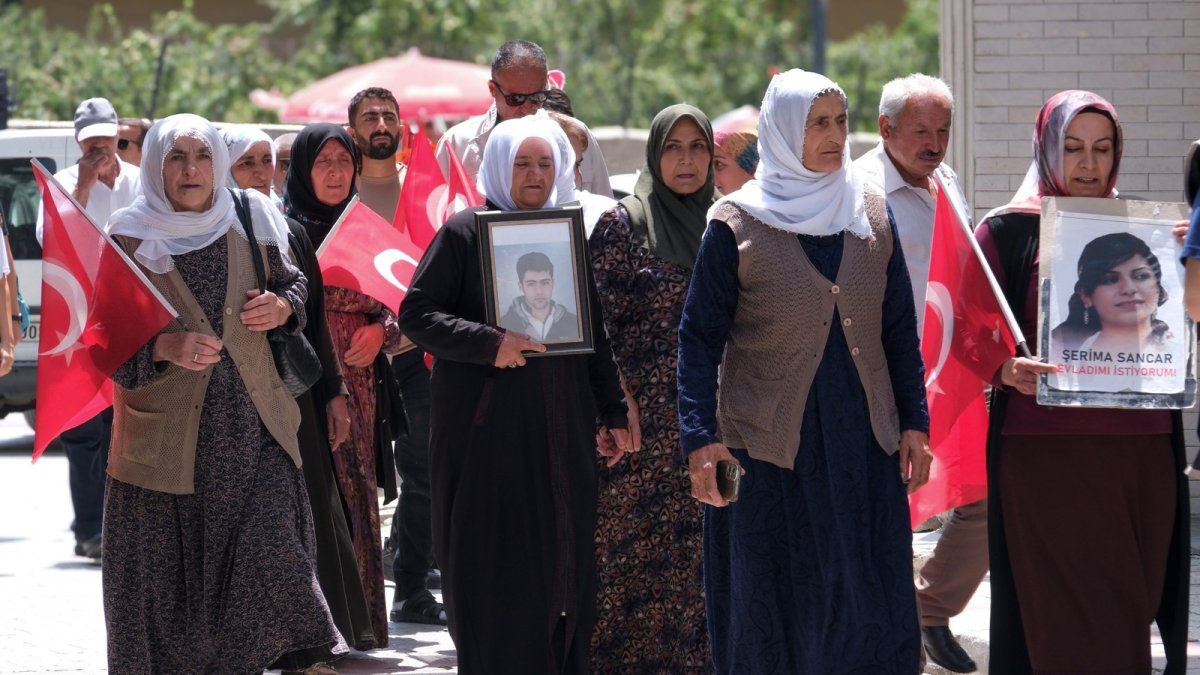
Justice Minister Gürlek cited surveys showing 91 percent of Turkish citizens back the initiative. The Diyarbakır Mothers, a group of roughly 80 parents who have maintained a sit-in for years, represent the most immediate human dimension. Necibe Çiftçi awaits her son Roşat, recruited at age 16 in 2015, while another son was killed by the group after refusing to join. Mevlüde Üçdağ similarly expects the return of her son Ramazan, describing the long wait for families whose children were drawn into the organization as minors.
The Diyarbakır Mothers’ sustained presence outside the provincial governorate has drawn consistent domestic media attention, underscoring generational impacts of recruitment practices documented since the mid-2010s. Their cases illustrate how the current law’s age-related provisions intersect with family-level reconciliation efforts.
Survey data referenced by Justice Minister Akın Gürlek aligns with broader polling trends showing sustained public interest in ending the conflict, particularly in western and central Anatolian provinces less directly affected by past violence.
Local civil society organizations in Diyarbakır have begun preparing support frameworks for potential returnees, focusing on vocational training and psychological services to address long-term integration challenges observed in earlier limited return programs.
Strategic Calculus for Iraq and Syria
Clearance of PKK positions in the Qandil Mountains would reduce cross-border tensions between Turkey and the Kurdistan Regional Government while easing pressure on the Iraqi federal government in Baghdad. In Syria, the law's provisions for returns through diplomatic channels could limit the operational space of the PKK's Syrian affiliate, affecting calculations by Damascus, Washington and Moscow. Turkey gains leverage to press for tighter control over militant movements along its southern borders.
Erbil-Baghdad coordination on border security could accelerate once Qandil positions are vacated, potentially unlocking stalled infrastructure projects linking Turkish energy corridors to southern Iraqi markets. Federal authorities in Baghdad have long viewed PKK presence as a complicating factor in their own relations with Ankara.
In Syria, reduced operational space for the PKK affiliate may influence United States and Russian calculations regarding local armed groups, particularly around Manbij and the eastern Euphrates where Turkish concerns have intersected with broader counter-ISIS operations.
Turkish leverage derived from the return framework could translate into renewed diplomatic engagement on refugee returns and border management, areas where Ankara has sought greater cooperation from both Damascus and international actors since 2019.
Implications for Regional Alliances and Energy Security
Successful implementation would strengthen Turkey's hand in NATO discussions on southeastern flank security and support its energy diversification goals under Vision 2030-style planning. Reduced instability in northern Iraq could facilitate smoother oil exports from the Kurdistan region through Turkish pipelines. For Iran, the development narrows opportunities to exploit Kurdish grievances, while Gulf states watch for signs that Ankara's influence in Sunni-Shia competition along the northern tier is consolidating. The process, if completed, offers a rare opening to lower the temperature across multiple conflict zones simultaneously.
Pipeline throughput from northern Iraq has fluctuated due to security concerns in previous years; sustained clearance of Qandil routes could stabilize volumes and support Turkey’s role as a transit hub under its broader energy strategy. NATO partners have monitored Turkish security developments for implications on alliance planning along the southern flank.
Iranian responses will likely focus on preventing any precedent that weakens its own influence over Kurdish populations in western provinces, while Gulf capitals assess whether Turkish gains alter the balance of Sunni political actors across the Levant and Mesopotamia.
Overall regional temperature reduction could open space for renewed economic initiatives involving multiple actors, including reconstruction financing and cross-border trade frameworks that have remained dormant amid prolonged instability.
By Malik Hassan, Staff WriterThis article was produced with AI-assisted research and editorial support. Reporting is based on sources cited in the article.
What's Your Reaction?
 Like
0
Like
0
 Dislike
0
Dislike
0
 Love
0
Love
0
 Funny
0
Funny
0
 Wow
0
Wow
0
 Sad
0
Sad
0
 Angry
0
Angry
0

Middle East Correspondent at Global1.News. Based in Beirut, covering politics, conflict, energy, and society across the Middle East. Brings context and depth to a region often reduced to headlines.










Comments (0)