
Trump's 'Lake America' Taunt Escalates Trade War as Canada Prepares Counter-Tariffs
Trump threatens to rename Lake Ontario 'Lake America' on Truth Social as the Canada-U.S. trade war escalates. Ottawa prepares $27.6B in counter-tariffs for Sept. 8 while Ford, Joly and experts push back.
In a recent CBC News report, the escalating rhetoric between Ottawa and Washington reached a new and unusual low on Tuesday morning when U.S. President Donald Trump posted on Truth Social that the United States was "giving serious consideration" to renaming Lake Ontario to "Lake America." In a second post, Trump shared an altered map with "Lake Ontario" crossed out and "Lake America" written in gold lettering beside an American flag, a move that has united Canadian politicians across party lines and drawn sharp rebukes from geographers, historians and municipal leaders.
Trump's 'Lake America' Taunt Escalates Trade War as Canada Prepares Counter-Tariffs
Toronto, Ont. – Tuesday — The threat is the latest salvo in a rapidly deteriorating trade relationship that saw 50 per cent U.S. tariffs on roughly $28 billion worth of Canadian goods come into effect on Saturday. The tariffs target certain motor vehicles, alcoholic beverages, dairy and other goods, with Trump threatening additional duties on cars, automotive parts and steel. Canada has announced dollar-for-dollar counter-tariffs on $27.6 billion of U.S. goods, set to begin Sept. 8. Prime Minister Mark Carney blamed last-minute changes by the American side for the breakdown in talks on Friday, calling them "unfair, uneconomic, and called into question the reliability of any deal." U.S. Trade Representative Jamieson Greer has blamed Canada for the collapse.
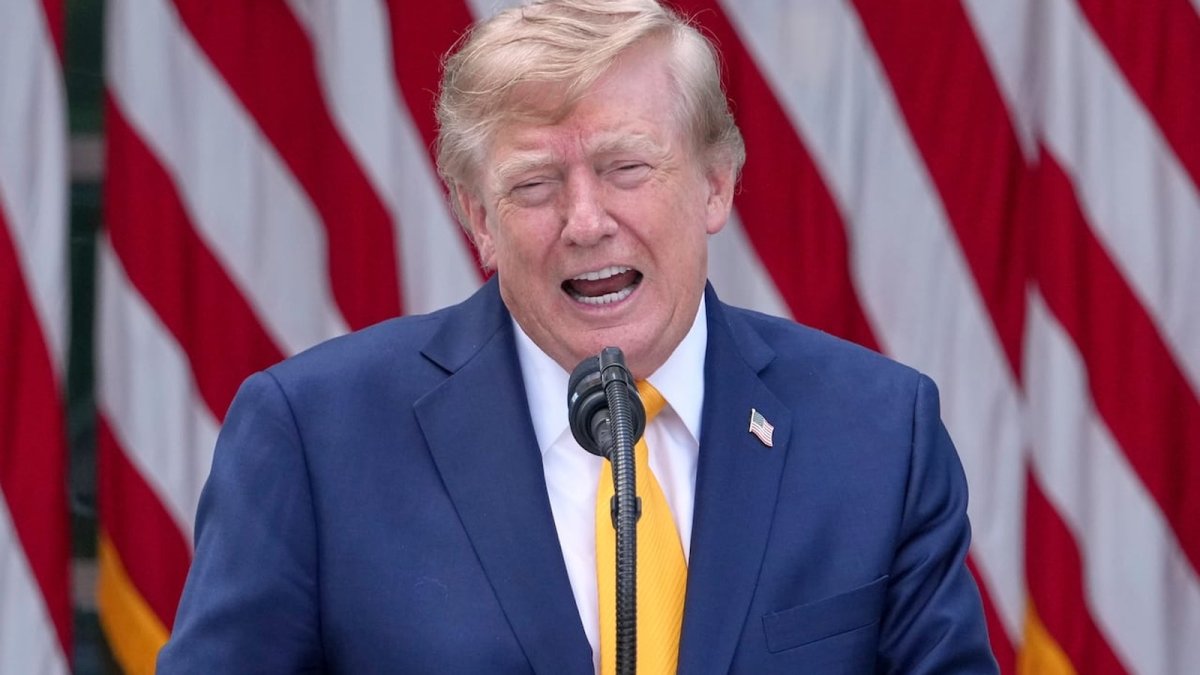
Ford Feud Fuels Personal Attacks From the White House
The name-change jab came a day after Ontario Premier Doug Ford told Trump he could "kiss my ass" — comments aired on Toronto radio station Newstalk 1010 on Monday in response to the tariffs. Ford doubled down at a news conference in Hamilton, where he said "everything is on the table" regarding retaliation, including electricity exports and critical minerals. Trump responded by calling Ford "Flunky Ford," and later referred to both Ford and Carney as "clowns" and "bad leaders." In another post, Trump wrote: "I deal with many countries, and Canada is easily the most difficult and unreasonable... They feel entitled, but they are not a State, and will be entitled no longer!" He also warned of "far WORSE" consequences if Canada's leaders do not "fall in line."
The attacks mark a significant escalation from policy disagreements to outright insults between the two countries' leaders. Ford appeared to walk back some of the heat on Tuesday, telling CNN's Wolf Blitzer: "Things got a little heated. It got a little personal yesterday between the president and myself. It's time to get back to the table. Let's negotiate a fair deal, because it's hurting the U.S., it's hurting Canada." Ford called for building "Fortress North America," noted that Canada is the number one trading partner with the U.S., and expressed concern for Americans seeing costs rise. He also defended his earlier comments, saying: "When President Trump wants to attack our sovereignty and attack our businesses and people in Ontario, I can't roll over. My job is to protect Ontario and Canada and, ironically, protect the American people."
Ottawa's Measured Response: 'We'll Always Call It Lake Ontario'
Industry Minister Mélanie Joly offered a firm but measured response to reporters, stating: "We'll always call it Lake Ontario. Period." She added: "We're proud of the Great Lakes... and we'll stand up for what we have." Joly also acknowledged the unusual nature of the situation, saying: "I really think that, with all these shenanigans happening. We'll just be smart and we'll be strategic, and we'll fight back."
Minister for Canada-U.S. Trade Dominic LeBlanc declined to comment directly on the renaming threat, telling CNBC: "We've decided as a federal government months ago not to respond to sort of the daily social media posts of either the president or his Cabinet secretaries. We're focused on doing what we can in Canada to build our economy and to having a constructive relationship with the government of the United States — our most important trading partner."
Mississauga Mayor Carolyn Parrish took to X to deliver a pointed rebuke, writing: "Dear Mr. Trump: Since the Mississaugas of the Credit First Nation established their homes close to and along the shores of this lake, it has been our lifeblood. I, and everyone in Mississauga, am proud to be living along the shores of LAKE ONTARIO. We will defend its good name!" The mayor's reference to the First Nation underscores the deep Indigenous history of the lake, which has carried its name since before the American Revolution.
Experts Dismiss Threat as 'Pure Rage Bait' With Real Precedent
Political strategist Jaime Watt, executive chairman of PR firm Navigator, told CBC Radio's Metro Morning that Trump's tactics are predictable and repetitive. "He's got a very limited playbook. He's got about four things he does, and he repeats them over again. First it was the Gulf of Mexico, now it's Lake Ontario. It's like trying to deal with a four-year-old having a temper tantrum." Watt added: "You can't let the schoolyard bully continue to take your lunch. You've got to put your foot down."
Reuben Rose-Redwood, professor of geography at the University of Victoria, called the threat "pure rage bait" and "a well-worn move from the Trump playbook akin to calling Canada the '51st State' or renaming the Gulf of Mexico to capture media attention." He explained that Trump can instruct the U.S. Department of the Interior and the U.S. Board on Geographic Names to rename Lake Ontario on U.S. federal maps, but Canadian and international mapmakers are not obliged to comply. "Trump's threat to rename Lake Ontario is pure rage bait aimed at stoking anger among Canadians while distracting Americans from the fact that Trump overplayed his hand in the trade negotiations with Canada."
However, Mary Baxter, a PhD candidate at Western University and historian of the Great Lakes, cautioned that there is a real possibility the threat becomes reality in some form. She pointed to January 2025, when Trump renamed the Gulf of Mexico the Gulf of America in one of his first executive orders. "With this president we have seen that he has announced certain intentions and he's followed through with them." Baxter noted that because Canada and the U.S. split the lake jurisdictionally, each country is free to name shared geographic features what it wants; how the lake is internationally recognized would come down to politics and preference. Changes to American-owned platforms like Google Maps could be more immediate.
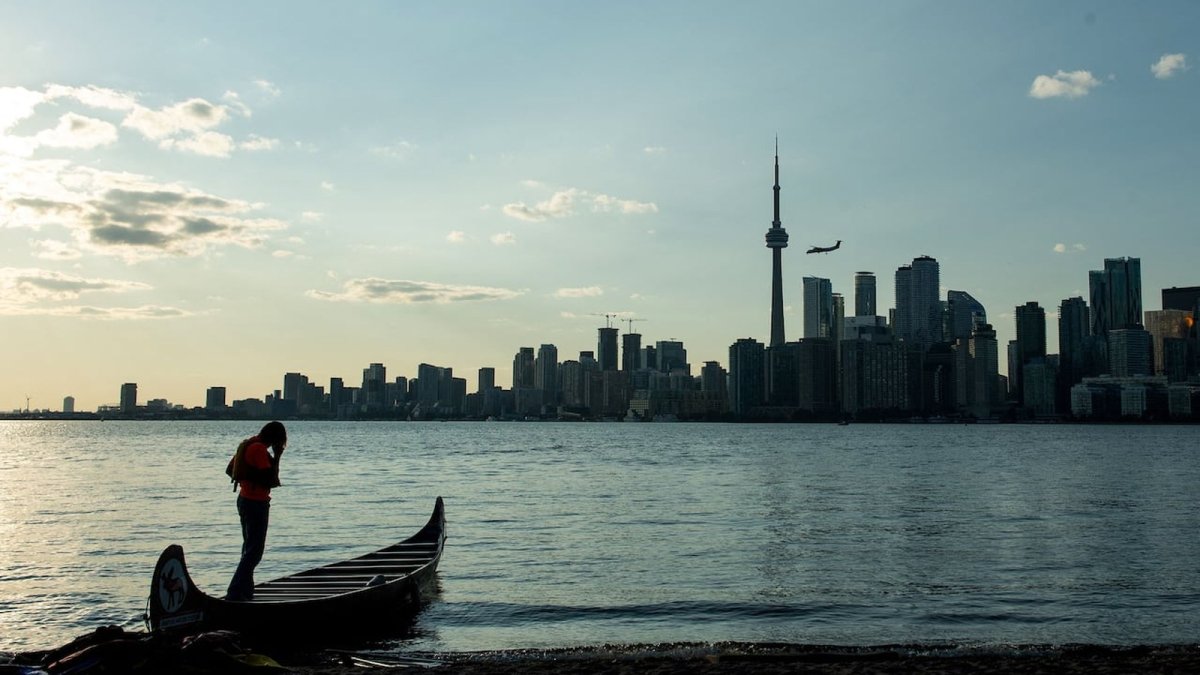
Lake Ontario's Deep History and Indigenous Roots
Lake Ontario is the smallest of the five Great Lakes by surface area, spanning roughly 7,340 square miles with about one-quarter in the United States. But it is considerably deeper than its size suggests, with an average depth of about 283 feet and a maximum of about 802 feet. It sits on the U.S.-Canada border between Ontario and New York state, with Toronto, Hamilton and Kingston on the Canadian shore and Rochester and Oswego on the American side. The lake is a key link in the Great Lakes–St. Lawrence Seaway system — water from the other Great Lakes flows through it down the St. Lawrence River to the Atlantic.
The name predates both countries by centuries. It is usually traced to the Wyandot (Huron) word Ontarí'io or a related Iroquoian term, variously translated as "great" or "beautiful" water. Generations of Canadian and American students memorized the Great Lakes with the acronym HOMES — Huron, Ontario, Michigan, Erie, Superior. Baxter emphasized the cultural significance of the name: "Often we don't know what's important to us until we are at the verge of having it taken away. When you think of a name that has stuck for so long, like Lake Ontario, I would think that it's important not only to Ontarians, but certainly for the First Nations who still make their homes around its waters."
White House Map Errors Undermine the Message
The White House's official X account shared a Lego-style map labelling the lake "Lake America" — but the map appeared to place Washington, D.C. in North Carolina. The Lincoln Project, a political action committee critical of Trump, responded with a sarcastic jab: "How much drinking water did you idiots use up just to put DC and NJ in the wrong places?" The error gave ammunition to critics who argue the focus on renaming geographic features distracts from substantive policy.
Derek Alderman, cultural and historical geographer at the University of Tennessee and former president of the American Association of Geographers, said the move seems intended "to exert some advantage or strength in the trade war with Canada" but "could backfire by further alienating the Canadian people." He noted that "place names are quite important to people's identity as well as key resources in educating our youth and being key parts of treaties, policy documents and maps." Alderman warned that Canadians could see the renaming "as part of the larger effort on the part of the U.S. to exert its influence territorially," feeding fears that Trump wants to make Canada a "51st state."
Toronto Residents Dismiss the Taunt as Nonsense
Toronto residents interviewed near Lake Ontario in the city's east end called the comments nonsensical. Gillian Hegge told reporters: "I just think [Trump] is running out of things to say. He did that a long time ago with the Gulf of Mexico so he's kind of repeating himself. For a long time I've been saying, 'Why does anyone listen?'" Sean Fennell said the comments resemble Trump's tactic of "pushing buttons": "There's a little bit of levity... but you can't take this guy seriously."
The renaming threat follows a pattern established in January 2025, when Trump ordered federal agencies to adopt "Gulf of America" in place of Gulf of Mexico and restored Mount McKinley as the federal name for Alaska's Denali. Other countries did not follow suit, and the international community largely continued using the traditional name. Earlier this month, Trump shared an image depicting the Strait of Hormuz as "NEW U.S. Territory," further evidence of his willingness to use geographic imagery as a political weapon. The White House also published a "record of Canadian abuse" after Ottawa announced its dollar-for-dollar counter-tariffs, framing Canada's defensive measures as provocations.
What This Means for Canada-U.S. Relations Going Forward
The Lake Ontario episode, while seemingly trivial on its face, carries significant implications for the broader trade dispute. The breakdown in negotiations on Friday, followed by the imposition of tariffs on Saturday, has created a volatile environment where symbolic gestures can have outsized consequences. Canada's counter-tariffs on $27.6 billion of U.S. goods, set to take effect Sept. 8, represent a significant escalation that will affect American exporters in sectors ranging from agriculture to manufacturing.
For Canadian readers, the stakes are concrete and personal. The tariffs on Canadian goods will affect industries employing thousands of workers, from automotive plants in Ontario to dairy producers across the country. The counter-tariffs will raise prices on a range of American consumer goods, contributing to cost-of-living pressures that Canadians are already feeling. The renaming threat, while symbolic, taps into deeper anxieties about American intentions toward Canadian sovereignty — anxieties that have been fuelled by Trump's repeated references to Canada as the "51st State" and his administration's willingness to use economic pressure to achieve political ends.
LeBlanc's strategy of ignoring daily White House social media posts reflects a calculated bet that the American public will eventually tire of the chaos and press their own government to return to productive negotiations. Ford's call for "Fortress North America" suggests a longer-term vision of continental economic integration that could survive the current turbulence. But the immediate outlook remains uncertain, with both sides dug in and the next round of tariffs scheduled to take effect in less than two weeks.
As Tuesday's threat demonstrates, the Trump administration is willing to use any tool at its disposal — including the naming of shared geographic features — to exert pressure on Canada. Whether the tactic proves effective or simply further alienates Canadians remains to be seen. What is clear is that the lake that has carried its name since before the American Revolution will continue to be called Lake Ontario by Canadians, regardless of what any map in Washington might say. The question now is whether the two countries can find a path back to the negotiating table before the economic damage becomes irreversible.
By Alex Thompson, Staff Writer
This article was produced with AI-assisted research and editorial support. Reporting is based on sources cited in the article.
What's Your Reaction?
 Like
0
Like
0
 Dislike
0
Dislike
0
 Love
0
Love
0
 Funny
0
Funny
0
 Wow
0
Wow
0
 Sad
0
Sad
0
 Angry
0
Angry
0
Canada Correspondent at Global1.News. Based in Toronto, covering Canadian politics, energy, trade, and US-Canada relations. Provides the Canadian perspective on North American and global affairs.












Comments (0)