
Trump Says He Has a Greenland Deal That Keeps the Island Danish
President Donald Trump says the United States, Denmark and Greenland have agreed a deal giving Washington permanent control over Greenland's security and a larger military presence, while the island stays Danish. No text of the agreement has been released.
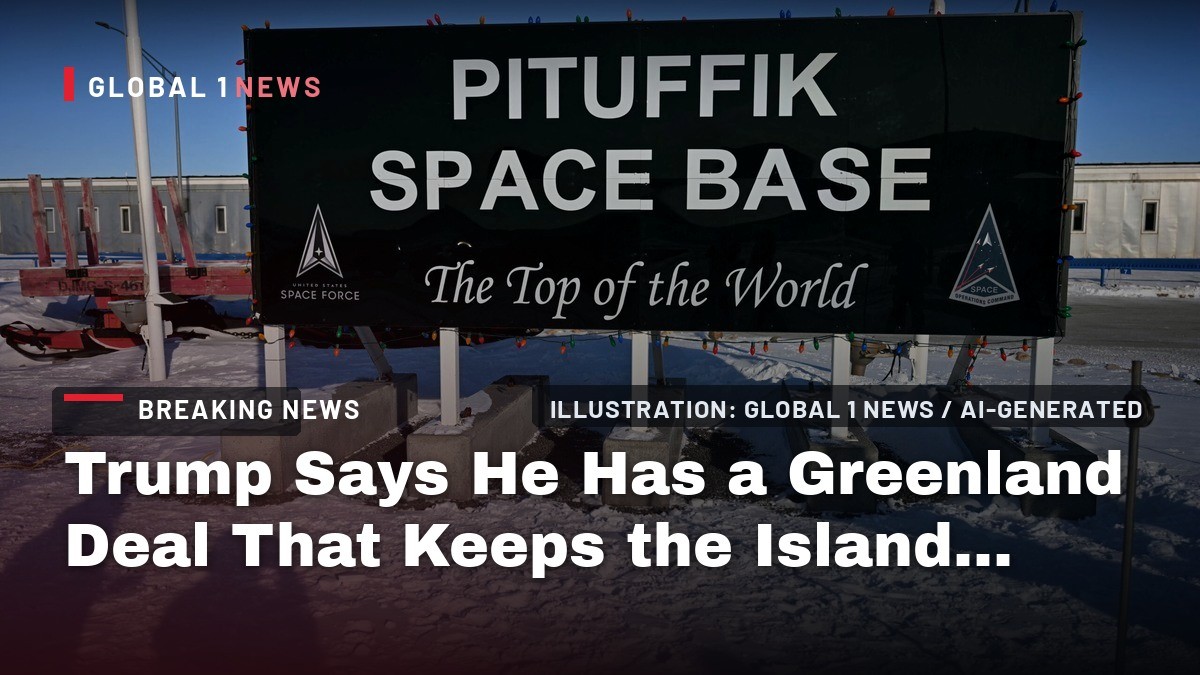
President Donald Trump says he has a deal with Denmark to expand the American military footprint in Greenland — and that it keeps the Arctic island in Danish hands. The announcement lands after months in which Washington threatened to take the territory by force from a NATO ally. Here is what matters: no text of the agreement has been released, so almost everything the public knows about it comes from a president's social media post and one unnamed State Department official.
Trump Says He Has a Greenland Deal That Keeps the Island Danish
Washington, D.C. - President Donald Trump announced Friday that the United States has entered into an agreement with Denmark and Greenland to bolster the U.S. military presence on the island, after months of threatening to seize the territory by force from the NATO ally. The deal, announced in a Truth Social post, also keeps Greenland in Denmark's hands. The office of Danish Prime Minister Mette Frederiksen said the agreement will be signed by all three governments next week during the United Nations General Assembly, but parliamentary action is still needed by the Danish and Greenland governments before it can be enforced.
The Deal Trump Announced From the White House
Trump framed the agreement in sweeping terms. In his post he said it "gives the United States permanent control over security, and all other needs, in Greenland, completely addressing ALL of our many U.S. concerns." He added that his administration would "immediately" begin the process of developing a larger military presence on the mineral-rich Danish territory, and that it would work with Greenlanders on the construction. "For over 100 years, Presidents have known the strategic importance of Greenland, but NONE of them were able to do anything about it," he wrote. "I am proud to be the President that permanently and conclusively addressed this very important situation. This is an 'Infinite Life' Agreement, there is no end!"
He also said there would be "NO COST to the United States," a claim no figure has been released to support. Secretary of State Marco Rubio called it a "historic deal" and a "huge win," telling Fox News it "permanently guarantees US security interests in the Arctic at zero cost to the US taxpayer." For Trump, the timing is not incidental. The Associated Press notes the pact lets him tout a foreign policy achievement ahead of the midterm elections, with the six-month-old Iran conflict having reshaped the race and undercut his pledge to keep the country out of foreign wars.
What the Agreement Actually Says
Here is the problem, folks: no text of the agreement has been released. What the public has instead is an outline from a State Department official who was not authorized to comment publicly and spoke on the condition of anonymity. According to that official, the deal bans any non-NATO base in Greenland, limits adversaries from making investments in Greenland, and guarantees that China and Russia cannot have a base there. The official specifically referenced both countries, saying the agreement blocks them from deploying troops or investing in "sensitive sectors" — sectors the official said are today open to adversarial money without any investment screening at all.
The official said the U.S. gets "permanent access, basing and overflights rights," unilateral power to build additional military structures with no approval needed from Greenland or Denmark, and that the deal would not expire even if Greenland became an independent country. Without the official text, it is unclear how exactly the deal differs from a 1951 agreement under which the U.S. can already send as many troops as it wants to Greenland.
The Words Denmark Chose
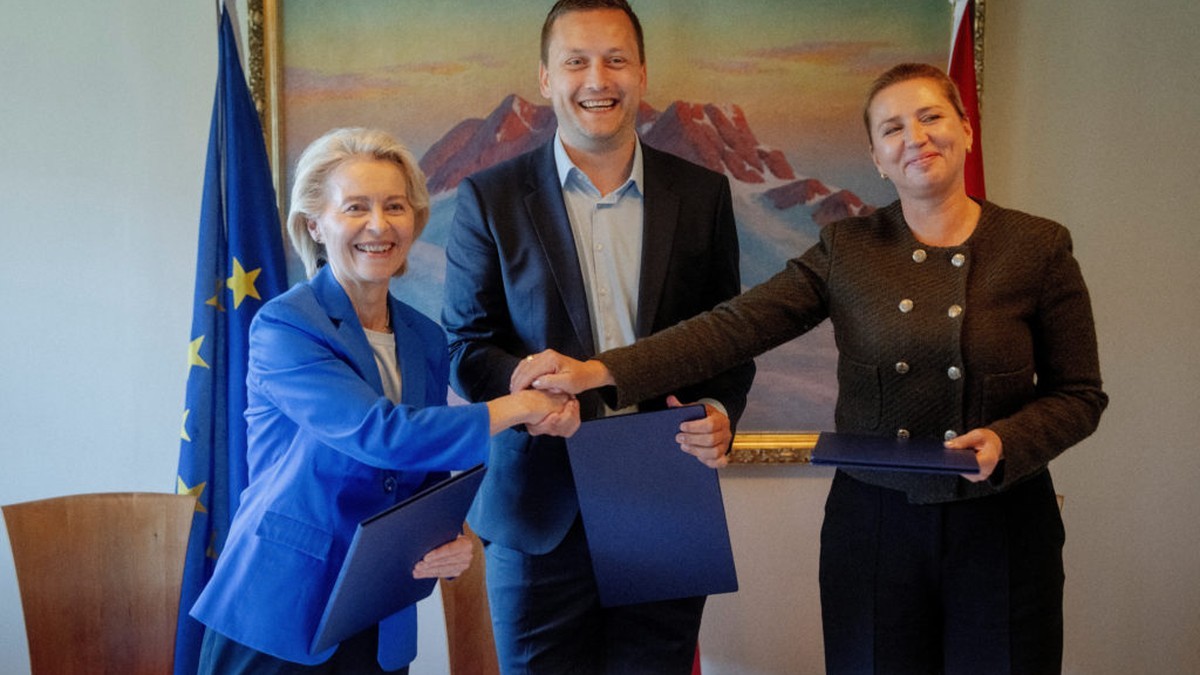
Frederiksen's statement did not address the specifics Trump mentioned. She said the agreement "strengthens our common security in the Arctic and the North Atlantic area" while also "recognizes the sovereignty and territorial integrity of the Kingdom and the right of the Greenlandic people to self-determination." She added that the deal still needed approval from legislators and would "have to go through the necessary parliamentary procedures to enter into force." Separately, she said she was "glad that we are about to make a great agreement for Greenland, the Kingdom of Denmark, and the United States," calling it "great for NATO and Europe as well."
Greenland Prime Minister Jens-Frederik Nielsen said it was "gratifying that we are about to enter into an agreement that ensures and strengthens the security" of Greenland, Denmark and the U.S. "The agreement recognises Greenland's interests and our place in international co-operation. It is for the benefit of us all," he said. Denmark maintains its sovereignty is intact, and AFP reports the terms themselves remain uncertain.
From 'We Will Take It' to 'Infinite Life'
Look at the road that got here. With his return to the White House last year, Trump called on Denmark to sell the island and pointedly would not rule out taking it by military force, even though Denmark is a NATO ally. Denmark and Greenland repeatedly said the island is not for sale, and condemned reports of U.S. intelligence gathering there. Frederiksen put it bluntly in 2025: "our message is clear: Greenland is not for sale," and "you can't buy another people." The push was also fiercely opposed by Russia and much of Europe.
At the World Economic Forum in Davos in January, Trump stepped back from the brink, proclaiming the "framework of a future deal." In the months after, he returned to the topic in fits of pique, at one point arguing that Greenland "should be controlled by the United States, not Denmark." Now he calls the result a "dream come true."
The Blood Supplies and the Runway Plans
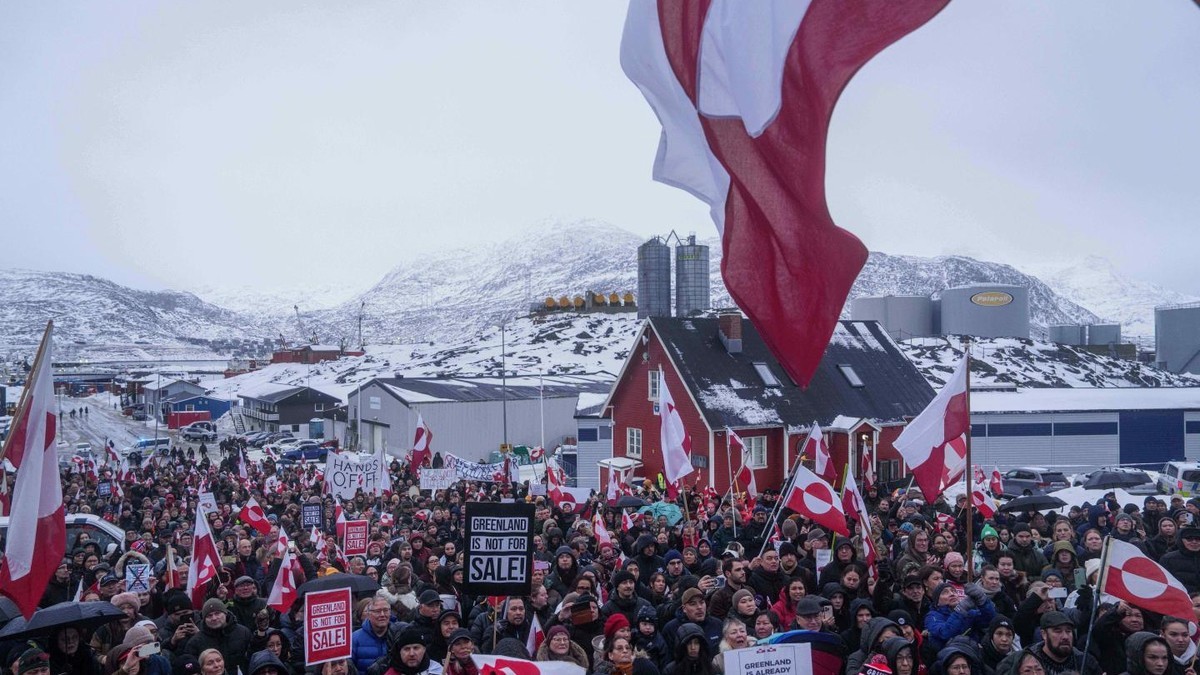
The pressure was not abstract. When Trump's rhetoric became more threatening earlier this year, the Danish armed forces flew emergency blood supplies and explosives to the island to prepare for a potential U.S. attack, according to The Atlantic. Frederiksen warned that a U.S. invasion would mean that "everything ends" for NATO — a scenario in which one founding member of the alliance attacks another. In Nuuk, protesters carried placards reading "no means no," "stop threatening us" and "Yankee go home!" Polling in January put support for "buying" Greenland at 28 percent, with 45 percent opposed.
The night the deal landed, a reporter from Denmark's public broadcaster watched politicians moving in and out of the government building in Nuuk, Greenland's capital. One resident's reaction to the whole saga, as reported by The Atlantic: "Goodbye, U.S.A."
Why Washington Wants This Island
Greenland sits off the northeastern coast of Canada, with more than two-thirds of its territory lying inside the Arctic Circle and an ice cap over most of it. That has made it crucial to the defense of North America since World War II, when the U.S. occupied the island to keep it out of Nazi hands and to protect North Atlantic shipping lanes. Trump says Greenland is essential to his plan to build a Golden Dome defense system against missile attacks from Russia and China, and that European allies could cooperate in that effort. The island also holds vast, largely untapped reserves of rare earth minerals, many of them critical to mobile phones and electric vehicles.
The U.S. already operates the remote Pituffik Space Base in the northwest, built after the 1951 Defense of Greenland Treaty, supporting missile warning, missile defense and space surveillance for the U.S. and NATO. The BBC reports more than 100 U.S. military personnel permanently stationed there. But Pituffik was built to watch the skies over the pole — it is not configured to track ships. That is the gap the Pentagon has been talking about all year. Trump has repeatedly claimed Chinese and Russian military forces are lurking off Greenland's coastline; the AP has documented those claims as false.
Three Bases and the Question of Sovereignty
Several media outlets have reported that the United States wants to open three new military bases in southern Greenland in addition to Pituffik. That reporting dates to May 2026, when U.S. officials were seeking sites focused on maritime surveillance of Russian and Chinese activity in the GIUK Gap — the chokepoint of water between Greenland, Iceland and the United Kingdom. One site would likely be Narsarsuaq, a former U.S. airfield from the Cold War. U.S. officials floated designating the three bases as formally sovereign American territory, according to one source with knowledge of the negotiations. None of that has been confirmed as part of this agreement, and the basing annex has not been published.
The sovereignty designation was always going to be the hard part. A formal carve-out would mark a departure from the 1951 defense agreement under which Washington operates in Greenland with Danish consent, and it would draw close scrutiny in both the Danish parliament and in Nuuk — which is exactly where this deal now goes.
Europe's Answer Was Money, Not Muscle
Europe's response to Trump's threats was cash and a small show of force. In September, European Commission President Ursula von der Leyen visited Nuuk and offered 200 million euros, about $232 million, over two years for climate change, internet connections, hydropower, fisheries and education, with a plan to double EU budget support to around half a billion euros from 2028. "Greenland's future is for the people of Greenland and Denmark to decide. No one else," she said, adding that territorial integrity, sovereignty and the inviolability of borders are fundamental principles of international law. Nielsen called the 27-nation bloc "a loyal and trusted friend."
Denmark and seven European allies sent a small group of military personnel to the island in January, publicly for Arctic exercises and privately as a demonstration of support for Greenland's sovereignty. Trump threatened tariffs on all of them — Denmark, Finland, France, Germany, the Netherlands, Norway, Sweden and the United Kingdom — before backing down after NATO agreed to boost Arctic security. Eleven NATO countries began Arctic Shield drills in Greenland on 7 September involving around 400 personnel. No U.S. troops took part.
What Has to Happen Next
The deal is not done. The three governments are set to sign next week on the sidelines of the UN General Assembly in New York, according to Frederiksen's office. After that, parliamentary action is still required by the Danish and Greenland governments before the agreement can be enforced — a vote that will test whether Greenland's 56,000 or so residents, most of them indigenous Inuit, accept a permanent American military footprint on their land. Much remains unclear, including whether any new U.S. bases would actually be constructed, and Reuters notes Trump's posts about negotiations often lack context or specifics.
Its own ambiguity is part of the story. Aaja Chemnitz, one of Greenland's two members of the Danish parliament, has previously said Trump's statements about Greenland were "completely crazy" and denied the existence of any "deal," insisting NATO has no mandate to negotiate on Greenland's behalf. That argument has not gone away just because three governments now say they have one.
The Trust That Was Spent
Washington may have achieved its security objectives. What it spent to get there is harder to measure. Imran Bayoumi, an associate director at the Atlantic Council's Scowcroft Center for Strategy and Security, said Americans "really underestimate how damaging it was for the image of the United States in Europe." He added: "I think Greenlanders, Danes, Europeans saw this as a real attack on their sovereignty, and it's going to take a lot of work to repair."
Jesper Moller Sorensen, Denmark's ambassador to Washington, had projected calm at a Wednesday event billed as "A Taste of the Arctic," telling The Atlantic that months-long discussions were heading in a good direction — but warning the outcome would depend on whether one person could be swayed. That person was swayed. The trust is another question entirely.
By Jessica Ali, Staff Writer
This article was produced with AI-assisted research and editorial support. Sources: The Associated Press, Reuters, BBC News, CNN, AFP, The Atlantic, Fox News, PBS NewsHour, Arctic Today.
What's Your Reaction?
 Like
0
Like
0
 Dislike
0
Dislike
0
 Love
0
Love
0
 Funny
0
Funny
0
 Wow
0
Wow
0
 Sad
0
Sad
0
 Angry
0
Angry
0

Editor-in-Chief at Global1.News. Atlanta-based journalist who cuts through the BS and tells it like it is. Lead anchor, host, and the voice you hear when the spin stops and the truth starts.















Comments (0)