
Mexico's Homicide Rate Falls 51 Percent Under Sheinbaum, Reaching Lowest Level in 12 Years
A Historic Drop Announced at the Mañanera President Claudia Sheinbaum delivered a landmark security announcement at her Tuesday morning mañanera from Palacio Nacional on August 11, 2026, revealing that intentional homicides in Mexico have fallen by 51 percent since she took office.

Mexico's Homicide Rate Falls 51 Percent Under Sheinbaum, Reaching Lowest Level in 12 Years
A Historic Drop Announced at the Mañanera
President Claudia Sheinbaum delivered a landmark security announcement at her Tuesday morning mañanera from Palacio Nacional on August 11, 2026, revealing that intentional homicides in Mexico have fallen by 51 percent since she took office. The figures, presented by Marcela Figueroa Franco, head of the Executive Secretariat of the National Public Security System (SESNSP), show the average daily homicide count dropped from 86.9 in September 2024 - the final month of Andrés Manuel López Obrador's presidency - to 42.5 in July 2026. That represents a reduction of 51 percent over 22 months, a period that has seen the consolidation of the federal government's security strategy under the Sheinbaum administration.
The announcement was met with a mix of cautious optimism and scrutiny, as security analysts and citizens alike examined what these numbers mean for a country that has long grappled with violence. Figueroa Franco emphasized that the security actions implemented across all states of the republic have allowed the reduction in the daily homicide average, demonstrating coordination between federal and state institutions. She stressed that this is not the work of a single agency but a collaborative effort involving multiple levels of government, from municipal police forces to the highest echelons of federal power.
For ordinary Mexicans, the numbers represent more than statistics. In colonias across the country, families have lived with the fear of violence for years, and any reduction in homicides translates into safer streets, more secure commutes, and a greater sense of normalcy. The mañanera announcement, delivered with the characteristic formality of Palacio Nacional, sought to frame these figures as a tangible victory for the administration's National Security Strategy, even as challenges remain in specific regions.
Month-by-Month Decline and a 12-Year Low
The data presented by Figueroa Franco paints a picture of steady, sustained improvement rather than a sudden shift. July 2026 recorded the lowest monthly daily average of intentional homicides in 12 years, the lowest since 2015. This milestone is significant not only for its symbolic weight but for what it suggests about the trajectory of security policy in Mexico. The decline from 86.9 daily homicides in September 2024 to 42.5 in July 2026 represents a gradual but consistent downward trend, with each month bringing the country closer to levels not seen in over a decade.
Breaking down the figures month by month reveals the depth of the change. In the early months of the Sheinbaum administration, the daily average remained stubbornly high, hovering in the 70s and 80s as the new government worked to implement its security vision. By mid-2025, the numbers began to dip below 60, and by early 2026, they had settled into the 50s. The most recent months have seen the average fall into the 40s, culminating in the historic July figure. This gradual decline suggests that the security strategy is taking root, though officials caution that the work is far from complete.
The 12-year low is particularly meaningful for communities that have borne the brunt of violence. For families in cities like Tijuana, Ciudad Juárez, and Acapulco, the reduction in homicides may be felt in quieter neighborhoods, fewer funerals, and a diminished presence of organized crime on street corners. However, the national average can obscure local realities, and the administration has been careful to acknowledge that some regions remain deeply affected. The SESNSP data, while encouraging, is a reminder that the fight for public security is an ongoing process that requires sustained effort and vigilance.
Seven States Still Concentrate 49 Percent of Homicides
Despite the national decline, the distribution of violence remains highly uneven. Between January and July 2026, seven states concentrated 49 percent of the homicides registered nationally. Guanajuato leads the list with 8.6 percent of the national total, followed closely by Baja California at 8.2 percent and Chihuahua at 8.1 percent. Sinaloa, Estado de México, Guerrero, and Morelos round out the group, each contributing significant numbers to the national tally. These states, many of which have long histories of cartel activity and territorial disputes, continue to present the greatest challenges to the federal government's security strategy.
Guanajuato's position at the top of the list is particularly notable. The state has been a hotspot for violence for years, driven by conflicts between rival criminal organizations vying for control of fuel theft routes and other illicit economies. Baja California and Chihuahua, both border states, face pressures from drug trafficking and the associated violence that comes with it. Sinaloa, home to one of the most powerful cartels in the world, remains a focal point for federal intervention. The concentration of homicides in these states underscores the need for targeted, localized strategies rather than a one-size-fits-all approach.
For residents of these states, the national numbers may feel abstract. A family in Celaya, Guanajuato, or a small business owner in Tijuana may not perceive the same improvement as someone in a lower-violence region. The federal government has acknowledged this disparity, with officials emphasizing that the security strategy includes specific measures for high-violence municipalities. The coordination between federal forces - including SEDENA, SEMAR, and the Guardia Nacional - and state governments is designed to address these hotspots, but the results are still uneven. The coming months will be critical in determining whether the national trend can be replicated in the states that need it most.
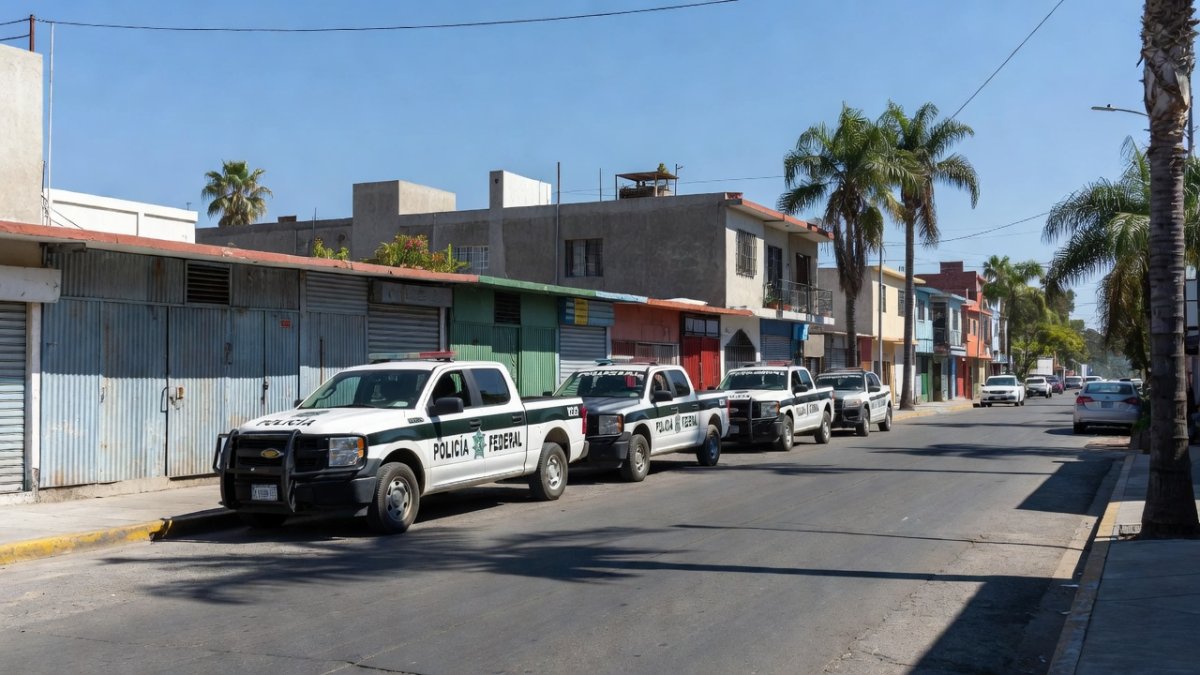
The National Security Strategy and Its Institutional Backbone
The reduction in homicides is attributed by the Sheinbaum administration to the National Security Strategy (Estrategia Nacional de Seguridad), a comprehensive framework that coordinates the efforts of multiple federal agencies. At the helm of this effort is the Secretaría de Seguridad y Protección Ciudadana (SSPC), led by Security Secretary Omar García Harfuch. The SSPC works in tandem with SEDENA, SEMAR, and the Guardia Nacional, deploying federal forces to support state and municipal authorities in high-priority areas. This interagency coordination is the cornerstone of the strategy, reflecting a shift from reactive policing to proactive, intelligence-driven operations.
Figueroa Franco's presentation highlighted the importance of federal-state coordination, noting that the security actions implemented across all states have allowed the reduction in the daily homicide average. This is not merely a federal effort; it requires the active participation of state governors, municipal presidents, and local police forces. The administration has invested in professionalizing local law enforcement, improving intelligence-sharing mechanisms, and ensuring that federal resources are deployed where they are most needed. The result, according to officials, is a more cohesive and effective security apparatus.
However, the strategy is not without its critics. Some analysts argue that the focus on homicide reduction may come at the expense of addressing other forms of crime, such as extortion and kidnapping, which have not seen the same level of improvement. Others point to the continued concentration of violence in specific states as evidence that the strategy has not fully addressed the root causes of criminal activity. The administration, for its part, has acknowledged these challenges and is reportedly tightening its offensive against extortion and organized crime, signaling that the security push is far from over.
What Lower Homicide Numbers Mean for Mexican Communities
For families in colonias across Mexico, the reduction in homicides is more than a statistic - it is a change in daily life. In neighborhoods that were once plagued by gunfire and fear, the quieter streets are a welcome relief. Parents feel safer sending their children to school, small business owners can keep their doors open later, and community gatherings that were once avoided are becoming more common. The psychological impact of reduced violence cannot be overstated; for many Mexicans, the constant threat of violence has been a defining feature of their lives for years.
Small business owners, in particular, stand to benefit from the decline in homicides. In tianguis and local markets, vendors who once feared for their safety can now focus on their livelihoods. The reduction in violence also has economic implications, as safer cities attract investment and tourism. Pueblo mágicos and other cultural destinations, which rely on visitors for their economic survival, may see a boost as perceptions of safety improve. For rural communities and indigenous groups, the decline in homicides can mean greater security for land rights activists and community leaders who have often been targets of violence.
Yet, the work is not complete. The administration's acknowledgment that seven states still concentrate nearly half of all homicides is a reminder that many communities continue to suffer. For those in Guanajuato, Baja California, and other high-violence states, the national trend may not yet be felt. The challenge for the Sheinbaum administration is to ensure that the benefits of the security strategy reach every corner of the country, not just those that have already seen improvement. The coming months will be a test of whether the federal government can translate national progress into local reality.
Reactions, the Extortion Offensive, and What to Watch For
The mañanera announcement has generated a range of reactions, from cautious praise to demands for more action. Opposition figures have noted that while the decline is welcome, the numbers remain far above the levels seen in the early 2000s, and much work remains to be done. Civil society organizations have called for greater transparency in how the data is collected and reported, while also urging the government to address the underlying social and economic factors that drive violence. The administration, for its part, has framed the figures as validation of its security strategy, while acknowledging that challenges persist.
Beyond the homicide numbers, the federal government is also tightening its offensive against extortion and organized crime. Reports around the same security briefing indicate that new measures are being implemented to combat these crimes, which have a profound impact on communities and businesses. Extortion, in particular, has become a growing concern in many parts of the country, affecting everyone from street vendors to large corporations. The administration's focus on this issue suggests a recognition that public security is about more than just homicide rates; it is about creating an environment where all Mexicans can live and work without fear.
In a separate security development last week, the Mexican Navy intercepted a vessel in the Pacific Ocean carrying nearly two tonnes of cocaine and arrested six men. U.S. Ambassador to Mexico Ronald Johnson commended the Navy and the Mexican government for the bust, highlighting the importance of international cooperation in the fight against drug trafficking. This operation, along with the extortion offensive, signals that the Sheinbaum administration is pursuing a comprehensive approach to security that goes beyond homicide reduction. As the country moves forward, the question will be whether these efforts can sustain the momentum and bring lasting peace to all of Mexico's communities.
Tags: Mexico homicides, Sheinbaum security, SESNSP, Marcela Figueroa, National Security Strategy, Guanajuato violence, Baja California, Chihuahua, extortion offensive, Mexican Navy cocaine seizure, Omar García Harfuch, public security Mexico
By Rosa Martinez, Staff Writer
This article was produced with AI-assisted research and editorial support. Reporting is based on sources cited in the article.
What's Your Reaction?
 Like
0
Like
0
 Dislike
0
Dislike
0
 Love
0
Love
0
 Funny
0
Funny
0
 Wow
0
Wow
0
 Sad
0
Sad
0
 Angry
0
Angry
0

Latin America/Andes Correspondent at Global1.News. Based in Bogota, covering politics, environment, energy, and social movements across the Andean region. Passionate about environmental journalism and communities protecting their land.















Comments (0)