
The Trump-Xi Summit: Stakes for Australia
Chinese media have confirmed that President Xi Jinping will travel to Washington for a state visit from 23 to 25 September, meeting U.S. President Donald Trump in a summit that is already being framed as a trade and artificial‑intelligence (AI) showdown.
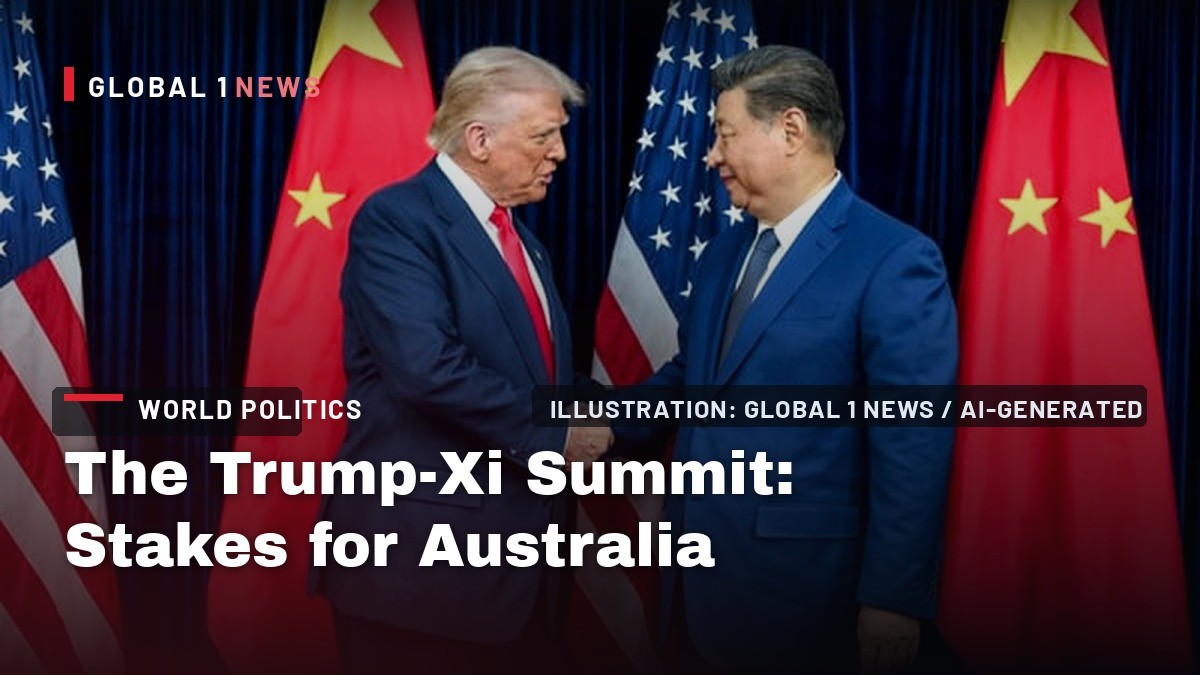
Chinese media have confirmed that President Xi Jinping will travel to Washington for a state visit from 23 to 25 September, meeting U.S. President Donald Trump in a summit that is already being framed as a trade and artificial‑intelligence (AI) showdown. While the two leaders each pursue distinct domestic agendas—Trump seeking commercial wins ahead of the midterm elections and Xi pressing for fewer constraints on China’s technological development—their negotiations will inevitably ripple across the Indo‑Pacific, especially for Australia. Canberra must read between the lines of any joint communiqué, compare the scope and duration of temporary arrangements that are set to expire in early November, and secure durable guarantees for its mineral projects, AI risk management, and maritime security.
Context of the Summit: Trade, AI and the November Deadline
The Trump‑Xi summit follows a brief encounter between the two countries’ economic chiefs in New York on 20 September, and it is expected that trade and AI will dominate the agenda. Both sides have already signaled that the talks will address “commercial wins” for the United States and “fewer constraints” for China’s technological advance. Yet the most immediate business impact for Australia centers on three temporary arrangements that are slated to lapse around 10 November: Washington’s suspension of restrictions on majority‑owned affiliates of listed Chinese entities, China’s suspension of expanded rare‑earth export controls, and a set of 178 U.S. tariff exclusions for Chinese goods. How long these pauses are extended, and under what conditions, will shape the competitive landscape for Australian exporters and investors.
Allied Concerns and the “Ironclad” Defence Commitment
Allied unease was evident on 21 September when U.S. Secretary of State Marco Rubio met his Japanese and South Korean counterparts in New York. Their joint statement reiterated the United States’ “ironclad” defence commitments, opposed economic coercion, and stressed peace and stability across the Taiwan Strait. The same day, Japanese Prime Minister Takaichi Sanae secured a meeting with Trump, and South Korean President Lee Jae‑myung sought contact at the United Nations General Assembly. These parallel diplomatic pushes underscore that Tokyo and Seoul are intent on having their security and economic concerns heard before the summit. Australia faces a similar imperative: to ensure that its own priorities are articulated before the leaders reach any agreement that could reshape regional trade rules or security postures.
Australia’s Dual Strategy: Reducing Dependence While Maintaining Access
The Albanese government has spent years rebuilding normal trade relations with China while simultaneously supporting Washington’s drive to reduce dependence on Chinese supply chains. If Trump and Xi reach a compromise that eases restrictions for the United States, Australia could be left shouldering the burden of reduced Chinese reliance without receiving comparable concessions. The key, therefore, is to secure durable support for Australian critical‑mineral projects and to lock in financing mechanisms that survive any extension of China’s rare‑earth export suspension. The Australia‑U.S. framework already envisages price support and financing for alternatives to Chinese supply, but the framework’s effectiveness will depend on whether Washington extends its own rare‑earth arrangements and on the clarity of any new terms.
Critical Minerals: Financing, Customers and Long‑Term Guarantees
Australia’s critical‑mineral sector is a test case for the summit’s broader impact. The existing bilateral framework promises price support and financing to develop non‑Chinese sources of rare earths and other strategic minerals. Should Washington and Beijing prolong their temporary export‑control suspensions, Canberra must press for assurances that support for Australian alternatives will endure beyond the short‑term pause. Australian projects require dependable financing and long‑term customers; without clear commitments, they risk being stranded if Chinese supplies become easier to obtain again. The summit therefore presents an opportunity for Australia to negotiate explicit, time‑bound guarantees that tie U.S. financial assistance to the continued development of domestic supply chains, irrespective of any subsequent Chinese policy shift.
AI Risk Management: Beyond Chips to Shared Digital Services
AI risks extend well beyond the hardware of chips and data centres. Australian businesses rely on software and digital services that cross borders, meaning that a serious AI incident in one jurisdiction can quickly cascade into another. The summit’s focus on AI therefore creates a strategic opening for Canberra to seek a multilateral warning mechanism. Such a system would require that affected countries and operators receive timely alerts about AI‑related failures, irrespective of whether a bilateral technology deal is in place. Government hotlines alone are insufficient; the first warning is likely to come from developers, cloud providers, or independent researchers. Australia should therefore advocate for a protocol that routes these warnings directly to Australian authorities and affected enterprises, ensuring that the response can be swift and proportionate.
Maritime Security: Protecting Fuel Supply Routes
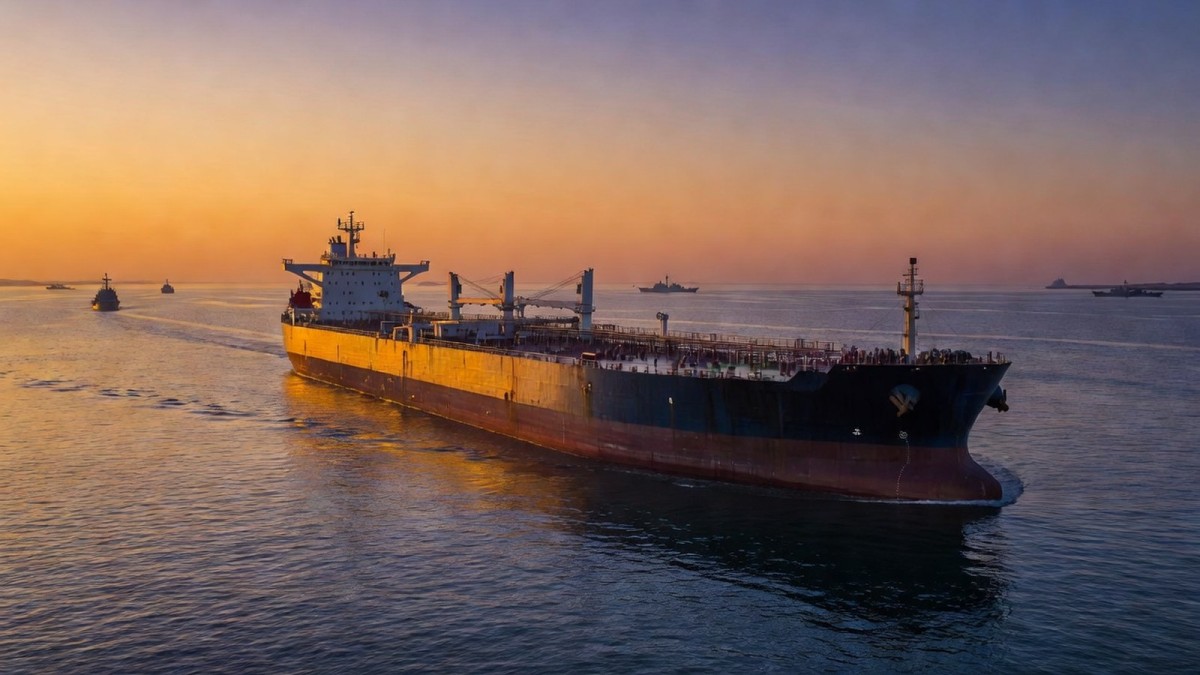
Defense‑commissioned research in 2022 warned that a major regional conflict could jeopardise routes supplying 90 percent of Australia’s refined‑fuel imports. The recent disruption in the Strait of Hormuz already imposed costs, and a similar blockage in the South China Sea would be equally damaging. Consequently, Canberra must seek explicit consultation before Washington negotiates any changes that affect its regional military presence or AUKUS commitments. Functional military hotlines and clear procedures for reporting incidents at sea and in the air are essential safeguards. Moreover, reaffirming that decisions to use nuclear weapons must remain under human control—an issue likely to surface at the summit—would add a practical layer of security for Australia’s strategic interests.
Assessing the Summit’s Outcome: What Success Looks Like for Australia
Australia’s test will be whether the summit leaves the country better positioned to invest in critical‑mineral projects, keep essential digital services running, and protect its trade routes. This requires commitments that Washington will honour and crisis‑management mechanisms that both powers will actually use. If the leaders merely buy time while Australia is left to manage uncertainty, the summit’s success will be limited to the United States and China, not to the broader Indo‑Pacific community. By scrutinising the wording of any joint statement, comparing announced scopes, durations and conditions, and pressing for concrete, enforceable guarantees, Canberra can turn a high‑stakes diplomatic encounter into a catalyst for its own economic resilience and security stability.
This article was produced with AI-assisted research and editorial support. Reporting is based on the source material cited below. Sources: The Diplomat; thediplomat.com; Global1.News (25 September 2026).
By Kenji Tanaka, Staff Writer
What's Your Reaction?
 Like
0
Like
0
 Dislike
0
Dislike
0
 Love
0
Love
0
 Funny
0
Funny
0
 Wow
0
Wow
0
 Sad
0
Sad
0
 Angry
0
Angry
0

Japan Correspondent at Global1.News. Tokyo-based voice covering Japanese politics, technology, economy, and culture. Tracks the intersection of tradition and innovation in one of the world's most dynamic societies.













Comments (0)