
The SEC Just Made Data Center Debt Easier to Sell — Right as the Banks Started Reading the Protest Signs
The SEC exempted direct-ownership data center securitizations from ABS rules just as top banks began weighing community opposition in credit decisions. A $130 billion pipeline of contested projects shows why readiness now outranks paperwork.
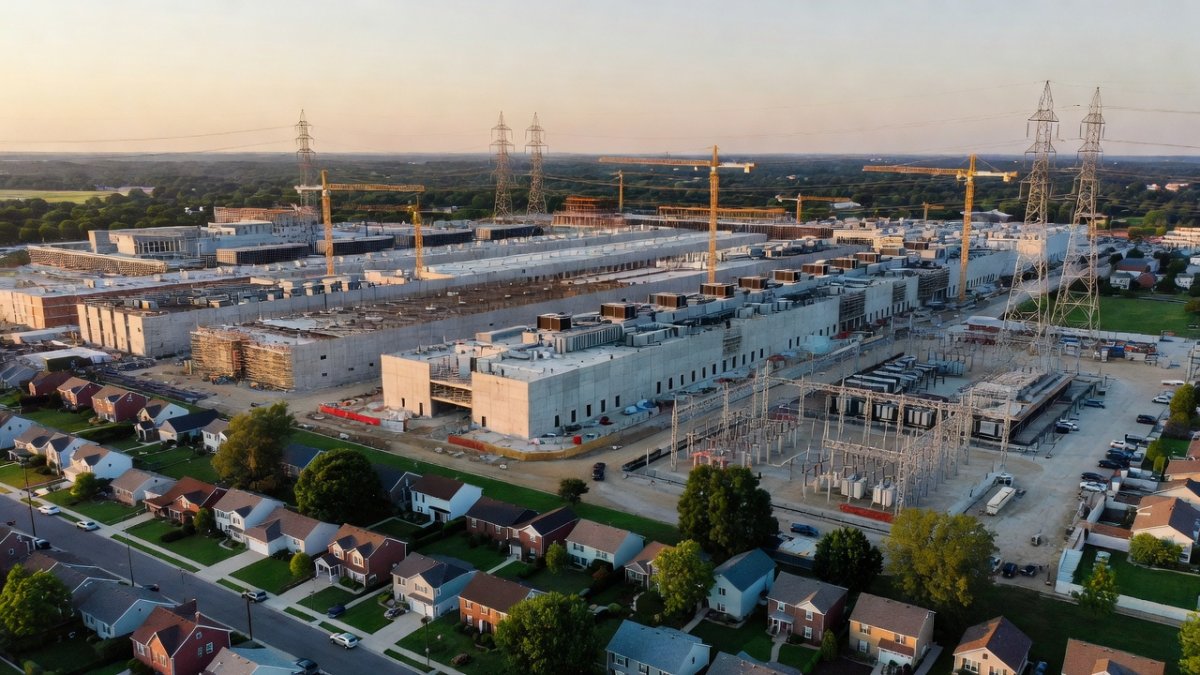
The SEC Just Made Data Center Debt Easier to Sell — Right as the Banks Started Reading the Protest Signs
Let me tell you something that's been sitting with me since the Reuters wire crossed my desk this morning. Two things happened this week in the AI buildout's money machine, and they're pulling in opposite directions. On one side, the SEC quietly made a whole category of data center debt cheaper and faster to issue — a regulatory gift that could open the floodgates for billions in new bonds. On the other side, the biggest banks on Wall Street just added a new line to their credit checklists: do the neighbors like you?
Same week. Same industry. Two forces, aimed straight at each other. The SEC is greasing the rails for data center securitization while JPMorgan, Morgan Stanley, and Bank of America are putting up barriers based on community opposition. I've been running hosting infrastructure for over a decade, and I've watched this buildout go through its GPU shortage, its power shortage, its protest phase. This is the phase that actually matters: the moment the debt itself becomes the story.
What the SEC Actually Did — and Why It Matters
On July 29, the SEC's Division of Corporation Finance issued interpretive guidance responding to a letter from the law firm Latham & Watkins. The ruling: fixed-income securities issued in certain data center securitizations are not "asset-backed securities" under Section 3(a)(79) of the Securities Exchange Act of 1934. The request went in on July 23. The SEC turned it around in less than a week.
Let me translate that into business terms, because this is one of those rulings that sounds like paperwork but moves real money. The exemption applies to direct-ownership structures — where the issuing entity actually owns the data center and the bonds get repaid from the building's net operating income. Think of it like a landlord borrowing against rental income instead of a bank bundling up loans. What it means in practice: operators no longer have to navigate the full thicket of ABS registration requirements. Lower legal costs, faster execution, a broader pool of buyers.
This is not a small corner of the market. Data center ABS and commercial mortgage-backed securities issuance blew past $25 billion in 2025 — more than the prior three years combined. Bloomberg-compiled data shows data center ABS issuance climbing to $15.5 billion last year from $2.4 billion in 2020. Latham & Watkins alone says it has advised on more than 100 data center securitizations with over $60 billion of aggregate issuance through upwards of 25 master-trust programs. Operators like Sabey, Compass, CyrusOne, and STACK have been tapping this market since 2018. The regulatory ambiguity was the friction. Now it's gone — for the structures that qualify.
And I'll say this plainly: the ruling does not extend any federal backing to these bonds. It doesn't make a single megawatt of power appear. It resolves one legal question and leaves the messy physical ones — permitting, construction, tenant credit — exactly where they were. That distinction is going to matter a lot more than most people think.
The New Credit Checklist — Readiness, Covenants, and the Neighbors
The same week, Reuters reported something that should make every operator sit up straight. Senior bankers told the wire service they are now scrutinizing community concerns when they assess project loans, and leaning toward states that are more welcoming to data centers. The sector is still red-hot — nobody is walking away from the fees — but the underwriting just got a new dimension.
Listen to the language they're using. Karen Fang, global head of infrastructure and sustainable finance at Bank of America: "I will primarily look for two things. One is the readiness of the project... the second aspect I look for is the credit quality of the project." And her definition of readiness: "all the permitting and approvals that are required, and the community support from the people who are going to live around it."
That is a bank explicitly telling you that community support is a credit factor. Not a PR factor. A credit factor. Kevin Curtin, head of AI infrastructure investment banking at JPMorgan, put it even more bluntly: "Putting the credit agreement in place is only the beginning. Throughout construction, builders must continually demonstrate that the project remains in compliance with the financial covenants and monitoring requirements agreed with lenders before each drawdown." Translation: your money gets released in tranches, and if the project starts slipping on permits, power, or political support, the cash flow stops. Morgan Stanley CFO Sharon Yeshaya said the firm is "very cognizant" of the risks and is there to "find offsets."
Banks conduct technical, environmental, zoning, appraisal, and insurance reviews before funding. They typically start talking to developers at least a year before construction begins. And now, one bank source told Reuters, community concerns are part of the credit risk assessment. Full stop.
The $130 Billion Wall
Here's the number that makes all of this make sense. In the first quarter of 2026 alone, at least 75 U.S. data center projects worth about $130 billion faced local opposition, according to research firm Data Center Watch. In the first six weeks of the year, more than 300 state bills were introduced touching the industry, with 14 states proposing moratoriums. This is not a fringe problem. It is the buildout's biggest non-financial risk, and it just got priced into the debt.
Look at the real-world cases. JPMorgan and Morgan Stanley managed the $12.3 billion bond sale for BlackRock's data center project with Meta in El Paso, Texas — and some residents oppose it. QTS, owned by Blackstone, never even approached banks for financing on its Prince William Digital Gateway project in Virginia because it knew the opposition would kill the deal — and the project was terminated anyway. CyrusOne got a $9.7 billion warehouse credit facility led by Morgan Stanley and KKR Capital Markets, but the credit agreement allows new construction only if all permits and leases are in place — and residents are fighting its $500 million center in Sangamon County, Illinois.
Then you add the delivery gap. Goldman Sachs projects U.S. data center power demand will more than double from 31 gigawatts in 2025 to 66 gigawatts by 2027 — from 4.1 percent to 8.5 percent of peak summer electricity. And the same research says only 50 to 60 percent of capacity planned for the next one to two years will actually become operational on schedule. The gap between announced and live is where the risk lives. That gap is now a line item in the credit models.
The Secondary Bottleneck Nobody's Talking About — Securitization Meets the Physical World
Here's the piece of this that keeps me up at night. The SEC just made it cheaper to package the buildout's debt into bonds — the same financial engineering that turned mortgages into securities a generation ago. Master trusts, ABS structures, pension money buying yield on buildings they'll never visit. The bond market wants clean legal categories. It wants assets that produce predictable cash for forty years. And the physical world is sitting there with permitting boards, interconnection queues, and town hall meetings that move at the speed of government, not the speed of Goldman.
The SEC resolved the legal question in under a week. The grid does not move that fast. A zoning board does not move that fast. A county supervisor up for re-election moves at exactly the speed of their voters' anger. So you have a situation where the paper side of the AI buildout just got a turbocharger, and the concrete side just got a new set of brakes.
That tension — financial engineering accelerating while physical reality slows — is the secondary bottleneck. The seam between the bond and the building has no owner. The SEC wrote a clean legal opinion. The lenders wrote a demanding credit checklist. And somewhere in between, a developer in a contested county is trying to get a permit, a grid interconnection, and a power purchase agreement while the clock on their drawdowns keeps ticking.
What This Means for Independent Hosting Providers
First — the capital wave is real, but it's not coming to every town. The SEC exemption will make it cheaper for operators in "ready" jurisdictions to raise bond money. If you're in a welcoming county with power and permits in hand, expect better-funded competitors to show up with cheaper capital than they had last year. If you're in a contested one, your local relationships just became a genuine credit advantage that the big guys can't buy off the shelf.
Second — read the lenders' checklist. It's your site-selection playbook. The banks are now doing readiness due diligence that you should have been doing all along: permits, approvals, power interconnection, insurance, and community temperature. Use their framework. If a bank won't lend to a project because of community opposition, that's your signal — don't build there either, or get there early enough to build the relationships the hyperscalers are too late to make.
Third — watch how this cycle corrects. It won't be a crash. It'll be stalled drawdowns. The covenant structure — cash released only as builders hit milestones — is the template for how the AI buildout slows down. Not with a headline bankruptcy, but with disbursements that stop coming because a permit slipped or a protest grew. Cash-flow interruption is how overbuilding unwinds quietly. Plan your own balance sheet like the lenders are planning theirs: milestone-based, conservatively.
Fourth — track data center ABS spreads the way you'd watch hyperscaler CDS. When data center debt becomes bonds in pension funds, the discipline moves to underwriters and ratings. If spreads on data center securitizations start widening, that's your early warning that the market is losing faith in the delivery gap. If they tighten, capital gets cheaper for everyone — including your competitors. Either way, it's the canary for the whole buildout's financing health.
The Bottom Line
Yesterday, Nvidia lined up six of the biggest allocators on earth to underwrite $500 billion of AI infrastructure — Apollo, BlackRock, Blackstone, Brookfield, Goldman, KKR. That's the equity side of the story, and I wrote about what it means this morning. This is the debt side: the SEC just made the paper easier to print, and the banks just made the money harder to spend.
Both things are true at once. That's not a contradiction. That's a market growing up — and a market about to find out which projects deserve the capital and which ones were never going to get built anyway. The bond market wants yield. The lenders want readiness. The neighbors want a say. And every one of those forces just became a line item in the same credit agreement.
Me? I'm an independent operator. I don't issue bonds and I don't syndicate loans. But I've learned one thing watching this industry for a decade: when the paperwork gets easier and the ground gets harder, the people who already own the ground win. Get your permits. Get your power. Get your neighbors on your side. Because the money is about to get very picky about whose concrete gets poured — and the pickiest money in the room is the money that just read the protest signs. Buh trust me on that one.
— Allan Ali, Founder
This article was produced with AI-assisted research and editorial support. Sources: Reuters via BNN Bloomberg (Aug 10, 2026), Cryptobriefing, InvestmentNews, Data Center Watch, Goldman Sachs Research, SEC Division of Corporation Finance.
What's Your Reaction?
 Like
0
Like
0
 Dislike
0
Dislike
0
 Love
0
Love
0
 Funny
0
Funny
0
 Wow
0
Wow
0
 Sad
0
Sad
0
 Angry
0
Angry
0

Publisher of Global1.News. Automation architect, systems builder, and the guy making sure the truth gets published.















Comments (0)