
The Double Typhoon Punch: Japan's Obon Week Under Siege
Typhoon Chan-hom made an unprecedented landfall in Japan's Ibaraki Prefecture during the Obon holiday, the first since 1951, grounding flights and halting trains as Typhoon Dolphin's aftermath still batters Okinawa and floods Shanghai.
The Double Typhoon Punch: Japan's Obon Week Under Siege
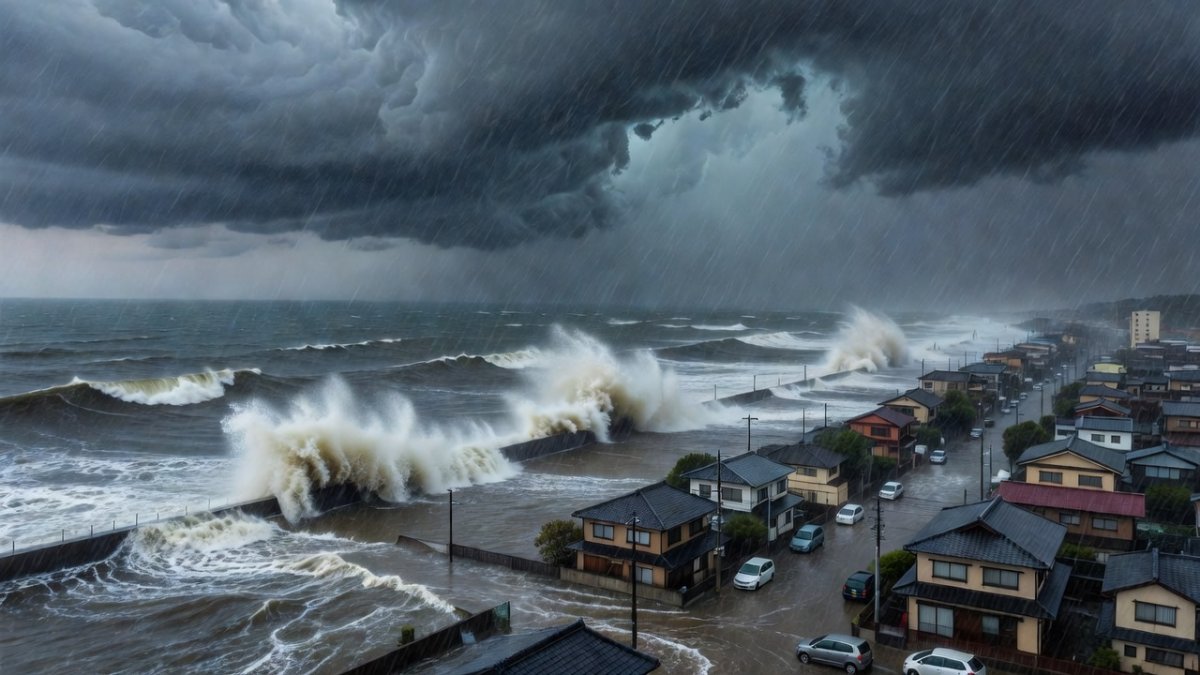
Folks, let’s get one thing straight right now: Japan is under a two-front assault from nature, and it’s hitting at the absolute worst possible time. We are looking at a meteorological one-two punch that has turned the nation’s most sacred travel week into a logistical nightmare and a safety crisis. While millions of families packed their bags for the Obon holiday to honor their ancestors, the sky decided to throw a fit of historic proportions. We’re talking about Typhoon Chan-hom slamming into the mainland with a record-breaking landfall, all while the remnants of Typhoon Dolphin are still flooding streets in China and leaving a trail of destruction through Okinawa. This isn’t just a weather report; this is a full-blown state of emergency for the Kanto and Tohoku regions.
Let’s break down the immediate threat. Typhoon Chan-hom, also known as Typhoon No. 15, made its move on Tuesday evening, August 11, 2026, around 8 p.m. local time. This wasn't just any landfall; it was an unprecedented event. The Japan Meteorological Agency (JMA) confirmed that this was the FIRST typhoon landfall in Ibaraki Prefecture, northeast of Tokyo, since record-keeping began in 1951. Think about that for a second—over seven decades of data, and this storm just carved its name into the history books. And it didn't do it quietly. The storm moved in an unusual east-to-west direction, a track that caught many off guard and intensified the danger across the Kanto region, including the sprawling metropolis of Tokyo, and pushing up into the Tohoku area.
The JMA isn't playing around with the warnings. They have urged the public to brace for violent winds, high waves, heavy rain, and a dangerous storm surge. This is the kind of advisory that gets your attention because it means the potential for structural damage, widespread flooding, and life-threatening conditions is not just possible—it's probable. The timing couldn't be more brutal. This is the Obon holiday travel period, with Mountain Day falling on August 11, marking the start of the busiest travel week of the year in Japan. Millions are on the move, and now they are moving directly into the crosshairs of a historic storm.
Record-Breaking Landfall and the JMA's Dire Warning
Let’s dig deeper into the specifics of Chan-hom’s impact because the details matter. The landfall in Ibaraki Prefecture is not just a statistical anomaly; it’s a sign of a shifting weather pattern that has meteorologists on high alert. The storm’s unusual east-to-west trajectory is a key factor. Typically, typhoons in this region move from west to east or curve northward. This one bucked the trend, and that unpredictability is what makes it so dangerous. It means the storm systems are interacting with the atmosphere in ways that are harder to forecast, giving residents less time to prepare and evacuate.
The JMA’s warnings are comprehensive and severe. They are not just talking about a bit of rain and wind. They are explicitly warning of "violent winds" capable of uprooting trees and tearing roofs off buildings. They are warning of "high waves" that can erode coastlines and inundate low-lying areas. They are warning of "heavy rain" that can trigger landslides and cause rivers to burst their banks. And they are warning of "storm surge," which is often the deadliest part of a typhoon, as it pushes a wall of seawater inland. For the Kanto region, which includes the political and economic heart of Japan, this is a worst-case scenario unfolding in real-time.
The fact that this is happening during Obon amplifies the risk. The JMA knows that people are distracted, that they are focused on family gatherings and travel logistics. They are urging everyone, from Tokyo residents to those in rural Tohoku, to not let their guard down. The message is clear: this is not a storm to be taken lightly. The combination of a record-breaking landfall, an unusual path, and the peak of a national holiday creates a perfect storm of vulnerability. The agency is essentially begging the public to prioritize safety over tradition, to delay travel if possible, and to heed all evacuation orders immediately.
Obon Travel Chaos: Flights Grounded, Trains Halted
Now, let’s talk about the immediate fallout for the millions of people trying to get home. The travel chaos is absolute. We are seeing a massive disruption of the nation's transportation network at the exact moment it is most needed. Bloomberg has reported that Japan Airlines (JAL) and All Nippon Airways (ANA), the country’s two biggest carriers, canceled flights as the storm neared Tokyo on August 11. We are talking about dozens of flights grounded, leaving travelers stranded at airports and scrambling for alternative plans. The ripple effect is enormous, with cancellations spreading through the domestic network and impacting international connections.
But it’s not just the airlines. The railway services, the lifeblood of Japanese commuters and travelers, have also been suspended. The Shinkansen bullet trains, which are usually the most reliable way to travel, have halted services on key routes. This is a massive blow to the Obon travel rush. Imagine families with luggage and children, expecting a smooth journey to their ancestral hometowns, only to find the stations closed and the platforms empty. The disruption has spread to expressways as well, with closures and traffic jams reported as the storm’s winds make driving dangerous. The entire Tohoku region, which is directly in the storm's path, is seeing its transport links severed.
This is a logistical nightmare of epic proportions. The Obon holiday is a time for family, for remembrance, and for connection. Instead, it has become a test of endurance and adaptability. People are being forced to make impossible choices: do they risk the roads, wait out the storm in a crowded terminal, or cancel their plans altogether? The economic impact is also staggering, with businesses losing revenue and the travel industry taking a massive hit. But right now, the focus isn't on the economy; it's on getting people to safety. The priority is to ensure that no one is caught in a dangerous situation because they were trying to make a train or a flight.
The Dolphin Aftermath: Okinawa and Amami Islands Battered
While Chan-hom is the immediate crisis, we cannot forget that this is the second major typhoon to hit Japan in just one week. Typhoon Dolphin, also known as Typhoon No. 13, already did its damage, and the wounds are still fresh. Dolphin slammed into Japan's southern Okinawa Prefecture on August 7-8, leaving a trail of destruction. The storm injured five to six people and cut power to a staggering number of buildings and households—estimates range from 14,000 to 56,000. That is a massive power outage that left residents in the dark and without air conditioning in the sweltering summer heat.
The Okinawa and Amami Islands, the latter in Kagoshima Prefecture, were battered by Dolphin’s fury. The storm surge was so significant that a 'Level 3 storm surge warning' was issued, a term that trended in Japanese searches as people desperately sought information. This warning level indicates a high risk of flooding and requires residents to be on high alert. The fact that this warning became a trending topic shows the level of public anxiety and the severity of the threat. The islands, which are often in the path of typhoons, were hit hard, and the recovery process is just beginning as they now face the secondary threat of Chan-hom.
The situation in Okinawa is a stark reminder of what Chan-hom could do to the mainland. The power outages, the injuries, and the storm surge are all previews of the potential impacts. The residents of Okinawa are no strangers to typhoons, but the intensity of Dolphin was notable. The fact that it caused such widespread damage and disruption is a warning sign for the Kanto and Tohoku regions. They are now facing a storm that has already proven its destructive potential in the south, and they must take every precaution. The infrastructure in Okinawa is built to withstand typhoons, yet it still suffered significant damage. The mainland, with its dense urban centers, faces even greater risks.
Dolphin's China Landfall: Shanghai 'Turns into the Sea'
Dolphin didn't stop at Japan. After battering Okinawa, it continued its path and made landfall in eastern China's Zhejiang province on August 9-10. The storm was still packing a punch, with winds of 151 km/h. The impact was immediate and severe. The Chinese authorities were forced to evacuate more than one million people from the storm's path. This is a massive mobilization of resources and people, underscoring the danger that Dolphin posed. The evacuation order was not a suggestion; it was a mandatory measure to save lives.
The storm’s impact on Shanghai was particularly dramatic. Over 1,000 flights were canceled, with 943 flights canceled at Shanghai's airports alone. This brought the city's air travel to a standstill, stranding thousands of passengers. But the most striking image was the flooding. The streets of Shanghai were inundated, and the hashtag 'Shanghai turns into the sea' trended on Weibo, the Chinese social media platform. Videos and photos showed cars submerged up to their windshields and people wading through knee-deep water. The city, a global financial hub, was brought to its knees by the floodwaters.
The situation was so severe that the U.S. Consulate General in Shanghai closed its doors on August 10. This is a significant action, indicating that the conditions were deemed unsafe for diplomatic staff and visitors. The flooding also prompted Beijing to raise its flood warnings, as the storm system moved inland and threatened other regions. The scenes from Shanghai are a stark reminder of the power of these storms and the widespread devastation they can cause. The fact that a city as modern and prepared as Shanghai was so severely impacted is a sobering thought for other coastal cities in the region, including those in Japan.
Why This Matters: The Unusual Storm Season and What's Next
So, why is this happening? Why are we seeing such a relentless barrage of typhoons? The answer lies in a combination of factors that meteorologists are closely monitoring. The fact that Chan-hom made an unprecedented landfall in Ibaraki and moved in an unusual east-to-west direction suggests that the steering currents in the atmosphere are not behaving as they normally do. This could be linked to larger climate patterns, such as the state of the jet stream and ocean temperatures. Warmer ocean waters provide more energy for typhoons to intensify, and we are seeing that play out in real-time.
The back-to-back nature of these storms is also highly unusual. Having two major typhoons in a single week, with one hitting Okinawa and the other targeting the Kanto region, is a rare and dangerous event. It stretches the resources of emergency services and leaves little time for recovery between storms. The psychological toll on the public is also significant. Just as residents in Okinawa are trying to clean up from Dolphin, they are now bracing for the potential impacts of Chan-hom. This constant state of alert is exhausting and can lead to complacency, which is exactly what authorities are trying to avoid.
Looking ahead, the forecast is for continued severe weather. The JMA is tracking Chan-hom as it moves across the Kanto and Tohoku regions, and the warnings are unlikely to be lifted anytime soon. The recovery from Dolphin in both Japan and China will take weeks, if not months. The economic cost is going to be in the billions of dollars. But the immediate focus is on safety. The priority is to ensure that people are out of harm's way and that emergency services can respond to the inevitable calls for help. The next 48 hours are critical.
Analysis: A New Reality for the Pacific Rim
Let’s step back and analyze the bigger picture here. This double-typhoon event is not just a random occurrence; it is a sign of a new reality for the Pacific Rim. The intensity and frequency of these storms are increasing, and we need to adapt. The fact that Chan-hom made a record-breaking landfall in Ibaraki is a wake-up call. It shows that no area is safe from these powerful storms. The traditional typhoon paths are shifting, and communities that were once considered low-risk are now in the firing line.
The response to these storms also needs to evolve. The evacuation of over a million people in China shows that authorities are taking the threat seriously, but it also highlights the massive logistical challenge involved. The power outages in Okinawa, affecting up to 56,000 households, show that infrastructure needs to be hardened against these extreme events. The flight cancellations and train suspensions in Japan show that the transportation network is highly vulnerable. We are seeing the limits of our current systems when faced with the power of nature.
This is a global issue, not just a Japanese or Chinese one. The storms that hit the Pacific Rim have ripple effects across the global economy, disrupting supply chains and causing financial losses. The flooding in Shanghai, a major port city, will have an impact on global trade. The travel chaos in Japan will affect tourism and business travel. We are all connected, and when a typhoon hits, we all feel it. The question is, are we prepared for a future where these events become more common and more severe? The evidence suggests that we need to be.
Your Action Steps: Stay Safe and Stay Informed
Folks, here is what you need to do right now. If you are in Japan, particularly in the Kanto or Tohoku regions, do not take this storm lightly. Follow the instructions of local authorities and the JMA. If you are told to evacuate, evacuate. Do not wait until it's too late. Have an emergency kit ready with water, food, flashlights, and batteries. Charge your phones and power banks. Stay indoors and away from windows. Do not go outside to "check out" the storm. It is not worth the risk.
If you are traveling, or have loved ones in the affected areas, stay in constant communication. Check the status of your flights and trains before you head to the station or airport. Be prepared for delays and cancellations. Have a backup plan. If you are in China, particularly in the areas affected by Dolphin, continue to heed the warnings. The floodwaters may recede, but the danger is not over. Be cautious of downed power lines and damaged buildings.
For everyone else, this is a moment to reflect on our shared vulnerability. We are all at the mercy of the natural world, and events like this remind us of that. It is also a moment to support those who are affected. If you can, donate to relief organizations that are working on the ground in Japan and China. Every little bit helps. And most importantly, stay informed. Follow reliable news sources and heed the advice of experts. The storm will pass, but the recovery will take time. Let's make sure we are all doing our part to help each other through it. Stay safe, stay dry, and stay strong.
By Jessica Ali, Staff Writer
This article was produced with AI-assisted research and editorial support. Sources: Japan Meteorological Agency (JMA), Reuters, Kyodo News, Bloomberg, Japan Times, NHK, Al Jazeera, The Guardian, Euronews.
What's Your Reaction?
 Like
0
Like
0
 Dislike
0
Dislike
0
 Love
0
Love
0
 Funny
0
Funny
0
 Wow
0
Wow
0
 Sad
0
Sad
0
 Angry
0
Angry
0

Editor-in-Chief at Global1.News. Atlanta-based journalist who cuts through the BS and tells it like it is. Lead anchor, host, and the voice you hear when the spin stops and the truth starts.














Comments (0)