
The Coffee, Time, a Judge, and the Pledge of Thailand’s Most Prominent Political Prisoner Arnon Nampa
In a modest courtroom in Bangkok, a simple cup of Americano became a quiet symbol of endurance, solidarity and the lingering hopes of Thailand’s reform movement.
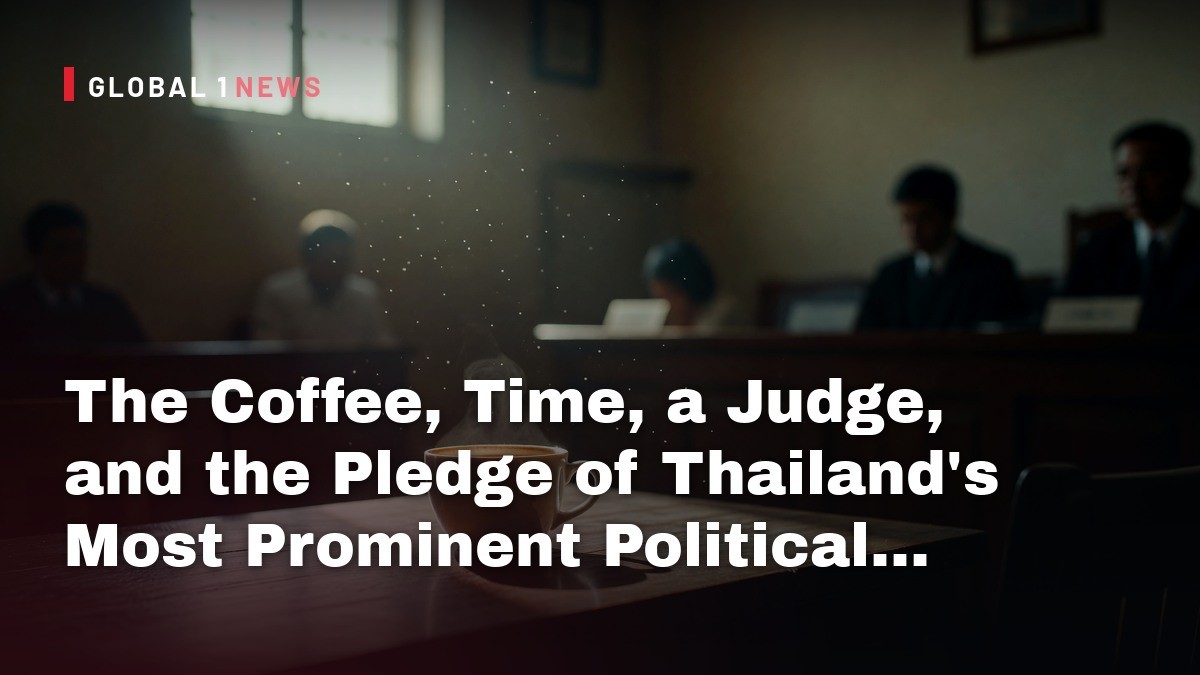
In a modest courtroom in Bangkok, a simple cup of Americano became a quiet symbol of endurance, solidarity and the lingering hopes of Thailand’s reform movement. When journalist Arnon Nampa—the nation’s most prominent political prisoner—asked for an unsweetened Americano and a croissant, the request was more than a culinary preference; it was a reminder of the human connections that persist even behind prison walls. The scene, captured in October 2026, offers a window into the broader story of Thailand’s struggle for free expression, the lingering impact of the lèse‑majesté law, and the personal resolve of those who continue to challenge the status quo.
From a Smartphone to a Cup of Coffee
Back in 2014, when a military coup led by Gen Prayut Chan‑o‑cha imposed “attitude adjustment” on dissenters, a young lawyer named Arnon Nampa, then just 31, stood guard over a journalist’s smartphone outside the Old Army Conference Room in Bangkok. For four hours, Arnow, representing the newly formed Thai Lawyers for Human Rights (TLHR), kept the device safe from soldiers before the journalist was taken to an army base in Ratchaburi. That act of quiet guardianship set the tone for a relationship built on mutual respect and shared risk.
Fast forward to October 2026, the same journalist returned to the courtroom, offering Arnon a freshly brewed Americano. The gesture, simple as it was, echoed the earlier moment of protection. In a setting where daily life is measured in the rhythm of court dates and prison meals, a cup of coffee becomes a conduit for remembering past solidarity and reaffirming present support.
The Letter from Prison: Coffee as Metaphor
On 19 October 2026, Arnon posted a letter on his Facebook page, describing coffee in poetic terms: three teaspoons of coffee brewed with hot water become an espresso; adding water creates an Americano; diluting further yields a tea‑like drink with a faint coffee aroma. He wrote, “Watching the morning rain drizzle outside, my thoughts wander through so many memories.” The description transforms a mundane beverage into a meditation on change, dilution, and the persistence of flavor—mirroring his own journey from a fiery reformist to a weary prisoner.
The letter’s tone underscores how even small comforts can sustain morale. For a man who has spent three years behind bars, the ritual of coffee preparation offers a mental anchor, a reminder that life’s essential elements—water, heat, patience—still operate, even within confinement.
Years Behind Bars and the Weight of Sentencing
When asked about his sentence, Arnon recalled the number “32” years, though he could not recall how many separate cases comprised it. The combined term reflects multiple convictions under Thailand’s lèse‑majesté law, a statute often described as anachronistic and draconian. While the exact breakdown remains unclear, the length of the sentence itself signals the state’s determination to silence dissenting voices that challenge the monarchy’s role.
Six years prior, Arnon had ignited a monarchy reform movement that drew tens of thousands onto Bangkok’s streets. The movement’s momentum, however, waned under the red‑orange political divide that has characterized Thai politics since the 2014 coup. The shift from mass rallies to a more subdued courtroom presence illustrates how the state’s crackdown has reshaped activist tactics and public engagement.
The Diminishing Public Mobilisation
In the courtroom, the journalist noted that even a rally of 200 people struggles to attract attention for the release of prisoners of conscience, including Arnon. Younger protesters, once energized by the movement’s two‑year surge, now feel disillusioned, recognizing that the protests did not achieve immediate monarchy reform but instead led to widespread prosecutions and dozens of imprisonments.
This generational fatigue highlights a broader challenge: maintaining momentum in a climate where the state’s legal apparatus, particularly the lèse‑majesté law, serves as a potent deterrent. The shift from street protests to legal battles underscores the need for new strategies that can navigate both public sentiment and judicial constraints.
Strategic Choices: Pardon or Mandela‑Style Resistance
During their conversation, the journalist urged Arnon to consider a clear strategy—whether to seek a royal pardon or to adopt a stoic, Mandela‑like path of long‑term resistance. The suggestion reflects a crossroads faced by many Thai activists: pursue immediate relief through compromise, or endure prolonged hardship for the sake of principle.
Arnon’s inquiry about contacts with the Palace and his request to interview conservative figures like former Prime Minister Anand Panyarachun—now 94—reveals a pragmatic side. He seeks dialogues that might bridge the divide, even as he remains steadfast in his belief that his criticism was rooted in good‑faith calls for reform, not defamation.
The Judge’s Offer and Arnon’s Refusal
In Courtroom 903, the presiding judge, seated on an elevated row, offered Arnon a conditional path: “If you confess, you should be out in no time.” The comment came as the court was dropping the case against Arnon and fellow activist Ekachai Hongkangwan, part of a national reconciliation bill that excludes royal defamation cases. Arnon’s response—shaking his head and declining—reinforced his principled stance that his criticism was a call for reform, not an act of lèse‑majesté.
This moment encapsulates the tension between legal pressure and moral conviction. By refusing to confess, Arnon maintains the integrity of his original intent, emphasizing that his activism sought to align the monarchy with contemporary democratic expectations rather than to undermine it.
Hope, Spirits, and a Public Message
As the courtroom session drew to a close, the journalist suggested that Arnon could enjoy a dram of rare single‑malt Scotch whisky once freed. Arnon’s reply—“Let’s drink when I am freed”—combined a touch of humor with a poignant reminder of his yearning for freedom. Before being taken back to prison, both Arnon and Ekachai wrote brief messages for the public. Ekachai’s hopeful note, “One day… justice shall prevail,” echoed the broader aspirations of Thailand’s reform movement.
Arnon’s own message read, “Thank you for all the support. I remain strong and firm in the fight. With firm belief and faith.” The words, penned on 26 October 2026, serve as a testament to resilience. They reinforce the idea that, even within the confines of a courtroom and a prison cell, the spirit of dissent can endure, buoyed by community support and the simple comfort of a shared cup of coffee.
This article was produced with AI-assisted research and editorial support. Reporting is based on the source material cited below. Sources: Khaosod English; khaosodenglish.com; Global1.News (30 October 2026).
By Ann Srisawat, Staff Writer
What's Your Reaction?
 Like
0
 Dislike
0
 Love
0
 Funny
0
 Wow
0
 Sad
0
 Angry
0

Southeast Asia Correspondent at Global1.News. Based in Bangkok, covering Thai and Southeast Asian politics, economy, technology, and culture. Deep regional perspective on one of the world's most dynamic regions.














Comments (0)