
The Challenges of Finding Political Treasure in Chinese Overseas Ports
China’s eighth Silk Road Maritime International Cooperation Forum, held in September 2026, placed overseas port projects once again under the international microscope.
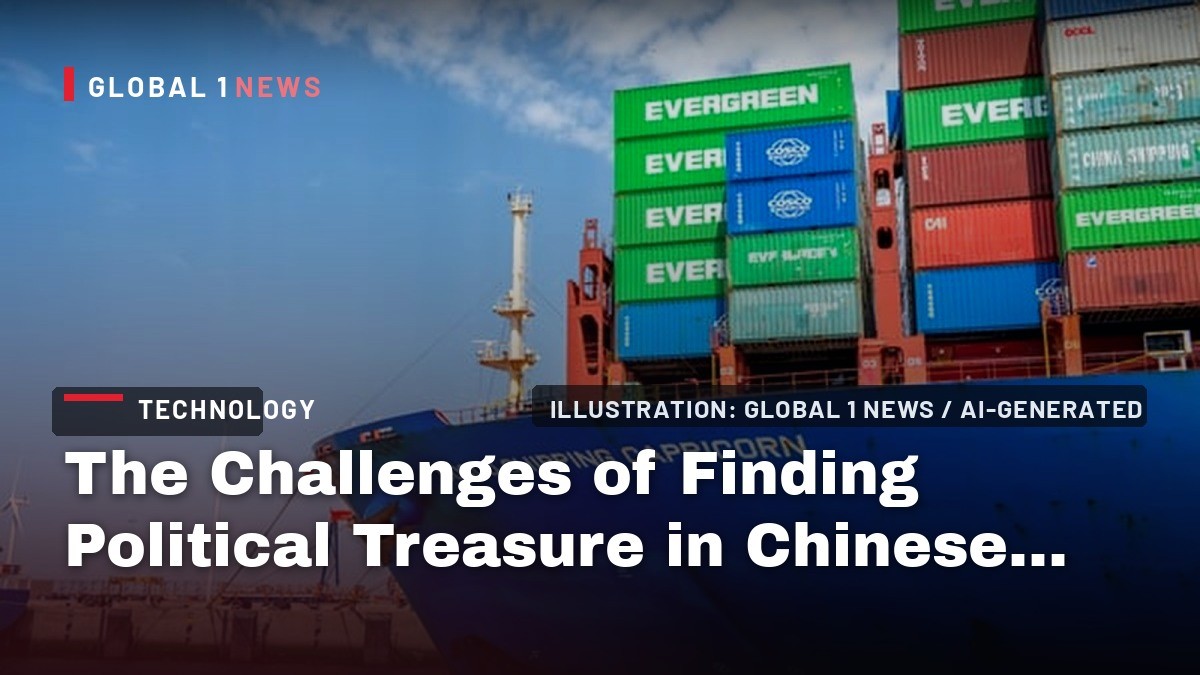
China’s eighth Silk Road Maritime International Cooperation Forum, held in September 2026, placed overseas port projects once again under the international microscope. While geopolitical narratives dominate headlines, the economic dimension of Chinese port involvement—its promises, its shortfalls, and its political reverberations—deserves a measured, data‑driven appraisal. This article, the third installment of a four‑part series, examines the tangible outcomes of Chinese investment in foreign ports, drawing on recent analyses of projects across Europe, Latin America and the Caribbean (LAC), Southeast Asia and South Asia. The goal is to separate optimism from overstatement, and to highlight the political stakes that accompany every berth, crane and dredging contract.
Host‑Country Expectations: Infrastructure, Jobs and Trade
Port authorities and national governments that welcome Chinese capital typically anticipate a bundle of material benefits. The most immediate expectation is the physical upgrade of port facilities: new berths, deeper drafts, modern cranes, expanded terminals and upgraded IT systems. Such improvements have been reported in a range of locations, from Panama’s Balboa and Cristóbal terminals to Belgium’s Zeebrugge, and further east to Myanmar’s Kyaukphyu Made Island and Bangladesh’s Mongla. Host officials argue that larger vessels and higher cargo volumes will translate into higher port earnings, greater tax receipts and a surge in ancillary business activity.
Beyond the walls of the dock, many host countries envision spill‑over effects. Linked infrastructure—roads, rail links and nearby special economic zones (SEZs)—is expected to catalyse broader economic development. In the United Arab Emirates, for example, SEZs have become a hallmark of Chinese port projects, suggesting a model where port upgrades dovetail with industrial clusters. The overarching narrative is one of export growth, increased inward foreign direct investment (FDI) and deeper integration into global supply chains.
Measured Gains in Europe and the LAC Region
Empirical assessments of Chinese involvement in twenty ports across Europe and the LAC region reveal a mixed but generally positive picture at the facility level. Analyses indicate that Chinese investment has frequently resulted in new or modernised quays, expanded terminals and enhanced intermodal connections. These physical upgrades have, in turn, boosted handling capacity, shortened turnaround times and improved overall efficiency. More than two‑thirds of the ports for which data were available reported measurable performance gains, and a similar proportion noted improved connectivity to regional and global shipping routes.
Job creation is another documented outcome. The same studies highlight that Chinese‑backed projects directly generated or preserved hundreds, and in some cases thousands, of jobs. Certain ports have even emerged as notable revenue and tax generators for their host governments. However, the benefits have largely remained confined to the port precincts themselves, with limited evidence of broader regional economic transformation.
South‑East and South‑Asian Outcomes: Infrastructure Without the Fiscal Upside
When the focus shifts to Southeast and South Asia, the pattern of results changes subtly. Ports in Bangladesh, Myanmar and the Philippines have similarly benefited from upgraded facilities, higher capacity and faster turnaround. Local development indicators—such as improved port rankings and expanded intermodal links—have been recorded. Yet, the fiscal impact appears muted. The analyses did not uncover significant revenue or tax increases for host governments, nor did they identify substantial technology transfer or the emergence of thriving SEZs around the upgraded ports.
Job creation, while noted, lacks precise quantification in these regions. Moreover, the broader trade effects—such as shifts in export composition or heightened foreign investment—remain largely unsubstantiated. The contrast with Europe and the LAC suggests that the economic spill‑over of Chinese port projects is highly context‑dependent, influenced by local governance, existing infrastructure and the scale of ancillary industrial development.
Project Diversity and the Reality Gap
Chinese participation in overseas ports is not monolithic. It spans a spectrum that includes equity investment, construction contracts, terminal‑operation concessions, sales of equipment and provision of ancillary services. The nature of each engagement—whether a dredging contract, a deep‑water port build‑out or a terminal‑modernisation scheme—varies widely across projects. This diversity complicates any blanket assessment of outcomes.
Crucially, many projects deviate from their original designs once underway. In Southeast and South Asia, nearly half of the studied cases (47 percent) experienced such a divergence. Causes range from local port deficiencies and domestic political shifts to the financial constraints of host governments and the technical capacities of Chinese contractors. External opposition, notably from Japan, has also played a role in reshaping project scopes. These mismatches between vision and execution mean that a significant share of Chinese‑backed ports fail to deliver the transformative changes initially promised.
Negative Externalities: Crowding Out and Dependency Risks
While the positive externalities of Chinese port projects are evident at the facility level, the literature also flags several adverse outcomes. The influx of Chinese capital and operators can crowd out domestic maritime firms, potentially leading to job losses in the local shipping sector. In some instances, the dominance of Chinese shipping networks raises concerns about over‑dependence, especially for countries seeking diversified trade routes.
Other identified risks include accelerated deindustrialisation—if port upgrades primarily serve export‑oriented logistics without fostering domestic manufacturing—and widening trade imbalances, where increased import capacity outpaces export growth. These negative externalities can erode the net benefit calculus for host nations, fueling anti‑port sentiments that may jeopardise future infrastructure cooperation.
Balancing Benefits and Risks: The Political Dimension
The economic outcomes of Chinese port involvement cannot be divorced from their political implications. Positive port performance may bolster the host government’s legitimacy, but unfulfilled promises or perceived over‑reliance on China can trigger public backlash. Moreover, the presence of Chinese maritime infrastructure often intersects with broader strategic concerns among third parties, notably the United States and Japan, which may view such projects as extensions of Beijing’s geopolitical influence.
Consequently, the net benefit of Chinese overseas ports is a contested terrain. While facility‑level gains are documented, the translation of these gains into sustained, inclusive growth remains uneven. Host countries must therefore assess not only the immediate economic returns but also the longer‑term political and strategic costs, ensuring that port development aligns with national development strategies rather than becoming a conduit for external dependence.
Looking Ahead: From Economic to Security Calculus
As the series progresses, the focus will shift toward the political and military risks associated with China’s overseas port footprint. The upcoming analysis will explore how port infrastructure can serve dual‑use purposes, potentially facilitating naval logistics, and how host‑country sovereignty considerations intersect with broader security dynamics in the Indo‑Pacific and beyond. Understanding the full spectrum of implications—from the crane‑lifted cargo to the strategic currents that flow through these maritime gateways—will be essential for policymakers navigating the complex waters of Chinese port investment.
This article was produced with AI-assisted research and editorial support. Reporting is based on the source material cited below. Sources: The Diplomat; thediplomat.com; Global1.News (17 September 2026).
By Kenji Tanaka, Staff Writer
What's Your Reaction?
 Like
0
Like
0
 Dislike
0
Dislike
0
 Love
0
Love
0
 Funny
0
Funny
0
 Wow
0
Wow
0
 Sad
0
Sad
0
 Angry
0
Angry
0

Japan Correspondent at Global1.News. Tokyo-based voice covering Japanese politics, technology, economy, and culture. Tracks the intersection of tradition and innovation in one of the world's most dynamic societies.















Comments (0)