
Thailand PM Anutin Moves to Remove NBTC Chairman Sarana
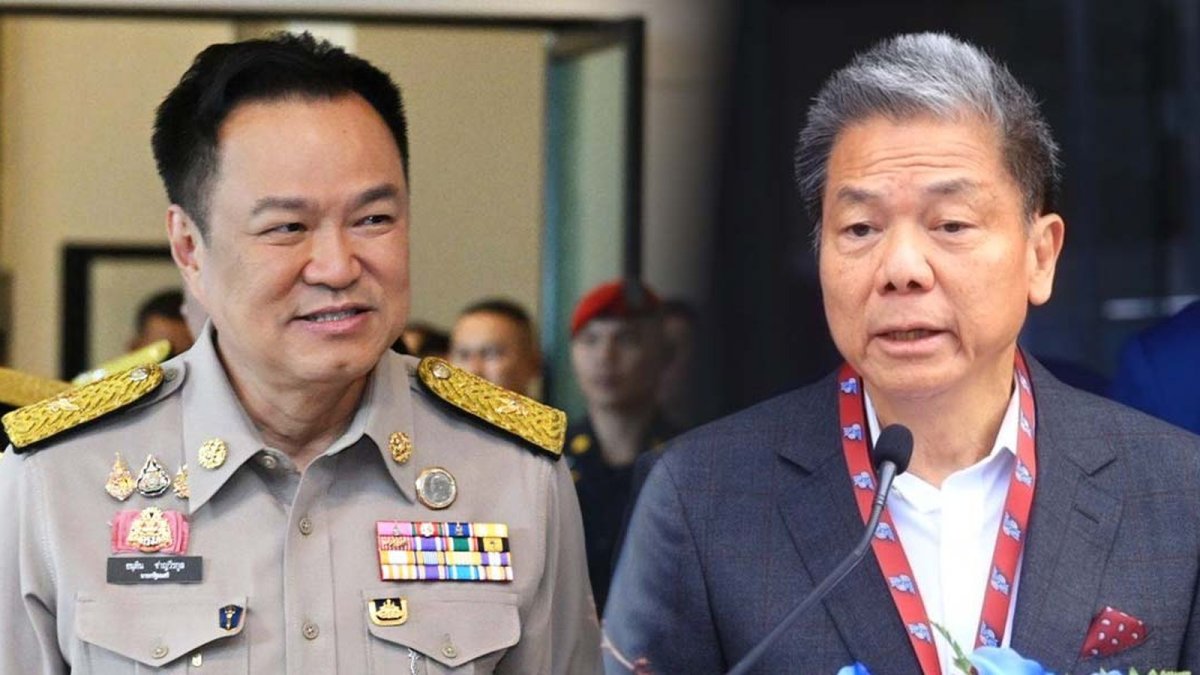
Prime Minister Anutin Charnvirakul has formally signed and submitted a request for a royal command to remove Dr Sarana Boonbaichaiyapruck from his position as chairman of the National Broadcasting and Telecommunications Commission (NBTC), escalating a bitter institutional standoff that has paralysed Thailand's telecom regulator for weeks.
Prime Minister Anutin Charnvirakul has formally signed and submitted a request for a royal command to remove Dr Sarana Boonbaichaiyapruck from his position as chairman of the National Broadcasting and Telecommunications Commission (NBTC), escalating a bitter institutional standoff that has paralysed Thailand's telecom regulator for weeks. The move, confirmed by Anutin on Tuesday, centres on allegations that Sarana lacked the proper qualifications for the job due to his past employment status at a state hospital. The development throws the future of critical satellite operations and digital infrastructure projects into fresh uncertainty, with the NBTC board unable to reach a quorum amid a boycott by four commissioners.
Anutin Signs Royal Command Request to Remove NBTC Chairman Sarana Amid Qualification Dispute
Bangkok, Thailand – Tuesday — Prime Minister Anutin Charnvirakul, who also serves as interior minister, has signed and submitted a request for a royal command to remove Dr Sarana Boonbaichaiyapruck from his position as NBTC chairman and from his membership on the commission. The request, confirmed by Anutin on Tuesday, centres on Sarana's alleged lack of the proper qualifications for the job, a controversy that has simmered for months and now threatens to disrupt the country's satellite and digital infrastructure agenda.
Prime Minister Defends Procedure
Speaking to reporters on Tuesday, Anutin was emphatic that the process had been followed to the letter. "I have signed it. I followed every step of the procedure. I did not do this with any ill intention. Everything was done according to procedure, based on opinions from within the government and from individuals," he said. The prime minister's remarks came in response to questions about whether the move could create a vacuum in NBTC operations, given that the board has struggled to convene meetings due to a lack of quorum.
Anutin dismissed such concerns, pointing out that other commissioners remain in office and can continue their duties. "There are still commissioners remaining, aren't there?" he asked rhetorically. He also stressed that the NBTC is an independent regulatory body and that the government has no authority to direct or supervise its operations. "The government cannot interfere. We can only provide cooperation if there are any problems. All operations must remain the responsibility of the NBTC. Its name clearly indicates that it is an independent organisation," Anutin said.
The Qualification Controversy
The roots of this dispute trace back to a resolution passed by the NBTC selection committee on July 17, which declared that Sarana was prohibited from serving as chairman under the 2010 NBTC Act. The law states that commissioners must not be employees of state agencies or state enterprises, nor directors or advisors to such bodies, and are expected to work full-time for the regulator. The selection panel was shown evidence that Sarana allegedly still held temporary employee status as a physician at Ramathibodi Hospital's Faculty of Medicine, with hourly payments from Jan 8 to April 12, 2022.
Sarana, a renowned cardiologist, has consistently denied any wrongdoing. He says he resigned from government service on Jan 8, 2022, and is neither a government officer nor an employee. He has explained that his physician work ahead of his appointment was patient handover, a standard medical procedure, and that he did not intend to act as a government official. He also alleges that no clear legal guidelines exist on conducting the inquiry into his role. Sarana has continued to consult at other hospitals and see patients, saying he had a duty to follow up on their care.
Court Dismisses Sarana's Petition
Last week, the Central Administrative Court dismissed the petition filed by Sarana against the selection committee's resolution. Crucially, the court did not rule on the legality of the resolution itself. Instead, it dismissed the petition because Sarana had not yet suffered a legally actionable injury, meaning the conditions for the court to accept the lawsuit had not been met. The court noted that Section 20 of the law requires a selection committee ruling for removal to be submitted for royal consideration for issuance of a royal command removing the official from office.
The court's ruling means the selection committee's decision remains in effect, and Sarana cannot argue that it has yet to take legal effect. His requests for temporary protection, including suspending enforcement, halting royal submission, and suspending the selection of a replacement, were all dismissed. This cleared the path for Anutin to proceed with the royal command request, a step that the prime minister says he has now taken.
Board Deadlock and Satellite Risks
The political and legal manoeuvring has had a tangible impact on the NBTC's ability to function. The board meeting on Aug 5 was aborted, lasting only 30 minutes, after four commissioners boycotted over the chairman's qualification status. The meeting failed to reach a quorum, which requires four of the seven members. A similar meeting on July 27 was also aborted, with three commissioners boycotting on the same grounds. The four commissioners who have boycotted are Somphop Purivigraipong, Pirongrong Ramasoota, Thanapant Raicharoen, and Suphat Suphachalasai.
This deadlock could impact high-priority telecom and digital infrastructure projects. Sarana has said that among the most pressing issues is acknowledging the extension of Thaicom 4 satellite operations. Its engineering lifespan is set to expire next month after two extensions. Failure to reach a resolution could lead to engineering risks and service disruptions. The Thaicom 4 and Thaicom 6 satellites had been operated by Thaicom under a state concession. Thaicom transferred ownership to the Digital Economy and Society Ministry, which assigned National Telecom (NT) to operate the service. Board meetings are scheduled for Aug 5, 6, 11, 13, and 19, though the Aug 5 meeting already failed to proceed.
Legal Expert Warns of 'Hot Potato'
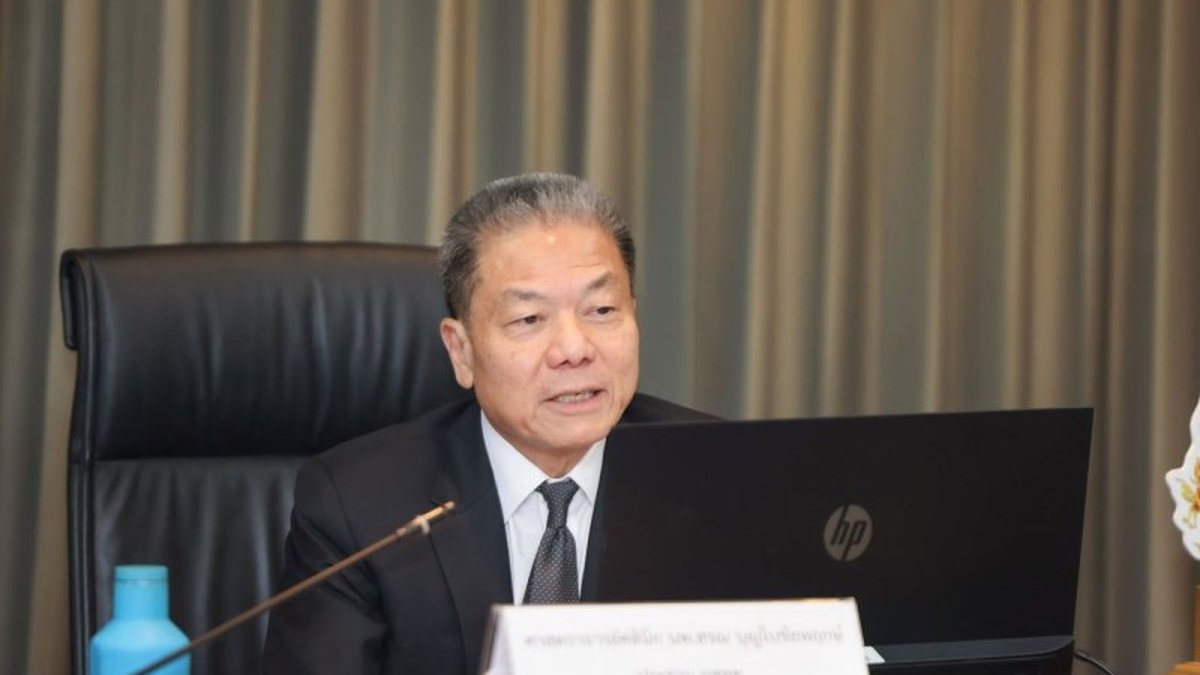
Earlier, a legal expert speaking on condition of anonymity warned that the qualification controversy could become a hot potato for the prime minister. The expert said Anutin should examine all details carefully before further action. One key issue is whether the NBTC selection committee had full authority to pass the July 17 resolution declaring Sarana lacks required qualifications. This question of authority is central to the dispute, and it remains unresolved.
Adding another layer of complexity, former selection committee member Narong Ratamarit has formally written to the prime minister and the Senate president arguing that the committee's responsibilities ended once the NBTC selection process was completed and candidates received royal appointment. Narong contends that no provision of the NBTC Act authorises the committee to revisit or revoke commissioners' status after royal appointment. This legal argument, if accepted, would undermine the very basis of the removal request.
What to Watch For
The coming days will be critical. The NBTC board has scheduled meetings for Aug 11, 13, and 19, and it remains to be seen whether the boycott will hold or whether a quorum can be reached. The royal command request now sits with the palace, and the timeline for a decision is unclear. For Thailand's digital economy, the stakes are high. The NBTC is not just a regulator; it is the gatekeeper for spectrum allocation, satellite licensing, and the rollout of 5G and other critical infrastructure. A prolonged deadlock could delay projects and undermine investor confidence in the Thai telecom sector.
For Thai readers, this is not merely a bureaucratic squabble. It is a test of the independence of regulatory bodies in Thailand, a principle that underpins the country's commitments under ASEAN frameworks and its ambitions to be a regional digital hub. The outcome of this dispute will send a signal about whether Thailand's institutions can resolve internal conflicts without political interference, and whether the rule of law prevails over personal and political considerations. As the situation unfolds, all eyes will be on the palace, the court, and the next NBTC board meeting.
By Ann Srisawat, Staff Writer
This article was produced with AI-assisted research and editorial support. Reporting is based on sources cited in the article.
What's Your Reaction?
 Like
0
Like
0
 Dislike
0
Dislike
0
 Love
0
Love
0
 Funny
0
Funny
0
 Wow
0
Wow
0
 Sad
0
Sad
0
 Angry
0
Angry
0

Southeast Asia Correspondent at Global1.News. Based in Bangkok, covering Thai and Southeast Asian politics, economy, technology, and culture. Deep regional perspective on one of the world's most dynamic regions.














Comments (0)