
Anthropic Just Co-Owned Its Landlord — and Wall Street Is Buying the Whole Block
Anthropic launched Theseus Infrastructure with Macquarie Asset Management and Singapore's GIC to build, own and lease AI data centers at scale, while Nvidia lined up $500 billion from Wall Street giants. Institutional and sovereign capital is now co-owning AI's physical plant.
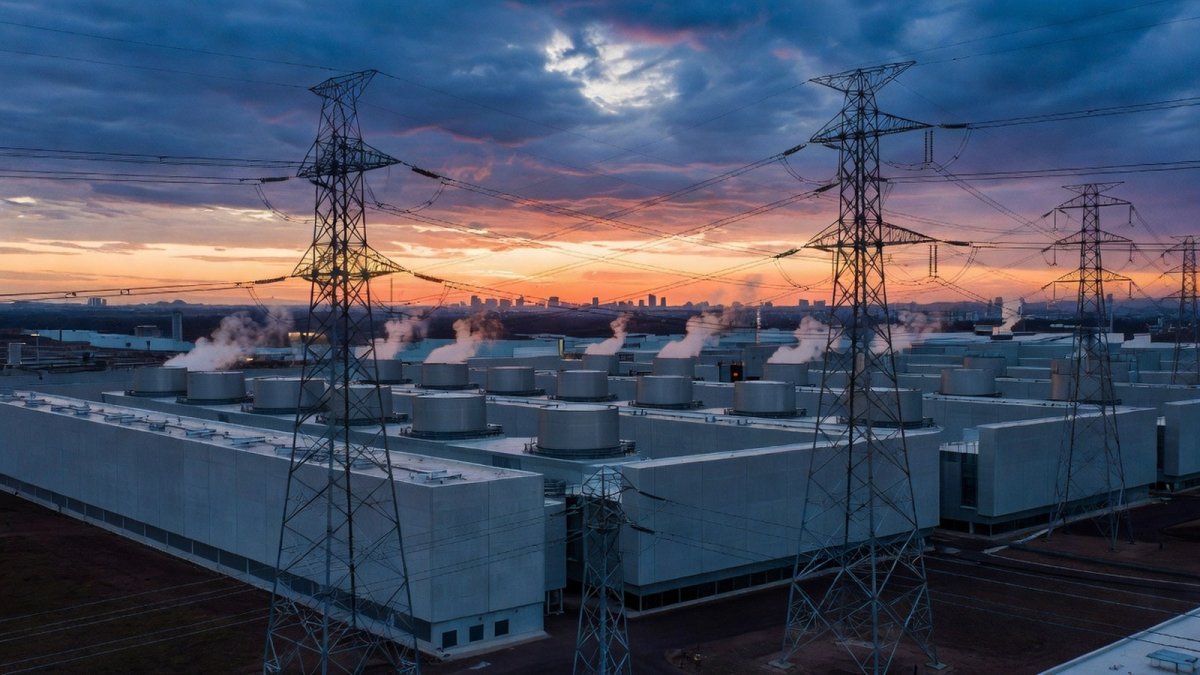
Anthropic Just Co-Owned Its Landlord — and Wall Street Is Buying the Whole Block
Let me tell you something that's been sitting with me since Monday morning, when the press releases started landing in my inbox like somebody left the taps running. Two announcements, one day, half a trillion dollars between them — and neither one was about a chip. Both were about who owns the building. And the answer just changed forever.
First, Anthropic — the company that makes Claude — announced a joint platform with Macquarie Asset Management and Singapore's sovereign wealth fund GIC. It's called Theseus Infrastructure. It will develop, operate, and lease data center infrastructure at scale to Anthropic under long-term agreements, with Anthropic as the anchor tenant and the initial focus on the United States. Macquarie-managed funds and GIC own the platform and fund the majority of the equity for each project.
Then, the same day, Nvidia announced it had lined up six of the biggest names on Wall Street — Apollo, BlackRock, Blackstone, Brookfield, Goldman Sachs, and KKR — for a $500 billion financing push behind AI infrastructure. Jensen Huang called it the moment compute becomes an asset class. The investors said they are treating AI hardware and data centers the way pension funds treat toll roads and airports.
I've been running hosting infrastructure for over a decade. I've watched the AI buildout go through its GPU shortage phase, its power shortage phase, its community backlash phase. This is the phase that actually matters. This is the moment the money that builds the future stopped being tech-company balance sheets and started being the same patient institutional capital that owns the world's airports.
What Anthropic Actually Did
Here's the part people are going to skim past, and it's the part that should impress and worry you in equal measure. Anthropic didn't sign another take-or-pay contract with Amazon or Google for capacity. It didn't do the thing every AI lab has done for the last three years — renting compute from whoever owns the biggest pile of GPUs. Instead, it went and found itself a landlord it co-owns.
Theseus is structured like a project-finance vehicle, the same model that built pipelines and airports for decades. Patient institutional money — funds managed by Macquarie plus GIC, which manages Singapore's foreign reserves — buys the building. An anchor tenant with a strong forward revenue book pays it down over years. The tenant gets certainty of supply and a say in how the asset is built. The investors get a contracted real-asset return on something that is otherwise almost impossible to buy exposure to.
And this is not Anthropic's first rodeo on the ownership front. The company has already committed $50 billion to custom data centers across the US, including Texas and New York. It secured a $35 billion loan — guaranteed by Google, of all people — to rent computing chips across five data centers. Put it together and you get a company that is deliberately, methodically buying its way out of dependence on the hyperscalers that are also its biggest rivals.
The $500 Billion Bombshell
Then came the bigger number. Nvidia said it had struck agreements with Apollo, BlackRock, Blackstone, Brookfield, Goldman Sachs, and KKR to raise more than $500 billion for AI infrastructure — data centers, chip factories, the whole physical stack. Huang's line was: "In AI, compute is revenue." He said Nvidia is bringing the world's leading long-term capital providers together to independently underwrite AI infrastructure. He has the option to backstop up to $125 billion of it himself.
Read the quotes from the money people. KKR's co-CEOs said compute has become a critical infrastructure asset and "delivery, not ambition, is the hard part." Apollo's president called modern compute a scarce, mission-critical asset class. That is not tech-bro language. That is airport language. That is toll-road language. That is the vocabulary of people who buy assets that generate cash for forty years and don't care what's on the cover of Wired.
These are the same firms that have spent the last year quietly taking majority stakes in data centers — BlackRock alone took a majority ownership position in a Meta data center in Texas last month. This is not a lending program. It's a buying program.
The Common Thread — Institutional Money Just Bought the Means of AI Production
Now, I know what you're thinking. These are two different deals, two different companies, two different structures. Why am I putting them in the same article?
Because they're the same story told twice. The AI buildout just crossed over from being financed by tech-company balance sheets — Meta's capex, Microsoft's capex, the whole debt-fueled splurge I've been writing about all summer — to being financed by the permanent capital of the world. Sovereign funds, pension money, asset managers with trillion-dollar books. And they're not just lending to the buildout anymore. They're co-owning it.
OpenAI and SoftBank pumped a billion dollars into SB Energy earlier this year so it could build and operate a 1.2-gigawatt site in Milam County, Texas. That's the Stargate machine making sure it owns its own power, not just its own chips. Anthropic co-owns its landlord. Nvidia has six of the biggest asset managers on earth underwriting its customers. The signal is unmistakable: the people who own the world's infrastructure have decided AI infrastructure is infrastructure, and they're moving in with suitcases.
The Secondary Bottleneck Nobody's Talking About — Community Consent Just Became a Line Item
Here's the piece of this that should make every independent operator sit up straight. Alongside the Theseus announcement, Anthropic restated a commitment it first made in February: it will pay 100% of the grid-infrastructure costs required to hook its data centers into the electrical grid, and it will work with utilities to estimate and cover consumer electricity price increases in the places where its sites land.
Let me translate that into business terms. Community consent — the thing that has been blocking, delaying, and killing data center projects all over the country — just became a priced line item on the balance sheet of a frontier AI lab. Gallup found seven in ten Americans oppose an AI data center in their area. There have been hundreds of bans and moratoriums, protests in 42 states, billions of dollars in projects blocked. And Anthropic's answer is: fine, we'll pay the ratepayers' difference. We'll buy the grid upgrades ourselves.
That is either the smartest political move in the history of this buildout or a check somebody is going to have to write for real in about three years. Probably both. And here's the kicker — the numbers aren't in the announcement. No total dollar size for Theseus. No target site count. No lease terms. No disclosure of whether Anthropic even takes equity in the platform. No audit mechanism for the utility-cover promise, which is unilateral and wasn't negotiated with any named utility. When a promise is that big and that undefined, the due diligence question isn't whether they mean it. It's what happens when the first community actually calls the check.
What This Means for Independent Hosting Providers
First — you are not competing with data centers anymore. You are competing with airports. When sovereign funds and pension managers own AI capacity, they price for twenty-year returns, not quarterly earnings. You cannot out-capitalize that. So don't try. Compete on what patient capital is bad at: flexibility, speed, service, niche specialization, human relationships. The building owner with a forty-year horizon can't turn on a dime. You can.
Second — the cost of consent just went up for everyone. Anthropic's move sets a precedent. The moment one operator offers to cover community power-price increases, every town with a pending data center application is going to ask the next applicant for the same thing. If you're scouting new sites, model community-compensation costs into your projections now, before it becomes a demand instead of a differentiator.
Third — watch the power market like a hawk. When labs and their financial partners start owning generation — dedicated renewables, gas plants, battery storage — the wholesale power market gets a new class of price-taker with no sensitivity to price. That skews power costs for everyone else on the grid. If you're in a region with heavy AI buildout, lock your power contracts and push for fixed-rate terms while you still can.
Fourth — read every partnership announcement for the ownership structure. The difference between a lease and co-ownership is the difference between renting and building equity. Every AI infrastructure deal announced this year is going to have a capital-structure paragraph buried in it. Read it. It tells you who is really on the hook if the buildout cools.
The Bottom Line
For three years I've been telling you the AI buildout was being paid for with borrowed money and borrowed time. This week, the borrowing got an upgrade. The world's most patient money — the money that owns seaports, power grids, and airports — just decided AI compute is a real asset class, and it's co-owning the landlord, the power plant, and the permitting process.
That's a vote of confidence in the buildout's long-term math. It's also a warning, because patient money is patient about losses too — it just waits longer before it walks. And when it walks, it takes the building with it.
Me? I'm an independent operator. I don't own airports. But I've learned one thing watching this industry for a decade: when the really big money starts treating your neighborhood like a long-term asset, your job isn't to beat them. It's to be the thing they can't build — fast, flexible, and personal. Buh trust me on that one.
— Allan Ali, Founder
This article was produced with AI-assisted research and editorial support. Sources: Macquarie Group press release (Aug 10, 2026), BBC News, Bloomberg, AI Weekly, Briefs.co, Anthropic.
What's Your Reaction?
 Like
0
Like
0
 Dislike
0
Dislike
0
 Love
0
Love
0
 Funny
0
Funny
0
 Wow
0
Wow
0
 Sad
0
Sad
0
 Angry
0
Angry
0

Publisher of Global1.News. Automation architect, systems builder, and the guy making sure the truth gets published.















Comments (0)