
Taylor Frankie Paul teases exit from ‘Secret Lives of Mormon Wives’
Reality‑television star Taylor Frankie Paul announced on Monday that she will no longer appear on the series The Secret Lives of Mormon Wives . In a candid Instagram post, Paul thanked the networks that had supported her but said she “doesn’t desire to move forward” with the show.
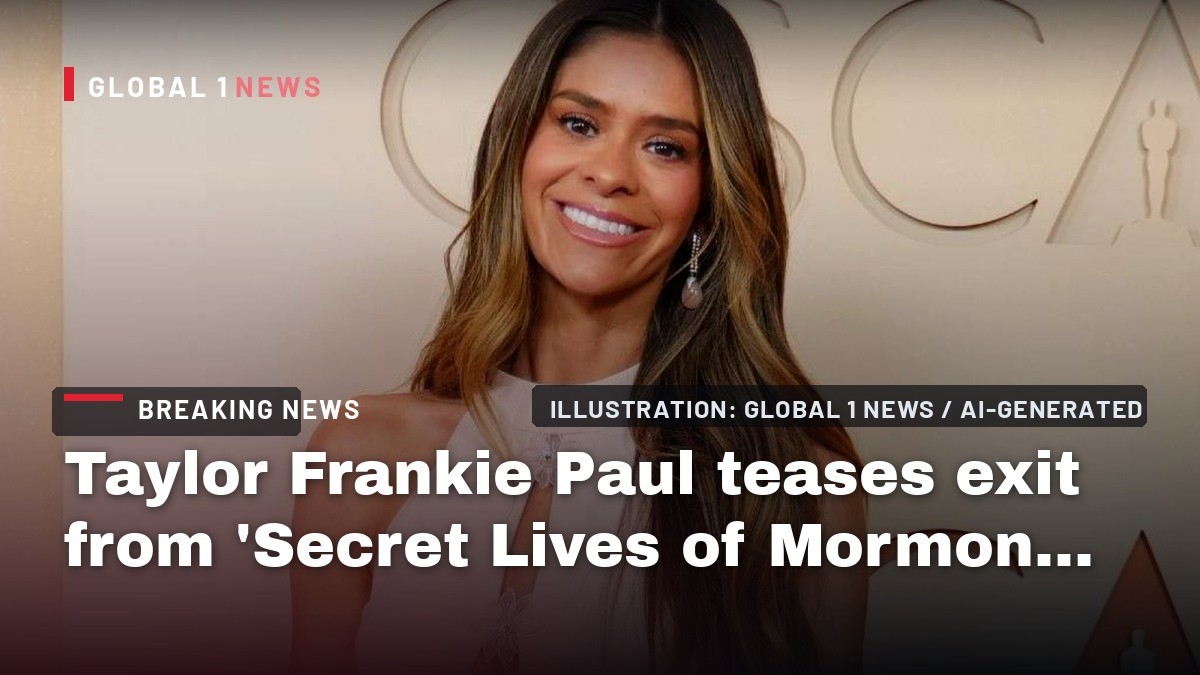
Reality‑television star Taylor Frankie Paul announced on Monday that she will no longer appear on the series The Secret Lives of Mormon Wives. In a candid Instagram post, Paul thanked the networks that had supported her but said she “doesn’t desire to move forward” with the show. Her decision comes amid a series of departures by other long‑time cast members and a legal battle over the custody of her three children.
Paul’s farewell message and the context of her exit
Paul’s Instagram statement began with gratitude toward the networks that gave her a chance to return after a tumultuous period involving legal disputes with her ex‑boyfriend Dakota Mortensen and ex‑husband Tate Paul. She wrote that she was “originally willing to be removed to let them all continue on with less stress” and that she had returned to that point. The 32‑year‑old reality star described feeling isolated by fellow cast members, noting that “some of the girls know what I’ve been through and then to turn and collectively pile on with their ‘statements’…laughing about my kids is disgusting.”
Paul also highlighted a perceived power imbalance on set, recalling that “these same people had meetings telling me I need to lead the way of pay…my voice was the only one that can make it happen.” She said she was grateful she “never followed through with their requests of demands” and that she kept “same pay out of fairness and integrity.” Her post concluded with a mix of resignation and relief: “I’m just relieved to be out.”
Other cast members also step away
Paul’s departure follows similar announcements from fellow participants. Mikayla Matthews, another long‑standing star, posted that she would not continue with the series, citing a moral conflict with the show’s content. “There’s no amount of money worth going against my morals,” she wrote, adding that the programme “shouldn’t be ‘relatable’ or entertainment in any way.” Matthews emphasized that the show had been a “huge part of my life” and helped her “provide for my family,” but she could not reconcile that with what she described as “toxic behaviour” and an “enabling cycle.”
Whitney Leavitt, who has been with the series for five years, also announced her exit ahead of the fifth season’s release. Her Instagram caption reflected on the five‑year journey, describing it as “five years of my life wrapped into an experience I’ll never be able to fully put into words.” Leavitt expressed gratitude for the connections she made, noting that “there will always be something that connects us when our paths cross.”
Legal battle over custody and child‑welfare allegations
Paul’s exit occurs while she continues to fight a custody dispute. In July, Utah’s Department of Children and Family Services (DCFS) filed a petition asking a court to find that her three children were “abused, neglected or dependent.” The petition sought protective supervision and the appointment of a guardian ad litem. Paul responded on social media, calling the allegations “false information” but acknowledging that “some things are true as well.” She said she would “give you the ugly and the pretty” and that the experience was “the most difficult thing I’ve ever, ever been through.”
In a statement to People, Paul’s lawyers said she “looks forward to continuing her progress toward normalizing custody and becoming the healthiest version of herself.” The legal proceedings have added a layer of complexity to Paul’s public statements, as she balances defending her reputation with the emotional toll of the allegations.
Production halted amid investigation
Season five of The Secret Lives of Mormon Wives was halted after an investigation into domestic‑violence allegations linked to the show’s cast. The production pause coincided with the filing of the DCFS petition and the public statements from Paul and other cast members. While the source material does not detail the outcome of the investigation, the timing suggests that the network and producers are responding to heightened scrutiny over the series’ handling of personal trauma.
The series, which follows the lives of women within the Mormon community, has drawn criticism for its portrayal of sensitive issues, including abuse. The recent departures and legal challenges may force the network to reassess its approach to participant welfare and on‑screen narratives.
Impact on viewers and broader cultural conversation
These developments arrive at a moment when Canadian audiences are increasingly attentive to how reality television treats its participants. The discussion around consent, mental‑health support, and the ethics of monetising personal hardship resonates with ongoing debates in Canada about media responsibility. While the show is produced in the United States, its reach extends into Canadian households, where viewers often compare its treatment of participants with domestic standards for workplace safety and psychological well‑being.
Canadian regulators have previously examined reality‑TV formats for compliance with privacy and harassment guidelines. The public outcry surrounding the alleged bullying and pay‑negotiation pressures described by Paul could inform future policy discussions on how production companies must safeguard participants, especially when allegations of abuse surface.
Industry reactions and future prospects
Industry observers note that the simultaneous exit of three prominent cast members is unusual for a long‑running reality franchise. The departures may signal a shift in how participants view their role in programmes that blend personal narrative with entertainment. As Paul and Matthews emphasised the moral cost of continuing, producers may need to re‑evaluate compensation structures and support services to retain talent.
Analysts suggest that the network could either re‑tool the series to address the concerns raised or consider ending the show altogether. The decision will likely hinge on audience metrics, advertiser confidence, and the legal outcomes surrounding Paul’s custody case. In Canada, broadcasters watching these developments may adjust their own reality‑TV contracts to include stronger safeguards against similar disputes.
What comes next for Taylor Frankie Paul?
Paul’s final Instagram post hinted at a desire to “show this process and how ugly it is” while owning her mistakes. She described herself as “not a mother of the year” but affirmed a right to “stick up for myself.” The statement underscores a personal resolve to navigate the custody battle publicly, despite the emotional strain.
As the legal proceedings continue, Paul’s focus appears to be on protecting her children and rebuilding her public image. Her departure from the series may allow her to concentrate on the court case and her personal well‑being, though the public nature of the dispute means she will likely remain in the media spotlight for the foreseeable future.
This article was produced with AI-assisted research and editorial support. Reporting is based on the source material cited below. Sources: Global News Canada; globalnews.ca; Global1.News (21 September 2026).
By Alex Thompson, Staff Writer
What's Your Reaction?
 Like
0
Like
0
 Dislike
0
Dislike
0
 Love
0
Love
0
 Funny
0
Funny
0
 Wow
0
Wow
0
 Sad
0
Sad
0
 Angry
0
Angry
0

Canada Correspondent at Global1.News. Based in Toronto, covering Canadian politics, energy, trade, and US-Canada relations. Provides the Canadian perspective on North American and global affairs.















Comments (0)