
Why Malaysia Won’t Extradite Dr. Zakir Naik to India
At the recent BRICS summit in New Delhi, a viral clip showed Malaysian Prime Minister Anwar Ibrahim breaking into a Hindi film song, a moment that underscored the cultural ties between Malaysia and India.
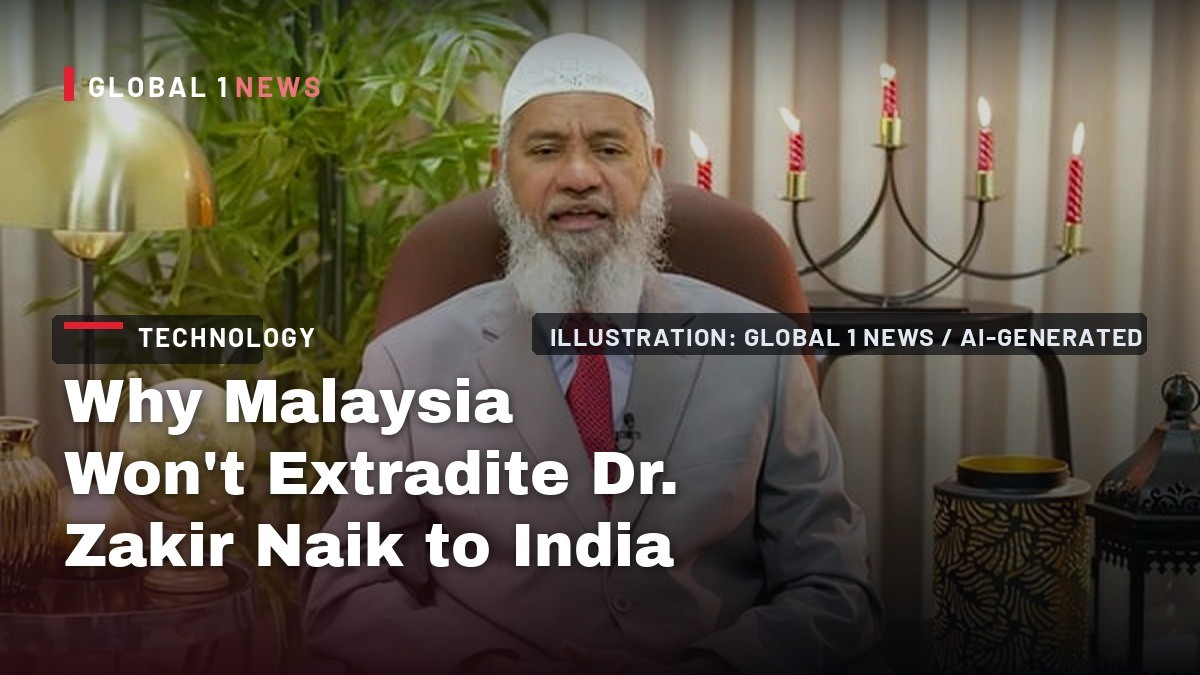
At the recent BRICS summit in New Delhi, a viral clip showed Malaysian Prime Minister Anwar Ibrahim breaking into a Hindi film song, a moment that underscored the cultural ties between Malaysia and India. Yet behind the light‑hearted performance lay a diplomatic dilemma that has lingered for years: the fate of Islamic preacher Dr. Zakir Naik, who has been residing in Malaysia since 2016 despite India’s repeated requests for his extradition. The case illustrates how domestic politics, religious demographics, and regional alliances intersect in Kuala Lumpur’s decision‑making.
Historical background of the extradition request
India’s interest in Naik began with a series of criminal charges related to hate speech, alleged incitement of terrorism, and money‑laundering. In January 2018, New Delhi formally lodged an extradition request with Malaysia, invoking the bilateral treaty signed in 2010. Simultaneously, India sought an Interpol Red Notice, but the agency declined, noting that a formal charge sheet had not been filed at the time of the application. This procedural hurdle has left the legal pathway to Naik’s arrest incomplete.
The extradition treaty, while providing a framework for cooperation, does not compel automatic compliance. Malaysia must balance its treaty obligations against internal considerations, particularly the political weight of its Muslim majority and the potential backlash from influential religious groups.
Domestic political calculus in Malaysia
Malay Muslims constitute more than 70 percent of Malaysia’s population, a demographic reality that shapes every major policy decision. Naik’s presence has become a rallying point for hard‑line Islamic parties, most notably the Pan‑Malaysian Islamic Party (PAS), which has warned of severe political repercussions should the government deport the preacher. Political analysts such as Mohamed Mustafa Ishak have emphasized that Malaysia perceives a “huge responsibility” to protect a fellow Muslim scholar, framing the issue as one of religious solidarity rather than mere legal compliance.
Within the ruling coalition, the presence of the Democratic Action Party (DAP)—a party dominated by Malaysian Chinese—adds another layer of sensitivity. Any perceived anti‑Malay or anti‑Islam stance could be weaponized by opposition forces, jeopardising the coalition’s stability. Consequently, leaders from successive administrations, including former Prime Ministers Najib Razak and Mahathir Mohamad, as well as the current Prime Minister Anwar Ibrahim, have publicly avoided committing to extradition.
Public sentiment and Naik’s popularity
Since his arrival, Naik has cultivated a sizable following among Malay Muslims, positioning himself as a defender of Islamic values. This popularity is not merely a personal fan base; it translates into political capital for parties that align with his message. Barisan Nasional, for instance, has at times leveraged the Naik issue to shore up support among hard‑line constituencies. The preacher’s claim that he would face an unfair trial in India resonates with a segment of the Malaysian public that views India’s current political climate as hostile toward Muslims.
Communications consultant Arfa’eza Abdul Aziz captured this sentiment, noting that extraditing Naik would be perceived as “anti‑Islam” and a failure by a Muslim nation to protect a fellow believer. Such narratives amplify the risk of domestic unrest and complicate any diplomatic overture toward India.
India’s internal dynamics and their impact on the case
India’s ruling Bharatiya Janata Party (BJP), under Prime Minister Narendra Modi, has pursued a hard‑line agenda that has heightened communal tensions. Incidents of mob violence in the name of cow protection, the demolition of Muslim homes in Uttar Pradesh under Yogi Adityanath’s administration, and the removal of names from voter lists have contributed to a perception among Malaysian Muslims that India is increasingly hostile toward its minority communities. These developments undermine confidence in the fairness of any prospective trial for Naik and reinforce Kuala Lumpur’s reluctance to comply with extradition demands.
The broader geopolitical context—India’s assertive posture within the Indo‑Pacific and its strained relations with certain Muslim‑majority states—further discourages a swift resolution. Malaysia, seeking to maintain stable bilateral ties while safeguarding domestic harmony, finds itself in a diplomatic bind.
Legal nuances and procedural obstacles
Beyond political considerations, the legal framework presents challenges. Interpol’s refusal to issue a Red Notice on the grounds that a formal charge sheet was absent highlights a procedural gap that Malaysia can cite when evaluating India’s request. The extradition treaty does not obligate Malaysia to surrender individuals absent a clear legal basis, allowing the government to argue that the request is premature.
Moreover, the principle of “non‑refoulement” in international law—preventing the transfer of individuals to a jurisdiction where they may face persecution—offers a legal shield. Naik’s own assertions of potential persecution based on his faith align with this principle, providing Malaysia with a defensible stance in international forums.
Regional diplomatic implications
The Naik case reflects broader trends in Southeast Asian diplomacy, where religious identity often intersects with foreign policy. Malaysia’s decision to protect a Muslim scholar can be viewed as a signal to other Muslim‑majority nations, reinforcing its role as a guardian of Islamic interests in the region. At the same time, maintaining a functional relationship with India—a key economic partner and a major player in the Quad—requires careful calibration.
Prime Minister Anwar’s measured response at the BRICS summit—acknowledging the issue without committing—demonstrates this balancing act. By emphasizing respect for the rule of law and bilateral relations, Kuala Lumpur signals its willingness to engage constructively while preserving domestic stability.
Future outlook and possible scenarios
Given the entrenched political and religious factors, the extradition of Dr. Zakir Naik appears unlikely in the near term. The issue has effectively been “shelved,” as recent analyses suggest, pending any shift in either domestic sentiment or India’s diplomatic approach. Should India intensify pressure—perhaps by linking trade negotiations or security cooperation to the case—Kuala Lumpur may face heightened scrutiny, but any concession would risk igniting widespread protests among Malay Muslims, both domestically and internationally.
Conversely, a change in India’s internal politics—such as a moderation of the BJP’s stance toward minorities—could open a pathway for renewed dialogue. Until such a transformation occurs, Malaysia is expected to continue its cautious posture, invoking legal technicalities and emphasizing the need to protect a fellow Muslim scholar. The Naik episode thus remains a vivid illustration of how religious demographics, domestic politics, and international law converge to shape extradition decisions in the contemporary Indo‑Pacific landscape.
This article was produced with AI-assisted research and editorial support. Reporting is based on the source material cited below. Sources: The Diplomat; thediplomat.com; Global1.News (21 September 2026).
By Kenji Tanaka, Staff Writer
What's Your Reaction?
 Like
0
Like
0
 Dislike
0
Dislike
0
 Love
0
Love
0
 Funny
0
Funny
0
 Wow
0
Wow
0
 Sad
0
Sad
0
 Angry
0
Angry
0

Japan Correspondent at Global1.News. Tokyo-based voice covering Japanese politics, technology, economy, and culture. Tracks the intersection of tradition and innovation in one of the world's most dynamic societies.















Comments (0)