
Tata Sons: India's corporate crown braces for upheaval amid boardroom revolt
The boardroom of Tata Sons, the 158‑year‑old holding company that underpins India’s most venerable industrial family, is once again at the centre of a high‑stakes power struggle.
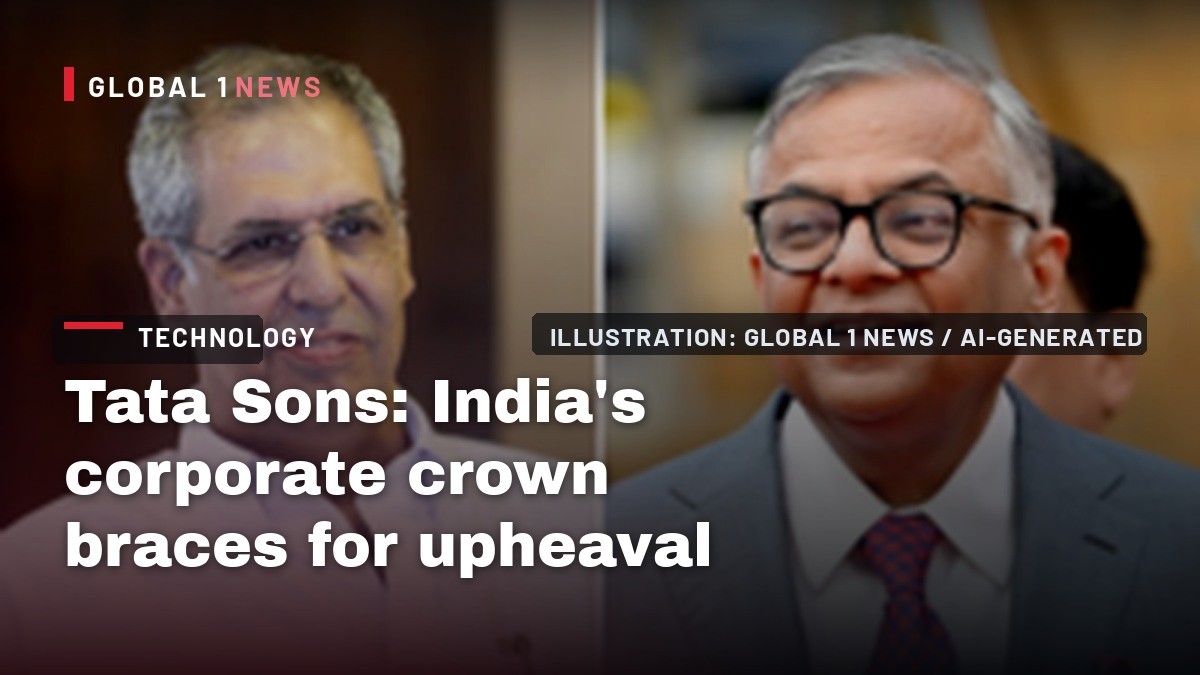
The boardroom of Tata Sons, the 158‑year‑old holding company that underpins India’s most venerable industrial family, is once again at the centre of a high‑stakes power struggle. This week the board re‑appointed N. Chandrasekaran as chairman and endorsed a public listing of Tata Sons, directly contravening the wishes of Tata Trusts, the group’s largest shareholder. The clash, which pits the trustees’ charitable mandate against a regulatory push for greater transparency, threatens to reshape the governance of one of Asia’s most influential conglomerates.
Board decision and the looming AGM
The board’s resolution to keep Chandrasekaran at the helm was passed by the Nomination and Remuneration Committee, yet corporate lawyer Nitin Potdar warned that the committee lacks the authority to make such a decision. Under Tata Sons’ articles of association, the committee can only recommend appointments; the final vote rests with the shareholders. Consequently, the upcoming Annual General Meeting, which must occur before 31 December, could overturn the board’s choice if Tata Trusts votes against it. The previous AGM was adjourned for lack of quorum, and no new date has been set, leaving the outcome uncertain.
Chandrasekaran, who received a five‑year extension, will turn 65 in 2028. The group’s governance code traditionally requires executives to step down from active roles at that age, a provision that Potdar says the board’s action sidestepped. If the AGM rejects the re‑appointment, the chairmanship could become vacant, adding further instability to a group already navigating several loss‑making ventures.
The public‑listing dilemma
The push for a Tata Sons IPO stems from a 2022 RBI classification that labelled the holding company an “upper‑layer non‑banking financial company” because of its systemic importance. That designation carries a statutory requirement for listed status. Tata Sons attempted to shed the classification by repaying debt and arguing that it does not borrow directly from public markets, but the RBI rejected the request after a two‑year review, effectively nudging the group toward a stock‑market debut.
Supporters of the listing argue that a public float would impose stricter scrutiny on capital‑allocation decisions, aligning Tata Sons with governance expectations for systemically important conglomerates. Opponents, including Tata Trusts, contend that a listing would erode the charitable control that funds hospitals, universities and research, and would subject the group to quarterly performance pressures that could jeopardise long‑term projects.
Stakeholder positions: Trusts versus the board
Tata Trusts, which owns roughly two‑thirds of Tata Sons, has publicly called the board’s actions “illegal” under the company’s own articles. In a statement the trustees reaffirmed their opposition to a listing, insisting that “all available options and not a listing alone” are being explored. Nonetheless, internal consensus among the trustees appears to be softening, as they are no longer unanimous in their stance.
Legal scholar Potdar predicts that the RBI lacks the power to compel a listing and that Tata Trusts will likely mount a legal challenge. The regulator, meanwhile, has pre‑emptively approached the courts to be heard first on any matter related to the listing, underscoring the high‑profile nature of the dispute.
Financial pressures and strategic bets
The board’s confidence in Chandrasekaran’s leadership is tempered by the group’s exposure to several high‑risk bets. Recent forays into semiconductors, AI partnerships with Nvidia, and aerospace collaborations with Boeing, Airbus and Singapore Airlines have stretched the group’s balance sheet. Moreover, newly formed subsidiaries such as Air India carry large financial commitments, and loss‑making ventures dilute the overall profitability of the conglomerate.
Analyst NA Soonawala warned that an IPO prospectus would have to disclose the full extent of subsidiary losses and borrowings, potentially presenting an unattractive picture to investors. The “acid test” of Air India’s performance, he noted, could be decisive in shaping market perception of Tata Sons’ financial health.
Implications for the charitable mission
The Tata Trusts channel dividends from commercial arms into a wide array of social initiatives, including hospitals, universities and research institutions. Potdar cautioned that a new class of shareholders might pressure the group to retain earnings for reinvestment rather than distribute dividends, jeopardising the funding stream for these charitable activities. “The first casualty will be the hospitals they run,” he warned.
Beyond the immediate financial impact, critics argue that a public listing would alter the group’s identity. The Tata model, built on a charitable majority shareholder, is seen as a source of patient capital that can sustain long‑gestation projects without the short‑term profit pressures typical of publicly listed firms. Forcing a listing could thus undermine a distinctive governance structure that has historically supported both commercial success and social responsibility.
Market perspective and systemic relevance
Listed Tata subsidiaries such as Tata Motors and Tata Consultancy Services together command a market capitalisation exceeding $260 billion and influence millions of retail shareholders, pension funds, insurers and mutual funds. InGovern, an investment advisory firm, argued that because these listed entities are indirectly affected by Tata Sons’ decisions, the holding company cannot remain insulated from the governance expectations placed on systemically important conglomerates.
The firm also highlighted that Tata Sons’ recent strategic moves—manufacturing iPhones for Apple, partnering with Nvidia on AI, and engaging with major aerospace players—require a “flexible and transparent capital structure.” From this viewpoint, a public listing could facilitate access to broader capital markets and improve the group’s ability to fund ambitious, long‑term projects.
Future scenarios and potential outcomes
Three plausible paths emerge from the current impasse. First, Tata Trusts could win the AGM vote, overturn the board’s re‑appointment of Chandrasekaran and halt the listing plan, preserving the charitable governance model but leaving the RBI’s classification unresolved. Second, the board could secure a majority at the AGM, cement Chandrasekaran’s tenure, and move forward with an IPO, likely triggering legal challenges from the Trusts and a protracted court battle. Third, a negotiated compromise might see the Trusts retain significant control while agreeing to a phased public offering that balances transparency with the preservation of dividend flows to charitable causes.
Regardless of the outcome, the dispute underscores a broader tension in India’s corporate landscape: the clash between traditional, philanthropy‑driven ownership structures and the modern demand for market‑based accountability. How the Tata saga resolves will set a precedent for other industrial foundations facing similar regulatory and governance pressures, and will shape the future trajectory of one of Asia’s most storied business families.
This article was produced with AI-assisted research and editorial support. Reporting is based on the source material cited below. Sources: BBC News Asia; bbc.co.uk; Global1.News (20 September 2026).
By Kenji Tanaka, Staff Writer
What's Your Reaction?
 Like
0
Like
0
 Dislike
0
Dislike
0
 Love
0
Love
0
 Funny
0
Funny
0
 Wow
0
Wow
0
 Sad
0
Sad
0
 Angry
0
Angry
0

Japan Correspondent at Global1.News. Tokyo-based voice covering Japanese politics, technology, economy, and culture. Tracks the intersection of tradition and innovation in one of the world's most dynamic societies.












Comments (0)