
Tai Po fire risks went unchecked as ‘honour system’ exploited, report says
In the wake of Hong Kong’s deadliest building fire in decades, a judge‑led investigative panel has laid bare a systemic failure that transcends a single agency, exposing a broader governance malaise within the city’s regulatory architecture.
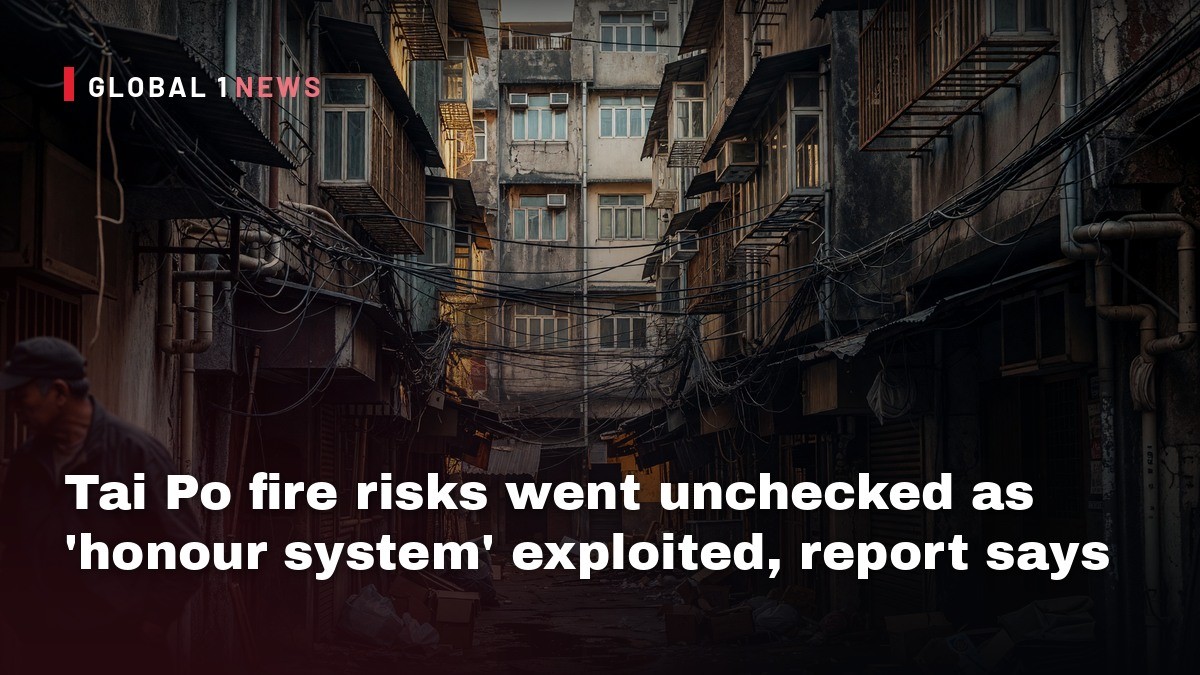
In the wake of Hong Kong’s deadliest building fire in decades, a judge‑led investigative panel has laid bare a systemic failure that transcends a single agency, exposing a broader governance malaise within the city’s regulatory architecture. The panel’s final report, released on 29 October 2026, attributes the tragedy at Wang Fuk Court in Tai Po not merely to isolated lapses but to a pervasive “lack of sense of crisis” and an overreliance on an informal “honour system” among the buildings, labour and fire safety authorities. While four government bodies were singled out, the Labour Department was deemed the least culpable. This episode offers a revealing case study of how administrative culture, inter‑agency coordination, and regulatory philosophy intersect to shape public safety outcomes in a highly urbanised, globally connected metropolis.
Contextualising the Tai Po Blaze within Hong Kong’s Safety Regime
The Wang Fuk Court fire, described by the panel as a “devastating building facade fire of such scale,” underscores the fragility of Hong Kong’s fire safety framework, a system historically lauded for its rigor yet increasingly strained by rapid urban development and complex property arrangements. The panel’s observation that the risks were “very much foreseeable” suggests that existing inspection protocols and risk‑assessment mechanisms failed to translate known hazards into preventive action. This failure is not an isolated incident; it reflects a broader trend wherein the city’s regulatory bodies have struggled to keep pace with the evolving nature of high‑rise construction, mixed‑use developments, and the intricate web of private and public stakeholders that shape the built environment.
Historically, Hong Kong’s fire safety regime has been anchored in a combination of statutory codes, regular inspections, and a culture of compliance reinforced by stringent penalties. However, the panel’s emphasis on an “honour system” indicates a shift toward reliance on self‑regulation and voluntary adherence, a paradigm that can be effective in low‑risk contexts but proves perilous when the stakes are high. The report’s critique therefore signals a potential erosion of the regulatory backbone that has traditionally underpinned the city’s safety record.
The “Honour System” and Its Discontents
The panel’s language—specifically the phrase “overreliance on an ‘honour system’”—captures a critical tension between formal enforcement and informal compliance. In practice, this system places the onus on building owners and managers to self‑declare compliance with fire safety standards, with authorities conducting periodic checks rather than continuous oversight. While such an approach can reduce administrative burdens, it also creates gaps when owners either underestimate risks or lack the technical capacity to address them. The Tai Po incident illustrates how these gaps can widen into catastrophic failures when the “sense of crisis” that should prompt proactive intervention is absent.
From a governance perspective, the reliance on honour raises questions about accountability mechanisms within Hong Kong’s public administration. If agencies defer to self‑reporting without robust verification, the incentive structure shifts away from deterrence toward passive acceptance. The panel’s finding that this mindset pervaded multiple departments suggests a systemic cultural issue, wherein the perceived cost of rigorous enforcement outweighs the perceived benefits, especially when the probability of a major incident is deemed low. This dynamic, if left unchecked, threatens to undermine public confidence in the state’s capacity to safeguard its citizens.
Inter‑Agency Dynamics: Buildings, Labour and Fire Safety Authorities
The report identifies four government bodies as bearing responsibility, yet it distinguishes the Labour Department as the least at fault. This delineation implies a hierarchy of culpability, with the buildings and fire safety authorities bearing the brunt of blame for failing to anticipate and mitigate the fire risk. The panel’s observation that these agencies “failed to foresee the risks” points to a breakdown in risk‑assessment protocols and inter‑agency communication. In a complex urban environment, effective safety governance requires seamless information flow between departments responsible for building standards, occupational safety, and emergency response.
By singling out the Labour Department as comparatively less responsible, the panel hints at a possible misalignment of mandates. The Labour Department traditionally focuses on occupational health and safety within workplaces, whereas building safety and fire prevention fall under the purview of other agencies. This functional separation may have contributed to a diffusion of responsibility, where each department assumed the others would address certain aspects of safety, leading to collective inaction. The report’s critique thus underscores the need for a more integrated governance model that aligns the objectives and operational procedures of all relevant agencies.
Implications for Governance and Policy Reform
The panel’s findings carry weighty implications for Hong Kong’s policy trajectory. First, they call for a reassessment of the “honour system” as a cornerstone of regulatory practice. A calibrated shift toward more proactive inspections, random audits, and data‑driven risk profiling could restore a sense of urgency among officials and stakeholders alike. Second, the identified “lack of sense of crisis” suggests that crisis management culture within the civil service requires reinforcement, perhaps through scenario‑based training, clearer escalation protocols, and performance metrics tied to preventive outcomes rather than merely reactive responses.
Furthermore, the report’s nuanced attribution of responsibility invites a broader conversation about institutional accountability. Strengthening whistle‑blower protections, establishing independent oversight bodies, and enhancing transparency in inspection reports could mitigate the complacency that allowed the Tai Po fire to unfold. By embedding these reforms within a legislative framework, the government can signal a decisive commitment to safeguarding public welfare, thereby restoring confidence in its regulatory capacity.
Strategic Lessons for Urban Safety Governance
The Tai Po incident offers a cautionary template for other high‑density cities confronting similar regulatory challenges. The reliance on self‑regulation, while administratively convenient, must be balanced against the inherent risks of complex, vertical urban fabrics where fire can spread rapidly across facades and internal spaces. The Hong Kong experience underscores the importance of cultivating a “sense of crisis” as an institutional virtue—a proactive mindset that treats risk as a dynamic variable requiring constant vigilance.
In practical terms, this translates into adopting a layered safety architecture: robust building codes, regular and unannounced inspections, real‑time monitoring technologies, and a culture that encourages reporting of hazards without fear of reprisal. The panel’s critique of the “honour system” suggests that technology‑enabled oversight—such as sensor networks that detect heat anomalies or structural stress—could complement human inspections, reducing reliance on voluntary compliance and enhancing early warning capabilities.
Geopolitical Dimensions: Hong Kong’s Safety Record and International Perception
Beyond domestic governance, the fire’s aftermath bears on Hong Kong’s international standing as a global financial hub. Safety incidents of this magnitude can reverberate through investor confidence, tourism, and the city’s reputation for rule of law and administrative competence. In an era where geopolitical narratives often hinge on the perceived efficacy of governance models, Hong Kong’s handling of the Tai Po blaze will be scrutinised by foreign governments, multinational corporations, and international organisations assessing risk exposure.
Consequently, the city’s response—through transparent investigations, swift policy reforms, and demonstrable improvements in safety outcomes—will be pivotal in shaping external perceptions. A failure to address the systemic issues highlighted by the panel could be leveraged by critics to question the broader governance model under the “one country, two systems” framework, potentially influencing diplomatic dialogues and trade considerations involving China and its global partners.
Path Forward: Institutional Resilience and Public Trust
In sum, the judge‑led panel’s report on the Wang Fuk Court fire illuminates a confluence of administrative complacency, overreliance on voluntary compliance, and fragmented inter‑agency coordination. While the Labour Department is identified as the least culpable among the four bodies examined, the broader lesson is clear: safety governance demands an integrated, crisis‑aware approach that transcends siloed responsibilities. Implementing reforms that reinforce proactive oversight, embed a culture of urgency, and leverage technological tools will be essential to prevent recurrence.
For Hong Kong, the stakes extend beyond the immediate tragedy; they touch the very fabric of public trust and the city’s global credibility. By confronting the systemic weaknesses exposed by the Tai Po fire, the administration can transform a painful episode into a catalyst for resilient, forward‑looking governance—thereby reaffirming Hong Kong’s commitment to safeguarding its citizens and maintaining its stature on the world stage.
This article was produced with AI-assisted research and editorial support. Reporting is based on the source material cited below. Sources: South China Morning Post; scmp.com; Global1.News (30 October 2026).
By Prof. Marcus Chen, Staff Writer
What's Your Reaction?
 Like
0
 Dislike
0
 Love
0
 Funny
0
 Wow
0
 Sad
0
 Angry
0

World Politics Analyst at Global1.News. Based in Beijing, covering US-China relations, global trade, and geopolitical strategy. Brings deep analytical perspective to the power dynamics shaping international affairs.














Comments (0)