
Syria's SDF Dissolves as Kurds Bet on Damascus Integration
In a recent i24NEWS English report, the focus turns to a question that would have been unthinkable just two years ago: what brought the Kurdish-led Syrian Democratic Forces (SDF) to the point of dissolving themselves and folding entirely into the national military of President Ahmed al-Sharaa's government in Damascus?
In a recent i24NEWS English report, the focus turns to a question that would have been unthinkable just two years ago: what brought the Kurdish-led Syrian Democratic Forces (SDF) to the point of dissolving themselves and folding entirely into the national military of President Ahmed al-Sharaa's government in Damascus? The answer, as the report details, is a combination of military defeat, shifting American patronage, and a calculated political bet by Kurdish leadership in the northeastern Syrian heartland of Hasakah and Qamishli.
The SDF Is Gone, and Syria's Kurds Now Bet on Damascus for Their Future
Jerusalem, Israel – this week — The announcement came at a centennial celebration in the northeastern Syrian city of Qamishli in late August, where SDF commander Mazloum Abdi stood before a crowd and declared that the integration of the group's military, security, and administrative institutions into Syrian state institutions was "complete and finished." Days later, in the final week of August, Abdi went further, announcing the official dissolution of the SDF, the Kurdish-led force that had controlled a de facto autonomous zone covering at one point about a quarter of Syria for over a decade. "From now on, we begin a new phase," Abdi said. "Our struggle will continue, to cement our people's rights in the constitution."
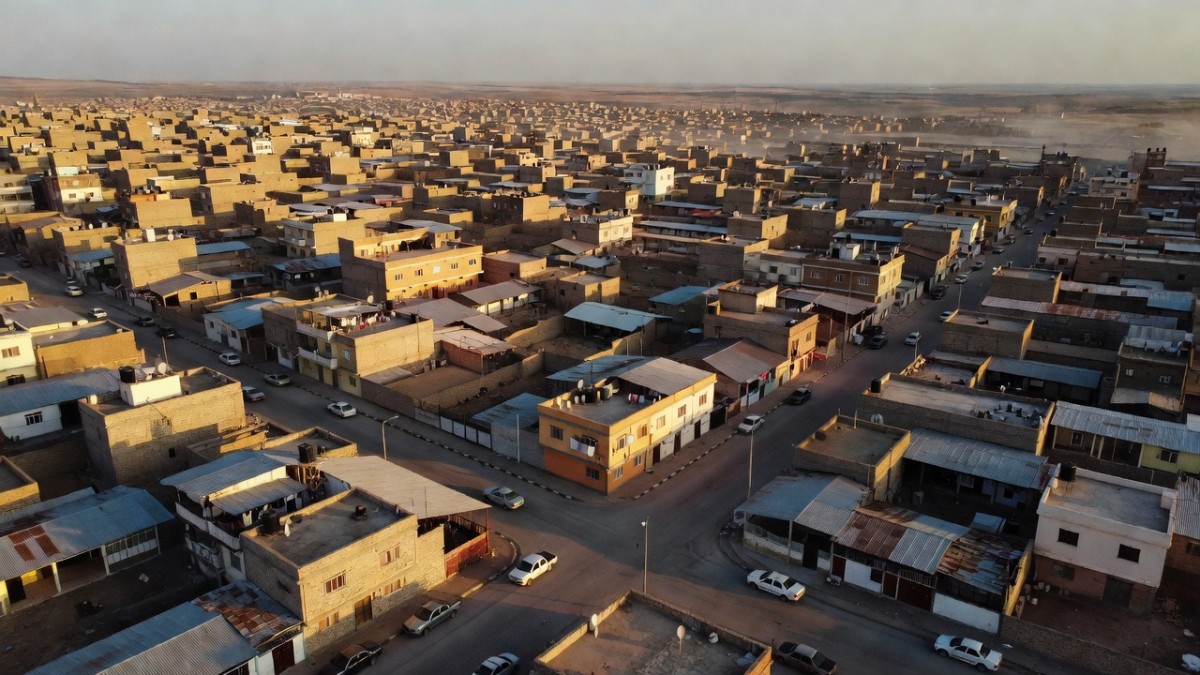
The move marks the end of an era that began in 2015 at the height of the Syrian war, when the SDF was founded as the main US partner in the fight against ISIS. At its peak, the force amassed around 100,000 fighters, both Kurds and Arabs, and carved out an autonomous administration across swaths of northeastern Syria. Now, tens of thousands of SDF personnel are employees of Syrian government ministries, with fighters integrated into the Syrian Ministry of Defense. Three all-Kurdish brigades of the national army serve in Hasakah and Qamishli, with a fourth in Kobani (Ain al-Arab), per the integration framework. For Israeli policymakers watching from Jerusalem, the absorption of the SDF into a unified Syrian command structure is a seismic shift in the regional order that demands careful analysis.
Why the SDF Chose Integration
The path to dissolution was neither smooth nor voluntary. In January 2026, after a year of stalled talks between the SDF and the new Damascus government, the Syrian army launched a military offensive that seized Arab-majority provinces including Raqqa and Deir ez-Zor from the SDF. The campaign forced Kurdish forces to withdraw toward their heartland of Hasakah and Qamishli, shrinking their territory dramatically and exposing the limits of their leverage. The SDF had already been weakened by internal fractures: according to Syria specialist Fabrice Balanche, Arab members defected en masse after the Syrian army took Raqqa and Deir ez-Zor, leaving the force at roughly half its former strength.
Washington's signal was equally decisive. The United States, which had armed and supported the SDF for years as its primary ground partner against ISIS, signaled that its patronage had limits. US envoy Tom Barrack said the group's original mission had "largely expired," a phrase that resonated deeply in Qamishli and in Jerusalem alike. The Kurdish leadership understood that the American security umbrella, which had protected their autonomous experiment since 2015, was being folded up. Without US military backing, and facing a determined Syrian army offensive, the SDF's options narrowed dramatically.
The result was the January 30, 2026 agreement. On that day, Abdi and Syrian President Ahmed al-Sharaa signed a US-brokered deal, with French involvement and Turkish endorsement, for a ceasefire and phased integration of SDF forces and civilian institutions into the state. The agreement included provisions for settling Kurdish civil and educational rights, political representation, and the return of displaced people. It was, in effect, a surrender negotiated with dignity — a recognition by the Kurds that the autonomous project had run its course and that the future lay in negotiating from within the Syrian state rather than against it.
From Autonomous Force to National Army
The mechanics of integration have moved with surprising speed. Tens of thousands of former SDF personnel are now on the payroll of Syrian government ministries, a logistical feat that required the new Damascus government to absorb an entire parallel administration. Fighters have been integrated into the Syrian Ministry of Defense, with the framework specifying that three all-Kurdish brigades of the national army now serve in Hasakah and Qamishli, with a fourth in Kobani (Ain al-Arab). These are not symbolic postings; they represent the formal incorporation of Kurdish military power into the Syrian Arab Army's chain of command.
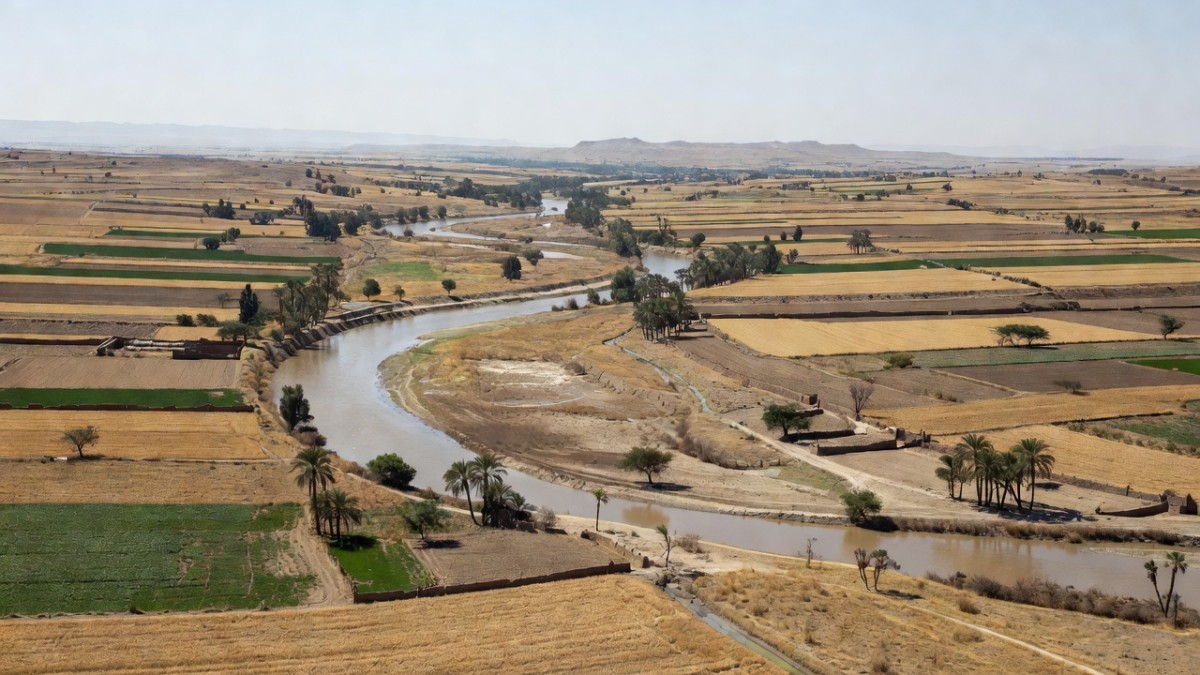
Civilian integration has proceeded alongside the military merger. In February, a Kurd from Qamishli was appointed governor of Hasakah province, a significant gesture of inclusion. In March, a senior Kurdish military official was appointed assistant defense minister in Damascus. Government forces have entered Hasakah and Qamishli, taking control of key infrastructure including Qamishli airport and critical oil fields in the region. Even the sensitive issue of ISIS detainees has been addressed: more than 5,700 ISIS detainees held in SDF-run prisons were transferred to Iraq, removing a major security burden and a potential flashpoint from Kurdish hands.
For the new Syria under al-Sharaa, the absorption of the northeast represents a consolidation of sovereignty that no Syrian government has achieved since the civil war began in 2011. The integration extends Damascus's reach to the Iraqi border and brings the country's oil resources, located primarily in the northeast, under central government control. It also creates, for the first time in over a decade, a single chain of command from the Euphrates to the Golan Heights — a development with direct implications for Israel, which shares a border with Syria's southern Quneitra province and maintains positions in the buffer zone and on Mount Hermon.
What Damascus Promised the Kurds
The Kurdish leadership's decision to dissolve the SDF was not made without concessions from Damascus. In mid-January 2026, just weeks before the integration agreement was signed, al-Sharaa issued a decree granting citizenship to stateless Kurds — an unprecedented step since Syria's independence in 1946. The same decree recognized Kurdish as a national language and designated the Newroz holiday, a significant cultural acknowledgment for a community that was systematically marginalized under the Assad dynasty and its Ba'athist ideology.
These gestures were designed to signal that the new Syria is different from the old. Under Hafez and Bashar al-Assad, Kurds were denied citizenship, their language was suppressed, and their political aspirations were met with violence. Al-Sharaa's decrees, while symbolic in some respects, represent a genuine break with that past. However, the harder questions remain unresolved. Kurdish rights have yet to be embedded in the new constitution, which is still being drafted. The status of the women's protection units, the all-female YPJ forces that were a hallmark of the SDF experiment, has been a particular sticking point in negotiations. Kurdish representation in the People's Assembly and the role of Kurds in constitutional drafting remain open questions.
Experts cited by The National have described the road ahead as "rocky," with mutual mistrust between Damascus and the Kurdish community still running deep. The Kurds remember decades of oppression and the recent military campaign that drove them from Raqqa and Deir ez-Zor. Damascus, for its part, is wary of Kurdish demands that could reignite separatist ambitions. The integration agreement is a framework, not a guarantee, and its success will depend on whether al-Sharaa's government delivers on its promises of political inclusion and cultural rights.
From Jerusalem's Vantage Point
Israeli policymakers watched the January campaign against the SDF from the sidelines, and they did so deliberately. Unlike Israel's vocal support for the Druze community in southern Syria, Jerusalem never embraced the Kurdish autonomy project in the northeast. The reasons are complex: Israel's primary security concerns lie along its northern border with Syria and Lebanon, not in the distant northeast, and Israeli officials were wary of alienating Turkey, which views the SDF as an extension of the Kurdistan Workers' Party (PKK), a designated terrorist organization. Ankara long pressed for the SDF's dismantlement, and Turkish officials pushed a playbook of disarmament and integration that ultimately prevailed.
The absorption of the SDF into the Syrian army consolidates the new Syria under al-Sharaa's government into a single chain of command from the Euphrates to the Golan. This is directly relevant to Israel because Jerusalem has been conducting security talks with Damascus — a track that resumed around Paris — over the buffer zone and Mount Hermon, while the IDF maintains positions in southern Syria and continues to strike what it calls threats near the border. A unified Syrian military command simplifies these negotiations in some ways, as Israel now deals with a single authority rather than a patchwork of armed groups. But it also raises questions about the nature of that authority and its long-term intentions.
For Israel, the removal of the SDF file also removes one flashpoint of Turkish-Israeli friction over Syria. Ankara and Jerusalem have clashed in recent years over Turkish radar deployments and airspace issues, and the SDF was a persistent source of tension. With the Kurdish force dissolved, that particular irritant is gone. However, the deeper question of Iran's influence remains. Under al-Sharaa, Damascus has kept Iran at arm's length — unlike the Assad era, when Tehran's Islamic Revolutionary Guard Corps operated freely in Syria and established a land bridge to Hezbollah in Lebanon. A unified Syrian army absorbing the northeast does not recreate the old Iranian foothold on Israel's doorstep, but Israeli officials will watch carefully whether the new Syrian army remains a professional national force or becomes a vector for any regional power's influence.
Regional and International Reactions
The international community has largely welcomed the integration as a step toward stability. US envoy Tom Barrack called the completion "absolutely historic" and praised the "far-sighted leadership" of both Abdi and al-Sharaa. French President Emmanuel Macron congratulated Syria on the "decisive step... in the process of the peaceful integration of the SDF into the Syrian state." The French involvement in brokering the deal reflects Paris's ongoing interest in Syrian affairs and its historical ties to the Kurdish community. Washington's posture, meanwhile, signals a broader shift in American priorities: the United States is no longer interested in maintaining a permanent military footprint in northeastern Syria, and the integration of the SDF allows for an orderly withdrawal of US forces from the region.
Turkey's reaction has been predictably positive. Ankara has long viewed the SDF as a direct threat to its territorial integrity, given the group's ties to the PKK, and Turkish officials have celebrated the dissolution as a victory for their policy of pressing Damascus to assert control over the northeast. The Turkish endorsement of the January 30 agreement was crucial to its success, and Ankara's influence over al-Sharaa's government appears to be growing. For Israel, this creates a complex dynamic: Turkey is a NATO member with which Israel has had fluctuating relations, and Ankara's expanded role in Syria is not necessarily aligned with Israeli interests, particularly regarding airspace and radar deployments near the border.
What Comes Next
The dissolution of the SDF does not end the Kurdish question in Syria; it transforms it. Abdi's statement that "our struggle will continue, to cement our people's rights in the constitution" makes clear that the Kurdish leadership intends to pursue its goals through political means rather than military ones. The constitutional drafting process, which is expected to unfold over the coming months, will be the first test of whether Damascus's promises of inclusion are genuine. Kurdish representation in the People's Assembly, the status of the women's protection units, and the constitutional recognition of Kurdish rights are all issues that will determine whether the integration holds or unravels.
For Israel, the coming period will require careful observation of the new Syrian army's character and loyalties. The IDF maintains positions in southern Syria, and Jerusalem has conducted security talks with Damascus over the buffer zone and Mount Hermon. A professional, national Syrian army that keeps Iran at bay could be a stabilizing factor; a Syrian army that becomes a vehicle for external influence would be a renewed threat. The Kurdish integration is a test case for al-Sharaa's Syria — whether it can build a genuinely inclusive state or whether it will repeat the mistakes of the Assad era.
The fall of the SDF's autonomous project is a reminder that in the Middle East, alliances are fleeting and geography is unforgiving. The Kurds of northeastern Syria bet on American patronage and lost; they now bet on Damascus's good faith. Whether that bet pays off will shape not only the future of Syria's Kurdish community but also the stability of a region that Israel watches with unblinking attention. From Qamishli to Jerusalem, the maps are being redrawn, and the new lines are still being tested.
By Hannah Berg, Staff Writer
This article was produced with AI-assisted research and editorial support. Reporting is based on sources cited in the article.
What's Your Reaction?
 Like
0
Like
0
 Dislike
0
Dislike
0
 Love
0
Love
0
 Funny
0
Funny
0
 Wow
0
Wow
0
 Sad
0
Sad
0
 Angry
0
Angry
0
Israel Correspondent at Global1.News. Based in Tel Aviv, covering Israeli politics, security, technology, and society. Provides balanced, deeply-sourced reporting on one of the most closely-watched regions in the world.












Comments (0)