
Strait of Hormuz: Iran's Last Leverage in 2026 War Endgame
The Strait of Hormuz, a narrow waterway carrying roughly 20% of the world's oil in peacetime, has once again become the fulcrum of Middle East geopolitics. In the aftermath of the 2026 war between the United States, Israel, and Iran, Tehran's control of this chokepoint has emerged as its most potent bargaining chip, eclipsing even its nuclear program as a source of strategic leverage.
The Strait of Hormuz, a narrow waterway carrying roughly 20% of the world's oil in peacetime, has once again become the fulcrum of Middle East geopolitics. In the aftermath of the 2026 war between the United States, Israel, and Iran, Tehran's control of this chokepoint has emerged as its most potent bargaining chip, eclipsing even its nuclear program as a source of strategic leverage. As the August 16 deadline for free passage approaches, maritime security, global energy markets, and great power competition converge at this single chokepoint.
Hormuz as Leverage: Iran's Strategic Chokehold in the Post-War Order
Beirut, Lebanon – August 12, 2026 — The Strait of Hormuz is not merely a geographic feature; it is a weapon, a bargaining table, and a barometer of Middle East power dynamics. For Iran, which effectively closed the strait in late March 2026 following the outbreak of the "Third Gulf War," this waterway represents the last remaining card in a high-stakes game against the United States. Brent Sadler, a former US naval officer and senior research fellow at the Heritage Foundation, argues that this is Iran's final major leverage in negotiations with Washington. The question now is whether Tehran will play that card to force a favorable settlement or risk a catastrophic escalation that could push oil prices toward $140 per barrel.

The Road to Closure: A Timeline of the 2026 War
The current crisis did not emerge in a vacuum. On February 28, 2026, the United States and Israel launched coordinated military operations—Operation Epic Fury and Operation Roaring Lion, respectively—against Iran following airstrikes that killed several Iranian officials, including Supreme Leader Ali Khamenei. Iran retaliated with Operation True Promise IV, and within weeks, the conflict had drawn in regional powers. The UAE, Saudi Arabia, and Kuwait attacked Iranian targets after strikes on their territory, while Israel began occupying southern Lebanon in March, reigniting Hezbollah-Israel fighting.
Iran's closure of the Strait of Hormuz shortly after the war began was a calculated move designed to inflict maximum economic pain on the global economy and, by extension, on the United States and its allies. By late March, Tehran had effectively annexed the strait, establishing control over the northern shipping lane through its territorial waters. The April 8 ceasefire, brokered under intense international pressure, came under strain almost immediately. The Islamabad Talks failed on April 12-13, prompting the US to impose its own naval blockade of Iranian ports—a move that mirrored Iran's closure of the strait and created a dual blockade that strangled regional commerce.
The June 17 signing of the Islamabad Memorandum of Understanding (MoU) appeared to offer a path out of the crisis. The agreement tasked Iran with de-mining and ensuring safe navigation, allowed ships to pass freely for an initial 60-day period (expiring Sunday, August 16, 2026), and mandated that Iran discuss the strait's future administration with Oman and Gulf states. A possible toll system was floated as a long-term solution. But the MoU's language on Hormuz was deliberately ambiguous, as analysts Negar Mortazavi of the Center for International Policy and Ryan Costello of NIAC have noted. This ambiguity has proven to be a double-edged sword, providing room for interpretation but also creating the conditions for the current standoff.
Iran's Calculus: Control as a Source of Power
For Iran's new Supreme Leader, Mojtaba Khamenei, who succeeded his slain father in March 2026, the strait is non-negotiable leverage. "The lever of closing the Strait of Hormuz must certainly continue to be used," he declared, signaling that Tehran views the waterway as its primary means of extracting concessions from Washington. This position was formalized on August 8, when Iran's Supreme National Security Council (SNSC), through secretary Mohammad Bagher Zolghadr, announced six conditions for reopening the strait: lifting the US naval blockade, lifting sanctions, withdrawing American forces from the region, paying war reparations, releasing frozen Iranian assets, and ending attacks on Iran's regional allies.
These demands are maximalist, reflecting Tehran's belief that it holds the upper hand. IRGC spokesman Hossein Mohebbi framed the strait as "a source of power tied to Iran's geographical position," adding that the US "will have no choice" but to accept Iran's conditions. Foreign Minister Abbas Araghchi has been more conciliatory, stating that an agreement with Oman is "very close" and that full reopening depends on the US honoring its June MoU commitments. Notably, there are no direct talks between Tehran and Washington; messages are exchanged through intermediaries, with Pakistan playing a leading mediation role.
Iran's leverage extends beyond the immediate military control of the strait. Analysts argue that Tehran sees Hormuz as "even more significant than its nuclear programme had been" as a bargaining chip. The potential fee system, which could generate tens of billions of dollars annually, represents a long-term revenue stream that could partially offset the devastating economic impact of sanctions. For a country that has endured decades of economic isolation, the prospect of controlling a global chokepoint is not just strategic—it is existential.
Washington's Response: Bluster, Blockade, and Economic Pressure
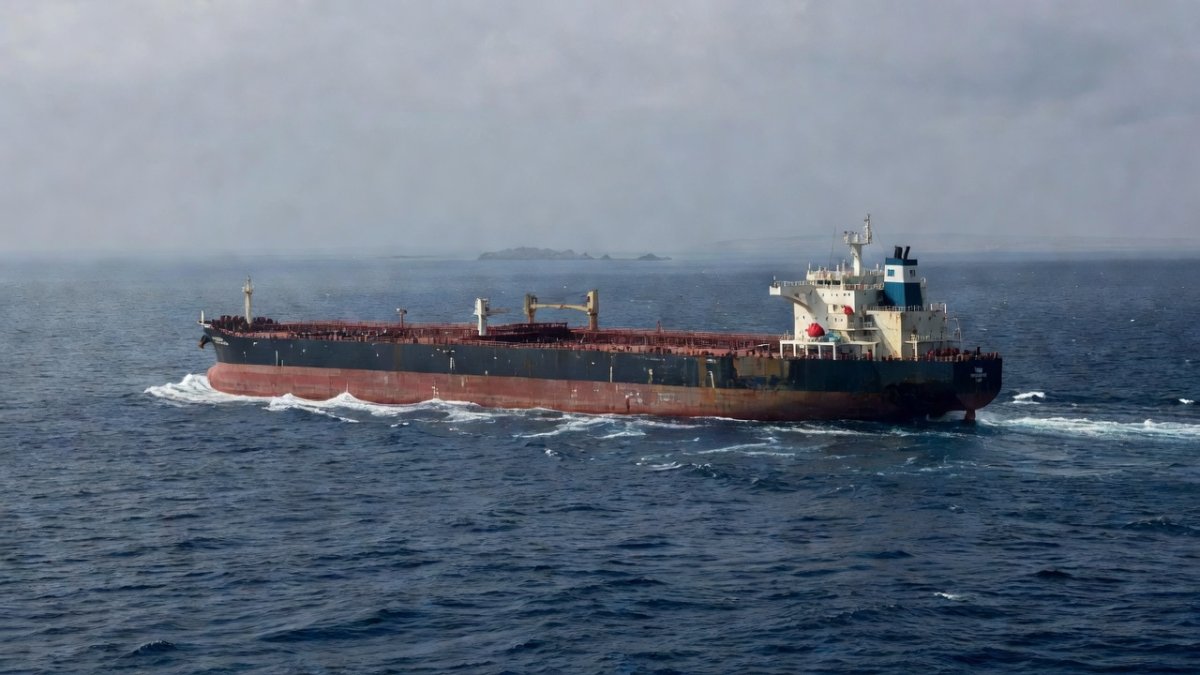
The United States has responded with a mixture of military posturing and diplomatic ambiguity. President Donald Trump has made contradictory claims, asserting on August 10 that "the only one that has control of the Strait of Hormuz right now is the United States Navy," while also claiming "100% control" and "total control over the Hormuz Strait." These statements stand in stark contrast to CENTCOM's July assessment, which acknowledged that "Iran does not control the Strait of Hormuz" while noting that US forces had facilitated the transit of more than 800 commercial vessels and 380 million barrels of crude oil since early May.
Trump's approach has been to "low-key it," as he told Axios on August 9, relying on mounting economic pressure rather than immediate fresh military strikes. This strategy includes a demand that Iran pay compensation for "damages over a 50-year period," covering the families of 17 US sailors killed in the October 2000 USS Cole attack, families of Iranian protesters killed in January 2026 unrest, and "damages and death caused to the people of Lebanon, Syria, Yemen, and Gaza." This expansive compensation demand, which Vice President JD Vance has sought to soften by expressing confidence about reaching a deal, appears designed to create political cover for a potential agreement while maintaining maximum pressure on Tehran.
Secretary of State Marco Rubio has been more direct, stating on July 20 that Iran is using the strait as leverage and calling on other countries to step up pressure. The US naval blockade of Iranian ports, imposed after the Islamabad Talks failed, remains in place, creating a standoff that has already led to incidents. On August 11-12, US forces fired on a Panama-flagged vessel that attempted to bypass the blockade, while the UKMTO reported an incident involving a tanker and military forces in the Gulf of Oman. These skirmishes underscore the volatility of the situation and the potential for miscalculation.
The Energy Dimension: Markets on a Knife's Edge
The stakes for global energy markets could not be higher. The Strait of Hormuz carries approximately 20% of the world's oil and significant LNG supplies in peacetime, making it the world's most important maritime chokepoint. Brent crude was trading at approximately $88 per barrel in early August, up from $83 at the end of the previous week but still well below the July surge above $100 and the May peak above $110. Oil jumped more than 5% on Monday, August 10, following Trump's new compensation demands, highlighting the market's sensitivity to political developments.
Capital Economics' Kieran Tompkins has warned that if the strait remains closed and OECD inventories continue to deplete, the oil market could hit a "tipping point" around the start of Q4, with prices "possibly in the region of $120-140 per barrel." Energy Aspects' Amrita Sen notes that China "singlehandedly balanced the market in May" with import cut-backs, but Chinese crude imports are recovering in July and set to rise further in August—"crude can't stay down forever." Jefferies' Modupe Adegbembo captures the prevailing sentiment among traders: they are "confident that we can get to some sort of agreement, even if it may be a fudge."
The energy calculus is further complicated by the Houthi strikes on Saudi infrastructure and Red Sea/Bab al-Mandeb shipping, including deadly attacks in Marib on August 7 and al-Mokha port on August 9, which killed at least 11 people. The UAE reported that an ADNOC vessel was targeted by a missile crossing the strait on August 8, prompting the UAE Ministry of Foreign Affairs to call the use of the strait "as a tool of economic coercion or blackmail" an act of piracy by the IRGC. These attacks demonstrate that the conflict has multiple fronts and that the strait is not the only chokepoint at risk.
Regional Dynamics: Gulf States and the New Security Architecture
The Gulf states find themselves in an unenviable position. Saudi Arabia, the UAE, and Kuwait were drawn into the war after Iranian strikes on their territory, and they now face the dual challenge of securing their maritime lifelines while managing their relationships with both Washington and Tehran. The Abraham Accords of 2020 and Gulf economic diversification efforts, such as Saudi Vision 2030, have raised the stakes for maritime security and energy stability. OPEC+ spare capacity is concentrated in Saudi Arabia and the UAE, providing a thin buffer against a prolonged Hormuz closure.
Oman has emerged as a critical intermediary, with Iran proposing an arrangement that would see inbound traffic use a northern lane through Iranian territorial waters and outbound traffic use a southern lane in Omani waters. The interim agreement is envisaged for 60 days, extendable, with talks on naval mine clearance from a central corridor, passage of military vessels, and a potential coordinated fee system. Qatari Foreign Ministry spokesperson has described the Iran-Oman talks as being at a "critical juncture," while Pakistan's Defense Minister Khawaja Asif noted on August 11 that "the signals in the last two to three days are that we are close to some sort of an arrangement."
The regional security architecture is being reshaped by the war. Egypt's Foreign Minister Badr Abdelatty is pressing for Gaza roadmap implementation, with discussions on deploying an International Stabilisation Force. Israel's occupation of southern Lebanon has created a new front that could draw in Hezbollah and, by extension, Iran. The war's cost to the United States is estimated at $113.3 billion as of June 2026, with the Trump administration requesting a record $1.5 trillion Pentagon budget. These figures underscore the enormous financial burden of the conflict and the domestic political pressure on Washington to reach a settlement.
Historical Precedents: The Strait as a Recurring Flashpoint
The current crisis is not without precedent. During the Iran-Iraq War (1980-88), the "Tanker War" saw both sides attack commercial shipping, prompting the US to reflag Kuwaiti tankers in 1987-88. Operation Praying Mantis in April 1988, the US Navy's largest surface engagement since World War II, sank the Iranian frigate Sahand. The 1988 downing of Iran Air Flight 655 by the USS Vincennes remains a deep wound in Iranian collective memory. More recently, the 2019-20 tanker attacks off Fujairah and the January 2020 US drone strike that killed Qasem Soleimani highlighted the strait's vulnerability to asymmetric threats.
Historically, Hormuz closure fears have repeatedly spiked oil prices: the 1973 Arab oil embargo, the 1979 Iranian revolution oil shock, the 1990-91 Gulf War, and the 2003 Iraq War all saw markets react to the possibility of disruption. The 2015 JCPOA nuclear deal and the US withdrawal in 2018, followed by "maximum pressure" sanctions, established the nuclear file as Iran's classic leverage—until the war rendered it moot. Now, with the nuclear program presumably degraded or destroyed, the strait has become Iran's primary means of projecting power and extracting concessions.
Regional Implications: The Road Ahead
As the August 16 deadline approaches, the region stands at a crossroads. The most likely outcome, analysts say, is a "fudge" — an interim arrangement extending the current de facto situation while letting both sides claim victory. Iran keeps its northern lane, the US continues facilitating transits, and the fee question is deferred. That buys short-term stability but leaves the underlying tensions unresolved.
The alternative scenarios are more dangerous. If the deadline passes without an agreement, Iran could escalate its attacks on shipping, prompting a US military response that could reignite the war. The oil market would react violently, with prices potentially surging toward $140 per barrel, triggering a global recession and political upheaval in energy-importing countries. Conversely, if the US accepts Iran's conditions—including lifting sanctions and paying reparations—it would represent a significant strategic victory for Tehran and a humiliating reversal for Washington, with profound implications for US credibility in the region.
Beyond the strait, the war has redrawn the region's strategic map: Israel occupies southern Lebanon, the Houthis strike Saudi infrastructure, and Gulf states are diversifying security partnerships. Talks over an International Stabilisation Force and Egypt's Gaza roadmap initiative signal recognition that the post-war order needs new mechanisms — but those efforts remain nascent.
For Iran, Hormuz is not just leverage—it is a symbol of resilience and a testament to the strategic value of geography. For the United States, it is a test of resolve and a reminder that military superiority does not always translate into political victory. For the Gulf states, it is an existential threat to their economic diversification plans and a catalyst for new security arrangements. And for the global economy, it is a reminder that the Middle East's chokepoints remain the world's most vulnerable arteries.
The coming days will determine whether the strait becomes a bridge to a new regional order or a battleground for the next phase of the conflict. As Brent Sadler's analysis suggests, Iran's control of Hormuz is its last major leverage—and how Tehran chooses to use it will shape the Middle East for years to come.
By Malik Hassan, Staff Writer
This article was produced with AI-assisted research and editorial support. Reporting is based on sources cited in the article.
What's Your Reaction?
 Like
0
Like
0
 Dislike
0
Dislike
0
 Love
0
Love
0
 Funny
0
Funny
0
 Wow
0
Wow
0
 Sad
0
Sad
0
 Angry
0
Angry
0

Middle East Correspondent at Global1.News. Based in Beirut, covering politics, conflict, energy, and society across the Middle East. Brings context and depth to a region often reduced to headlines.










Comments (0)