
SpaceX Just Spent $15.8 Billion on AI in One Quarter — and Wall Street Punished It
SpaceX's first earnings since its IPO beat estimates with $7.8B revenue and 92% growth, but $15.8B in quarterly AI capital spending sent the stock down 7%. AMD's light Q3 forecast fell 8% too. The market is demanding revenue proof, not capex promises.
SpaceX Just Spent $15.8 Billion on AI in One Quarter — and Wall Street Punished It
I watched last night's Bloomberg Tech segment with the same feeling I get when a client calls about a server that's been pegged at 99 percent CPU for three days — impressed, but worried about what's about to break. SpaceX posted its first earnings report as a public company, and it wasn't the victory lap everyone expected. Revenue up 92 percent. Beat the street by nearly a billion dollars. And the stock still fell more than 7 percent after hours.
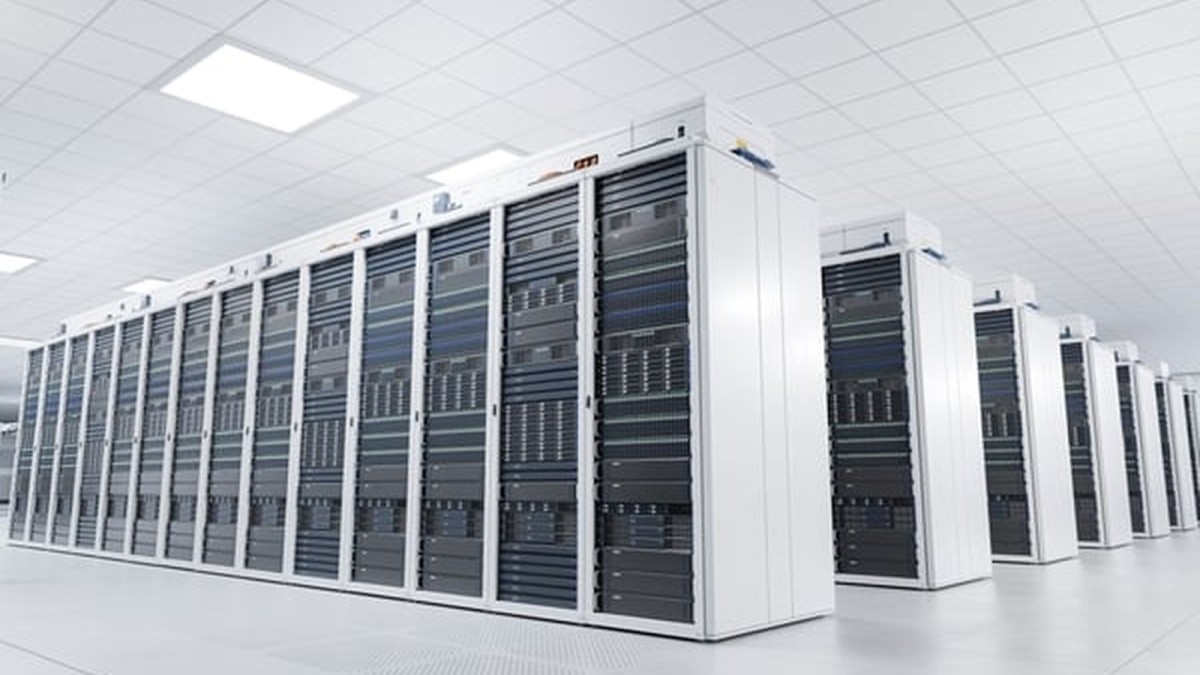
The reason is the number that should matter to every independent hosting provider on this planet: $15.8 billion in AI capital spending in a single quarter. Let me tell you something — I've been running hosting infrastructure for over a decade, and I've seen a lot of expensive mistakes. But a rocket company spending more on AI in three months than most countries spend on defense in a year? That's not a line item. That's a signal.
The Earnings Debut That Should Have Been a Party
Let's give SpaceX its due first, because the fundamentals were genuinely strong. The company reported $7.8 billion in second-quarter revenue, up 92 percent year over year and well ahead of the $6.9 billion analysts were looking for. The net loss narrowed to $541 million from a $1 billion loss a year ago. Gwynne Shotwell and team delivered the kind of quarter any newly public company would kill for.
But here's what actually happened on the tape. Despite beating revenue estimates, shares fell more than 7 percent in after-hours trading. That's the same pattern we've seen all summer: Google raises capex, the stock drops 4 percent. Oracle's credit rating gets cut to BBB-, the stock craters. The market is no longer rewarding spending. It's punishing it.
The $15.8 Billion AI Habit — and What It's Actually Buying
The capex number is the story. SpaceX spent $18.4 billion on capital expenditures in Q2 alone, and $15.8 billion of that came from the AI segment. For the first half of 2026, capex hit $28.5 billion — more than four times what the company spent in the same period a year earlier. Analysts had penciled in a $48.7 billion annual run rate. SpaceX is spending at a $73.5 billion annualized clip.
What's it buying? A lot of it goes to compute. Remember, SpaceX agreed in June to acquire Cursor — the AI coding company — for $60 billion in an all-stock deal tied to a joint model-training partnership with xAI's Colossus infrastructure. Cursor was doing roughly $4 billion in annualized revenue. That's a 15x multiple, rich but not insane for a company growing that fast. The point is SpaceX isn't dabbling in AI. It's building a hyperscaler inside a rocket company.
Starlink Is the Cash Machine Paying for It
And this is where it gets interesting, because SpaceX has something no hyperscaler has: a real, consumer-facing, cash-printing business funding the AI habit. The Connectivity segment — Starlink — generated $4.3 billion in revenue, up 66 percent, with subscribers doubling to 12 million. Starlink posted an operating profit of $1.19 billion in Q1. Meanwhile the company is guiding toward a $100 billion annualized revenue run rate by the end of 2026, a number that includes expected Cursor revenue.
Think about that for a second. Every hyperscaler funding the AI buildout is borrowing money, selling equity, or both. SpaceX is paying for its $15.8 billion quarterly AI splurge out of a satellite internet business that actually prints cash. That's the difference between a buildout that survives a downturn and one that gets foreclosed on.
Same Verdict, Different Company — AMD's "Underwhelming" Forecast
Now the other half of yesterday's earnings tape, because it reinforces the same lesson. AMD reported record second-quarter revenue of $11.5 billion, up 50 percent year over year. Data center revenue hit $6.7 billion, up 107 percent — that's the segment powering AI, and it's now 58 percent of AMD's entire business. Lisa Su called it an excellent quarter, and she wasn't wrong.
Then AMD guided third-quarter revenue to about $13 billion. The average analyst estimate was $12.5 billion, so the guide beat the consensus. But some Wall Street estimates were well north of $13 billion, and the market wanted more. AMD stock fell 8 percent in after-hours trading. The Bloomberg verdict: AMD "needs to show more rapid growth to justify its valuation." Translation — a 50 percent revenue grower with 107 percent data center growth just got punished for not growing fast enough.
The Market Is Saying Something Nobody Wants to Hear
Put the two together and you get the clearest signal of the entire AI cycle. SpaceX beats revenue by a mile, spends like a hyperscaler, stock falls. AMD crushes the quarter, guides above consensus, stock falls. The market is telling every company in this industry the same thing: revenue proof per dollar of capex is the only metric that matters now. Even the robotaxi corner of the same show told the story — Zoox finally started charging for rides in Las Vegas. The whole economy is being asked to monetize AI today, not tomorrow.
This is the pricing-signal distortion I've been warning about since Google's earnings day — when the market can't decide whether $205 billion of capex is good or bad, every supplier in the chain gets mixed signals. Now the confusion has spread to a rocket company and a chipmaker. If you're an independent hosting provider trying to plan capacity for next year, you're staring at a market that punishes both the spenders and the suppliers.
What This Means for Independent Hosting Providers
First, watch AMD's guide as your hardware clock. $13 billion in Q3 guidance means data center demand is still growing — EPYC and Instinct are ramping, Helios racks are deploying. But the stock punishment means suppliers face margin pressure to show revenue per GPU, not just GPU shipments. Lock your equipment orders now, because lead times don't get better when the market gets nervous.
Second, reposition around revenue proof. The hyperscalers — and now SpaceX — are going to face brutal scrutiny on every dollar of capex. That's your opening. Pitch utilization, pitch profit per rack, pitch the fact that your capacity is paid for by actual customers, not by a bond issuance. The market just told you what it values. Sell that.
Third, watch the concentration risk. SpaceX plus Cursor plus xAI means AI revenue is consolidating into fewer hands. If you're running workloads for AI startups, remember your tenant's funding can vanish in a single quarter. Diversify. Don't build your whole business around one AI tenant, because that tenant's boss just told Wall Street she's spending $15.8 billion a quarter to take your margin.
Fourth, keep your financing short and fixed. The SpaceX lockup expires this week — roughly 900 million additional shares come unlocked after third-quarter results, a block bigger than the entire IPO. If SpaceX stock wobbles, the whole AI trade sentiment wobbles with it. Floating-rate debt is a one-way ticket to pain. Lock your rates while you still can.
The Bottom Line
Here's the truth I keep coming back to, and yesterday's tape just confirmed it: the blank check era is over. When a company that grew revenue 92 percent gets punished for spending, and a chipmaker that doubled its data center business gets punished for not doubling it again, the market has officially stopped believing the story. It wants receipts.
That's good news for independents, in a twisted way. The giants are now fighting for every basis point of revenue proof, which means real customers matter more than ever. Keep your books clean, keep your promises honest, and keep an eye on that capex line, ent? Because the rocket company just showed us exactly where this cycle is headed — and it's headed to the bottom line.
-- Allan Ali, Founder
This article was produced with AI-assisted research and editorial support. Reporting is based on sources cited in the article.
What's Your Reaction?
 Like
0
Like
0
 Dislike
0
Dislike
0
 Love
0
Love
0
 Funny
0
Funny
0
 Wow
0
Wow
0
 Sad
0
Sad
0
 Angry
0
Angry
0

Publisher of Global1.News. Automation architect, systems builder, and the guy making sure the truth gets published.













Comments (0)