
SpaceX declares Starship ready for orbit, sets launch date next week
SpaceX is gearing up to fire its 14th Starship prototype on a trajectory that finally aims for orbit. The company says it could lift off as early as September 22, targeting a 7:15 am local window in Brownsville, Texas.
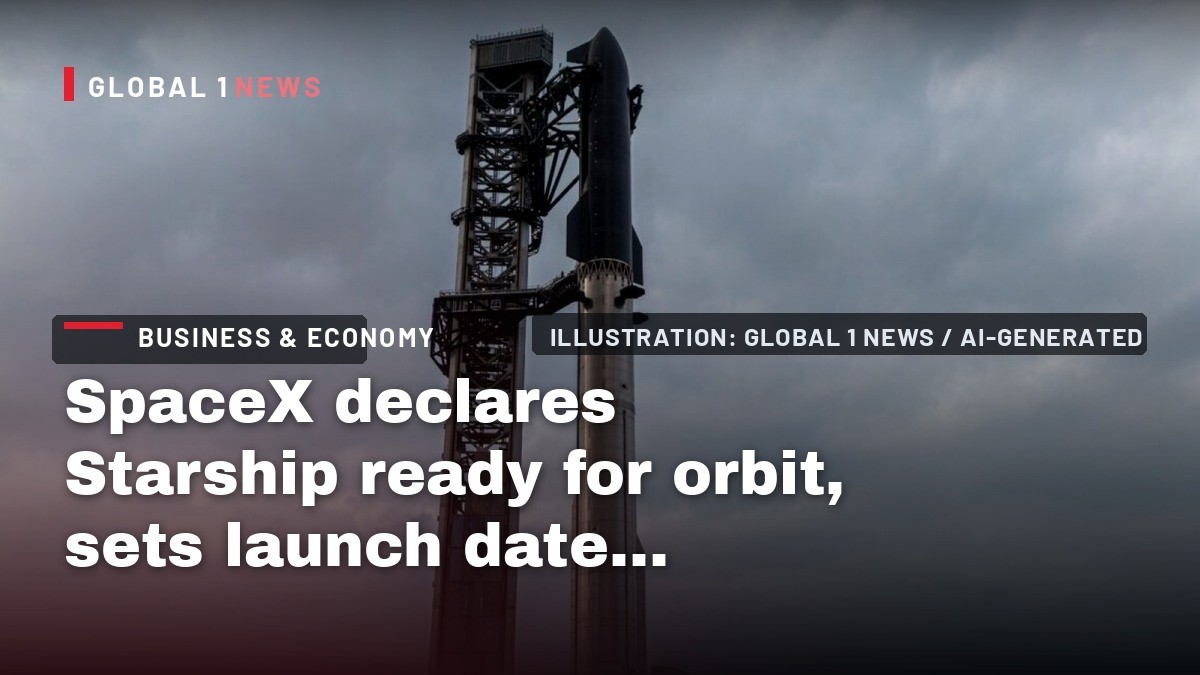
SpaceX is gearing up to fire its 14th Starship prototype on a trajectory that finally aims for orbit. The company says it could lift off as early as September 22, targeting a 7:15 am local window in Brownsville, Texas. That launch window, a 75‑minute slice, lines up with sunrise, promising a picture‑perfect start. But for us running real hosting infrastructure, the headline is less about the spectacle and more about the ripple effects on satellite broadband, launch pricing, and the broader risk calculus for independent providers.
Why the orbit attempt matters for the hosting world
The upcoming flight will carry 26 of the larger V3 Starlink satellites into a 275 km orbit. Those are the next‑generation payloads that promise higher throughput than the V2 mini units launched on Falcon 9. For hosting firms that rely on satellite backhaul in remote Caribbean islands, a more capable Starlink constellation could translate into lower latency and higher bandwidth options. That sounds like a win, but the reality is that each new launch cycle brings pricing volatility and dependency on a single hyperscaler’s roadmap.
SpaceX’s push for a fully reusable, super‑heavy lift system is meant to drive down launch costs. Yet the company still needs regulatory sign‑off and is still troubleshooting hardware—ice clogging in the Super Heavy’s center engines, for instance, forced an early termination of the boost‑back burn on the July 24 test. Those hiccups hint that the promised cost reductions are still a work in progress, and any delay or failure can cascade into service disruptions for customers counting on satellite capacity.
The technical hiccups that keep the hype in check
The July 24 test flight exposed a concrete weakness: ice buildup in three center engines during the terminal phase of the boost‑back burn. SpaceX’s own update said this forced an early end to the maneuver and led to a hard splashdown after only eight of the planned 13 engines reignited for the landing burn. The company is now fitting better filtration hardware and tweaking software to improve relight reliability. That’s a reminder that even the most hyped hardware can suffer from basic engineering oversights.
For us, the lesson is clear—don’t bet your entire network on a single launch provider’s “next big thing.” The fact that the first stage will now aim for a controlled Gulf of Mexico splashdown, rather than a return to the launch site, underscores how far the system still is from the seamless, rapid‑turnaround model that many providers are being sold.
Tile reuse: a modest step forward
SpaceX also highlighted a modest but noteworthy upgrade: two heat‑shield tiles recovered from Ship 40 will be reflown on Ship 41, marking the first tile reuse for Starship. The company says it has added retention mechanisms to tiles in high‑risk areas and introduced a curved tile design to reduce heating in gaps. While this is progress, it’s a tiny slice of the overall thermal protection system. The broader challenge remains—ensuring that the heat shield can survive repeated flights without costly refurbishments.
From a hosting provider’s perspective, incremental improvements like tile reuse are welcome, but they don’t shift the risk profile dramatically. The real cost driver is still the launch price, and until we see a clear, repeatable cost curve, it’s risky to base capacity planning on speculative price drops.
Regulatory bottlenecks and launch cadence
The announcement is “pending regulatory approval,” a phrase that should set off alarms for any business that depends on satellite capacity. The Federal Aviation Administration and other bodies still need to sign off on the flight, meaning the launch date could slip. SpaceX’s own history shows that even with a clear target window, regulatory hold‑ups can push missions back weeks or months.
That uncertainty translates directly into business risk. If you’ve contracted for a certain amount of bandwidth based on a projected launch date, any delay forces you to either over‑provision with alternative links—often at higher cost—or risk service degradation. Independent hosting firms need to build flexibility into their network designs, perhaps by diversifying across multiple satellite constellations or keeping terrestrial backups where feasible.
The economics of hyperscaler launch services
SpaceX’s pricing model for Starlink launches is opaque, but the company’s broader strategy is to undercut traditional launch providers by leveraging the massive scale of its own satellite constellation. However, that scale is built on the assumption that each launch succeeds and that the hardware matures quickly. The recent engine ice issue and the need for additional tile retention mechanisms suggest that the cost per successful launch is still higher than the headline numbers imply.
For independent providers, the lure of cheap bandwidth from a hyperscaler must be weighed against the hidden costs of dependency: limited negotiation leverage, potential service interruptions, and the risk that a single launch failure could bottleneck an entire region’s connectivity. A diversified procurement strategy—mixing satellite, fiber, and microwave—remains the prudent path.
Practical steps for hosting founders
First, treat any announced launch date as a tentative milestone, not a firm commitment. Build contractual clauses that allow for schedule slips without penalty. Second, monitor the technical health of the launch vehicle closely—engine reliability, thermal protection upgrades, and landing success rates are leading indicators of future launch cost stability. Third, diversify your satellite bandwidth sources. Even if Starlink’s V3 payloads promise better performance, having a fallback to other constellations or terrestrial links cushions against launch delays.
Finally, keep an eye on the regulatory pipeline. The fact that SpaceX still needs approval for this flight means the process is not a done deal. Engaging with regulators early—through industry groups or direct outreach—can give you early warning of potential hold‑ups that could affect your capacity planning.
Bottom line: hype is not a substitute for hard data
The September 22 Starship attempt is a big step for SpaceX, but it’s still a test. Ice‑clogged engines, hard splashdowns, and incremental tile reuse remind us that the road to a truly reusable, low‑cost launch system is still under construction. For hosting providers, the key takeaway is to stay skeptical of hype‑driven pricing promises and to embed resilience into network design.
In short, celebrate the engineering milestones, but keep your foot on the brake when it comes to committing capital based on a single provider’s roadmap. Diversify, negotiate hard, and keep watching the technical bulletins—those are the real signals that will protect your business from the next launch‑day surprise.
— Allan Ali, Founder
This article was produced with AI-assisted research and editorial support. Reporting is based on the source material cited below. Sources: Ars Technica; arstechnica.com; Global1.News (18 September 2026).
By Allan Ali, Global1.News
What's Your Reaction?
 Like
0
Like
0
 Dislike
0
Dislike
0
 Love
0
Love
0
 Funny
0
Funny
0
 Wow
0
Wow
0
 Sad
0
Sad
0
 Angry
0
Angry
0

Publisher of Global1.News. Automation architect, systems builder, and the guy making sure the truth gets published.













Comments (0)