
Solar Eclipse 2026: Europe's Rare Sky Show Carries Deep Meaning for Latin America
On Wednesday, August 12, 2026, the sky over the northern Atlantic turned to twilight in the middle of the day, as the Moon slid perfectly in front of the Sun. For millions of people across Europe, it was a moment of collective awe, but for us in Latin America, it was also a reminder of our own deep history with the cosmos and a preview of the celestial spectacles heading our way.
On Wednesday, August 12, 2026, the sky over the northern Atlantic turned to twilight in the middle of the day, as the Moon slid perfectly in front of the Sun. For millions of people across Europe, it was a moment of collective awe, but for us in Latin America, it was also a reminder of our own deep history with the cosmos and a preview of the celestial spectacles heading our way. From the ancient Maya who charted these events with mathematical precision to the modern observatories perched in the Chilean desert, this eclipse connected our past, present, and future under a single shadow.
A Shadow Over Europe, a Signal for Latin America: The 2026 Solar Eclipse
São Paulo, Brazil – August 13, 2026 — The 2026 eclipse rewrote the northern sky, but its deepest echoes landed south of the equator, where Indigenous astronomy and modern observatories give Latin America a unique claim on the cosmos. Here is what the shadow means for the region — and when it comes home.
Europe's Sky Goes Dark: A 27-Year First
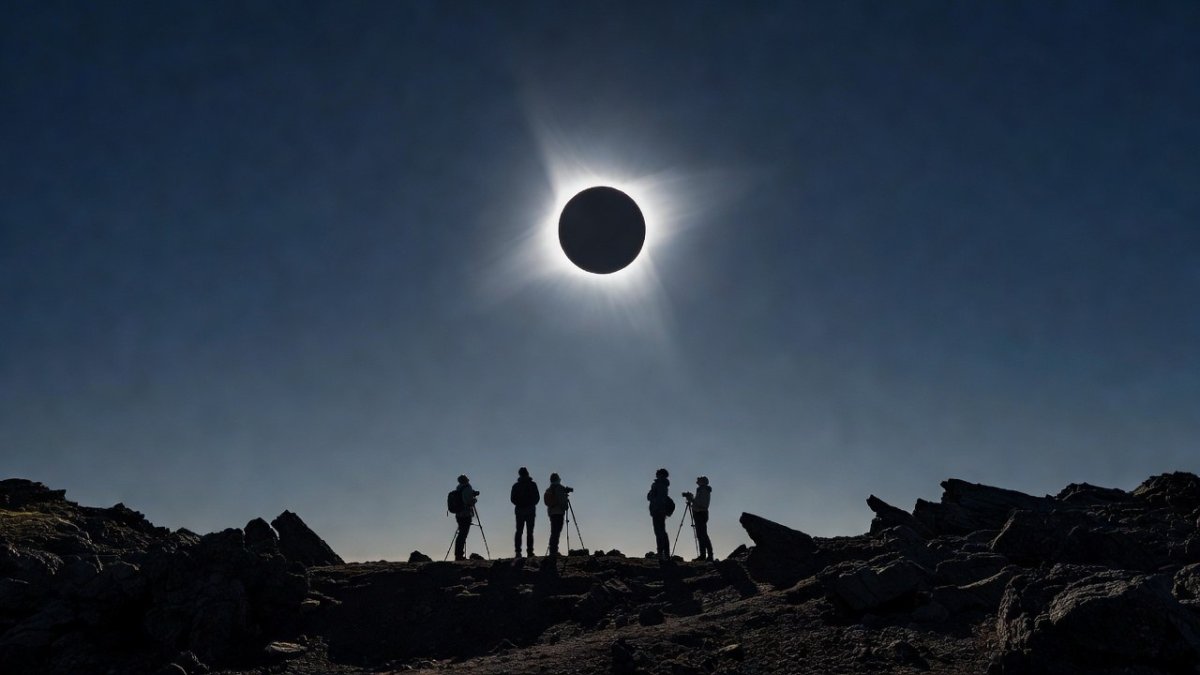
The total solar eclipse of August 12, 2026, was a historic event for the northern hemisphere, marking the first time in 27 years that totality graced the continent of Europe. The last time Europeans witnessed such a spectacle from their own soil was on August 11, 1999, a generation ago. This was also the first total solar eclipse on Earth in 28 months, breaking a long dry spell for sky watchers worldwide. With a magnitude of 1.0386, the Moon covered more than the Sun's disk, and because it passed just 2.2 days after perigee on August 10, its apparent diameter was larger than average, creating a longer and more dramatic period of darkness.
The path of totality was a journey across some of the most remote and dramatic landscapes on the planet. It began in northernmost Siberia, swept across the Arctic, then crossed Greenland and Iceland before plunging into the Atlantic Ocean. From there, the shadow made landfall in northern Spain and the extreme northeastern tip of Portugal, finally ending over the Balearic Islands in the Mediterranean. Spanish cities like A Coruña, Valencia, Zaragoza, Palma, and Bilbao were plunged into darkness, while Madrid and Barcelona, frustratingly, found themselves just outside the path of totality, experiencing only a deep partial eclipse.
The greatest eclipse occurred at 17:47:06 UTC, approximately 45 kilometers off Iceland's west coast at coordinates 65.2N, 25.2W. There, the Moon completely hid the Sun for a maximum of 2 minutes and 18 seconds, casting a shadow band 294 kilometers wide across the ocean. For Iceland, this was a particularly momentous occasion: it was the country's first total solar eclipse in 72 years, and the first time the capital, Reykjavik, had seen totality since the year 1433. Hundreds of visitors from around the world flew into the island nation, braving its unpredictable weather for a chance to witness the corona with their own eyes.
The Science Hidden in the Shadow
While the visual spectacle is breathtaking, the scientific value of a total solar eclipse remains immense. Totality is the only moment when the Sun's corona, its faint outer atmosphere, becomes visible to the naked eye. This ethereal, pearly-white halo is normally lost in the glare of the Sun's surface, but during an eclipse, it reveals itself in all its glory. For scientists, this is a precious opportunity to study the corona's structure, temperature, and magnetic fields, which are key to understanding solar activity and space weather that can affect satellites and power grids on Earth.
Historically, eclipses have been pivotal in proving some of our most fundamental theories about the universe. The most famous example is the total solar eclipse of May 29, 1919. Expeditions led by Arthur Eddington and Frank Dyson traveled to Sobral in Brazil and Principe off the coast of West Africa to photograph the eclipse. Their measurements of starlight bending around the Sun provided the first experimental confirmation of Albert Einstein's general theory of relativity, transforming our understanding of gravity and space-time, and catapulting Einstein to global fame. That groundbreaking proof happened on Brazilian soil, a point of pride for Latin American science.
As the 2026 eclipse unfolded, scientists used modern instruments to continue this legacy, studying the corona's dynamics and testing new imaging techniques. However, it is crucial to remember that this research is only possible with proper eye safety. The Sun must never be viewed directly without protection. Only ISO 12312-2 certified eclipse glasses or indirect projection methods are safe, a lesson that applies equally to the millions who watched in Europe and to those of us preparing for future eclipses in Latin America. The shadow is a gift, but it demands respect.
Ancient Sky Watchers: The Maya and the Dresden Codex
Long before European astronomers had telescopes, the ancient Maya were predicting solar eclipses with astonishing accuracy. More than a thousand years ago, they developed complex mathematical systems to track the movements of the Sun, Moon, and planets. Their knowledge was so advanced that they could forecast not just that an eclipse would occur, but when and where it would be visible. This was not mere superstition; it was a sophisticated science that required centuries of careful observation and record-keeping.
The key to their predictive power lies in a remarkable document known as the Dresden Codex, one of the few surviving Maya books. Within its pages, specifically on pages 51a-58b, are eclipse tables based on a 405-lunation cycle, which spans about 33 years. This table ingeniously accounts for the lunar synodic period, the lunar nodal cycle, and the solar year, incorporating correction mechanisms that kept predictions accurate for centuries. A 2025 study published in Science Advances (sciadv.adt9039) reconstructed how Maya daykeepers used this table, suggesting that the surviving version likely served the period from 1076 to 1148 CE.
For the Maya, eclipses were not just astronomical events; they were deeply woven into their cosmology and religious beliefs. They saw them as moments of cosmic imbalance, when the Sun was under threat, and their rulers would perform rituals to appease the gods and ensure the Sun's return. The precision of the Dresden Codex shows that they understood the cyclical nature of these events, allowing them to prepare for what they saw as dangerous times. Their legacy is a testament to the intellectual power of Indigenous American civilizations, a heritage that we in Latin America can look upon with immense pride.
The Inca's Solar Order
Further south, in the Andes, the Inca Empire built a civilization that was equally attuned to the Sun's movements. The Inca considered the Sun, or Inti, to be their divine ancestor, and their architecture and urban planning reflected a deep reverence for its cycles. They constructed solar observatories across their vast territory, from modern-day Ecuador to Chile, to track the solstices, equinoxes, and other celestial events that governed their agricultural calendar and religious festivals.
The most iconic of these structures is the Intihuatana stone at Machu Picchu. The name comes from Quechua, where Inti means Sun and wata means to tie, and it is often translated as the "hitching post of the Sun." This carved rock pillar was not just a decorative piece; it functioned as a precise solar calendar. On the solstices, the sun would cast a specific shadow that aligned with the stone, marking the turning points of the year. The Inca also used a system of ceques, which were ritual sight lines radiating from the capital of Cusco, to track celestial bodies, and the Temple of the Sun at Machu Picchu was specifically aligned to the movements of the Sun.
This solar order was central to Inca governance and survival. By predicting the seasons, they could plan planting and harvesting, ensuring food security for their large population. The Intihuatana was a physical manifestation of their ability to "tie" the Sun to the Earth, maintaining cosmic order. When the Spanish arrived, they often destroyed these stones, seeing them as symbols of a pagan religion. But the surviving examples, like the one at Machu Picchu, stand as a powerful reminder of the sophisticated astronomical knowledge that existed in the Americas long before European contact.
Latin America's Living Observatory
Today, Latin America is not just a place with a rich astronomical past; it is the world's premier hub for ground-based astronomy. The Atacama Desert in Chile, with its high altitude, bone-dry air, and minimal light pollution, offers conditions that are unmatched anywhere else on Earth. It is home to some of the most powerful telescopes ever built, making it a living observatory for the entire planet. Astronomers from around the globe flock to this region to study the universe, from the birth of stars to the formation of galaxies.
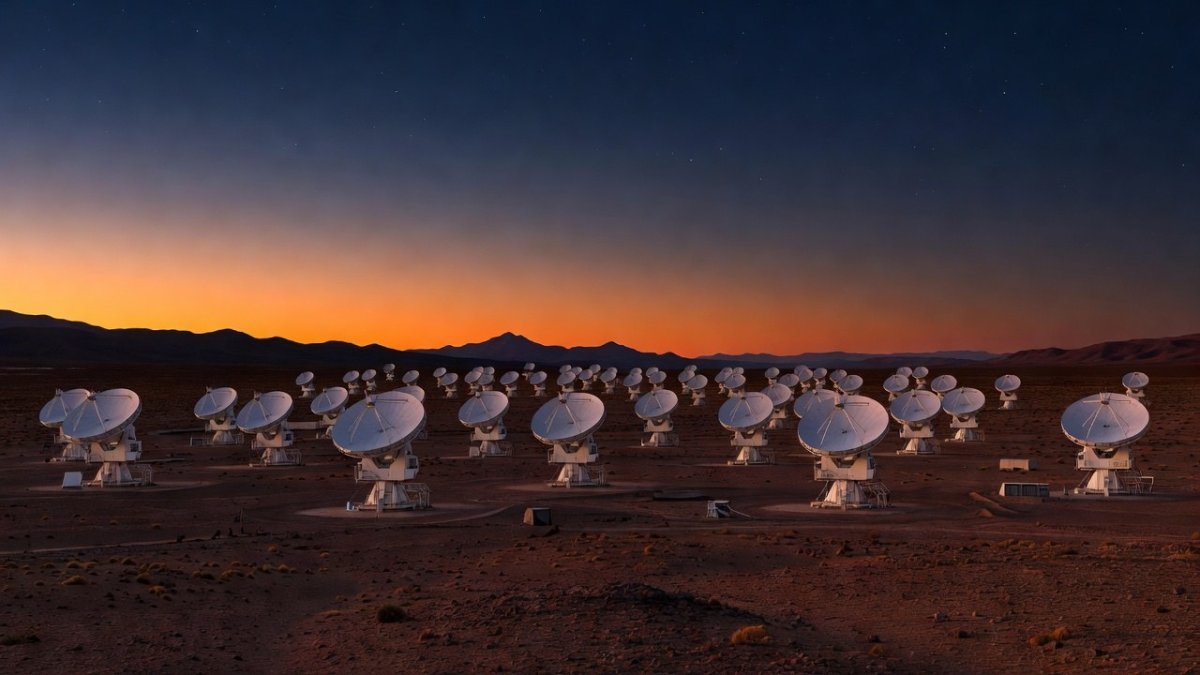
The Atacama hosts the Atacama Large Millimeter/submillimeter Array (ALMA), the largest submillimetre observatory on Earth, located on the Chajnantor plateau at about 5,000 meters above sea level. It also houses the European Southern Observatory's Very Large Telescope (VLT) at Cerro Paranal. These facilities have revolutionized our understanding of the cosmos, and they are a source of immense scientific pride for the region. However, this precious resource is under threat. Astronomers are increasingly warning that light pollution from growing cities and industrial projects is endangering Chile's dark skies, and ESO has been actively advocating for their protection.
The August 2026 eclipse, while visible in Europe, served as a reminder of the importance of preserving our own dark skies. For Latin American astronomers, it was also a rehearsal. The techniques used to study the corona, the public engagement strategies, and the safety protocols are all being refined for the events coming our way. The Atacama's clear skies are a national treasure, and protecting them is not just about science; it is about preserving a natural resource that benefits all of humanity. The shadow that crossed Europe is a call to action for us to safeguard our own celestial window.
What Comes Next: A Ring of Fire Over South America
Latin America does not have to wait 27 years for the next big eclipse. In fact, our region is about to become the center of the astronomical world. On February 6, 2027, an annular "ring of fire" eclipse will cross southern Chile, Argentina, Uruguay, and Brazil, before moving on to West Africa. This spectacular event, where the Moon covers the center of the Sun but leaves a bright ring around its edge, will have a maximum annularity of 7 minutes and 51 seconds, an exceptionally long duration. A partial eclipse will be visible across much of South America, making it a continent-wide event.
Just under a year later, on January 26, 2028, another annular eclipse will cross Ecuador, Peru, Brazil, Suriname, and French Guiana, along a path about 323 kilometers wide. This means that within a span of less than two years, millions of Latin Americans will have the chance to witness a major celestial event from their own backyards. These are not just scientific curiosities; they are opportunities for education, tourism, and community building. Cities along the paths are already planning viewing events, and schools are preparing lessons to teach students about the mechanics of eclipses.
The European eclipse of August 2026 was a spectacular show, but it was also a preview of what is to come for us. The excitement, the crowds, the scientific observations, and the shared sense of wonder are all things we will experience firsthand very soon. For Latin America, the future of eclipse watching is bright, or rather, it is about to get dramatically dark. The "ring of fire" is coming, and it is time for us to prepare to look up together.
The Bottom Line: Looking Up Together
The total solar eclipse of August 12, 2026, was a powerful reminder of our place in the universe. It connected people across continents, from the Arctic to the Mediterranean, in a shared moment of awe. For Latin America, it was a bridge between our ancient past and our scientific future. The Maya and the Inca looked to the skies with reverence and understanding, and today, our astronomers continue that legacy from the peaks of the Atacama. The shadow that crossed Europe is a thread that ties us all together.
As we look forward to the annular eclipses of 2027 and 2028, we have a unique opportunity to engage our communities, to celebrate our heritage, and to inspire the next generation of scientists and dreamers. These events are not just about the Sun and the Moon; they are about us. They are moments when we pause our daily routines, step outside, and remember that we are part of a vast and beautiful cosmos. They are a chance to look up, together, and feel a sense of connection that transcends borders and politics.
The science is clear, the history is rich, and the future is bright. Let us protect our dark skies, honor the knowledge of our ancestors, and prepare to witness the wonders that await us. The next great eclipse is not a distant dream; it is a near reality. Let us be ready to look up, not just as individuals, but as a united Latin America, ready to embrace the cosmos with open eyes and open minds.
By Elena Vasquez, Staff Writer
This article was produced with AI-assisted research and editorial support. Reporting is based on sources cited in the article.
What's Your Reaction?
 Like
0
Like
0
 Dislike
0
Dislike
0
 Love
0
Love
0
 Funny
0
Funny
0
 Wow
0
Wow
0
 Sad
0
Sad
0
 Angry
0
Angry
0

Latin America Correspondent at Global1.News. Based in Mexico City, covering politics, economics, energy, and culture across the region. Brings an on-the-ground perspective to stories spanning from the Rio Grande to Patagonia.















Comments (0)