
Snap tries to make the case again for its $2,200 smart glasses
Snap’s $2,200 Specs glasses have been the punchline of tech jokes since they first hit the stage earlier this year. The product’s hefty price tag, clunky look and under‑whelming debut left investors spooked and the stock nosediving.
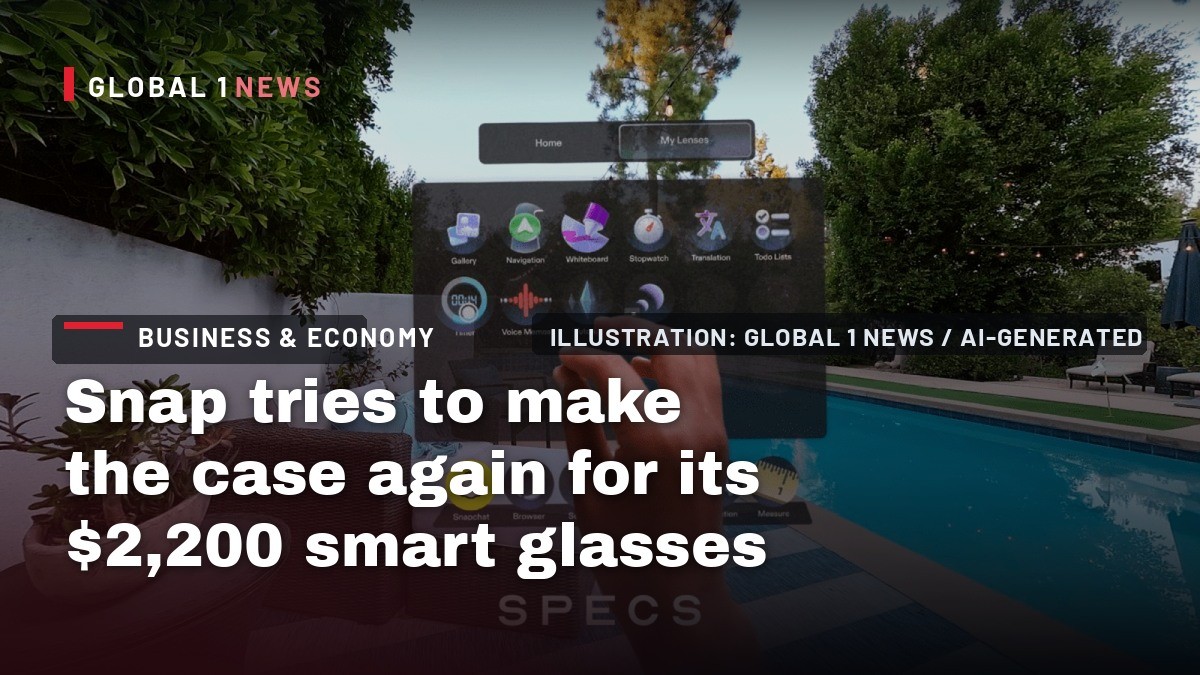
Snap’s $2,200 Specs glasses have been the punchline of tech jokes since they first hit the stage earlier this year. The product’s hefty price tag, clunky look and under‑whelming debut left investors spooked and the stock nosediving. Now the company is trying to spin the hardware into a platform, rolling out a raft of new features, enterprise tie‑ups and a subscription connectivity add‑on. As someone who runs real hosting infrastructure for a decade, I’m not buying the hype. I see a classic case of a VC‑fueled hardware push that tries to hide its lack of consumer traction behind a veneer of AI‑powered “productivity.” Let’s break down what Snap is actually offering, why it matters for independent hosting providers, and what you should be wary of when a hyperscaler‑style product tries to force its way into the market.
From “underwater” launch to “AI native OS” – the narrative shift
When Snap first unveiled Specs, the reaction was swift and brutal: a $2,200 piece of headgear that looked more like scuba gear than a sleek AR device. The market response was a cascade of jeers and calls for CEO Evan Spiegel’s resignation, and the company’s shares took a hit. Fast‑forward to the recent Los Angeles event, and Snap is re‑branding the same hardware as the centerpiece of an “AI native operating system.” Spiegel described this new Specs Intelligence as an “anticipatory AI” that learns your goals, priorities and routines from connected apps, promising to help you focus on what matters while making progress toward longer‑term objectives.
In practice, the description sounds a lot like an AI‑powered productivity layer that can sit on any device – iPhone, Mac or the glasses themselves. The promise is that the AI will “connect the dots across Lenses,” Snap’s term for its AR camera effects, but the core functionality does not require the glasses at all. This is a familiar pattern: a costly hardware product is retrofitted with software services to justify its existence, a tactic we’ve seen from other VC‑backed hardware startups that struggle to find a market fit.
Entertainment add‑ons: HBO Max, Spotify, and the “baseline” of fun
One of the new features announced is the ability for Specs to stream HBO Max and Spotify. While adding media playback is a logical step for any AR device, it does little to differentiate Specs from the myriad smartphones and tablets that already deliver the same services for a fraction of the cost. For an independent hosting provider, the lesson is clear: content partnerships are nice, but they won’t move the needle if the underlying hardware is a hard sell. The price point alone makes it unlikely that casual consumers will adopt the device for binge‑watching or music streaming, regardless of the added convenience of “hands‑free” playback.
Moreover, the entertainment integration is bundled with a separate connectivity package that adds cellular data via a Verizon partnership. The package costs $10 a month for Verizon customers and $20 a month for non‑Verizon users. That adds recurring expense on top of the $2,200 upfront cost, further narrowing the potential audience to a niche of early adopters willing to pay a premium for a novelty experience.
Specs Intelligence – AI hype or real productivity?
Snap’s biggest claim is the Specs Intelligence system, pitched as an “AI native operating system” that builds an understanding of a user’s life from connected apps. The language is deliberately grandiose, echoing the buzzwords that dominate VC‑funded AI startups. The reality, however, is that the system functions more like an AI‑enhanced productivity app that can be used with the glasses but does not depend on them.
From a risk perspective, this raises two concerns for hosting providers. First, the AI service will likely be hosted on cloud platforms owned by hyperscalers, meaning any data processed by Specs Intelligence will flow through those ecosystems, raising questions about data sovereignty and latency for enterprise customers. Second, the AI layer adds another dependency layer – if Snap’s AI service falters, the entire Specs experience degrades, making the hardware a liability rather than an asset for businesses looking for reliable tools.
Enterprise angle: IT technicians as the primary users
Snap is trying to sell Specs to enterprises through a program called Specs for Enterprise, touting partnerships with Amazon, Salesforce, Nvidia and others. The demo shown at the event featured an IT technician repairing hardware with the glasses, suggesting the device is aimed at field service workers who need hands‑free visual assistance.
While the concept of AR‑assisted maintenance is compelling, the execution here feels half‑baked. The hardware’s weight and bulk, combined with the $2,200 price tag, make it a tough sell for large IT departments that already have cheaper, more proven solutions like smart glasses from established industrial vendors. For independent hosting firms, the takeaway is to be skeptical of “enterprise” claims that hinge on a single, expensive device. If you’re looking to integrate AR into your workflow, evaluate the total cost of ownership, including the connectivity add‑on, and compare it against existing tools that already integrate with your MDM and security stacks.
Connectivity costs and the hidden subscription trap
The new connectivity package, sold separately, provides a charging case with built‑in cellular connectivity. Priced at $10 a month for Verizon customers and $20 a month for non‑Verizon users, it adds a recurring expense that can quickly erode any margin you might have hoped to capture by reselling the device to corporate clients. This is a classic “hardware‑plus‑service” model that many VC‑backed startups use to generate predictable revenue streams, but it also creates a barrier to adoption for price‑sensitive businesses.
From a hosting perspective, the reliance on a cellular data plan introduces another point of failure. If the network goes down or the data plan expires, the glasses become essentially useless for any remote assistance scenario. That risk is rarely highlighted in the promotional material, but it’s a real operational concern for any organization that might consider deploying Specs at scale.
Marketing spin versus market reality
Spiegel’s closing remarks framed the launch as a pushback against the narrative that AI will replace humans or that virtual worlds will supplant reality. He positioned Specs as a “human‑centric” computer that should make people more important, not less. The sentiment is noble, but it doesn’t change the fact that the product is a $2,200 piece of hardware with limited practical use cases and an ecosystem that leans heavily on third‑party services.
In the broader tech landscape, we’ve seen similar attempts where companies try to force a new form factor onto the market by loading it with services. The result is often a product that never gains traction beyond early adopters and hype cycles. For independent hosting providers, the lesson is to stay grounded in the economics: a device that costs thousands of dollars and requires a monthly data subscription will struggle to find a sustainable user base unless it solves a critical, high‑value problem that cannot be addressed with existing tools.
Actionable takeaways for founders and hosting operators
First, scrutinize the total cost of ownership. Snap’s Specs comes with a $2,200 upfront price plus a $10‑$20 monthly connectivity fee. Add to that the cost of any required enterprise subscriptions from partners like Salesforce or Nvidia, and the economics quickly become untenable for most businesses.
Second, evaluate the dependency chain. The AI intelligence layer runs on external cloud services, meaning you’re handing over data and processing to hyperscalers you may not control. If data residency or latency is a concern for your clients, this model introduces risk.
Third, consider the real‑world use cases. The only demo shown was an IT technician fixing hardware – a narrow scenario that doesn’t translate to broader productivity gains for most workers. Ask yourself whether the glasses solve a problem that can’t be solved with a smartphone, tablet, or existing AR headset that’s cheaper and lighter.
Finally, keep an eye on the market signal. Snap’s move to bundle services around a struggling hardware product is a warning sign for any founder thinking about “hardware + AI” combos. Unless you have a clear, defensible niche and a path to profitability without relying on perpetual subscription add‑ons, you risk ending up in the same hype‑to‑reality gap that Snap is currently navigating.
— Allan Ali, Founder
This article was produced with AI-assisted research and editorial support. Reporting is based on the source material cited below. Sources: TechCrunch; techcrunch.com; Global1.News (17 September 2026).
By Allan Ali, Global1.News
What's Your Reaction?
 Like
0
Like
0
 Dislike
0
Dislike
0
 Love
0
Love
0
 Funny
0
Funny
0
 Wow
0
Wow
0
 Sad
0
Sad
0
 Angry
0
Angry
0

Publisher of Global1.News. Automation architect, systems builder, and the guy making sure the truth gets published.















Comments (0)