
E. Coli in Rail Water: CAG Audit Exposes Systemic Failure
The Comptroller and Auditor General of India (CAG) has found E. coli bacteria in drinking water from water coolers at eight major railway stations, including Chhatrapati Shivaji Maharaj Terminus (CSMT) and Hyderabad, in a damning audit of passenger amenities tabled in Parliament on August 12.
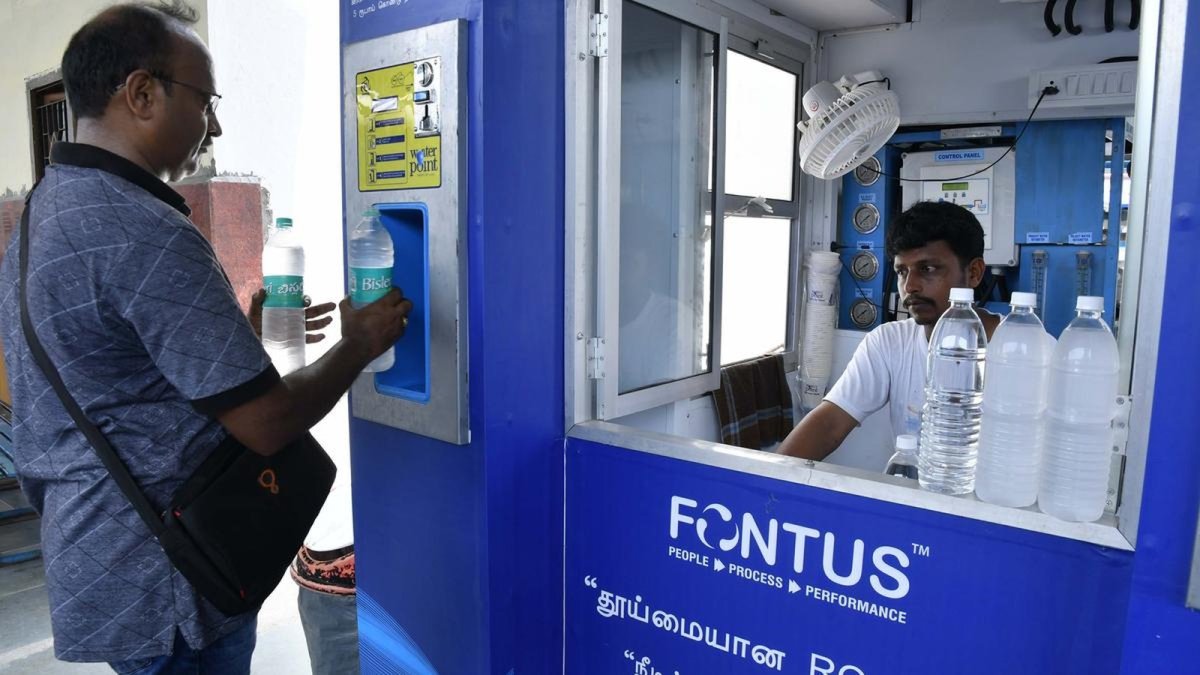
The Comptroller and Auditor General of India (CAG) has found E. coli bacteria in drinking water from water coolers at eight major railway stations, including Chhatrapati Shivaji Maharaj Terminus (CSMT) and Hyderabad, in a damning audit of passenger amenities tabled in Parliament on August 12. The audit of 512 non-suburban stations revealed that nearly 89 per cent were deficient in minimum essential amenities, with persistent failures in sanitation, drinking water quality, and accessibility infrastructure dating back to previous audits in 2007, 2013, and 2016.
E. Coli in Rail Water: CAG Audit Exposes Systemic Failure
New Delhi – August 16, 2026 — The CAG's report, "Passenger amenities and sanitation at non-suburban railway stations in Indian Railways," has laid bare the scale of neglect across Indian Railways, finding that bacteriological analysis of drinking water was not carried out at 59 stations over six zones, while water coolers at eight stations tested positive for E. coli during the 2022-23 and 2023-24 audit period.
The Audit: 512 Stations, 89% Deficient
The CAG, in collaboration with railway officials, audited 512 non-suburban grade stations drawn from the total 5,908 stations under the Non-Suburban Group (NSG). The findings are stark: 458 stations, accounting for more than 89 per cent, were deficient in the provision of Minimum Essential Amenities (MEA), with amenities either not provided at all or available below prescribed norms. Only 54 stations, or 11 per cent, had no shortfalls.
The audit covered the period from 2019-20 to 2023-24, with Indian Railways operating over 7,424 passenger trains (non-suburban) daily and carrying 292.4 crore non-suburban passengers in 2023-24. The deficiencies spanned core amenities: fans were short at 42 per cent of stations, water coolers at 40 per cent, drinking water taps at 27 per cent, urinals at 22 per cent, seating arrangements at 15 per cent, platform shelters at 13 per cent, latrines at 12 per cent, and clocks at 12 per cent.
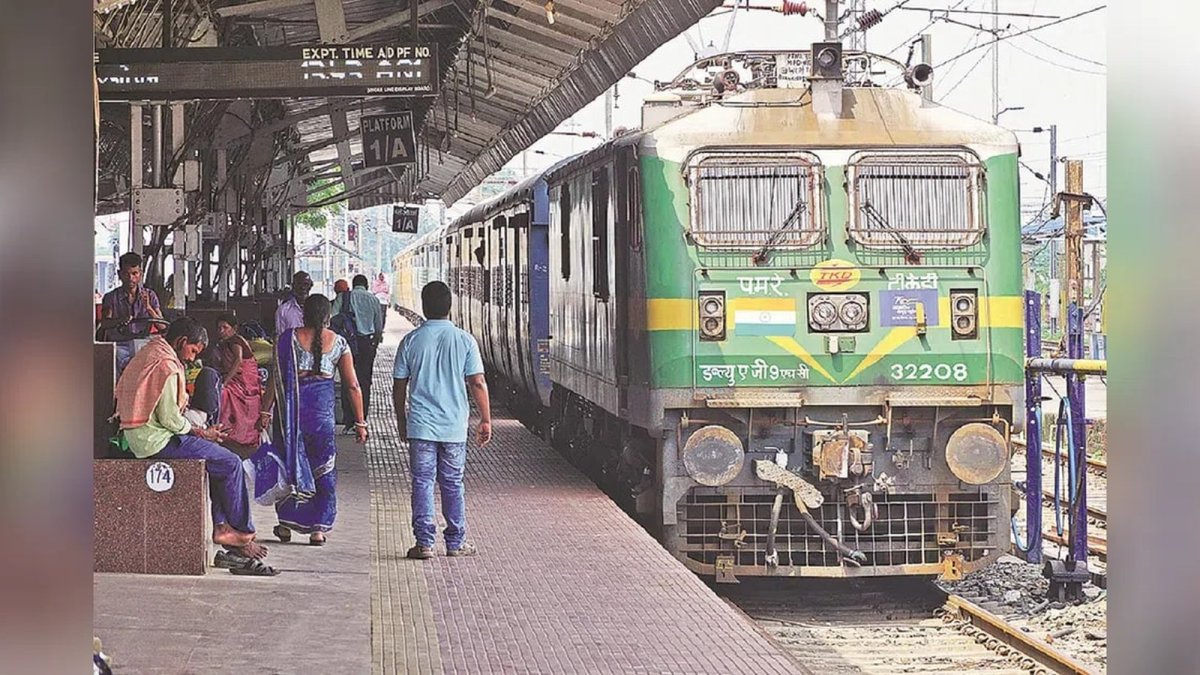
E. Coli in Drinking Water: The Health Risk
The presence of E. coli in drinking water is a direct public health threat, capable of causing severe gastrointestinal illness, typhoid, and cholera, particularly dangerous for children, the elderly, and immunocompromised passengers. The CAG's findings confirm that water coolers at Coimbatore and Palakkad Junctions (Southern Railway), Hyderabad (South Central Railway), CSMT, Bhiwandi Road, Kalyan and Lonavala (Central Railway), and Madhupur (Eastern Railway) tested positive for E. coli.
This is not a marginal issue. The audit found that bacteriological tests, other than Total coliforms, were unsatisfactory at eight stations in four zones during 2022-23 and 11 stations in five zones during 2023-24. The Railway Board's own April 2018 instructions mandated that drinking water be provided at all stations, yet compliance with the Uniform Drinking Water Quality Protocol remains elusive.
What the Water Tests Found
The CAG's water quality analysis revealed a systemic failure in testing protocols. Test results of drinking water samples collected from taps on platforms at 49 stations in eight zones during 2022-23 and 56 stations in nine zones during 2023-24 indicated the presence of Total coliforms bacteria, including E. coli. Furthermore, bacteriological analysis of drinking water was not carried out at 59 stations over six zones, meaning the actual scale of contamination could be significantly higher.
The report urged the Railways to "ensure compliance with prescribed protocols for inspection of water supply systems and comprehensive testing of drinking water quality, including all parameters under the Uniform Drinking Water Quality Protocol." The failure to conduct routine bacteriological tests at 59 stations represents a critical gap in public health surveillance, leaving millions of daily passengers exposed to potentially contaminated water.
Big Stations, Big Gaps
The audit found that even India's premier stations — CSMT, Howrah, Sealdah, New Delhi and Mumbai Central, all categorised as NSG-1 (where earnings exceed Rs 500 crore and/or outward passengers exceed 20 million annually) — were deficient in seating arrangements, sanitary facilities (urinals and latrines), dustbins, and electronic train indicator boards. Audit scrutiny of NSG-1 category stations revealed deficiencies in drinking water taps at 12 stations, fans and water coolers at eight stations each, and signage at five stations.
Other stations with shortfalls included Naihati, Gaya, Bhagalpur, Bhopal and Rajkot. The CAG pointed out that these same deficiencies were flagged in three previous audits in 2007, 2013 and 2016, indicating a persistent failure of monitoring and enforcement. The Railway Board's September 2012 instruction that platform shelters should cover the area where general second-class coaches stop was not ensured at 379 stations, leaving passengers "exposed to vagaries of weather."
The Money Trail: Underused Budgets
The CAG's analysis of fund utilisation reveals that the problem is not a lack of resources but poor planning and execution. Budget grants for passenger amenities were underutilised by 36 to 44 per cent during 2019-20 to 2023-24, even in non-COVID years. While fund allocation remained stable at Rs 3,207 crore (2019-20), Rs 3,875 crore (2020-21), Rs 3,414 crore (2021-22) and Rs 3,351 crore (2022-23), it shot up to Rs 14,072 crore in 2023-24.
Yet, the year-on-year underutilisation was significant: Rs 1,403 crore (44%), Rs 1,499 crore (39%), Rs 1,423 crore (42%), Rs 1,198 crore (36%) and Rs 5,956 crore (42%) during the five-year period. This occurred even as passenger earnings increased from Rs 42,190 crore in 2014-15 to Rs 70,693 crore in 2023-24. The CAG attributed the persistent shortfalls to "inadequate monitoring of implementation of the Railway Board Circular dated April 9, 2018, absence of time-bound action plans, weak oversight of fund utilisation under Plan Head and inconsistent prioritisation of works at zonal level."
Divyangjan Access and Sanitation Failures
The audit found that accessibility infrastructure for Divyangjans (persons with disabilities) was inadequate and non-compliant, with substantial deficiencies in information systems, toilets, ramps, tactile pathways, lifts and announcements. At Madurai Junction (Southern Railway), the tactile pathway was incorrectly laid instead of at the prescribed distance of 1,800 mm from the platform edge. Of 374 Divyangjans interviewed, 131 (35 per cent) reported that amenities were inadequate, citing non-functional or closed toilets, absence of low-height drinking water facilities, parking, non-slippery pathways, lifts, portable ramps and low-height ticket counters.
Sanitation failures extended to CSR-funded infrastructure. In Southern Railway, during 2020-2023, 187 pre-fabricated toilets were installed at Rs 0.25 crore per unit, but 79 remained non-operational due to the absence of service providers for operation and maintenance, leaving Rs 19.75 crore from M/s Neyveli Lignite Corporation unutilised as of February 2025. Similarly, in East Coast Railway, 62 of 92 pre-fabricated toilet blocks remained non-operational, with Rs 15.50 crore from M/s Mahanadi Coalfields Limited unutilised as of March 2025. In Eastern Railway, a bio-toilet complex at Plassey station installed in December 2022 remained non-functional due to lack of water and electricity.
What This Means for India
For the 292.4 crore non-suburban passengers who travelled in 2023-24, this audit confirms what many have long suspected: Indian Railways' passenger amenities are in a state of chronic neglect. The shortfalls are not isolated — a further analysis of Passenger Amenities Management System (PAMS) data from February 2025 confirmed that deficiencies persisted across all station categories and zones, signalling systemic gaps. The CAG found shortfalls of latrines at 201 stations, urinals at 403 stations and water taps at 2,035 stations.
The review of 395 passenger amenity works across 325 non-Amrit Bharat stations showed that 59 per cent of works were delayed from one to over four years, with only 41 per cent completed within stipulated timelines. The Amrit Bharat Station Scheme, launched in 2022 to modernise over 1,300 stations, has not yet addressed the fundamental issues of water quality and sanitation at the audited stations.
The Bottom Line
The CAG's report is a damning indictment of Indian Railways' management of passenger amenities. The presence of E. coli in drinking water at major stations like CSMT and Hyderabad is not a minor inconvenience — it is a public health emergency that demands immediate action. The persistent underutilisation of budgets, ranging from 36 to 44 per cent, combined with the failure to implement Railway Board instructions from 2018, points to a systemic failure of accountability.
The CAG has recommended that the Railways prepare and deploy station-wise, time-bound action plans to address amenity concerns, including effectively implementing accessibility provisions for Divyangjans and strengthening sanitation and garbage management measures. It has also urged the Railways to ensure regular functioning of all consultative committees and Service Improvement Groups with effective documentation, supervision and follow-up on deficiencies. For the millions of Indians who depend on rail travel daily, the question is whether these recommendations will be implemented before the next audit, or whether passengers will continue to drink water contaminated with E. coli at some of India's busiest railway stations.
— By Dr. Raj Patel, Staff Writer
This article was produced with AI-assisted research and editorial support. Sources: CAG report, Business Standard, The Hindu, NDTV.
What's Your Reaction?
 Like
0
Like
0
 Dislike
0
Dislike
0
 Love
0
Love
0
 Funny
0
Funny
0
 Wow
0
Wow
0
 Sad
0
Sad
0
 Angry
0
Angry
0

India/South Asia Correspondent at Global1.News. Analytical voice with a background in science and health journalism. Based in New Delhi, covering Indian politics, education, healthcare, technology, and policy. Breaks down complex data into clear, actionable reporting.











Comments (0)