
Saint-Louis Regatta: Pond Kholé's Dramatic Grand Prix Win
The roar that rolled down the Senegal River on Saturday wasn't just the sound of a crowd—it was the sound of history, pride, and a centuries-old way of life colliding in a burst of spray and muscle.
The roar that rolled down the Senegal River on Saturday wasn't just the sound of a crowd—it was the sound of history, pride, and a centuries-old way of life colliding in a burst of spray and muscle. In the shadow of the iconic Faidherbe Bridge, the sub-district of Pond Kholé pulled off a dramatic Grand Prix victory at the Saint-Louis Regatta, snatching glory from rivals Lodo and Dack in a race that had thousands of spectators on their feet. This wasn't just a canoe race; it was the beating heart of Guet Ndar, the historic fishing district that has kept this tradition alive for nearly 200 years.
Saint-Louis Regatta: Pond Kholé's Dramatic Grand Prix Win
Saint-Louis, Senegal – This weekend — The annual regatta in Saint-Louis, Senegal, delivered everything a sporting spectacle should: dominance, a comeback, and a finish that will be talked about until next year's race. The Grand Prix des Régates 2026 was decided on Saturday, with Pond Kholé emerging victorious in the third and decisive race, breaking the hearts of Lodo, who had won the first two heats of the day. The winning pirogue, named "Ameth Fall Braya," held off its rivals in a close, hard-fought sprint along the banks of the Senegal River, a victory made sweeter by the dramatic turnaround.
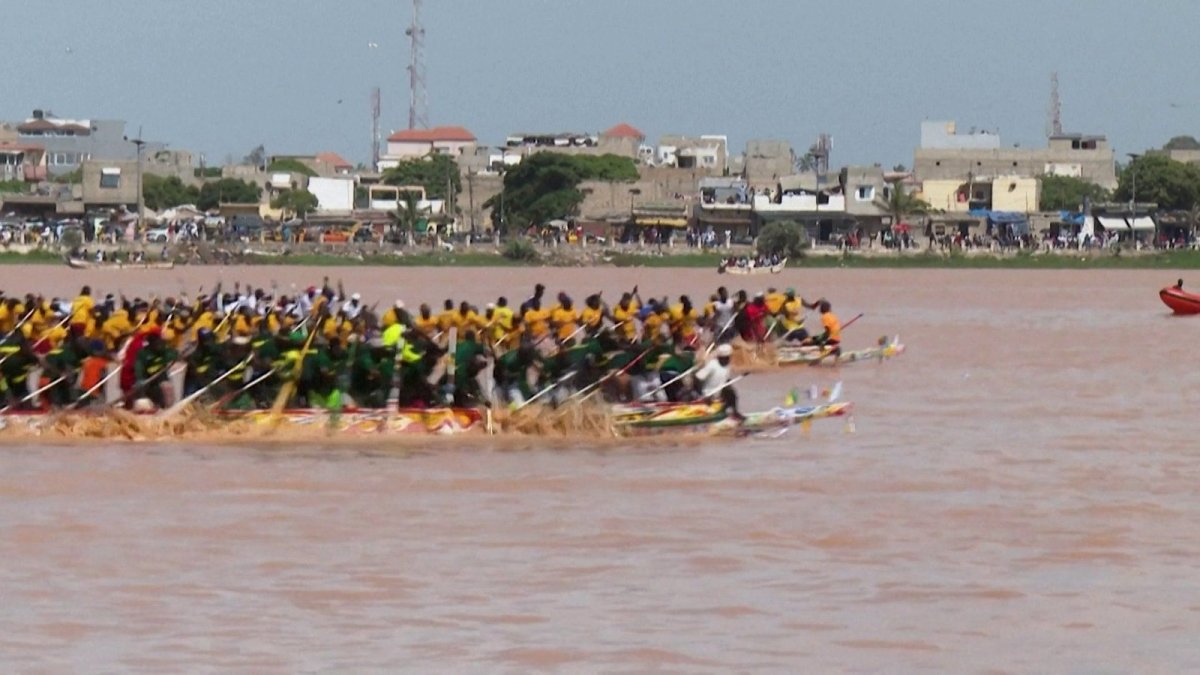
Race Day in Guet Ndar: Pond Kholé's Grand Prix Triumph
The atmosphere was electric as thousands of spectators lined the riverbanks, cramming every available inch of space around the Sindoné arm of the Senegal River and the Faidherbe Bridge that links the island city to the mainland. The Al Jazeera English report captured the scene perfectly, noting that "thousands gathered in Saint-Louis, Senegal, for the annual regatta, a centuries-old canoe race that remains a symbol of the city's fishing heritage." They came for the spectacle, but they stayed for the drama that unfolded on the water.
Lodo came into the Grand Prix as the team to beat, having swept the first two races of the day with a display of power and coordination that had their supporters in full voice. But the regatta is a test of endurance and nerve, and Pond Kholé saved their best for the main event. In the third and decisive race, the "Ameth Fall Braya" pirogue, powered by a crew of 50 to 70 rowers moving in perfect synchronicity, edged out Lodo and Dack in a finish that was decided by metres, not lengths. The victory was a testament to the crew's preparation—rower Younouss Dieye revealed he had trained for 10 days straight before the race—and their mental fortitude under the weight of expectation.
The final was presided over by Senegal's Minister of Fisheries and Maritime Economy, Amy Mara Dièye, who was on a working visit to Saint-Louis. Her presence underscored the regatta's significance beyond sport, linking the celebration to the political and economic realities of Senegal's coastal communities. For the people of Guet Ndar, one of Africa's most densely populated neighbourhoods, this was more than a race—it was a declaration of identity, a day when the fishing community takes centre stage and the rest of the world watches.
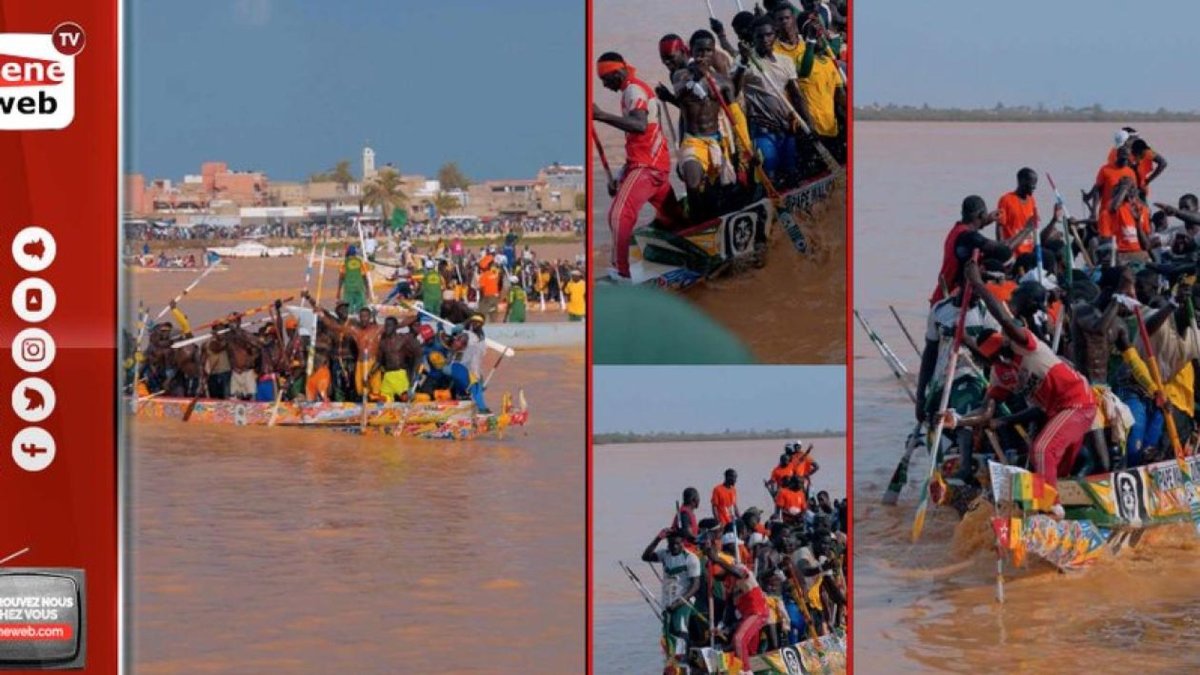
Nearly 200 Years of Paddling: The Race's Roots
To understand what happened on Saturday, you have to understand what came before. The Saint-Louis Regatta is not a modern invention; it is a living tradition that dates back nearly 200 years, a fact confirmed by France 24's coverage of the event. While the modern competition was formalised in the 1950s, according to El Hadj Moctar Gueye, president of the organising committee, the roots of the race run much deeper, intertwined with the very founding of the fishing community in Guet Ndar.
The structure of the competition is as unique as its history. Saint-Louis's fishermen are divided into three teams, each representing a geographical section of the old quarter. These are not casual participants; they are the lifeblood of the community, men who spend their days on the Atlantic and their weekends on the river. The pirogues themselves are marvels of local craftsmanship—long wooden canoes between 15 and 20 metres long, now built specifically for racing rather than for hauling fish. The course stretches 3.5 kilometres through the estuary where the Senegal River meets the Atlantic Ocean, a challenging route that tests both speed and stamina.
The historical weight of the event is palpable. N'Deye Seck, a 75-year-old tailor in the N'Dar Market, recalled that former French president Charles de Gaulle attended the regatta in 1959, just months before Senegal gained its independence. That moment—a colonial power's leader witnessing a distinctly local tradition—captures the regatta's enduring power. It was a symbol of Senegal's identity before independence, and it remains a symbol of Saint-Louis's unique character today. As Assane Diaw, a former competitor whose family has raced for about 100 years, put it: "This is the only truly local sport here. We have football teams, but the pirogue race is uniquely Saint-Louisien."
More Than a Race: The Soob Ritual and a Community's Soul
Before the pirogues hit the water, the banks of the Senegal River were transformed into a stage for the traditional "Soob" ritual. Chants filled the air, tam-tam drums set a rhythm that seemed to pulse through the crowd, and costumed "faux lions"—traditional entertainers—danced through the spectators, whipping up the energy to a fever pitch. This is not a sideshow; it is an essential part of the regatta, a spiritual and cultural prelude that connects the race to the ancestors and the spirits of the river.
The Soob ritual is a reminder that the Saint-Louis Regatta is about far more than who crosses the finish line first. It is a celebration of community, a day when the fishing families of Guet Ndar come together to honour their heritage and their heroes. Koutaye Niang, a 43-year-old fisherman who raced for two decades and captained a winning pirogue that ended a rival team's five-year winning streak, captured the emotional stakes perfectly: "All those who live (in my community), Dak, feel like kings today." That feeling of collective triumph, of an entire neighbourhood elevated by the success of its rowers, is the true prize of the regatta.
Assane Diaw, whose family has been part of this tradition for a century, spoke about what drives the competitors. On the prize, he said: "It's the love that people have… it's the blood that flows." That blood connection—generations of fathers and sons, uncles and nephews, all pulling together in the same direction—is what makes this race unlike any other. Younouss Dieye, the Pondou Khole rower, summed up the winning feeling simply: "It's a feeling of joy whenever we win." But for the thousands watching, the joy is shared, a collective euphoria that binds the community together long after the last pirogue has crossed the line.
The South African Perspective: What the Water Teaches Us
For South African sports fans, the Saint-Louis Regatta should feel strangely familiar. We know what it means to have a sport that is more than a game—we see it every time the Springboks take the field, every time Bafana Bafana play, every time a local derby in Soweto or Cape Town brings a community to a standstill. But the regatta offers a different model, one rooted not in professional leagues or corporate sponsorships, but in the daily rhythms of a working community.
Think of our own coastal fishing communities—Hout Bay and Kalk Bay in the Western Cape, Knysna in the Garden Route, the vibrant small-scale fisheries along the KwaZulu-Natal coast. These are communities with their own traditions, their own struggles, and their own deep connection to the sea. The Saint-Louis Regatta shows what can happen when that connection is celebrated, when the skills that sustain a community are transformed into a source of pride and unity. It is a lesson in grassroots sporting culture that South Africa, with its own debates around transformation and access to sport, would do well to study.
There is also a Pan-African dimension here that resonates beyond Senegal's borders. The regatta is a reminder that Africa's sporting heritage extends far beyond football, rugby, and athletics. From the wrestling traditions of Senegal to the stick-fighting of the Cape, from the canoe races of West Africa to the endurance running of East Africa, the continent's sporting soul is rich and varied. The Saint-Louis Regatta is a celebration of that diversity, a living proof that African sport is not just about following global trends but about honouring local traditions. For South African sports administrators and fans alike, it is a call to look inward, to find and celebrate the sporting traditions that make us uniquely African.
The Fight to Keep Artisanal Fishing Alive
But beneath the celebration, there is a serious undercurrent that cannot be ignored. The Saint-Louis Regatta is a celebration of fishing heritage, but that heritage is under threat. Artisanal fishing is the lifeblood of Senegal's coast—fish provides up to 70% of the protein in the Senegalese diet and supports up to 15% of employment, according to the OWEN Project. These are not abstract statistics; they represent the livelihoods of the very men and women who line the riverbanks and power the pirogues.
France 24's coverage noted a sobering reality: despite the race's popularity and the money it generates, the fishing economy faces serious pressures. Overfishing, climate change, and competition from industrial fleets are squeezing the small-scale fishermen who are the heart of this tradition. The regatta's cultural survival is tied directly to the survival of the fishing way of life—if the fishermen can't make a living, the tradition will eventually fade, no matter how many crowds gather on the riverbanks.
The connection between sport and livelihood was made explicit at the first Festi-Gaal on July 25, 2026, organised by UNAPAS and CAJUST. That event featured a pirogue race between sub-districts, but it was also a platform for demands in support of artisanal fishing. The message was clear: the regatta is not just a nostalgic spectacle; it is a political statement, a declaration that the fishing communities of Senegal will not be forgotten. The presence of Minister Amy Mara Dièye at the Grand Prix signals that the government is listening, but whether that translates into meaningful policy support remains to be seen.
What to Watch For
The 2026 regatta is over, but the story is far from finished. The rivalry between Lodo and Pond Kholé has reached a fever pitch—Lodo's early dominance and Pond Kholé's dramatic comeback have set the stage for a rematch next year that will be one of the most anticipated in the event's history. Can Pond Kholé defend their title, or will Lodo reclaim their place at the top? The answer will be decided on the water, but the build-up will be felt throughout Saint-Louis for the next 12 months.
Beyond the race itself, watch for the expansion of the Festi-Gaal and the growing political weight of the artisanal fishing movement. The demands made at the first Festi-Gaal are not going away, and the regatta provides a powerful platform for the fishing community to make its voice heard. The Senegalese government's response to these demands will shape not just the future of the fishing industry, but the future of the regatta itself.
For South African sports fans, the Saint-Louis Regatta is a reminder that the most powerful sporting moments are often the ones that happen closest to home. We don't need to look to Europe or America for sporting inspiration; we have our own traditions, our own heroes, our own stories waiting to be told. The pirogues of Saint-Louis are a call to celebrate what makes us African, to honour the communities that sustain us, and to remember that sport, at its best, is about more than winning—it's about belonging.
The sun sets on the Senegal River, the tam-tam drums fall silent, and the fishermen of Guet Ndar return to their daily work. But the memory of Saturday's race will linger, a reminder that in a world of constant change, some traditions are worth fighting for. For Pond Kholé, the kings of the river, the victory is sweet. For the rest of us, the regatta is a lesson in the power of sport to unite, to inspire, and to keep history alive. The water remembers, and so will we.
By Dante Williams, Staff Writer
This article was produced with AI-assisted research and editorial support. Reporting is based on sources cited in the article.
What's Your Reaction?
 Like
0
Like
0
 Dislike
0
Dislike
0
 Love
0
Love
0
 Funny
0
Funny
0
 Wow
0
Wow
0
 Sad
0
Sad
0
 Angry
0
Angry
0

Breaking News and Investigations Correspondent at Global1.News. Based in London, covering global breaking news, security, and investigative stories. Known for digging deeper and connecting the dots across continents.













Comments (0)