
MiniMax H3's Massive Upgrade: Open Weights, Native Sound, and a Third of the Price
MiniMax H3 drops open weights, native 32kHz audio, and 2K video at $7.80 per minute - one-third the cost of rivals like Veo and Kling. But US, EU, UK, and South Korea creators are locked out commercially. Game-changer or tease? Jessica Ali breaks it down.
Folks, if you blinked, you missed it — because the AI video wars just detonated again, and this time the blast radius is global. MiniMax, the Shanghai lab that refuses to play by the old rules, just dropped the H3 — and it’s not just an upgrade, it’s a full-on paradigm shift that’s about to make Hollywood’s expensive toys look like yesterday’s flip phones. Strap in, because this one’s got open weights, native sound, and a price tag that’s going to make the big boys sweat through their tailored suits.
MINIMAX H3's Big Upgrade: Open Weights, Native Sound, and a Third of the Price
Shanghai, China - August 16, 2026 - The video generation landscape just got a seismic shockwave, and it originated from a lab most Americans have never heard of. MiniMax, the Shanghai-based AI powerhouse, unveiled its third-generation Hailuo model — the H3 — at WAIC 2026 on July 17, and then did the unthinkable on July 31: they released it to the public. But the real fireworks started on August 2 and 3, when the open weights hit Hugging Face, and the entire creator economy felt the ground shift beneath their feet. This isn’t an incremental step; it’s a leapfrog move that redefines what “open” means in the AI video space — and what it costs to compete.

What Just Happened
Let’s cut through the corporate fluff and get to the raw data, because this is where the story gets wild. MiniMax H3 is a 33-billion-parameter open-weight video model, clocking in at roughly 42.5 GB in its smallest usable form. That’s not a toy; that’s a serious piece of machinery that just got handed to the public on a silver platter. The open weights dropped on Hugging Face on August 2-3, and the community response was nothing short of volcanic. ComfyUI support was merged the very same day — not a week later, not a “coming soon” promise, but same-day integration that had creators rendering clips within hours.
And here’s the kicker that should make every naysayer eat their words: one ComfyUI maintainer rendered clips on an RTX 3060 — a consumer-grade GPU that costs less than a night out in Manhattan. That’s not a lab demo; that’s a democratization event. Within 24 hours of the open-weight release, the community had already pushed out GGUF, INT4, and NVFP4 quantized versions, making the model even more accessible to creators with modest hardware. This isn’t a slow burn; it’s a wildfire, and it’s spreading faster than any corporate PR team can contain.
Native Sound Changes Everything
Now, let’s talk about the feature that’s going to make every other video model look like a silent film. MiniMax describes H3 as a “general-purpose, omni-modal generative system” — and for once, the marketing hype is actually underselling it. This model doesn’t just generate video; it jointly understands multimodal context spanning text, images, video, and audio. That means it’s not just a visual engine; it’s a full sensory production studio that spits out native stereo audio at 32 kHz, up to 2K resolution, at 24 frames per second, for clips ranging from 4 to 15 seconds — all in a single generation pass.
Let me spell that out for you because it’s a game-changer: dialogue, sound effects, and ambient audio are generated together with the picture. No more syncing audio in post, no more hunting for stock sound effects, no more robotic voiceovers that sound like they were recorded in a tin can. The H3 produces a complete audiovisual package in one shot. It’s like going from a flip phone to a smartphone in a single upgrade — and it supports three generation modes: text-to-video, image-to-video, and video-to-video, with the ability to accept up to nine reference images for omni-reference stacking. Plus, first-frame and last-frame control means you can actually get repeatable outputs, which is the holy grail for anyone trying to build a consistent visual narrative.
The Price War Nobody Saw Coming
Here’s where the corporate giants should start sweating through their boardroom windows. MiniMax H3 costs about $7.80 per minute of video via API — and that’s not just competitive; it’s a knockout punch. That’s less than one-third the cost of rivals like Google’s Veo or Kling, and it’s backed by actual performance. Independent benchmark aggregator Artificial Analysis ranks H3 at #1 in AI video editing — not #2, not “top three,” but the absolute top of the heap. This isn’t a cheap knockoff; it’s a superior product at a fraction of the price.
Let’s put that in perspective. For the price of a single minute of Veo output, you can generate three minutes of H3 video that’s ranked higher by independent evaluators. That’s not a discount; that’s a market disruption. And it’s not just about cost — it’s about access. The API pricing makes it viable for indie creators, small agencies, and even students to produce professional-grade video content without selling a kidney. The old guard has been charging premium prices for premium tools, and MiniMax just blew up that pricing model with a stick of dynamite labeled “open weights.”
Who Can Actually Use It
Now, let’s get practical, because a tool is only as good as its accessibility. There are three primary ways to get your hands on H3, and each one serves a different type of creator. First, there’s the consumer-facing Hailuo platform — the app that lets you generate video with a few taps, perfect for social media managers and casual creators who want results without touching code. Second, there’s the platform API, model ID MiniMax-H3, which is the professional route for businesses that want to integrate video generation directly into their workflows. And third, there’s Luma Agents, which adds another distribution layer for those already in that ecosystem.
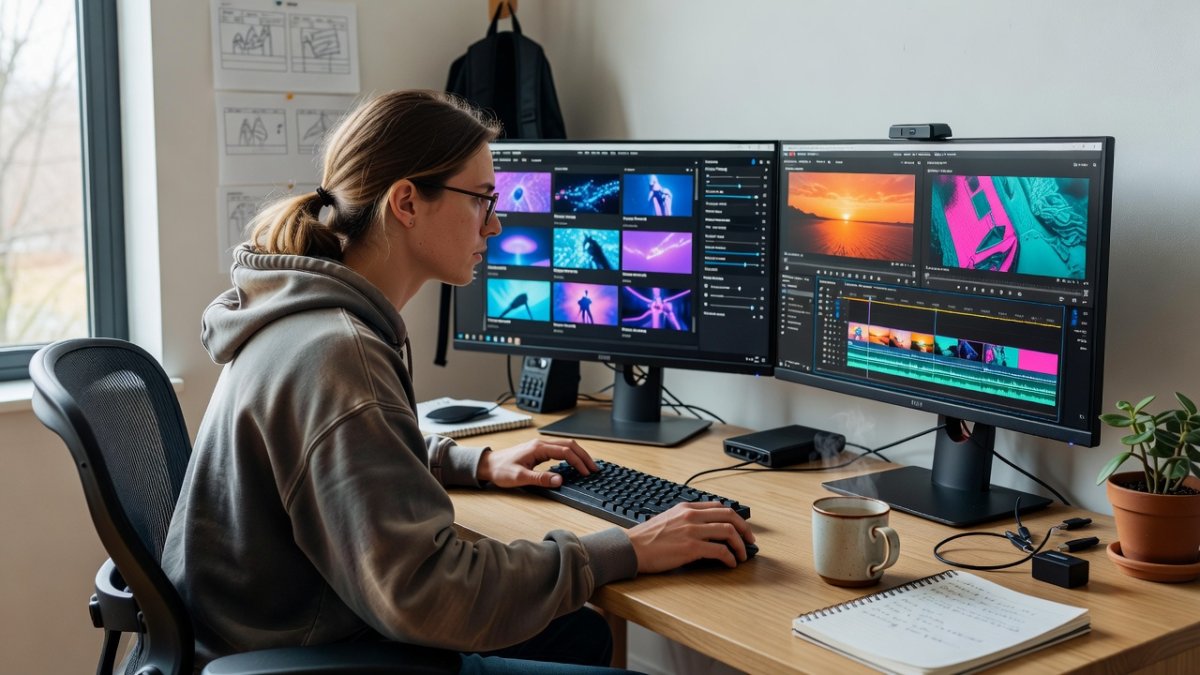
But the real story for power users is the open-weight download, and that’s where the Ostris AI Toolkit comes in. On August 3, Ostris added H3 text-to-video and image-to-video LoRA training support, which means creators can fine-tune the open-weights model on consumer-grade GPUs. That’s not just using a model; that’s owning it, shaping it, and making it your own. MiniMax is positioning H3 for advertising, branding, e-commerce, product design, UI/UX, gaming, film pre-visualization, and retail catalog media — and with LoRA training, you can tailor it to your specific niche. This is the difference between renting a car and owning a garage full of custom-built machines.
The Elephant in the Room: Licensing
Alright, folks, time to cut through the BS because there’s a massive asterisk on this “open” release that’s got a lot of creators — including me — fired up. The open-weight release license EXCLUDES the US, EU, UK, and South Korea for commercial use. Let me repeat that: the model is open weights, but if you’re in the United States, the European Union, the United Kingdom, or South Korea, you cannot legally use it for commercial purposes. That’s not open; that’s a tease. It’s like handing someone the keys to a Ferrari but telling them they can only drive it in a parking lot — and only on weekends.
This territorial restriction has drawn sharp criticism from the global creator community, and rightfully so. MiniMax is happy to take the PR win for “open weights,” but they’ve effectively locked out the largest commercial markets in the world. For American and European creators, this means you can tinker with it, you can learn from it, but you can’t build a business on it without risking legal exposure. That’s a significant caveat that the hype machine conveniently glosses over. It’s a brilliant strategic move for MiniMax to dominate markets outside the West, but it’s a slap in the face to the very creators who would benefit most from this technology.
What This Means
Let’s zoom out and look at the big picture, because this isn’t just about one model — it’s about the trajectory of the entire AI video industry. The open-weight AI video race just got a new frontrunner, and it’s not from Silicon Valley. MiniMax has effectively shown that you don’t need billions in venture capital or a cozy relationship with Big Tech to produce world-class video generation. The 33B parameter model, the native audio, the sub-$8 per minute pricing — it’s a blueprint for how to compete in a market that was starting to feel like a monopoly.
But here’s the uncomfortable truth for US and EU creators: you’re being locked out of the most exciting development in this space. While creators in Asia and other regions can commercially exploit H3, Western creators are stuck with either paying triple the price for rival models or risking legal gray areas. And to make matters worse, there’s a separate copyright lawsuit filed against MiniMax over AI training data that “clouds every clip,” according to TechTimes. That unresolved legal fight is a shadow hanging over every generation, and it’s a reminder that this industry is still building the plane while flying it. The technology is breathtaking, but the legal and licensing frameworks are a mess.

The Bottom Line
So, what do you do with this information? First, if you’re outside the restricted territories, get on Hailuo or the API and start experimenting — this is the most cost-effective way to produce high-quality AI video with native audio, and it’s ranked #1 for a reason. Second, if you’re in the US, EU, UK, or South Korea, don’t just sit on your hands — keep an eye on the licensing terms, because pressure from the creator community can force changes. Third, support open models and the tools like ComfyUI and Ostris AI Toolkit that make them accessible; the more we demand openness, the harder it becomes for companies to pull these territorial stunts.
And finally, stay vigilant. The copyright lawsuit against MiniMax is a reminder that this technology is built on a foundation that’s still being litigated. Don’t build your entire business on a model that could be pulled out from under you. Diversify your tools, understand the legal landscape, and always have a backup plan. The AI video revolution is here, and it’s cheaper and more powerful than ever — but it’s also a wild west where the rules are still being written. Keep your eyes open, your skills sharp, and your options open. That’s how you win in this game.
— Jessica Ali, Global 1 News — cutting through the BS, one story at a time.
This article was produced with AI-assisted research and editorial support. Reporting is based on sources cited in the article.
What's Your Reaction?
 Like
0
Like
0
 Dislike
0
Dislike
0
 Love
0
Love
0
 Funny
0
Funny
0
 Wow
0
Wow
0
 Sad
0
Sad
0
 Angry
0
Angry
0

Editor-in-Chief at Global1.News. Atlanta-based journalist who cuts through the BS and tells it like it is. Lead anchor, host, and the voice you hear when the spin stops and the truth starts.














Comments (0)