
Russian Drone 'Safari' Targets Kherson Vegetable Seller as Kyiv Demands Accountability
A Russian drone chased 52-year-old vegetable seller Yuriy through a Kherson market before exploding, in what President Zelensky called proof of a Russian 'human safari' campaign against civilians. Kyiv's foreign minister branded the attack a barbaric war crime and demanded international accountability.
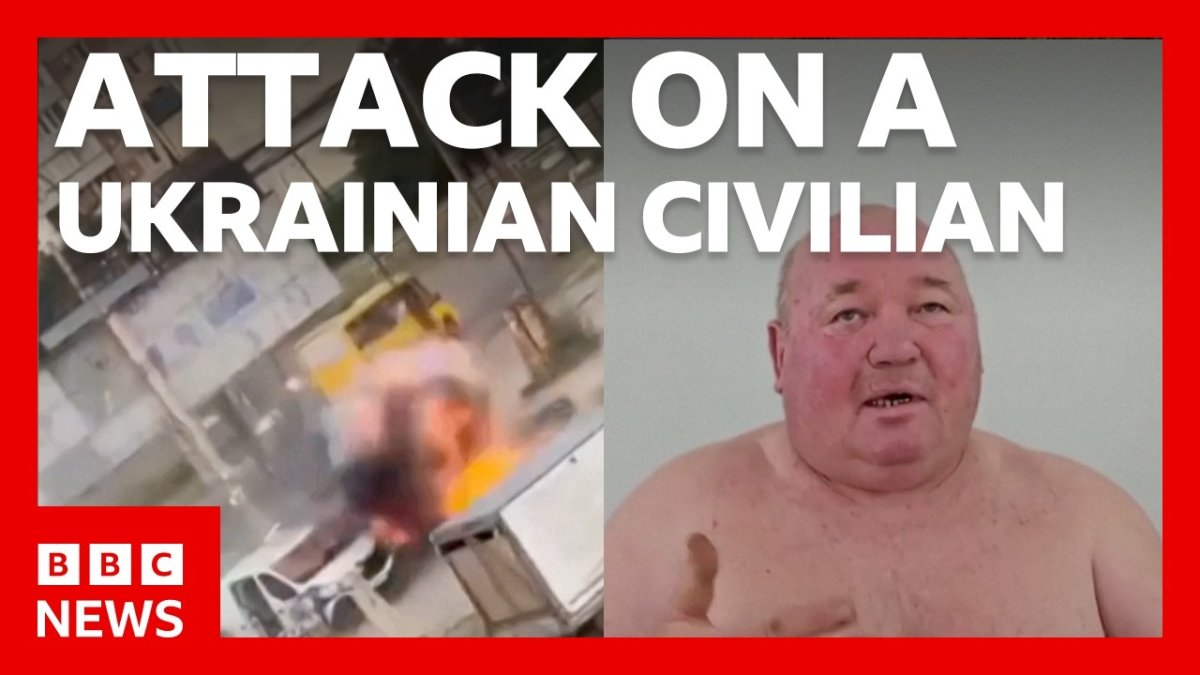
In a recent BBC News report, the human cost of Russia's drone war against Ukrainian civilians came into brutal focus when President Volodymyr Zelensky released footage of a remotely piloted aircraft hunting a 52-year-old vegetable seller through the streets of Kherson. The man, identified as Yuriy, survived the attack with shrapnel wounds and a concussion, but the video has reignited international condemnation of what Kyiv describes as a deliberate Russian campaign to terrorise civilians living near the front line.
Russia's 'Human Safari': A Vegetable Seller's Narrow Escape Exposes the Terror of Drone Warfare
Kyiv, Ukraine – 6 August 2026 — Ukraine's leadership has demanded international accountability after a Russian drone chased a street vendor through a market square in the Kherson region before exploding on impact, in an attack President Volodymyr Zelensky said proved that Russian soldiers are "enjoying killings and tormenting people."
A Morning Market Turns Into a Hunting Ground
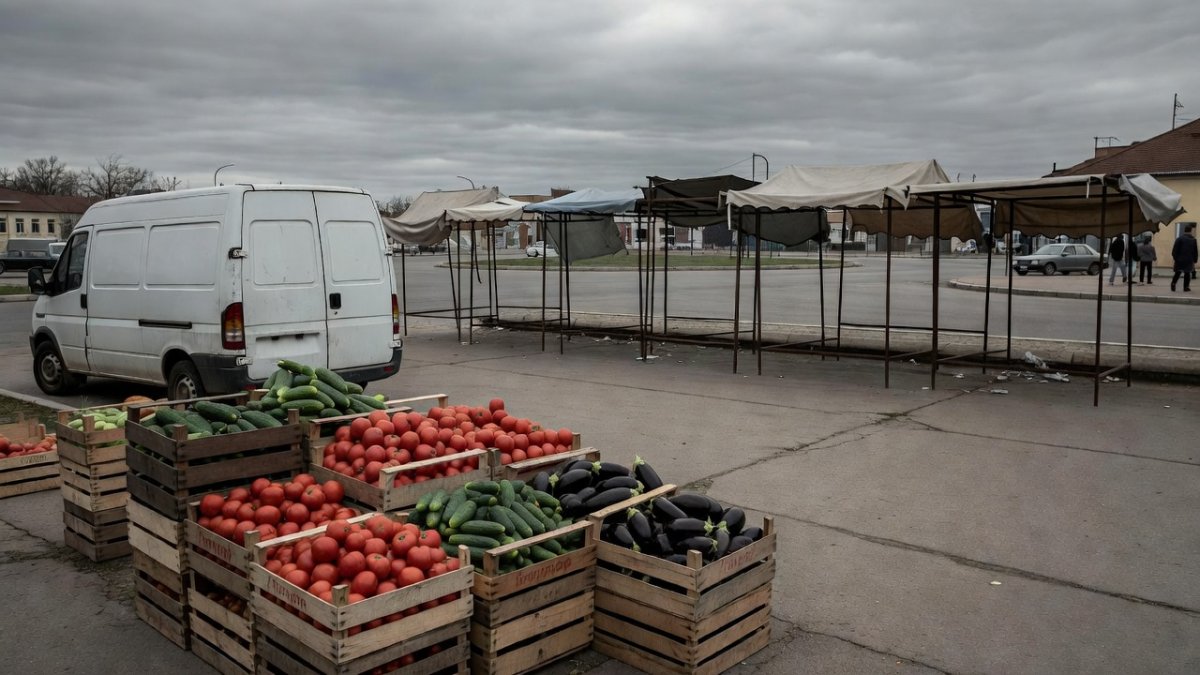
Yuriy, a 52-year-old street vegetable seller, had travelled into Kherson with his wife on the morning of the attack to sell produce, according to Oleksandr Prokudin, head of the Kherson regional military administration. As the couple began laying out crates of vegetables beside their white van, Yuriy heard a distinctive buzzing sound overhead. When his wife ran for cover, the drone turned its attention to him.
Footage shared by Zelensky shows the unmanned aircraft hovering above Yuriy as he moved away, then chasing him as he sprinted around the van. He held up heads of garlic toward the drone's camera to show the operator he was not trying to film it, he later recounted from a hospital bed. "It could see that I had tomatoes out, some cucumbers and eggplants laid out on the floor," Yuriy said in a video posted by the regional governor. "It even ducked under the umbrella when I was running away round the other side."
The drone eventually swooped down and exploded on impact. A doctor said Yuriy escaped with multiple shrapnel wounds, a concussion and psychological trauma. That he survived, officials said, was a matter of timing and luck rather than intent.
Kremlin's 'Human Safari' Campaign
The attack is far from an isolated incident. So-called "human safari" strikes — the deployment of remotely operated drones against civilians — have long been carried out by Russian troops in Kherson, which sits only a few miles from the front line. The tactic is designed to terrify residents of frontline areas, Ukrainian officials say, and the drone's onboard camera often films the victim's final moments before detonation.
A 2025 UN report found that Russian armed forces "recurrently killed and injured civilians" in the Kherson area by using drones to target them directly. The UN has also warned that posting videos of civilians being killed and injured amounts to the war crime of outrages upon personal dignity, a point that gives the viral spread of such footage a legal as well as moral dimension. Russia, which launched its full-scale invasion of Ukraine in February 2022, denies targeting civilians.
Zelensky and Kyiv's Response
President Volodymyr Zelensky used his Telegram channel to share the footage of the attack on Yuriy, stating directly: "The world must see this. It must see every piece of evidence that Russia has gone mad, and every fact that Russian soldiers are enjoying killings and tormenting people." The statement framed the incident as part of a broader pattern of deliberate cruelty by Russian forces operating near the front line in southern Ukraine. Ukrainian officials emphasised that the video provided clear visual proof of targeted harassment of civilians engaged in everyday activities such as selling vegetables at a market.
Ukraine's Foreign Minister Andrii Sybiha described the video as evidence of a "barbaric war crime" and characterised the so-called safaris as a "deliberate and systemic Russian strategy." He stated explicitly: "The sadist operating this drone knows full well that he is targeting a civilian." Sybiha called for immediate international condemnation and stressed that such attacks form part of an organised effort to intimidate and displace residents in frontline communities like Kherson. He urged Western governments to treat the incident as further justification for stronger sanctions and legal action against Russian military personnel involved.
Kyiv renewed its demands for war-crimes accountability, pointing to the growing archive of drone footage as material that could support prosecutions. Officials argued that the shortage of air defence systems leaves civilians exposed to these low-altitude attacks and pressed allies to accelerate deliveries of interceptors and long-range strike capabilities. The Foreign Ministry highlighted that sustained pressure on Russia through diplomatic and legal channels remains essential to deter further civilian targeting.
BBC Verify: Tracing the Evidence
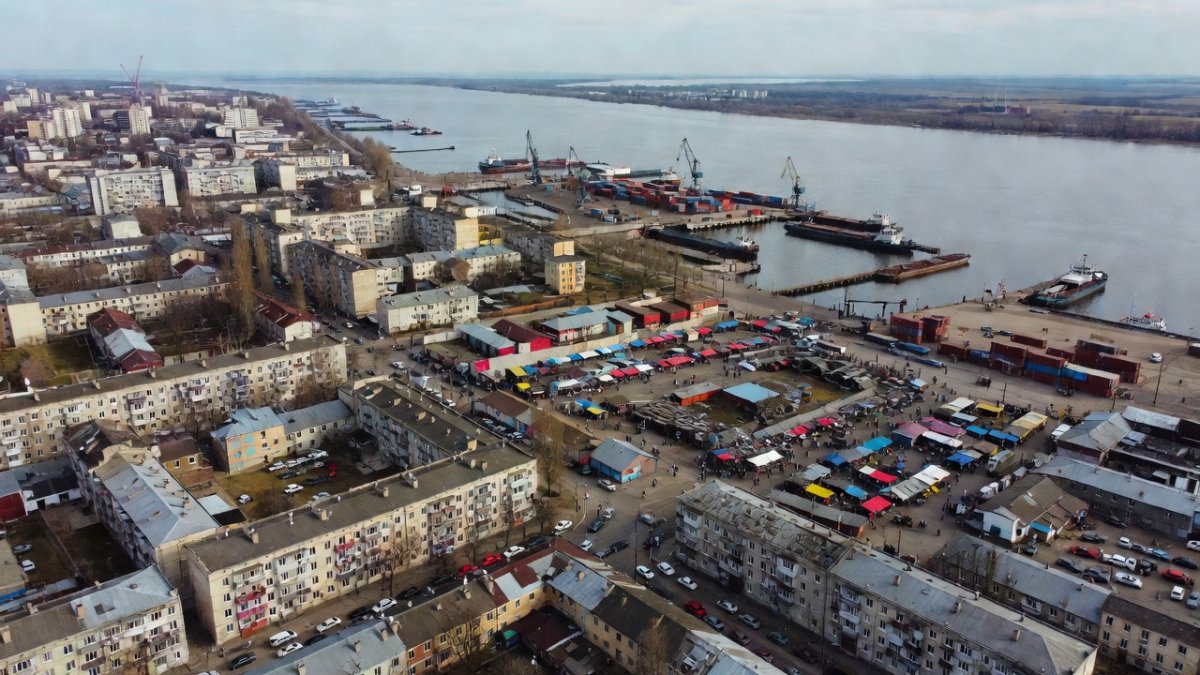
BBC Verify geolocated the video to a market space beside a roundabout in the Tavriiskyi district in northern Kherson. Analysts matched visible landmarks, including the layout of stalls and the position of the white van, to satellite imagery of the area. The earliest public copy BBC Verify found was shared by a pro-Ukrainian Instagram account on Tuesday morning. It remains unclear who filmed the attack or how the footage reached the platform, though the drone's own camera appears to have captured the pursuit from above.
The footage forms part of a growing archive of drone attack videos posted online, allowing thousands to witness the last moments of terrified victims. BBC Verify noted that the visual record provides investigators with precise timestamps and locations that can be cross-referenced with other open-source material. The UN has previously stated that posting videos of civilians being killed and injured amounts to the war crime of outrages upon personal dignity, underscoring the legal implications of widespread dissemination.
The BBC News report was prepared by Laura Gozzi with additional reporting by Richard Irvine-Brown of BBC Verify. Their analysis confirmed the sequence of events described by Yuriy and regional officials, including the drone's pursuit around the van and its final detonation. The verification process strengthens the evidentiary value of the material for any future accountability mechanisms.
A Deadly Night Across Ukraine
The Kherson attack came amid one of the deadliest nights of the war in recent weeks. A massive Russian missile barrage on Kyiv and the surrounding region killed 21 people, 17 of them in the capital area, with dozens more wounded. Ukrainian air defence units struggled to intercept all incoming projectiles, highlighting ongoing gaps in coverage that leave both military and civilian targets vulnerable.
President Zelensky appealed to allies to increase supplies of air defence missiles, warning that the interceptor shortage was costing lives. He noted that repeated strikes on residential districts demonstrate the need for additional systems capable of engaging multiple threats simultaneously. Ukrainian officials have repeatedly linked the intensity of these barrages to the broader Russian campaign of pressure on frontline and rear areas alike.
Russia's defence ministry said it had struck logistics hubs and supply centres in Kyiv and the surrounding region. Russian strikes have intensified, with the number of missiles launched increasing significantly in recent weeks. Western-made components have been found inside Russian weapons used in these strikes, according to Ukrainian investigations. Russia continues to deny targeting civilians since its full-scale invasion of Ukraine began in February 2022, maintaining that its operations focus solely on military infrastructure.
Analysis and Implications
Analysts suggest the "human safari" tactic represents a deliberate psychological warfare strategy designed to depopulate frontline towns and demoralise Ukrainian society. By repeatedly targeting individuals engaged in routine tasks, Russian forces appear to aim at creating an atmosphere of constant fear that encourages residents to abandon areas close to the contact line. This interpretation aligns with the pattern documented in the 2025 UN report and the visible evidence from multiple geolocated incidents.
The evidence trail carries significant implications for war crimes accountability. Geolocated footage, combined with the UN's prior findings and the expanding international record, could feed future prosecutions at the ICC or Ukrainian courts. Each verified video adds to a body of material that investigators can use to establish command responsibility and individual operator involvement. Russia's denials grow harder to sustain as the visual record expands and independent verification confirms locations and sequences of events.
Politically, such videos strengthen Kyiv's case for more Western air defence and long-range weapons. Allies face renewed pressure to address interceptor shortages and to impose additional sanctions targeting units known for civilian targeting. Looking ahead, the footage of Yuriy's escape has become a symbol of both Russian cruelty and Ukrainian resilience. The international community's response will signal whether such attacks carry real consequences or whether the pattern of impunity continues unchecked.
By Irina Volkov, Staff Writer
This article was produced with AI-assisted research and editorial support. Reporting is based on sources cited in the article.
What's Your Reaction?
 Like
0
Like
0
 Dislike
0
Dislike
0
 Love
0
Love
0
 Funny
0
Funny
0
 Wow
0
Wow
0
 Sad
0
Sad
0
 Angry
0
Angry
0
Russia/Eastern Europe Correspondent at Global1.News. Covering Russian politics, energy, security, and the shifting dynamics of the post-Soviet space. Provides clear-eyed analysis on one of the world's most opaque regions.














Comments (0)