
Russia's First Wartime Duma Election Puts Occupied Ukraine on the Ballot
Russia votes on the final day of its first wartime State Duma election, with the four annexed Ukrainian regions on the ballot for the first time and Kyiv, Brussels and human rights groups rejecting the vote as illegal.
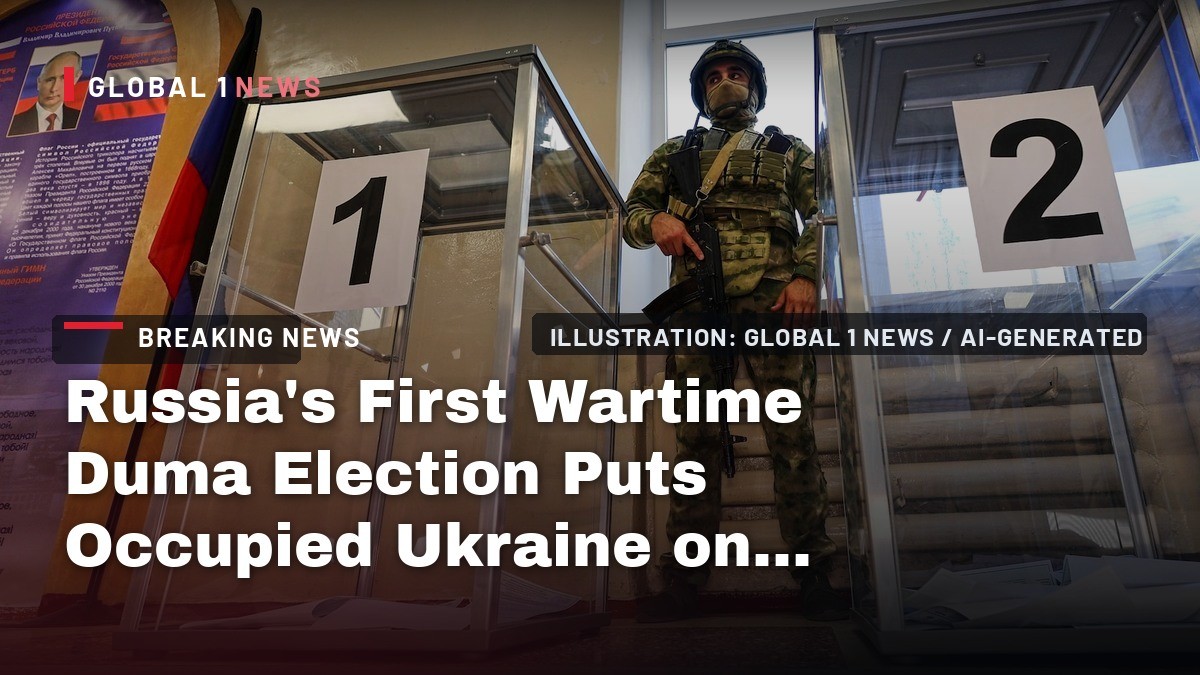
Folks, Russia is voting in the final hours of its first wartime parliamentary election, and for the first time the ballot includes four Ukrainian regions Moscow claims to have annexed. Polls close on Sunday evening. Counting has not yet begun.
Russia's First Wartime Duma Election Puts Occupied Ukraine on the Ballot
Moscow, Russia — Russia's first nationwide parliamentary election since the full-scale invasion of Ukraine enters its final day on Sunday, with polls closing across eleven time zones after three days of voting. The election puts 450 Duma seats up for grabs, alongside eleven regional governorships and 39 regional legislatures. For the first time, residents of four Ukrainian regions Moscow claimed to annex in 2022 are on the ballot.
Three Days, Eleven Time Zones, and a Verdict Nobody Is Waiting For
Voters are choosing among ten parties for 450 seats — 225 filled by party lists under a 5% threshold, and 225 in single-member districts decided by first-past-the-post. A party needs 226 seats for an absolute majority and 300 for the two-thirds constitutional supermajority. Some 111 million eligible voters were registered across Russia's eleven time zones, according to TASS. The three-day voting format was introduced for the 2020 constitutional referendum and enshrined in law in 2021. Electronic voting is now available in 33 regions, up from seven in 2021, according to SWP Berlin. President Vladimir Putin voted online Friday, with the Kremlin releasing images of him at a computer screen, the Associated Press reported. In his pre-vote address, Putin said: "Your choice and resolve will once again demonstrate that millions of people stand behind our fighters, that we are a united people, bound by shared values, historical memory, and love for the Motherland." This is the ninth Duma convocation, serving 2026 to 2031.
'For the First Time Since Their Reunification'
Donetsk, Luhansk, Zaporizhzhia and Kherson are on the ballot for the first time, having been annexed by Moscow in September 2022 despite not being fully under Russian control. The move is not recognised internationally. Voting is also under way in Crimea, annexed in 2014. Russian officials call the four territories "the new regions" and say they hold over 3.5 million voters, according to the Associated Press. Balloting there and in some Russian border areas began at the end of last month, with officials citing security reasons. Putin said in a 16 September speech that residents would be voting for the Duma "for the first time since their reunification with Russia," and noted that soldiers fighting would also vote. Carnegie Politika reports that Russian citizenship was made compulsory for all those living under occupation after the 2022 invasion.
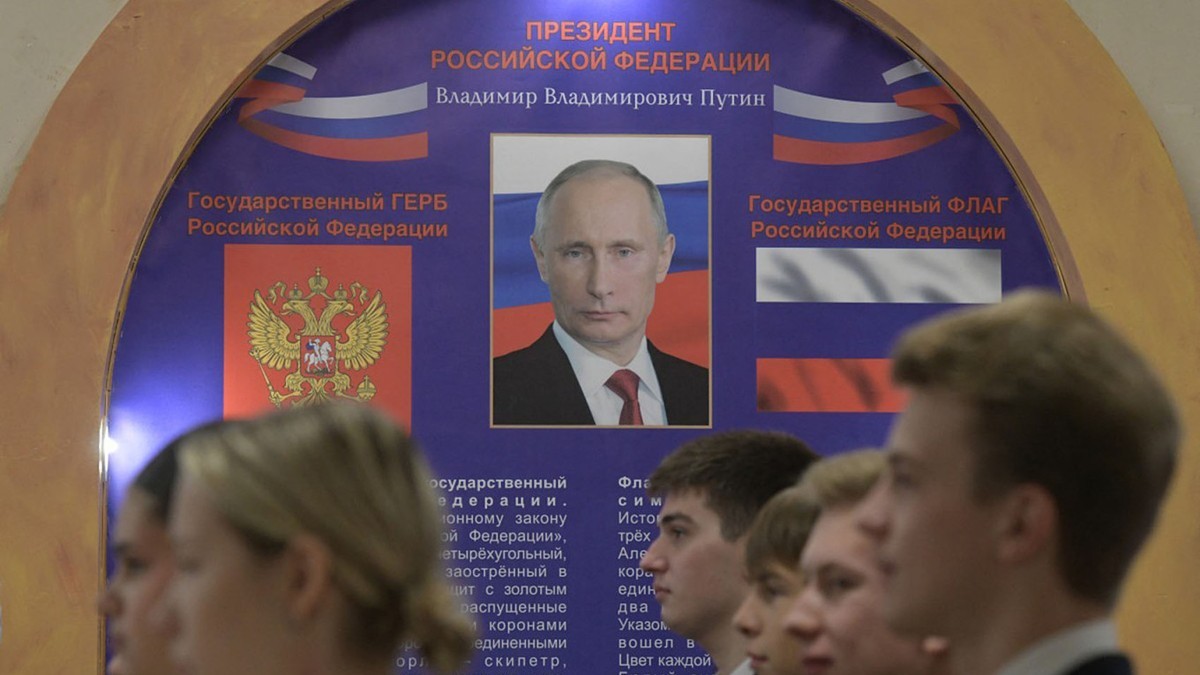
A Soldier Stands Beside the Ballot Box
At one polling station in the Russian-held part of the Donetsk region, the Associated Press reported, voters dropped their ballots into a box as an armed Russian soldier stood nearby and watched. Violeta Artemchuk, coordinator of the Donbas SOS human rights group, told the AP that local election commission members were going door to door with Russian troops and security agents to force people to vote. She said Moscow-appointed authorities threatened public sector workers with dismissal and linked pensions and social payments to participation. "For instance, if a person with a disability or a pensioner relies on social assistance and does not take part in the voting, they could be added to a list of individuals deemed disloyal to the so-called authorities and subsequently deprived of their benefits or humanitarian assistance," she said. A coalition of nine Ukrainian human rights groups urged residents of occupied territories to protect their lives and safety, calling the vote an attempt to legitimise the occupation.
Kyiv: Taking Part Is a Crime
Ukrainian officials denounced the voting as illegal and urged foreign governments and international organisations not to recognise it, according to the Associated Press. Kyiv said participation in organising the vote could carry criminal liability. Ukraine's foreign ministry said the proceedings do not alter the internationally recognised status of the regions and grant Moscow no sovereign rights, and that seating representatives from them undermines the legitimacy of the entire State Duma. Volodymyr Fesenko, a political analyst at the Kyiv-based Penta Center, told the AP: "Elections held at gunpoint are a farce." He added: "The very fact that voting takes place amid endless shelling and bombing reflects the Kremlin's attitude toward the people and the electoral process in the occupied territories." He also said: "It's nothing short of a mockery. Any electoral procedures conducted by the Russian occupation authorities have nothing to do with democracy."
Brussels Calls It a Sham
European Commission spokesperson Christian Wigand said the voting in the Russian-held regions represented "another blatant violation of international law." He said the European Union "does not, and will never recognise" the elections or their results. Wigand also said the way the elections are held "underscores the continued and deepening erosion of democracy in Russia," and that the Kremlin "deprives voters in Russia of a genuine choice about the future of their country." He noted Russia decided not to invite observers from the Organization for Security and Co-operation in Europe. According to SWP Berlin, the Central Election Commission instead invited 103 states and 12 non-Western regional and national organisations to send observers. Independent monitoring is effectively gone: Golos, Russia's leading independent election-monitoring NGO, announced its dissolution in 2025 owing to state repression.
The Opposition That Was Taken Off the Paper
The liberal Yabloko party, the only registered political entity that openly criticised the war, was removed from the ballot by Russia's Supreme Court in August. The court cited, among other reasons, that the anti-war stance was akin to seeking the violation of Russia's territorial integrity. Yabloko denied breaching electoral rules and still runs a few dozen candidates in single-constituency races. Most anti-war candidates were excluded before voting began, Reuters reported. Boris Nadezhdin, who tried to challenge Putin in 2024, left Russia last month after being designated a "foreign agent" and barred from seeking office. Tatyana Stanovaya of the Carnegie Russia Eurasia Center told the AP: "The risks that the campaign would turn into a struggle for and against peace — that is, a dispute about the war — were quite high, and this clearly was not part of the plan." The independent project ExtremeScan found that had Yabloko been on the ballot, 18% of all adult voters would have been prepared to vote for it. Alexander Bratersky, a political analyst, told Al Jazeera that anti-war voters used New People as their "legal avatar."
What the Kremlin Actually Needs From Sunday
Turnout and margin are the numbers that matter. Nationwide turnout stood at 32.58% as of 1400 local time Saturday, according to CEC data cited by Reuters and TASS. Turnout was about 30% as of late Friday, the Associated Press reported, and over 4.6 million people cast votes early, CEC chief Ella Pamfilova said. In 2021, official turnout was 51.7%, while Golos put the actual figure at no more than 38%. SWP Berlin reports the presidential administration has lowered its expectations from 55% to 50% for turnout and from 60% to 45% for United Russia's result. The independent outlet Meduza reported that administrators raised the party's target in early September, with a nationwide requirement of more than 50%. State pollsters VTsIOM put United Russia at 51-53% and FOM at 47-49%. Putin's approval has fallen from 85% to as low as 65% depending on the poll, per SWP, while Levada showed 76% in August, down from 87% a year earlier. Chris Weafer, CEO of Macro-Advisory Ltd, told the AP that "the public narrative and particularly the turnout" is what matters to the Kremlin.
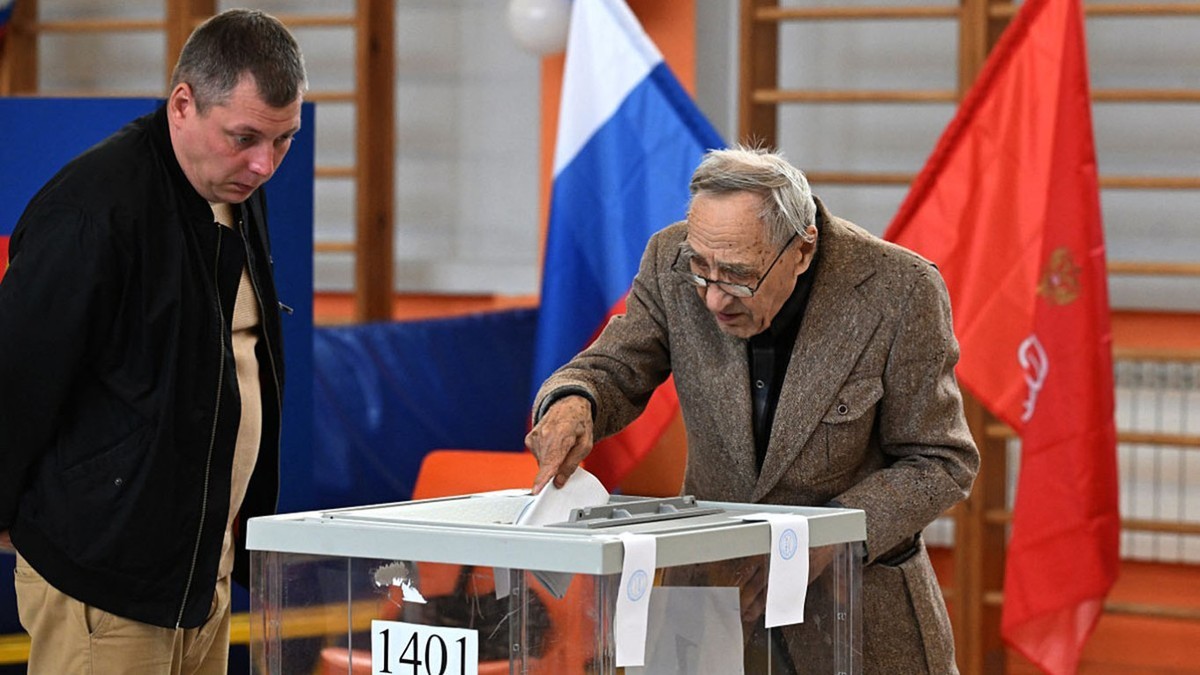
Drones Over the Polling Stations
In Russia's Black Sea resort of Sochi, polling stations were briefly closed because of a drone threat, local officials said, according to the Associated Press. One station in the Krasnodar region had to be moved after a drone shattered its windows, Pamfilova said. In the Russian-held Luhansk region, 14 polling stations used backup power after drones damaged electrical lines. Russian officials said Ukrainian attacks earlier this week killed a polling station chief and wounded another in the Russian-controlled Zaporizhzhia region; there was no immediate Ukrainian comment. Putin accused Ukraine of trying to hamper the vote. Moscow's online voting system was hit by a "strong attack" overnight, Pamfilova said via state media, and the digital ministry reported a thwarted sabotage attempt on Far East communication lines, Reuters reported. The election follows a summer of Ukrainian drone strikes on Russian oil refineries that triggered a fuel crisis, with Wildberries and Ozon warehouses also attacked, the AP reported.
Protest Voting, and Why Its Organisers Say It Still Matters
"Noon for Peaceful Russia" has asked voters to show up at polling stations simultaneously at noon on Sunday, the final day, to generate striking photos of long lines across Russia and at embassies abroad. Katerina Kiltau, chairwoman of the political council for Peaceful Russia, told The Moscow Times: "It's important not only to see that you are not alone. A simultaneous turnout will also show the world that there are Russians who want a peaceful and democratic future." She added: "We understand that this is a choice between bad and very bad. But that is how protest voting works in an environment where elections are not free." Exiled opposition figures Yulia Navalnaya and Maxim Katz called on Russians to vote for any party other than United Russia. Yabloko chairman Nikolai Rybakov argued against voting for systemic opposition parties, given their support for the war. The 2011 Duma election was the last to trigger mass protests over alleged vote-rigging.
What to Watch When the Counting Starts
Counting begins after polling stations close Sunday, with the CEC expected to endorse the outcome later in the week. United Russia goes in holding more than two-thirds of the seats — 324 won in 2021, now 310 after departures. Andrei Turchak, secretary of the party's General Council, told reporters the party expects to win a constitutional majority, TASS reported. The party list is led by Foreign Minister Sergey Lavrov and Moscow Mayor Sergei Sobyanin, with war correspondent Yevgeny Poddubny third. Party leader Dmitry Medvedev, as in the previous election, was not included. Al Jazeera notes United Russia is poised to dominate the body once more. Watch the turnout number and the race for second place — and treat the official count with the same scrutiny as 2021.
By Jessica Ali, Staff Writer
This article was produced with AI-assisted research and editorial support. Sources: AP, Reuters, TASS, Al Jazeera, The Moscow Times, SWP Berlin, Carnegie Politika, European Commission, Ukrainian Ministry of Foreign Affairs.
What's Your Reaction?
 Like
0
Like
0
 Dislike
0
Dislike
0
 Love
0
Love
0
 Funny
0
Funny
0
 Wow
0
Wow
0
 Sad
0
Sad
0
 Angry
0
Angry
0

Editor-in-Chief at Global1.News. Atlanta-based journalist who cuts through the BS and tells it like it is. Lead anchor, host, and the voice you hear when the spin stops and the truth starts.









Comments (0)