
Rubio urges West to return to its ‘civilizational roots’
U.S. Secretary of State Marco Rubio’s recent stop in Athens underscores a broader strategic narrative that the Trump administration is seeking to embed within its transatlantic partnerships.
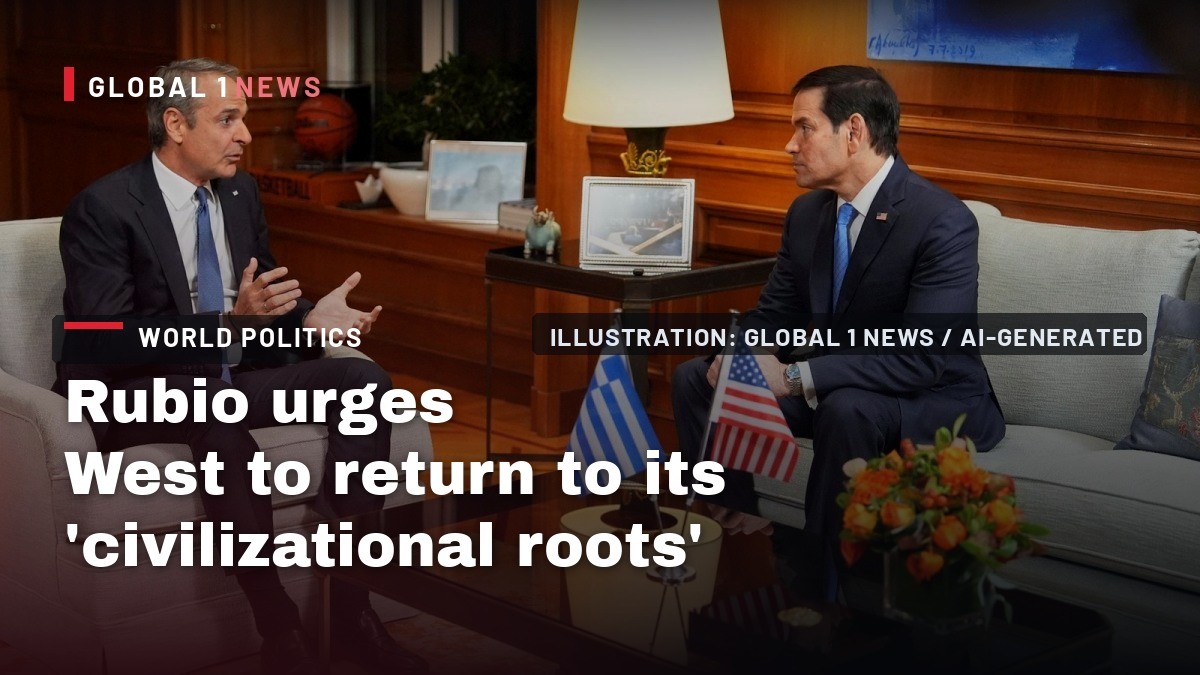
U.S. Secretary of State Marco Rubio’s recent stop in Athens underscores a broader strategic narrative that the Trump administration is seeking to embed within its transatlantic partnerships. Speaking near the Acropolis, Rubio invoked the ancient Greek legacy of “curiosity, courage, ambition and a restless spirit of exploration” as a template for what he described as the West’s “civilizational roots.” The speech, set against a backdrop of protests over the war in Iran and domestic political turbulence in the United States, offers a window into how Washington is attempting to re‑frame its foreign policy discourse amid rising great‑power competition and internal partisan battles.
Historical Symbolism as Diplomatic Currency
Rubio’s choice of venue was deliberate. The Acropolis, a universally recognised emblem of participatory governance and the social contract, provided a potent visual cue for a message that linked Western dominance to the values allegedly born in ancient Greece. By emphasizing “loyalty to your nation” and the “right to defend its interests,” Rubio sought to remind his audience that the West’s historical ascendancy was rooted in a civilizational ethos that, in his view, is now under threat.
This rhetorical framing aligns with a broader Trump‑era narrative that casts contemporary geopolitical challenges as a clash between a “civilized” West and forces that undermine its values. By invoking antiquity, Rubio attempts to elevate the discourse beyond immediate policy disputes, positioning the United States as a guardian of a timeless Western tradition.
Domestic Politics Behind the Diplomatic Tour
The Athens visit formed the second leg of a three‑nation NATO tour that also included Iceland and Portugal. The timing is significant: Rubio, alongside Vice President JD Vance, is widely regarded as a leading contender to inherit the mantle of the Republican Party’s future leadership. Their prominence comes at a moment when the party faces “stiff challenges” in the upcoming congressional midterm elections, as noted in the source material.
Rubio’s diplomatic overtures therefore serve a dual purpose. On one hand, they aim to reassure traditional allies of U.S. commitment despite the “often brusque and sometimes rude approach” that has caused unease. On the other, they provide a platform for Rubio to showcase his own foreign‑policy credentials, positioning himself as a statesman capable of navigating complex transatlantic relationships while reinforcing the administration’s ideological stance.
Greek Public Sentiment and Protest Dynamics
Approximately 1,500 demonstrators gathered in Athens to protest Rubio’s presence and the war in Iran, chanting “American killers!” The protest was organised by a communist labour union and other left‑wing groups, and organisers claimed similar demonstrations occurred in at least twelve other Greek cities. Police banned public demonstrations in central Athens on the day of the speech, indicating a heightened security environment.
The scale and intensity of the protests reflect deep‑seated anti‑American sentiment among certain segments of Greek society, exacerbated by the broader context of U.S. policy toward Iran. While the source material does not provide quantitative polling data, the description of “a large gathering” and the chant used suggest a significant degree of public opposition that could complicate diplomatic outreach.
U.S. Diplomatic Controversies in Greece
Rubio’s visit was also shadowed by allegations against U.S. Ambassador to Greece Kimberly Guilfoyle. Reports in the Wall Street Journal, referenced by the source, claim that Guilfoyle suggested the United States could undermine the Greek government, promoted a particular Greek construction and energy firm, and allowed its lobbyist into private diplomatic meetings. These accusations have prompted probes by senior Democrats on the Senate Foreign Relations and House Foreign Affairs committees.
Rubio declined to comment on the allegations while in Greece, stating only that the embassy was “doing a great job” and that the ambassador was “strong.” His refusal to address the matter directly underscores a diplomatic calculus: avoiding public controversy in the host country while signalling loyalty to a senior administration official. This approach mirrors the administration’s broader pattern of defending controversial figures when questioned abroad.
Strategic Messaging to NATO Allies
Beyond Greece, Rubio’s itinerary included Iceland, where he met the foreign minister at the historic 1986 Reykjavik summit site—the meeting between Ronald Reagan and Mikhail Gorbachev that many view as a catalyst for the Cold War’s end. By invoking this venue, Rubio reinforced a narrative of U.S. leadership in securing European security, while simultaneously assuring Iceland that the United States “has no designs on the island” and would respect Icelandic consent on any action.
This reassurance comes against a backdrop of heightened tensions in the High North, where Russian activity has intensified. The source material notes that the Trump administration has portrayed Iceland as uneasy after a controversial map posted by President Donald Trump suggested U.S. territorial claims extending to Iceland and Greenland. Rubio’s statements appear aimed at calming these anxieties and reaffirming NATO solidarity, even as the administration’s broader rhetoric remains assertive.
Implications for Western Unity and Future Policy
Rubio’s Athens speech, framed as a call for the West to return to its “civilizational roots,” reflects an attempt to re‑anchor Western cohesion around a shared historical identity. By linking contemporary security and energy cooperation with ancient Greek virtues, Rubio seeks to counter narratives that portray the West as fragmented or morally compromised.
However, the resonance of this message is contested. Domestic protests in Greece, diplomatic scandals involving the U.S. ambassador, and the broader perception of the Trump administration’s “anti‑immigration” stance as “racist” by European critics suggest that the appeal of a civilizational appeal may be limited. The administration’s ability to translate rhetorical appeals into concrete policy outcomes—such as deeper energy cooperation or coordinated security actions—will be a key test of its diplomatic effectiveness as the next decade unfolds.
Looking Ahead: The Next Decade of Western Strategy
Rubio concluded his speech with a stark warning: the coming decade will “write the story of the next century,” determining whether the West maintains its global primacy or slides into “atrophy, servitude, and decline.” This prognostication frames the current geopolitical crossroads—marked by great‑power rivalry with Russia and an increasingly assertive China, as well as regional flashpoints like Iran—as a decisive moment for Western policy.
From a strategic perspective, the emphasis on national loyalty and the defense of national interests aligns with a realist interpretation of international relations, one that the Trump administration has championed. Yet the challenge remains to balance such a stance with the multilateral cooperation that underpins NATO and broader Western alliances. As Rubio’s tour demonstrates, the United States is actively seeking to reaffirm its leadership, but the success of that effort will hinge on its ability to address both external threats and internal controversies without alienating key partners.
This article was produced with AI-assisted research and editorial support. Reporting is based on the source material cited below. Sources: Daily Sabah Middle East; dailysabah.com; Global1.News (08 October 2026).
By Malik Hassan, Staff Writer
What's Your Reaction?
 Like
0
Like
0
 Dislike
0
Dislike
0
 Love
0
Love
0
 Funny
0
Funny
0
 Wow
0
Wow
0
 Sad
0
Sad
0
 Angry
0
Angry
0
Middle East Correspondent at Global1.News. Based in Beirut, covering politics, conflict, energy, and society across the Middle East. Brings context and depth to a region often reduced to headlines.









Comments (0)