
Cerebras secures Microsoft as a customer
Microsoft just signed on to Cerebras’ wafer‑scale AI chips, making it the third hyperscaler to line up with the company after AWS and Oracle. Why the Microsoft win matters – and why it doesn’t change the risk landscape Getting Microsoft on board is a badge of credibility, no doubt.
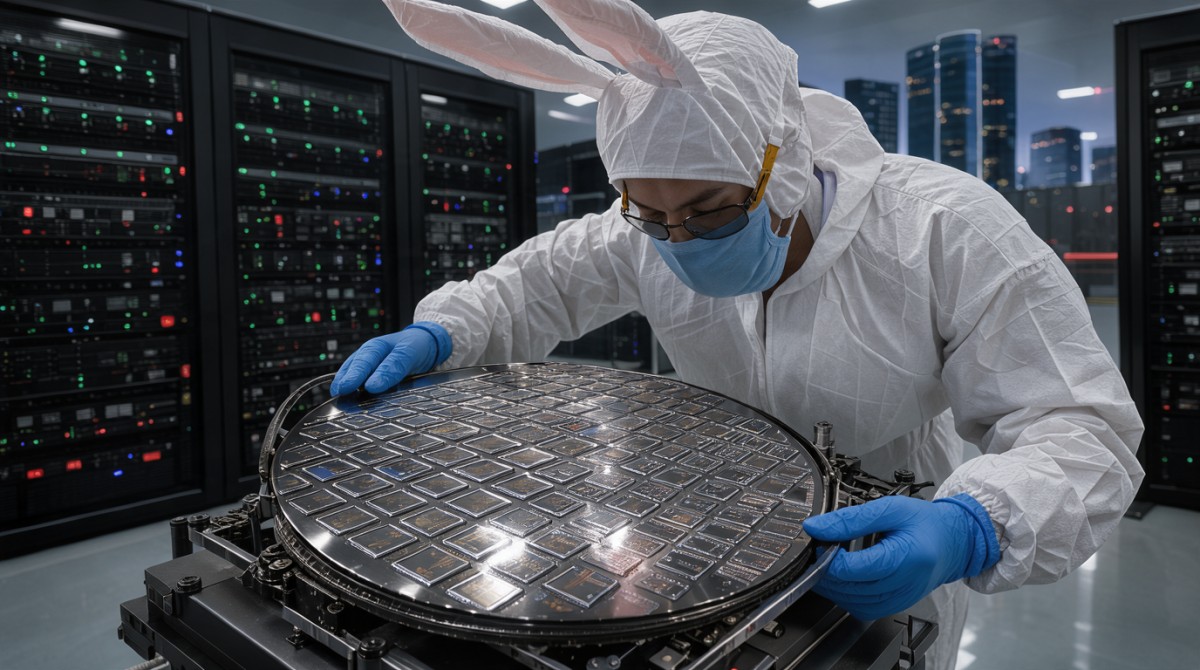
Microsoft just signed on to Cerebras’ wafer‑scale AI chips, making it the third hyperscaler to line up with the company after AWS and Oracle. From a founder’s chair, that headline reads like another chapter in the hype‑driven race to hoard the newest silicon, but the details reveal why independent hosting providers should sit up straight. The deal is still under wraps, the CFO says the win stems from Cerebras’ own cloud push, and the company is scrambling to add data‑center capacity abroad. All of this is a reminder that the shiny veneer of hyperscaler contracts often masks hard constraints that can bite anyone trying to run AI workloads at scale.
Why the Microsoft win matters – and why it doesn’t change the risk landscape
Getting Microsoft on board is a badge of credibility, no doubt. It signals that Cerebras’ wafer‑scale chips are finally “good enough” for the biggest cloud players. But the announcement is thin on substance – no pricing, no deployment timeline, just a promise that more details will surface in 2027. That’s the classic hyperscaler play: lock in a headline partner, then let the details fester in a cloud of secrecy.
For independent hosting firms, the lesson is clear: a hyperscaler contract is not a guarantee of steady revenue. The CFO, Bob Komin, explained that the win was tied to Cerebras’ own cloud offering, which they launched in early 2025 to give “AI natives” a way to test the chips without owning a data centre. In practice, that means the hardware is still being sold through a service model that requires Cerebras to own the underlying capacity. If that capacity stalls, the whole revenue pipeline stalls – a risk any provider that relies on third‑party infrastructure must factor in.
Capacity constraints – the Achilles’ heel of wafer‑scale ambitions
Cerebras admits its data‑center capacity is a bottleneck. The Q3 call highlighted that the company’s planned 700 MW of capacity is still under construction, with “larger portions” not expected to ramp until December and the bulk of that capacity slated for overseas sites in 2027. The CEO, Andrew Feldman, flagged land, power and shell availability as limiting factors, and even warned that evolving US policy could tighten the squeeze further.
From a founder’s perspective, this is a red flag. When you’re betting on a hardware platform that needs massive power and custom shells, any delay in capacity translates directly into delayed shipments and missed service‑level commitments. Independent providers that consider reselling or integrating Cerebras chips need to map out the exact timeline for capacity rollout and have fallback plans – otherwise you’re left holding a pricey piece of silicon you can’t actually deploy.
Geographic diversification – a double‑edged sword
The company’s 2027 roadmap shows more than 75 % of its new capacity will sit outside the US, with sites in Canada, France, Norway, Finland and a data centre in São Paulo, Brazil. On paper, spreading risk across jurisdictions sounds prudent, especially given US policy headwinds. In reality, it adds layers of complexity for any partner that must move data across borders.
Compliance, latency and support costs rise sharply when you’re dealing with multi‑regional footprints. For a hosting provider, the promise of “global” capacity can quickly become a logistical nightmare, especially if you have to meet strict data‑sovereignty rules for certain customers. The takeaway? Don’t be seduced by the overseas expansion narrative without doing the due‑diligence on how it will affect your service delivery and cost base.
Financial health – margins, cash flow and the short‑seller scare
Cerebras reported Q3 revenue of $231 million, up 10 % sequentially and 70 % YoY, with AI cloud contributing $145 million. Gross margins sat at 41 %, with a target of 50 % in the near term and 60 % long term. Core net income turned positive at $30 million, and adjusted EBITDA is barely positive at $2 million. Those numbers look solid on the surface, but the CFO’s comments about “special pricing programs” for early customers suggest that the margin profile is still being propped up by discounts.
More concerning is the short‑seller attack from Culper Research, which claimed Cerebras’ wafers “break down after around two years of use,” threatening the business model. While Feldman dismissed the claim as speculation, the fact that a short‑seller could gain traction indicates market skepticism. Independent providers must treat such headlines as warning signs and not assume the technology is a lock‑step revenue generator.
Hardware yield myths – why low margins don’t equal a yield problem
Critics have pointed to the relatively low hardware gross margins as evidence of a yield issue. Feldman countered that the margins reflect the “ramp of our manufacturing capabilities” and special pricing, not a fundamental defect. He also noted the inherent challenges of wafer‑scale production – performance variation and unavoidable imperfections across a giant die.
In practice, that means you can expect a mix of chip performance and possibly higher failure rates early in the product cycle. For a hosting operation that needs predictable performance, that variance can translate into uneven service quality and higher support overhead. The prudent move is to demand clear SLAs that account for performance binning and to keep a buffer of alternative compute options in case a batch underperforms.
The OpenAI partnership – a glimpse of upside and a reminder of fragility
Cerebras highlighted its expanded partnership with OpenAI, citing “overwhelming” success of the Ultrafast GPT‑5.6 preview on its chips. Yet Feldman admitted the company lacks sufficient capacity to roll out the Ultrafast model broadly, and that delays could trigger a cancellation clause if they exceed 90 days. Roughly 5 % of the contract value sits at risk under that clause.
This partnership illustrates the upside: a high‑profile AI lab can drive demand and validate the technology. But it also underscores the fragility of relying on a single marquee customer for growth. If capacity constraints force a missed deadline, the contract can be walked away from, and the revenue hit will be immediate. Independent providers should view such partnerships as a potential boost, not a safety net.
Actionable takeaways for independent hosting founders
First, treat hyperscaler announcements as marketing, not a guarantee of supply. Verify the underlying capacity roadmap and align it with your own rollout plans. Second, demand transparency on pricing and performance bins – the “special pricing” mentioned in the earnings call could erode margins for downstream partners. Third, build a diversified compute portfolio; don’t put all your eggs in the wafer‑scale basket, especially when the technology still wrestles with yield and longevity concerns.
Finally, keep an eye on regulatory and geopolitical factors that could affect overseas data‑center sites. The US policy landscape and the need for cross‑border data flows can quickly turn a seemingly global expansion into a compliance quagmire. In short, the Microsoft win is a nice headline, but the real story for us in the trenches is the capacity crunch, the margin pressure and the need for a pragmatic, multi‑layered strategy.
— Allan Ali, Founder
This article was produced with AI-assisted research and editorial support. Reporting is based on the source material cited below. Sources: Data Center Dynamics; datacenterdynamics.com; Global1.News (15 November 2026).
By Allan Ali, Global1.News
What's Your Reaction?
 Like
0
 Dislike
0
 Love
0
 Funny
0
 Wow
0
 Sad
0
 Angry
0

Publisher of Global1.News. Automation architect, systems builder, and the guy making sure the truth gets published.















Comments (0)