
Qatar Urges Global Pressure on Israel for Ceasefire Compliance
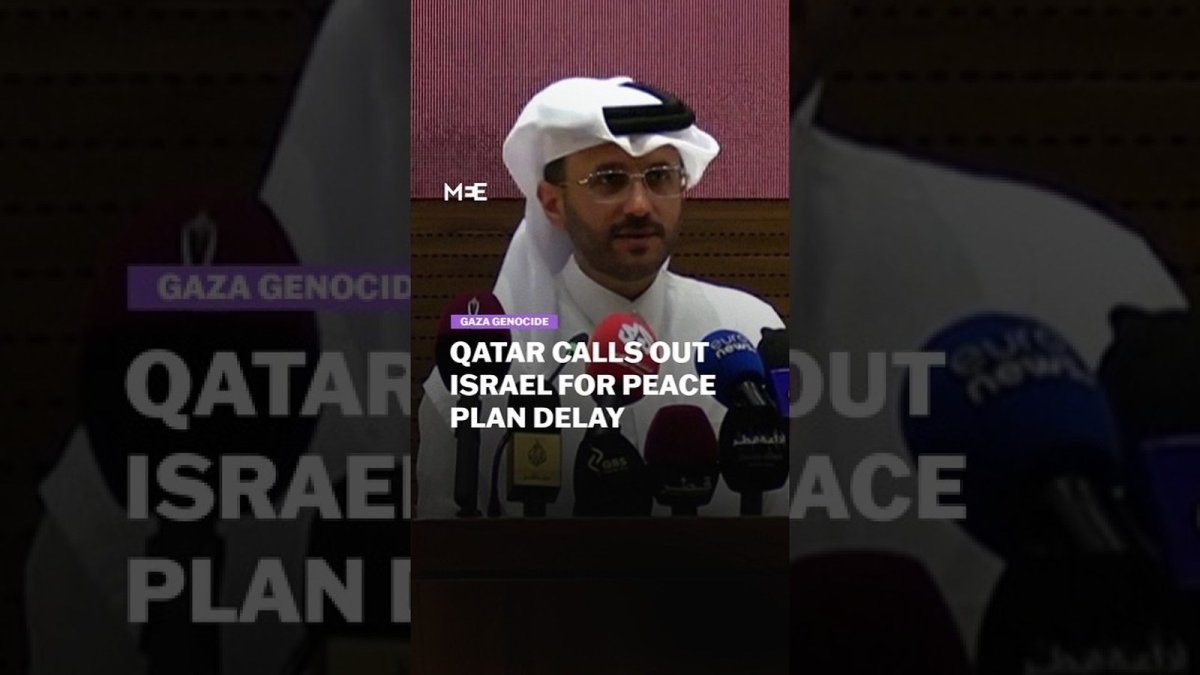
In a recent Middle East Eye report published on 4 August 2026 titled "Qatar calls out Israel for delayed implementation of Gaza peace plan," mediator Qatar publicly called out Israel for delays after US President Donald Trump announced that Hamas had agreed to disarm. The video highlights how Israel continues to refuse withdrawal from the territory despite the roadmap's progress. This development places fresh international scrutiny on the stalled ceasefire process that began in October 2025.
In a recent Middle East Eye report published on 4 August 2026 titled "Qatar calls out Israel for delayed implementation of Gaza peace plan," mediator Qatar publicly called out Israel for delays after US President Donald Trump announced that Hamas had agreed to disarm. The video highlights how Israel continues to refuse withdrawal from the territory despite the roadmap's progress. This development places fresh international scrutiny on the stalled ceasefire process that began in October 2025.
Qatar Urges Global Pressure on Israel for Ceasefire Compliance
Doha, Qatar – August 5, 2026 — Qatar has issued a direct appeal for international pressure on Israel to fulfill its commitments under the Gaza ceasefire agreement. The call comes as Hamas has completed its obligations under the US-brokered roadmap, according to Qatari officials. This stance reflects the mediators' frustration with ongoing delays that prevent reconstruction efforts from advancing.
Ceasefire Origins and the Yellow Line
The October 2025 ceasefire was initially viewed by mediators and Palestinian factions as a fragile but necessary halt to two years of devastating conflict, achieved through the release of Israeli hostages and Israel's initial pullback behind the yellow line. That line had confined Israeli forces to slightly more than half of Gaza, creating limited space for humanitarian movement and the start of recovery. Nearly ten months later, the expansion of Israeli control to roughly seventy percent of the territory has altered the practical meaning of that agreement.
This territorial growth, paired with the continued restriction of aid and the absence of reconstruction, has eroded confidence that the roadmap can deliver the phased withdrawal and civilian governance it envisions. For families already displaced multiple times, the shift signals that earlier compromises may again be overtaken by incremental changes on the ground rather than mutual implementation. The credibility of any future commitments now rests on whether the original territorial limits can be restored as a baseline for the next stage.
Qatar's Public Call at Doha News Conference
Qatar Foreign Ministry spokesman Majed Al-Ansari addressed reporters in Doha on Tuesday, stating that Hamas "has committed to everything it was expected to do under the roadmap." He urged the international community to pressure Israel to implement the agreement so that reconstruction of Gaza could begin. Al-Ansari noted that the international community now clearly knows which party is preventing the agreement from being implemented on the ground. His remarks followed the Board of Peace and President Trump's announcement on 31 July that Hamas had accepted the next phase of the ceasefire. Qatar has mediated alongside Egypt and Turkiye throughout the process. These statements underscore the diplomatic strain as implementation stalls.
Tripartite Rebuke from Egypt, Qatar and Turkey
Egypt, Qatar and Turkey issued a joint statement condemning Israel's latest strikes in Gaza, describing them as continuous and deadly violations that kill women and children. The mediators said these actions undermine efforts to implement the second stage of the ceasefire, especially after Hamas and Palestinian factions accepted the roadmap including disarmament. Sunday, 2 August 2026, proved one of the deadliest days since the October ceasefire, with at least 18 Palestinians killed and two more on Monday. Sources close to the deliberations revealed that the three countries contacted the Trump administration to explore next steps after Israel's rejection of the roadmap. One source emphasized that US pressure on Israel remains the mediators' primary hope, though it does not always succeed. This coordinated response highlights regional unity in pushing for adherence to the agreement.
Details of the 15-Point Roadmap for Implementation
The roadmap requires Hamas and allied groups to hand over heavy weapons, military manufacturing facilities, bases, rocket launchers and maps of underground tunnels to the three mediators, who would then transfer them to a UN-backed committee of independent Palestinian technocrats. Palestinian groups seek to retain personal firearms such as pistols for self-defense while demanding that Israel cease targeting their cadres and guarantee safe passage for those wishing to leave the Strip for exile. Israel has accepted in principle the rehabilitation of about 10,000 employees of the Hamas government, including policemen, by the Palestinian committee, along with admission of an International Stabilisation Force. No official confirmation has emerged from Israel regarding the employees' fate. The plan aims to transition governance away from armed rule toward civilian administration under the technocrat committee. Mediators continue to stress that verifiable steps on both sides are essential for progress.
Palestinian groups have conditioned their participation on retaining personal firearms for self-defence, an end to targeted operations against their members, and safe passage for those choosing exile. The sequencing dispute centres on verification: mediators insist that verifiable steps by both sides must occur in parallel, while Israeli statements have placed full demilitarisation as an absolute precondition before any other provisions advance. Without agreed order, the practical movement of weapons, personnel and forces remains frozen, leaving the transition to civilian administration stalled at the planning stage.
Israel's Position and Effective Rejection of Key Provisions
Doron Spielman, spokesman for Prime Minister Benjamin Netanyahu's office, stated that Israel has conveyed its comments and concerns on the proposed framework to American counterparts, noting that the public version does not reflect Israel's positions. He added that the indispensable first step toward any lasting arrangement is the genuine, verifiable and irreversible demilitarisation of Hamas. Israeli President Isaac Herzog welcomed the deal as a very positive step but insisted that Hamas must be fully disarmed for it to proceed. According to sources with knowledge of the talks, Israel has effectively rejected most of the roadmap's provisions. These responses come amid continued military operations that contradict the ceasefire's intent. The gap between stated principles and actions on the ground remains a central obstacle.
Board of Peace and Mladenov Engagement with Israeli Leadership
Nickolay Mladenov, high representative of the US-led Board of Peace, met Prime Minister Netanyahu on Monday to press for an end to military operations in Gaza. Following the meeting, the Board of Peace issued a statement noting that Israel and the Board share a common understanding of the ultimate objectives, including complete decommissioning of weapons and transition to civilian governance. The statement avoided any reference to Israel's recent strikes. Mladenov posted on X that his team is working around the clock with parties, mediators and regional partners to de-escalate and create space for full implementation of the President's plan. These diplomatic efforts illustrate ongoing attempts to bridge differences despite persistent tensions.
Human Cost and Daily Realities on the Ground
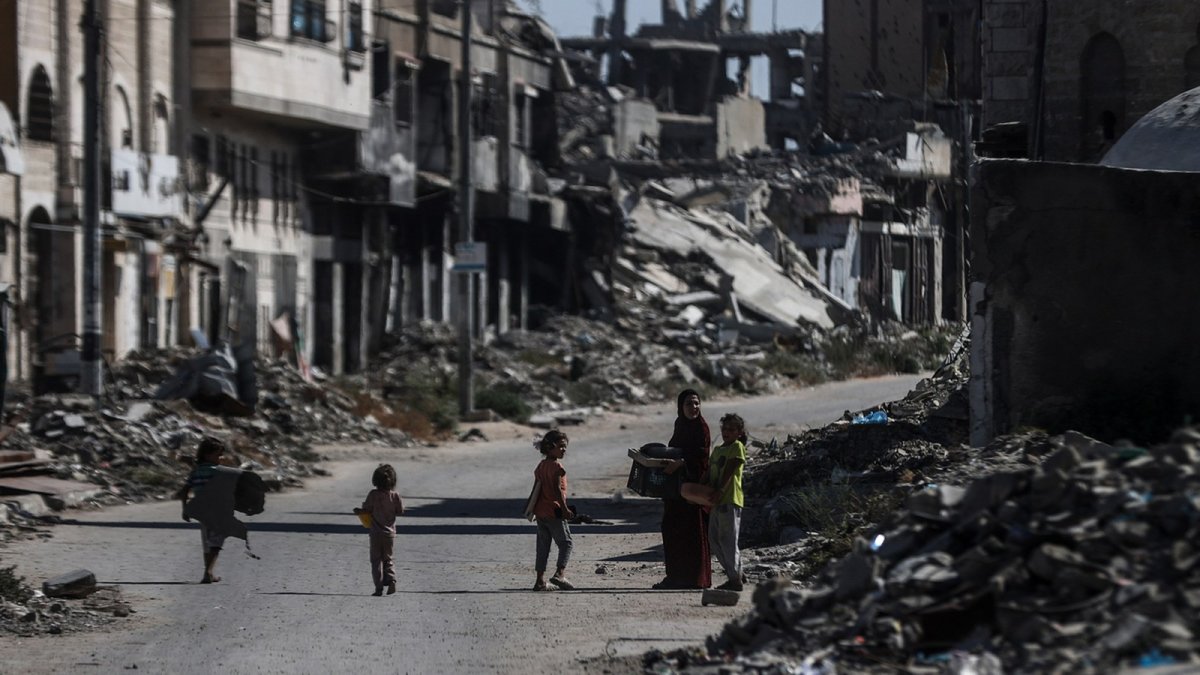
Israel has killed more than 73,000 people and injured more than 174,000 in Gaza since October 2023, according to the Gaza Health Ministry. Since the ceasefire took effect on 10 October 2025, Israeli attacks have continued, killing an additional 1,252 Palestinians and injuring 4,120. Israel has expanded its area of control from just over 50 per cent to about 70 per cent of the Strip, blocking sufficient humanitarian aid and preventing reconstruction. Most of Gaza's two million residents remain displaced, confined to a narrow coastal area where daily life revolves around scarcity and uncertainty. Palestinian families describe the prolonged limbo as an extension of displacement that began decades earlier, with children growing up amid rubble and restricted movement. These conditions underscore the urgent need for the roadmap's full implementation to restore basic stability.
Each passing week of stalled implementation deepens the sense among Gaza’s families that basic stability remains conditional on decisions made elsewhere. The human cost accumulates in the absence of the concrete steps the agreement was meant to enable, and the promise of the roadmap has yet to translate into restored services, repaired schools or safety for children who have known little beyond repeated displacement.
Analysis and Broader Implications for the Region
The public stance from Qatar signals a shift in mediator strategy toward greater transparency about which side bears responsibility for delays. This approach could influence how the Trump administration and other international actors engage with both parties in coming weeks. Palestinian communities view the roadmap as a potential pathway out of endless cycles of violence, yet they remain wary given Israel's expanded territorial control and history of non-compliance. Regional mediators face the challenge of balancing their roles while advocating for accountability that protects civilian lives. The situation also intersects with wider Middle East dynamics, where sustained ceasefire adherence could ease tensions involving neighboring states. Without concrete movement on reconstruction and withdrawal, the risk of renewed escalation persists for families already bearing the heaviest burdens.
Egypt, Qatar and Turkey have conveyed to the Trump administration that sustained US pressure on Israel represents their primary remaining lever, though they acknowledge it has not always produced results. Quiet channels, mediators calculate, have reached their limit — and public accountability is now the tool left in the box.
The stakes extend beyond Gaza to regional stability, as renewed escalation would further strain relations among states already engaged in the process. For families inside the enclave, the narrow window for de-escalation determines whether the roadmap can still interrupt the cycle of displacement and violence or whether the current limbo simply lengthens. Past negotiations have shown that agreements can stagnate once initial momentum fades; the mediators' gamble is that greater transparency may yet compel the flexibility needed before that pattern repeats.
Looking ahead, sustained international engagement will determine whether the roadmap advances beyond statements into tangible relief for Gaza's residents. The coming days may reveal whether US pressure can prompt the flexibility mediators seek, offering a narrow window for de-escalation and the start of recovery.
By Fatima Al-Rashid, Staff Writer
This article was produced with AI-assisted research and editorial support. Reporting is based on sources cited in the article.
What's Your Reaction?
 Like
0
Like
0
 Dislike
0
Dislike
0
 Love
0
Love
0
 Funny
0
Funny
0
 Wow
0
Wow
0
 Sad
0
Sad
0
 Angry
0
Angry
0

Gulf/MENA Correspondent at Global1.News. Based in Doha, covering Gulf politics, energy markets, diplomacy, and development across the Middle East and North Africa. Tracks the economic transformation of the Gulf states.













Comments (0)