
Protesters stage ‘die-in’ against pesticides in Montreal
Demonstrators gathered on Saturday in downtown Montreal for a striking “die‑in” protest aimed at drawing attention to the health risks of pesticide use.
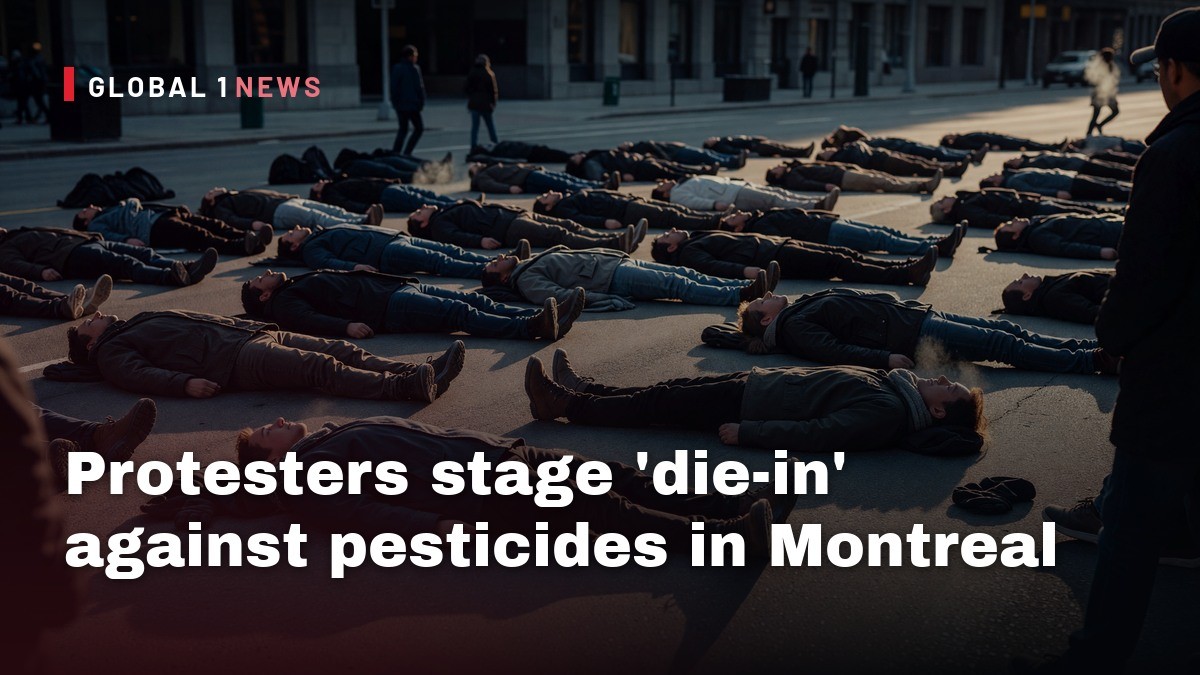
Demonstrators gathered on Saturday in downtown Montreal for a striking “die‑in” protest aimed at drawing attention to the health risks of pesticide use. The demonstration unfolded in front of the Guy‑Favreau complex, the home of Health Canada’s federal offices, and featured participants lying motionless on the pavement while others, clad in white coveralls, mimicked the act of spraying chemicals. The visual tableau was designed to underscore a simple, stark message: “pesticides kill.”
Setting the scene in Montreal
Hundreds of protestors, many dressed in Halloween costumes, converged on the streets surrounding the Guy‑Favreau complex. Children were invited to trace chalk outlines of imagined victims on the ground, a symbolic act that highlighted the perceived human toll of pesticide exposure. Organisers placed a cardboard coffin and a series of tombstones at the protest site, each bearing the name of a disease they linked to pesticide use, reinforcing the narrative that the chemicals pose a direct threat to public health.
The performance element of the protest—participants lying motionless as if dead—was intended to dramatise the potential consequences of pesticide exposure. Volunteers in white coveralls moved through the crowd, pretending to spray, a theatrical gesture that mirrored the routine application of pesticides in agricultural and urban settings. The visual impact was amplified by the presence of the federal health agency’s offices just steps away, creating a direct confrontation between activists and the policymakers they hold responsible.
Organisers and their grievances
Thibault Rehn, executive director of the watchdog group Vigilance OGM, helped coordinate the Montreal demonstration. Rehn framed the protest as a response to what he described as “historic setbacks” by the federal government. Central to the activists’ grievance is legislation passed in June, which, according to Rehn, grants the cabinet authority to override Health Canada’s recommendations and approve the use of pesticides that have previously been banned.
The legislation in question, while not detailed in the protest’s public statements, is understood to broaden the government’s discretion in authorising chemicals deemed hazardous. Rehn and other members of Vigilance OGM argue that this shift undermines the precautionary principle that has traditionally guided Canadian health and environmental policy, potentially exposing Canadians to greater health risks.
National context: Federal pesticide policy
Health Canada, the department responsible for protecting public health, has long regulated pesticide approval through a rigorous risk‑assessment process. The agency evaluates scientific data on toxicity, environmental impact, and exposure levels before granting licences for use. However, the June legislation referenced by protestors appears to modify the balance of power, allowing the cabinet to intervene and approve substances even when Health Canada advises against them.
Critics contend that this change could erode the independence of scientific advice in policy decisions, a concern that resonates beyond Quebec. Across Canada, provincial ministries of the environment and agriculture also manage pesticide registration and enforcement, often aligning with federal guidelines. Any shift at the federal level may ripple through provincial frameworks, potentially altering the stringency of pesticide controls nationwide.
Provincial and municipal responses
While the Montreal protest was the most visible, similar demonstrations were organised in several other Quebec municipalities, including Quebec City, Sherbrooke, Saguenay, Terrebonne, Blainville and Val‑David, as well as in Ottawa. The coordinated nature of these actions suggests a broader provincial network of activists concerned about pesticide policy. In Quebec, the provincial Ministry of the Environment and the Ministry of Agriculture, Fisheries and Food share responsibility for pesticide regulation, and have historically taken a cautious approach to the approval of new chemicals.
Municipalities across the province also manage local pesticide applications, particularly for public green spaces and municipal water treatment. The protests may prompt city councils to revisit their own pesticide use policies, especially as public pressure mounts to adopt greener alternatives such as integrated pest management.
Health implications and public concern
The protest’s emphasis on disease names on tombstones reflects a growing public anxiety about the health impacts of pesticide exposure. Scientific studies have linked certain pesticides to a range of health outcomes, including neurological disorders, endocrine disruption and certain cancers. While the specific chemicals at the centre of the June legislation were not named in the protest, the broader concern is that any weakening of regulatory safeguards could increase the risk of exposure for Canadians.
Public health advocates argue that precautionary measures—such as restricting the use of highly toxic substances and promoting safer alternatives—are essential to protect vulnerable populations, including children, pregnant people and agricultural workers. The visual symbolism of the die‑in, with children tracing chalk outlines, underscores the intergenerational dimension of the issue, suggesting that the consequences of today’s policy choices may be felt by future Canadians.
Political ramifications
The timing of the protest, coinciding with the federal government’s recent legislative change, places pesticide policy squarely in the national political conversation. Opposition parties in the House of Commons have previously questioned the adequacy of Canada’s pesticide regulations, and the June legislation may become a focal point for parliamentary debate. The protest’s location—directly outside Health Canada’s headquarters—signals a demand for accountability from the very institution tasked with safeguarding public health.
Within Quebec, the provincial government’s stance on pesticide regulation could be tested as activists push for stricter controls. The coordinated protests across multiple cities suggest an organized effort to influence both federal and provincial policymakers. If public pressure continues, it may prompt a review of the June legislation or lead to new legislative initiatives aimed at reinforcing health‑based decision‑making.
Looking ahead: Potential outcomes
While the immediate impact of a single protest is difficult to quantify, the event adds to a growing chorus of voices calling for tighter pesticide regulation in Canada. The visual and symbolic power of the die‑in, combined with the involvement of a national watchdog group, may encourage other stakeholders—such as environmental NGOs, health professionals and concerned citizens—to mobilise.
Future developments could include parliamentary hearings on the June legislation, provincial reviews of pesticide licensing, and increased public education campaigns about safe pesticide practices. As the conversation unfolds, the Montreal protest serves as a reminder that public health and environmental stewardship remain central concerns for Canadians navigating the balance between agricultural productivity and the health of their communities.
This article was produced with AI-assisted research and editorial support. Reporting is based on the source material cited below. Sources: Global News Canada; globalnews.ca; Global1.News (31 October 2026).
By Alex Thompson, Staff Writer
What's Your Reaction?
 Like
0
 Dislike
0
 Love
0
 Funny
0
 Wow
0
 Sad
0
 Angry
0

Canada Correspondent at Global1.News. Based in Toronto, covering Canadian politics, energy, trade, and US-Canada relations. Provides the Canadian perspective on North American and global affairs.














Comments (0)