
Philippines holds oil storage talks with Saudi Arabia, Russia, US
Energy Secretary Sharon Garin announced that the Philippines is actively pursuing oil‑storage agreements with Saudi Arabia, Russia and the United States.
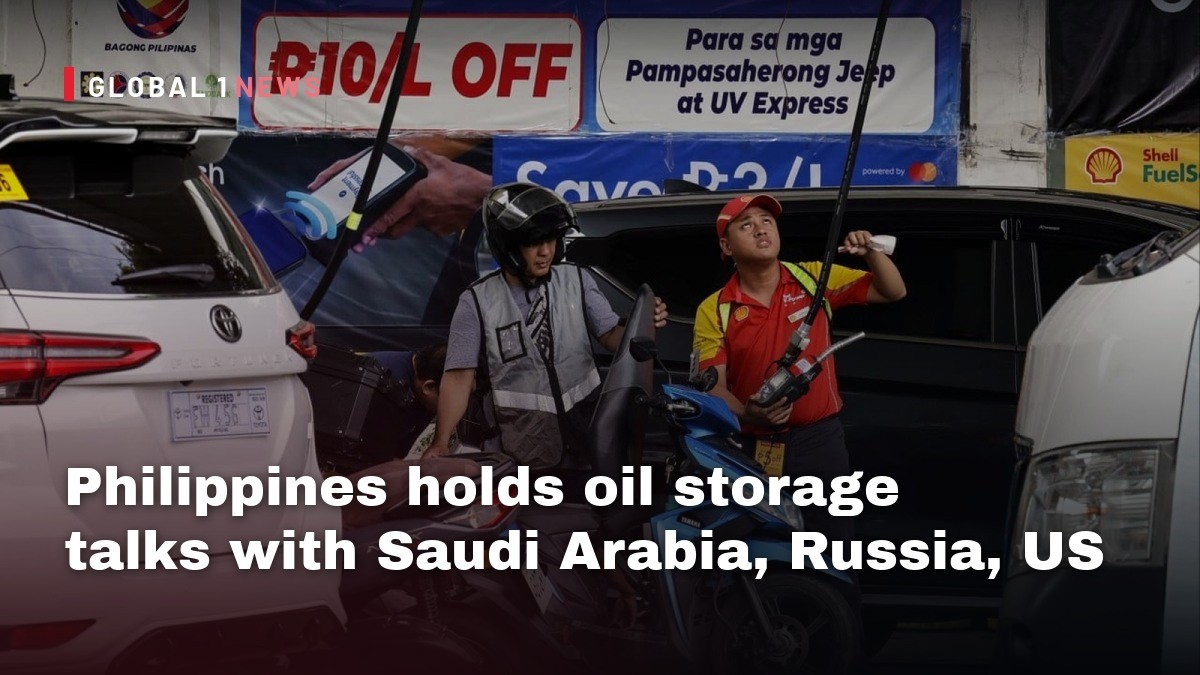
Energy Secretary Sharon Garin announced that the Philippines is actively pursuing oil‑storage agreements with Saudi Arabia, Russia and the United States. The talks are part of a broader strategy to shield the archipelago from volatile fuel prices that have surged amid the ongoing Iran war. With almost all of its energy requirements imported, Manila is seeking to diversify its supply chain and build strategic reserves that can be tapped in times of crisis.
Strategic context: why oil storage now?
The Philippines’ urgency stems from two converging threats. First, the Iran war has sent global oil markets into turbulence, prompting many import‑dependent nations to reassess their exposure to price spikes. Second, the country faces a looming domestic supply shortfall as the El Niño weather pattern is projected to curtail renewable generation. Garin highlighted that the combined effect of these external and internal pressures makes oil storage a critical component of national energy security.
By securing storage capacity with major oil‑producing partners, the Philippines hopes to create a buffer that can be released when market prices surge or when supply routes are disrupted. The involvement of Saudi Arabia, Russia and the United States—each a leading global oil exporter—signals Manila’s intent to negotiate flexible, multi‑source arrangements rather than relying on a single supplier.
Impact of the Iran war on global fuel markets
The conflict in Iran has reverberated across the global oil market, driving up prices and raising concerns about supply chain reliability. While the source material does not provide specific price figures, it notes that the war has been a catalyst for the Philippines’ storage talks. The war’s disruption of Iranian exports has prompted importing nations to seek alternative sources and to stockpile additional reserves as a hedge against future volatility.
For the Philippines, which imports nearly all of its energy, the risk of price spikes is particularly acute. Higher import costs would translate directly into higher electricity rates and transport costs, affecting both households and industry. By establishing storage agreements now, the government aims to mitigate these downstream effects.
El Niño and the domestic energy shortfall
El Niño is expected to reduce the country’s renewable output dramatically. Garin estimated a 60 percent decline in hydropower and a 20 percent fall in solar generation during the first half of 2027. These figures illustrate the scale of the shortfall that the Philippines must address through alternative generation sources.
To compensate, the government plans to increase diesel and gas‑fired power generation. This shift underscores a temporary pivot away from renewables toward more controllable, albeit carbon‑intensive, energy sources. The need for additional oil storage aligns with this pivot, as diesel and gas plants require reliable fuel supplies that can be sourced domestically from stored reserves.
Broader regional outreach: talks with Japan and other partners
In addition to the trilateral talks with Saudi Arabia, Russia and the United States, Garin disclosed that the Philippines is also in dialogue with Japan, Kuwait, the United Arab Emirates and Australia. This broader outreach reflects a comprehensive approach to building a diversified storage portfolio.
The inclusion of Japan is particularly noteworthy given its own experience with energy security challenges following the Fukushima disaster. While the source material does not detail the nature of the Japan‑Philippines discussions, the fact that both nations are exploring storage cooperation suggests a potential alignment of strategic interests in the region.
Implications for the Philippines’ energy policy
The current storage negotiations signal a shift in the Philippines’ energy policy from a purely import‑reliant stance toward a more resilient, stockpile‑based model. By securing storage capacity abroad, the government can mitigate short‑term price shocks while preserving the flexibility to draw on reserves as needed.
This approach also dovetails with the country’s longer‑term energy transition goals. While the immediate response involves scaling up diesel and gas generation, the strategic reserves could later be used to support a gradual re‑integration of renewables once El Niño subsides and hydropower and solar output recover.
Potential challenges and risks
Negotiating storage agreements with multiple major powers presents diplomatic and logistical complexities. Each partner may have differing terms regarding pricing, volume, and duration of storage, requiring Manila to balance competing interests while safeguarding national security.
Moreover, expanding diesel and gas‑fired generation raises environmental concerns. While the source material does not discuss emissions, the reliance on fossil‑fuel plants could attract scrutiny from climate advocates and may affect the Philippines’ commitments under international climate accords.
Outlook: preparing for 2027 and beyond
Looking ahead to the first half of 2027, the Philippines faces a critical period in which reduced renewable output must be offset by alternative generation and secure fuel supplies. The storage talks, now underway with a range of oil‑producing nations, aim to ensure that the country can meet its electricity demand without succumbing to price volatility.
As the Iran war continues to shape global oil dynamics and El Niño exerts pressure on domestic generation, Manila’s multi‑partner strategy reflects a pragmatic effort to diversify risk. Successful agreements could provide a template for other import‑dependent economies in the region seeking to bolster their energy resilience amid an increasingly unpredictable geopolitical landscape.
This article was produced with AI-assisted research and editorial support. Reporting is based on the source material cited below. Sources: South China Morning Post; scmp.com; Global1.News (28 October 2026).
By Kenji Tanaka, Staff Writer
What's Your Reaction?
 Like
0
 Dislike
0
 Love
0
 Funny
0
 Wow
0
 Sad
0
 Angry
0

Japan Correspondent at Global1.News. Tokyo-based voice covering Japanese politics, technology, economy, and culture. Tracks the intersection of tradition and innovation in one of the world's most dynamic societies.









Comments (0)