
285,993 Canadians Ask Carney to Expel Trump's Ambassador
A nonbinding House of Commons petition with 285,993 validated signatures asks Prime Minister Mark Carney to declare U.S. Ambassador Pete Hoekstra persona non grata as Canada and the United States remain locked in a trade war.
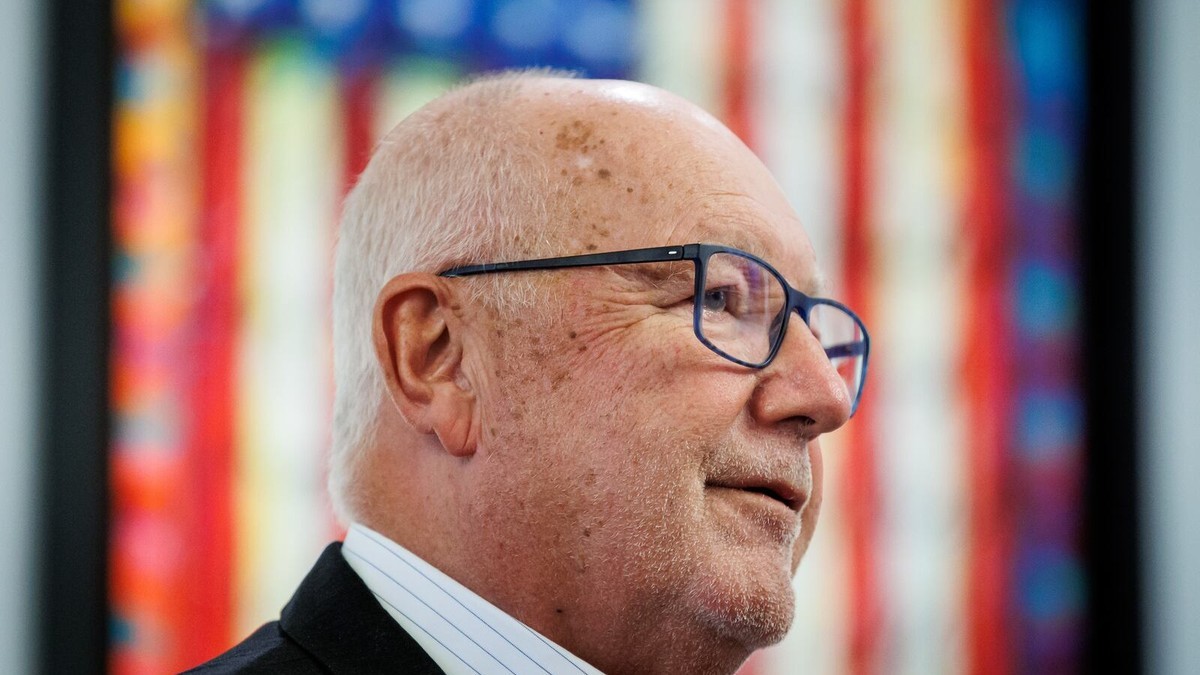
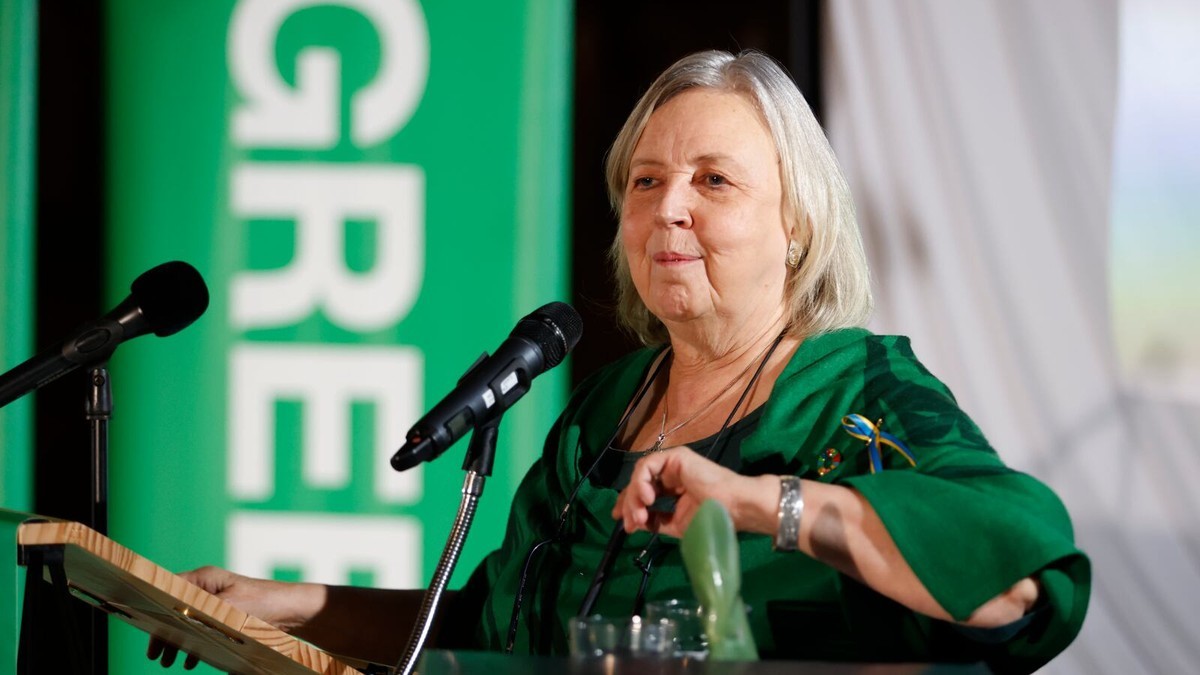
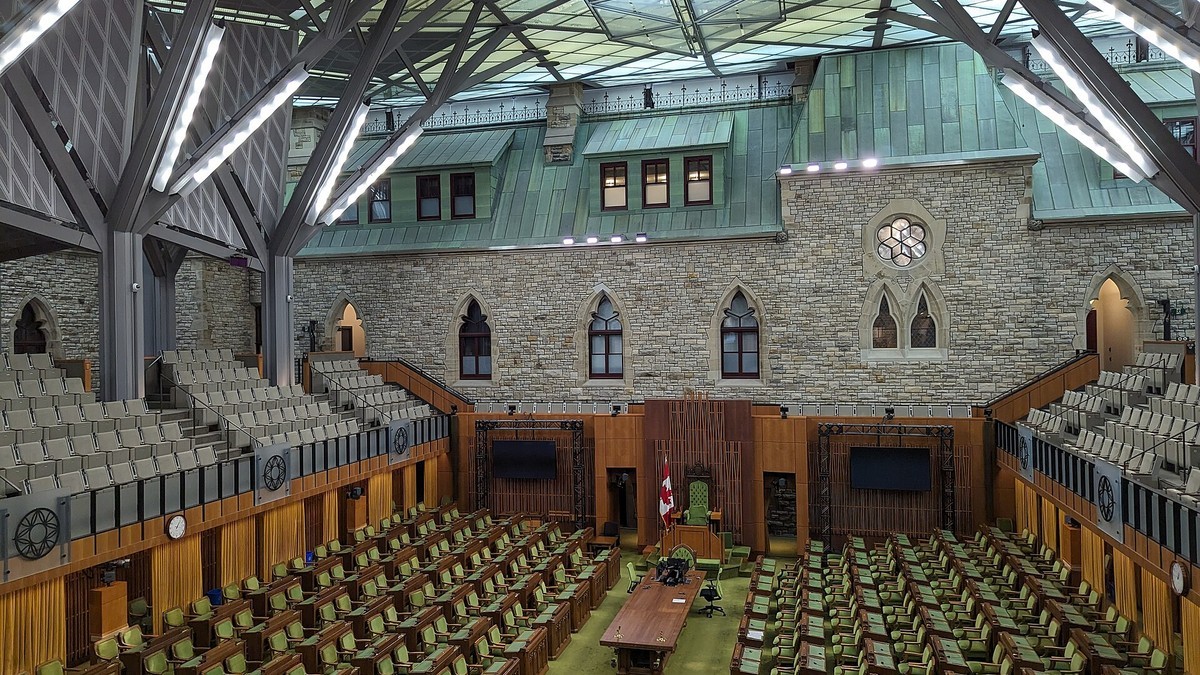
A petition calling on Prime Minister Mark Carney's government to expel U.S. Ambassador Pete Hoekstra was formally presented in the House of Commons on November 26, 2026, and it asks Ottawa to declare him persona non grata, request his removal and raise his conduct with Washington. It further asks that a parliamentary committee review U.S. diplomatic interference in Canadian domestic affairs. Green Party MP Elizabeth May, who sponsored the nonbinding petition, told the House the envoy has been "repeatedly abusive and insulting to Canadians." May, who was born in the United States, offered a Thanksgiving Day sign-off: "And with that, I wish him a happy Thanksgiving." She added: "I think there are other countries he'd be happier living in."
285,993 Canadians Ask Carney to Expel Trump's Ambassador
The Petition and the Number Behind It
OTTAWA - Petition No. 451-01421 was initiated by Leanne Walker of Calgary, Alberta, and the House of Commons record lists 285,993 validated signatures. It opened for signature on July 21, 2026, and closed on November 18, 2026. The record gives November 26, 2026, as the date it was presented. Some outlets described the tabling as Wednesday; November 26, 2026 was a Thursday. The published provincial rows run from 123,412 in Ontario and 57,394 in British Columbia down to 78 in Nunavut.
Outlets do not agree on the total. POLITICO reported "nearly 290,000," AFP reported "more than 300,000," and Le Monde and BNN Bloomberg each said "nearly 300,000." Newsweek used the validated figure. CP24 quoted May citing "more than 280,000" at the time of tabling, and May called the response "extraordinary." Walker told CBC News she "hopes the petition will send a message" and that the support shows "it's not a fringe issue."
Who Pete Hoekstra Is in Ottawa
Pete Hoekstra is 72, a former Republican congressman from Michigan and a Trump ally. He has shared the president's Truth Social posts referring to Canada as the "51st state" and asked why Canadians were offended by what he called a "generous offer," according to the Daily Beast. In a Canadian podcast interview, he told Canadians to "keep your nose out of American politics." At a Halifax Chamber of Commerce event in September 2025, he said the 2025 federal election "was an anti-American campaign. That has continued. That's disappointing," and he objected to reports describing the dispute as a "trade war." In June he said the idea of the United States annexing Canada would be "a great discussion" for Trump to have with Carney. Asked in May about his standing, he told POLITICO: "Donald Trump did not tell me to go to Canada and become liked."
What the Petition Actually Alleges
The petition's preamble sets out five allegations. It says he repeatedly made public statements undermining Canada-U.S. diplomatic relations, including characterizing the 2025 federal election as anti-American. It says he normalized threats to annex Canada as the "51st state," describing the rhetoric as a "term of endearment." It says he accused Canada of interfering in U.S. domestic politics while himself intervening in Canadian political discourse. It says he "has been linked to a Michigan-based voter identification app used by the Alberta separatist Centurion Project, while claiming no knowledge of its use." It says the Alberta Prosperity Project met with U.S. State Department officials three times between April 2025 and January 2026, and that Hoekstra claims no knowledge of those meetings. None of these allegations has been established, and the petition itself records that Hoekstra claims no knowledge of the app or of the meetings. No finding of fact has been made.
May Says Carney Likely Will Not Act
May told CTV's Your Morning that she doubts Carney's administration will act on the petition. "When the leader of a country has the support of the people of a country, that creates a stronger negotiating position right now," she said. Trump's loss of the House of Representatives and Senate in the midterm elections weakened his position with Canada, May argued. She has told Newsweek he was "unfit for the mandate he holds," and that he may be doing the job the president wants done: being rude to his hosts and blowing up bridges. The petition, she said, "does allege that Pete Hoekstra has engaged in foreign interference in Canadian elections," and she said it also alleges he encouraged Alberta separatism. On expulsion she was careful. "It's very rare of Canada to expel foreign diplomats," she said. "We've done it on occasion." May said the "reality" is that Canada "has a lot on the line, trying to remove these unfair and illegal tariffs," but that the petition "does perhaps strengthen the government of Canada's hand to say, we're doing what the people of Canada want. We say elbows up."
The Legal Tool Ottawa Already Has
The petition's second demand asks Ottawa to raise with Washington "the pattern of conduct by Ambassador Hoekstra inconsistent with the Vienna convention on Diplomatic Relations." The convention supplies the mechanism for the first demand. Under it, Canada can declare a foreign ambassador persona non grata without having to explain its decision, according to Newsweek. Expelling Hoekstra could risk a further diplomatic confrontation with Washington while Carney attempts to negotiate a trade agreement with the Trump administration. Carney was asked in June whether Hoekstra should be expelled after the ambassador shared another Trump post on Canada. "The short answer is no, to the second part of your question," he said. "It's an administration that we have to work with," he added, citing the countries' extensive trade and security ties. The petition also asks that a parliamentary committee be directed to review U.S. diplomatic interference in Canadian domestic affairs, but a petition cannot compel that step.
Two Precedents, Both Recent
The precedents are recent. In 2023 the Liberal government expelled Zhao Wei, a Chinese diplomat, over an alleged plot to intimidate a Canadian politician and his family in Hong Kong. The following year Canada expelled six Indian diplomats it considered persons of interest in the 2023 murder of a Sikh separatist leader, a Canadian citizen, in British Columbia.
The 2023 case rested on an alleged plot to intimidate a Canadian politician and his family. The 2024 case rested on the six being considered persons of interest in a murder investigation. The Hoekstra petition rests on different ground: public statements, alleged ties to a Michigan-based voter identification app, and meetings between an Alberta group and State Department officials. Those earlier expulsions were government decisions. The request now on the order paper is a petition, and the decision it asks for belongs to the government, not to the House.
A Trade War More Than Twenty Months Old
The petition lands in an unsettled relationship, more than 20 months after the trade war began. Canada's merchandise exports to the United States accounted for 71.7 percent of the total in 2025, according to Statistics Canada, the lowest share since the early 1980s. Barry Appleton, an international trade lawyer, told CTV Your Morning that a petition of this kind works as a "temperature check." Washington imposed a 50 percent tariff on Canadian goods on August 22, 2026, and Canada matched it dollar for dollar on September 8, 2026. The value of goods hit is disputed: Money.ca reported $27.6 billion, while The Associated Press reported roughly $20 billion.
After Carney's November 1, 2026 call with Trump, Carney said U.S. negotiators were "asking less and they're offering more." The two leaders met for nearly 20 minutes at the Asia-Pacific Economic Cooperation summit in Shenzhen, China, on November 18, 2026. Afterward, Carney said: "There is the possibility of a deal, a bilateral deal, but we're not yet there." No agreement has been reached.
Autos, Steel and the January First Deadline
U.S. Trade Representative Jamieson Greer said Washington is looking to strike a deal that "accommodates" Canada in North American steel, aluminum and automobile sectors. Those sectors, along with lumber, are subject to steep 25 percent tariffs imposed under Section 232 of the U.S. Trade Expansion Act. In August, shortly after trade talks broke down, Trump said the U.S. would double these tariffs to 50 percent starting January 1, 2027, a separate action from the August levy. Canada's chief trade negotiator, Janice Charette, told a federal advisory committee that "multiple trade issues" remain outstanding, according to sources briefed by the government. The biggest issue still outstanding is the 25 percent U.S. tariff on Canadian automobiles, those sources said.
Prime Minister Mark Carney has said the U.S. wants to keep hefty tariffs on some vehicles and that Canada could turn to Chinese automakers if talks fail. Ottawa has warned that completely removing the levies is unlikely and that the Canadian economy needs to adjust to a permanently altered trading relationship with the United States.
Poilievre Goes to Washington Instead
Conservative Leader Pierre Poilievre will make his first official trip to Washington next week, with two events scheduled for the Thursday of that week. "I will be travelling to Washington to fight for tariff-free trade with the United States, to protect Canadian jobs and bring down the cost of living," he said in a statement. It is his third trip to the United States this year. On a September trip to New York he refused to criticize Carney's handling of trade negotiations, saying "politics ends at the border." The trip coincides with yet another round of talks between Ottawa and Washington. Canada-U.S. Trade Minister Dominic LeBlanc said talks would ease off during American Thanksgiving and start back up again next week. Poilievre has pressed the government on results: "It's time for Mr. Carney to put the big talk in the past and deliver real results," he said after the November 1 call between Carney and Trump.
What Ottawa Owes the House by January
The obligation is procedural. Once a petition is presented, the federal government has 45 calendar days to respond, which puts the deadline at January 10, 2027. That deadline is set by the calendar, not by the size of the petition. Nothing in the process compels an expulsion or any other action; the petition is nonbinding. May stressed during parliamentary proceedings that MPs who sponsor petitions do not necessarily endorse their demands.
The State Department said: "The Department is aware of the petition. We have nothing further to add." The U.S. Embassy has not engaged with the campaign. The petition seeks a declaration, a formal complaint to Washington and a committee review, and the government's formal response is the next document in the file. Whether it produces more than paper is a political question, and the file around it is crowded with tariffs, autos and a possible bilateral trade deal.
By Jessica Ali, Staff Writer
This article was produced with AI-assisted research and editorial support. Sources: House of Commons Petition e-7531 (Petition No. 451-01421), POLITICO, CP24/CTV News, AFP, Le Monde, CBC News, Newsweek, the Daily Beast, Money.ca, The Associated Press, Global News, BNN Bloomberg. Lead photograph: U.S. Ambassador to Canada Pete Hoekstra, via CP24/CTV News. Inline photographs: Elizabeth May via CP24/CTV News; the House of Commons chamber by Takipoint123, CC BY-SA 4.0, via Wikimedia Commons.
What's Your Reaction?
 Like
0
 Dislike
0
 Love
0
 Funny
0
 Wow
0
 Sad
0
 Angry
0

Editor-in-Chief at Global1.News. Atlanta-based journalist who cuts through the BS and tells it like it is. Lead anchor, host, and the voice you hear when the spin stops and the truth starts.














Comments (0)