
Reported Breach Reaches Air Force Cloud One Control Layer
Reuters reports that hackers breached Cloud One, the Air Force's flagship cloud platform, reaching a control layer with access to tactical and personnel systems. No government body has confirmed the intrusion or said whether any data was stolen.
An intruder reached the control plane of the Air Force's own cloud. That is the layer that, in theory, can check aircraft status or spare-parts movement, not just store files. Reuters reported the breach, and no government body has confirmed it.
Reported Breach Reaches Air Force Cloud One Control Layer
A Remote Control Nobody Should Have Found
WASHINGTON - The intrusion Reuters described is not a small scare. It is a reported breach of a platform the Air Force built to centralize work, and it rests on five anonymous sources. That is the first fact to hold onto: Reuters could not establish who did it, how far the intruders got, or whether any data was stolen. No government body named by Reuters has confirmed the breach. The Air Force did not confirm it either.
Its statement says it "does not comment on the security posture, vulnerabilities or operational status of specific networks and systems. We continuously take prudent measures to protect Department (of the Air Force) information, systems and mission capabilities." That is a careful non-answer. It does not say whether Cloud One was breached, what was touched, or who might be responsible. A remote control nobody should have found is still, for now, a reported remote control.
What Cloud One Was Built to Hold
Cloud One began in 2017 as the Air Force's answer to fragmented IT. Its own site calls it a "one-stop shop" for Department of Defense mission owners, and Reuters described it as combining Microsoft, Amazon, Oracle and Alphabet to power scores of applications. Those applications are not abstract. They include personnel and pay systems, logistics and maintenance tools, and two operational names worth knowing: Cloud-Based Command and Control, which collates air defense radar and other feeds from across North America, and the Theater Integrated Combat Munitions System, which tracks bombs and missiles across more than 200 Air Force locations worldwide.
The program's own public counters list 68 systems in Zone C and 189 production systems across IL2 to IL6. That is a lot of surface area. It is also why the word "flagship" fits. Cloud One was built to hold the mundane and the sensitive in one place, and the reported breach landed on a platform designed to be the front door for both.

The Month It Took Before Anyone Said It Out Loud
The timing is rotten. Cloud One's intrusion was discovered within the past month or so during work to upgrade the system, people familiar with the matter told Reuters. The public learned about it on 27 November, through Reuters. That is not proof of a cover-up. It is proof that a serious platform problem can sit inside an upgrade cycle before it becomes a public sentence. The discovery led to disruption across the platform, Reuters reported. Efforts to migrate back-office applications were paused, and some users had their administrator rights revoked.
Each of those steps is a containment measure, not a public alarm. The Air Force, asked about specific systems, offered its general statement and nothing more. So the month matters: the breach may have been found in upgrade work, but the country did not hear about it until Reuters published. The silence before that publication is part of what has to be explained.
Cyber Command Is Now Counting the Damage
Cyber Command has been called in, according to one person familiar with the matter. Its job is to assess the damage, a task that sounds more precise than it is. Reuters could not establish the full scope of the intrusion or whether any data had been stolen. Cyber Command did not respond to requests for comment. That leaves the military's own cyber force working on a reported breach that no government body has publicly confirmed. The absence of a public damage count is not a small detail.
It is the difference between a contained incident and a platform-wide problem, and nobody outside the investigation has supplied the answer. The sources describe disruption, not destruction. They do not say aircraft, radar or weapons systems stopped working. They do not say what the intruders did inside the control plane. They do not name a vulnerability. The damage count, if one exists, remains inside the government. Until it surfaces, the public has a reported intrusion and a list of unknowns.
Patches That Could Not Be Applied
The most concrete consequence is maintenance. Updates to applications already running on Cloud One were blocked, which left Air Force personnel unable to apply fixes just as a new batch of serious software vulnerabilities was disclosed across the technology industry. That is a rotten combination: a suspected intrusion and a patching freeze at the same time. Reuters reported the blockage. The sources do not say which applications were affected or for how long. The Air Force says it does not discuss specific systems.
So the public cannot know whether a payroll tool, a logistics tracker or a command-and-control application sat unpatched. What is clear is the logic of the freeze. Investigators who fear an intruder in the control plane do not want new code moving through the same environment before they understand what happened. Patching is not optional in normal times. In a breach, it becomes a trade-off between closing a known hole and moving through a system you no longer trust. The trade-off is real, and it is unresolved.

The Contractors, and the Handover in 2025
The contract trail is part of the context. SAIC was the prime contractor for Cloud One until 2025, when Leidos took over. SAIC did not respond to a request for comment. Leidos referred questions to the Air Force. Neither company confirmed a breach, and the public record does not say whether the reported intrusion touched work done under either contractor. The money side is clearer. Amazon Web Services held a $581.3 million contract under the program, and Microsoft received a $170.4 million firm-fixed-price task order. Both run through December 2028.
Cloud One is separate from the Joint Warfighting Cloud Capability program. In 2022, then Air Force CIO Lauren Knausenberger described Cloud One as an "$800m service" relying on AWS, Microsoft Azure and Google Cloud, with Oracle promised. The first iteration expired in 2024. Those details do not explain the intrusion. They do explain why a breach here reaches beyond one office: the platform is a contract ecosystem, a migration target and an operational dependency at once.
The Hundred Percent That Got Tested
The program's confidence matters. In 2023, Cloud One's leadership wrote in a commentary carried by FedScoop that it had a "100 per cent success rate" in overcoming a "staggering" number of attempts to penetrate the platform. The next year, Lt. Col. Beau Brantley, Cloud One's lead engineer, put it more simply at Hill Air Force Base: "We have a 100% success rate." Those were claims about the platform's defenses, made before the reported intrusion. They are not proof that anyone lied.
They are proof that confidence was high and public. A breach reported by Reuters now tests that claim in the hardest way. The sources do not say how the intruders got in, so the public cannot measure the failure against the claim. What can be said is narrower: a platform advertised as hard to penetrate is now the subject of a reported breach, and its own officials' words are the benchmark against which the unanswered questions will be judged.
A Government Already Sinking in Breach Reports
Cloud One did not land in a quiet government. Reuters noted that Washington has already been dealing with the fallout from at least six other disclosed cyber incidents. They include two at the FBI, a previous hack of Pentagon data, a recent leak of Department of Homeland Security personnel information, a breach affecting at least two spy agencies and a hack at the Treasury Department. That list is background, not a link. No source in Reuters' account says the Cloud One intruders were responsible for any of them.
The broader anxiety is about AI-powered intrusions. AI models can swiftly detect weaknesses across wide surface areas, which is especially serious for cloud networks. That is the climate: more breaches, faster discovery by attackers. Cloud One is not another item on the list. It is a flagship platform, and the reported breach arrived while the government was still absorbing the others. The cumulative effect is a credibility problem, not a proven conspiracy.
The Same Friday, Britain's Benefit System Went Dark
The same Friday brought a second headline that must be kept separate. BBC News reported that nearly all Department for Work and Pensions services had been taken offline due to a "cyber incident." Benefits and pensions payments were not affected, DWP said. The systems affected included pensions, universal credit and PIP applications, plus the "Tell Us Once" system used to report a death. A spokeswoman for Prime Minister Andy Burnham said there was "currently no evidence" that personal data had been lost or stolen.
DWP said it was working with the National Cyber Security Centre and the Government Cyber Coordination Centre to investigate and restore services. Downing Street had not ruled out a cyber attack. Work and Pensions Committee Chair Debbie Abrahams said DWP took "swift action" and called the impact investigation "critical." No source has connected this incident to Cloud One. That is not a technicality. It is the line between two stories that broke on the same day.
What Would Count as Confirmation
What would count as confirmation? Not a second wire story built on the same anonymous sources. A real confirmation would be an on-record statement from the Air Force or Cyber Command that Cloud One was breached, followed by a scope: which systems were touched, whether data left, and what the intruders did inside the control plane. It would name the vulnerability or at least the affected software class. It would say whether the migration pause and the patching freeze are still in effect. None of that has happened.
The Air Force's statement does not address the breach. Cyber Command did not comment. Reuters could not establish the identity of the hackers, the full scope, or whether data was stolen. That is not a gap in a tidy story. It is the story. A reported breach of the Air Force's flagship cloud remains unconfirmed by any government body, and the public is left with anonymous sources, a careful non-answer and a set of urgent questions.
By Jessica Ali, Staff Writer
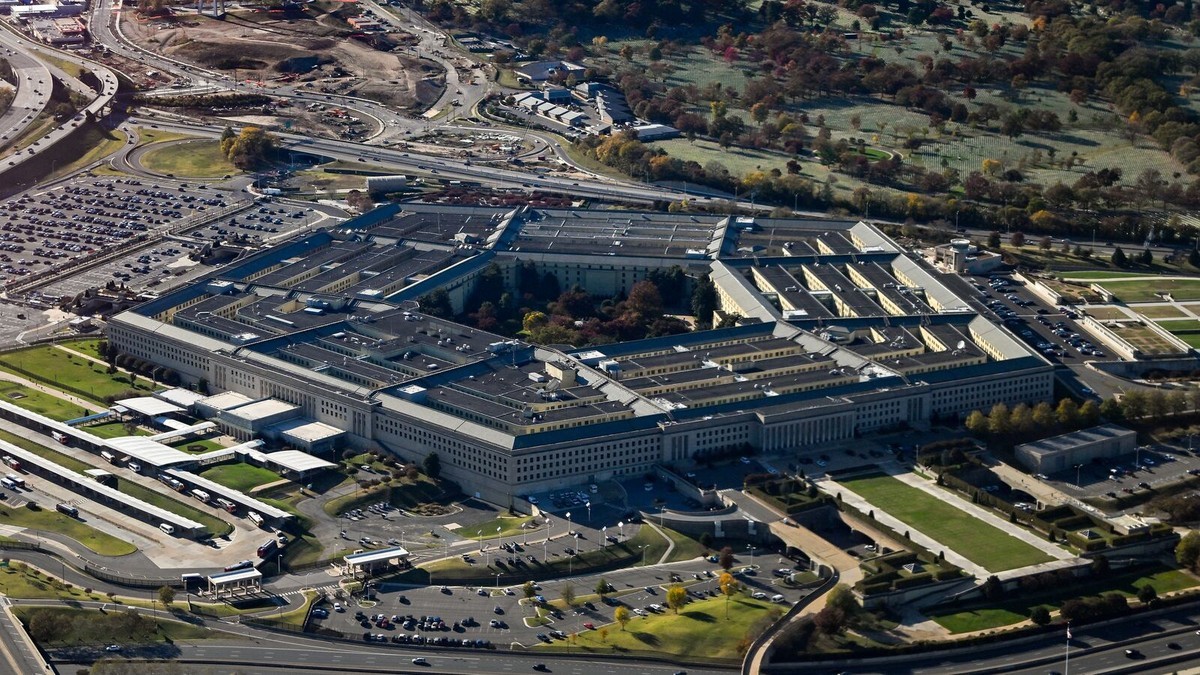
This article was produced with AI-assisted research and editorial support. Sources: Reuters; Air Force Cloud One program office; Hill Air Force Base public affairs; BBC News; The Verge; Bloomberg. Lead photograph: an aerial view of the Pentagon by Kenny Holston/The New York Times, via The Irish Times. The two inline images are editorial illustrations produced in-house by Global 1 News.
What's Your Reaction?
 Like
0
 Dislike
0
 Love
0
 Funny
0
 Wow
0
 Sad
0
 Angry
0

Editor-in-Chief at Global1.News. Atlanta-based journalist who cuts through the BS and tells it like it is. Lead anchor, host, and the voice you hear when the spin stops and the truth starts.












Comments (0)