
Peru's Constitutional Court Frees Former President Humala in Odebrecht Reversal
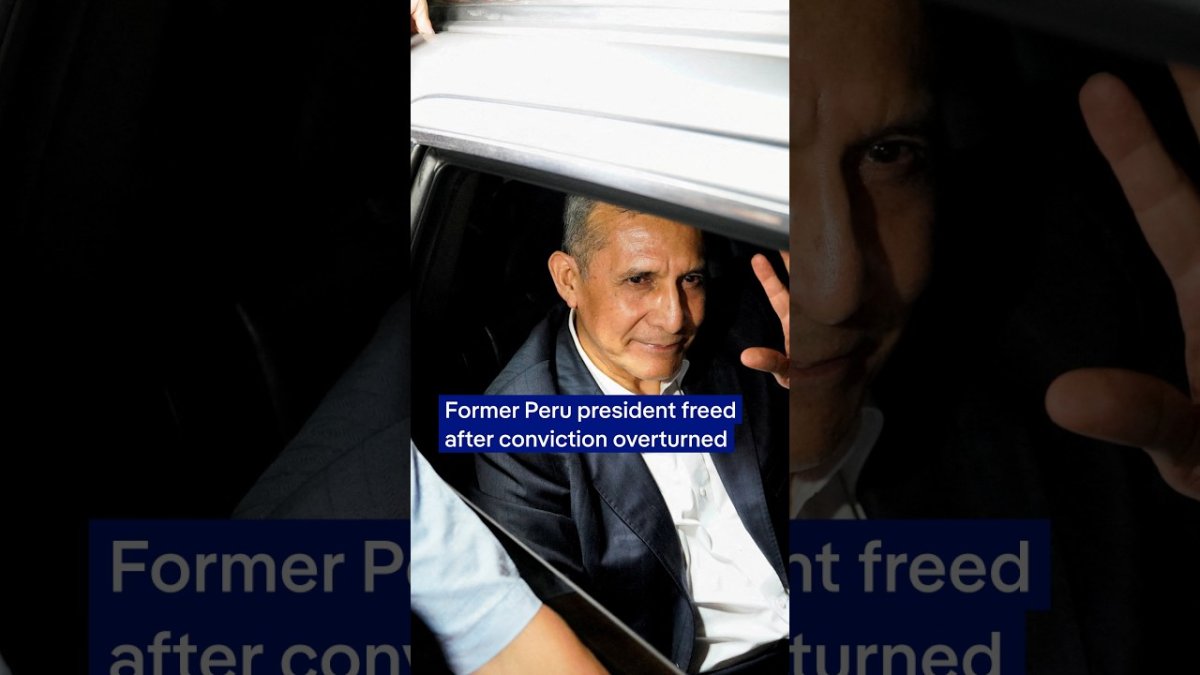
In a recent DW News report, Peru's Constitutional Court ordered the release of former President Ollanta Humala from Barbadillo Prison in Lima last Friday evening after overturning his 15-year money-laundering conviction. The ruling centered on nearly $3 million in disputed funds from Odebrecht for the 2011 campaign and $200,000 from Hugo Chávez for the 2006 campaign.
In a recent DW News report, Peru's Constitutional Court ordered the release of former President Ollanta Humala from Barbadillo Prison in Lima last Friday evening after overturning his 15-year money-laundering conviction. The ruling centered on nearly $3 million in disputed funds from Odebrecht for the 2011 campaign and $200,000 from Hugo Chávez for the 2006 campaign. Families across Latin America who have followed years of trials now face renewed questions about whether justice systems deliver consistent accountability or selective outcomes.
Peru's Constitutional Court Frees Humala in Odebrecht Reversal
Lima, Peru – This Week — Peru's Constitutional Court overturned former President Ollanta Humala's 15-year money-laundering conviction on grounds that campaign contributions did not meet the legal definition of money laundering when the acts occurred. The court applied the principle of legality, noting the specific classification entered the penal code only in 2016. Humala walked free from Barbadillo Prison last Friday evening amid a crowd of supporters.
The Story Unfolds — Court Applies Same Standard as Fujimori Case
The Tribunal Constitucional relied on identical reasoning it used nine months earlier to dismiss the Caso Cócteles investigation against now-President Keiko Fujimori. Both cases involved allegations of irregular campaign contributions. Humala's lawyer, Julio Espinoza Goyena, posted on social media that the contributions "do not constitute money laundering" and demanded the definitive dismissal of proceedings plus full freedom for his client. The court directed the Second National Criminal Appeals Chamber to define Humala's legal situation immediately, with hearings resuming August 5, 2026.
The principle of legality, often summarized as nullum crimen, nulla poena sine lege, formed the core of the decision. Because Peru's penal code did not classify certain campaign finance practices as money laundering until 2016, the court concluded that acts from 2006 and 2011 could not be punished under that statute. This strict temporal limit prevented retroactive application and directly triggered the habeas corpus relief that led to Humala's immediate release.
The investigation itself began in 2016, shortly after Odebrecht's global admissions. Humala spent roughly one year in pre-trial detention before the case moved to a three-year trial phase. Conviction came in 2025, followed by the April 15, 2025 sentencing that imposed the fifteen-year term. The Constitutional Court's intervention in 2026 therefore arrived after nearly a decade of proceedings, underscoring how the legality principle can halt long-running cases when statutory definitions shift.
The Second National Criminal Appeals Chamber now faces the task of implementing the ruling. Hearings scheduled for August 5, 2026, will decide whether the entire case receives definitive dismissal or whether narrower charges survive. Legal observers note that the chamber must reconcile the Constitutional Court's interpretation with remaining procedural rules, a step that could set binding precedent for similar Odebrecht matters still pending in Peruvian courts.
Latin American Context — Odebrecht Web Reaches Mexico and Beyond
The Odebrecht scandal, also known as Lava Jato, implicated multiple Peruvian leaders and stretched across the region. Humala became the first of four Peruvian presidents investigated. Alejandro Toledo received a sentence exceeding 20 years for accepting $35 million in bribes. Alan García died by suicide in 2019 while facing arrest. Pedro Pablo Kuczynski encountered impeachment and ongoing probes. In Mexico, former PEMEX CEO Emilio Lozoya Austin faces trial on bribery, criminal association, and money-laundering charges tied to Odebrecht, with the FGR seeking a 46-year sentence. The SCJN recently upheld a ruling requiring Lozoya to compensate journalist Lourdes Mendoza Peñaloza for moral damages. These parallel cases show how one company's payments created lasting legal and political fallout from Brazil through Peru to Mexico's Presidencia and Palacio Nacional.
Odebrecht, now operating as Novonor, admitted to distributing hundreds of millions of dollars in bribes to officials and political parties throughout Latin America. The Lava Jato investigation originated in Brazil and quickly expanded as cooperating witnesses revealed systematic payments tied to public works contracts. In Peru the fallout reached four successive presidents, each accused of accepting funds that allegedly influenced campaign or policy decisions during the height of the company's regional expansion.
The Mexican chapter centers on Emilio Lozoya Austin, who served as PEMEX chief executive from 2012 to 2016 under President Enrique Peña Nieto. Mexico's FGR has pursued charges of bribery, criminal association, and money laundering linked to Odebrecht contracts. Lozoya's sister was arrested in connection with the case, and the Supreme Court of Justice of the Nation issued a March 2026 ruling ordering compensation to journalist Lourdes Mendoza Peñaloza for moral damages, illustrating how the scandal continues to generate both criminal and civil consequences south of the border.
The Fujimori Precedent — A Court's Shifting Standard
Nine months before Humala's release, the same Constitutional Court applied the principle of legality to dismiss the Caso Cócteles investigation against Keiko Fujimori. That case also centered on alleged irregular campaign contributions, and the tribunal concluded that the conduct could not be prosecuted as money laundering because the relevant penal code provisions postdated the events. The parallel reasoning has prompted analysts to examine whether the court is establishing a uniform doctrinal line or responding to shifting political pressures.
The Fujimori dismissal drew immediate attention because it involved the daughter of former president Alberto Fujimori, against whom Humala had led a military rebellion in 2000. When the same legal shield later freed Humala, observers noted an ironic symmetry: two political rivals whose families have clashed for decades now benefit from identical judicial logic. This convergence has fueled debate over whether the Tribunal Constitucional is correcting past overreach or creating a pathway that weakens accountability for campaign finance violations across the political spectrum.
Public perception of equal justice has been tested by these sequential rulings. Supporters of both leaders argue that the court has finally applied consistent standards, while critics contend that the decisions risk signaling to future candidates that certain forms of financing may escape scrutiny if timing aligns with statutory changes. The coming August hearings in Humala's case will likely intensify this discussion as Peruvians assess whether the precedent promotes fairness or selective impunity.
Impact on Communities — Families Weigh Persecution Claims Against Accountability
Ordinary Peruvians and Latin American families have watched former leaders cycle through investigations since Odebrecht's 2016 admissions. Humala stated outside the prison that he and his wife Nadine Heredia became "victims of political and judicial persecution" due to their administration and ideology, forcing asylum for Heredia and their 15-year-old son in Brazil under President Luiz Inácio Lula da Silva. Heredia also received a 15-year sentence. Communities in Lima's colonias and across the region question whether courts apply rules evenly when the same legal standard now shields both Humala and Fujimori, Peru's first elected female president and the rival Humala defeated in the 2011 runoff. The outcome tests public faith in institutions such as Peru's Tribunal Constitucional and Mexico's SCJN to deliver consistent justice rather than political results.
Barbadillo Prison has housed multiple former Peruvian presidents in recent years, turning the facility into a symbol of the country's turbulent reckoning with corruption. Families in working-class neighborhoods have followed the trials through television and social media, often viewing the proceedings as tests of whether elites face the same standards applied to ordinary citizens. The Constitutional Court's ruling has therefore sparked conversations in households about whether legal technicalities ultimately protect the powerful or restore procedural fairness.
In Mexico, similar questions arise as the Lozoya case continues. Citizens compare the pace and outcomes of Peruvian proceedings with those handled by the FGR and SCJN, wondering whether campaign finance scandals will produce consistent accountability or repeated procedural exits. The human cost extends beyond the principals: spouses and children separated by exile or detention, communities left to interpret whether justice institutions serve the public or merely manage political transitions.
Reactions and Responses — Political Figures Stay Silent or Divided
Humala, who rose to prominence leading a 2000 military rebellion against Alberto Fujimori and later moderated his platform to win in 2011, described himself as "taken hostage by the state and by the hitmen of the justice system." The prosecution issued no comments after the release. Keiko Fujimori's administration, sworn in this week, has not addressed the parallel legal reasoning. In Mexico, the FGR continues its case against Lozoya without referencing the Peruvian precedent, while SEGOB and SRE monitor regional stability. Public reactions in Peru split between supporters celebrating the end of what they call selective prosecution and critics warning that the ruling weakens efforts to prosecute campaign finance violations.
Humala's public statements emphasized themes of persecution tied to his political ideology, resonating with supporters who view the decade-long process as politically motivated. His lawyer's social media posts reinforced demands for full closure, while the absence of any prosecutorial rebuttal left the official response to the court record alone. Keiko Fujimori's new administration, focused on its recent inauguration as Peru's first elected female president, has maintained silence on the shared legal standard now protecting both former rivals.
Division within Peruvian public opinion reflects deeper partisan lines. Those who backed Humala in 2011 see vindication, while others recall his earlier clash with Alberto Fujimori and question whether the ruling truly advances equal justice. The irony that the same doctrinal approach now shields figures from opposing political traditions has become a frequent topic in community discussions and media commentary across the country.
What to Watch For
The Second National Criminal Appeals Chamber hearings beginning August 5, 2026, will determine whether the case receives definitive dismissal. Observers will track whether similar appeals surface in Mexico's ongoing Lozoya proceedings or other Odebrecht-linked matters. Regional institutions including the INE in Mexico and Peru's electoral bodies face pressure to strengthen campaign finance rules before future elections. Families in affected countries continue to monitor whether these rulings restore or erode trust in the rule of law.
Definitive dismissal would close the criminal chapter for Humala but could encourage other defendants across the region to invoke the same legality argument. In Mexico, Lozoya's defense team may cite the Peruvian precedent when challenging the timing of charges, potentially affecting the trajectory of that high-profile trial. Electoral authorities in both countries now confront renewed calls to update financing regulations so that future campaigns operate under clearer, contemporaneous statutes.
Consistent application of the legality principle could narrow the scope of future corruption prosecutions, prompting legislatures to revisit penal code definitions. Communities from Lima to Mexico City will watch whether courts can maintain public confidence by applying standards that appear predictable and even-handed rather than responsive to individual political circumstances. The coming months will clarify whether this doctrinal shift strengthens or strains the broader fight against regional graft.
The release of Ollanta Humala marks another chapter in Latin America's long reckoning with Odebrecht payments that reached PEMEX, Peruvian campaigns, and Brazilian construction projects. Communities from Lima to Mexico City now weigh whether the principle of legality protects defendants or shields powerful figures from accountability. The coming months will reveal whether courts across the region can apply standards that families recognize as fair and consistent.
By Rosa Martinez, Staff Writer
This article was produced with AI-assisted research and editorial support. Reporting is based on sources cited in the article.
What's Your Reaction?
 Like
0
Like
0
 Dislike
0
Dislike
0
 Love
0
Love
0
 Funny
0
Funny
0
 Wow
0
Wow
0
 Sad
0
Sad
0
 Angry
0
Angry
0
Latin America/Andes Correspondent at Global1.News. Based in Bogota, covering politics, environment, energy, and social movements across the Andean region. Passionate about environmental journalism and communities protecting their land.











Comments (0)