
Pasig court extends suspension of P85 Metro Manila wage hike
Pasig RTC Branch 152 issued a preliminary injunction suspending the P85 Metro Manila wage hike (Wage Order NCR-27), blocking implementation while the case proceeds. Labor groups vow to challenge the ruling, which affects over 1.1 million minimum wage earners.
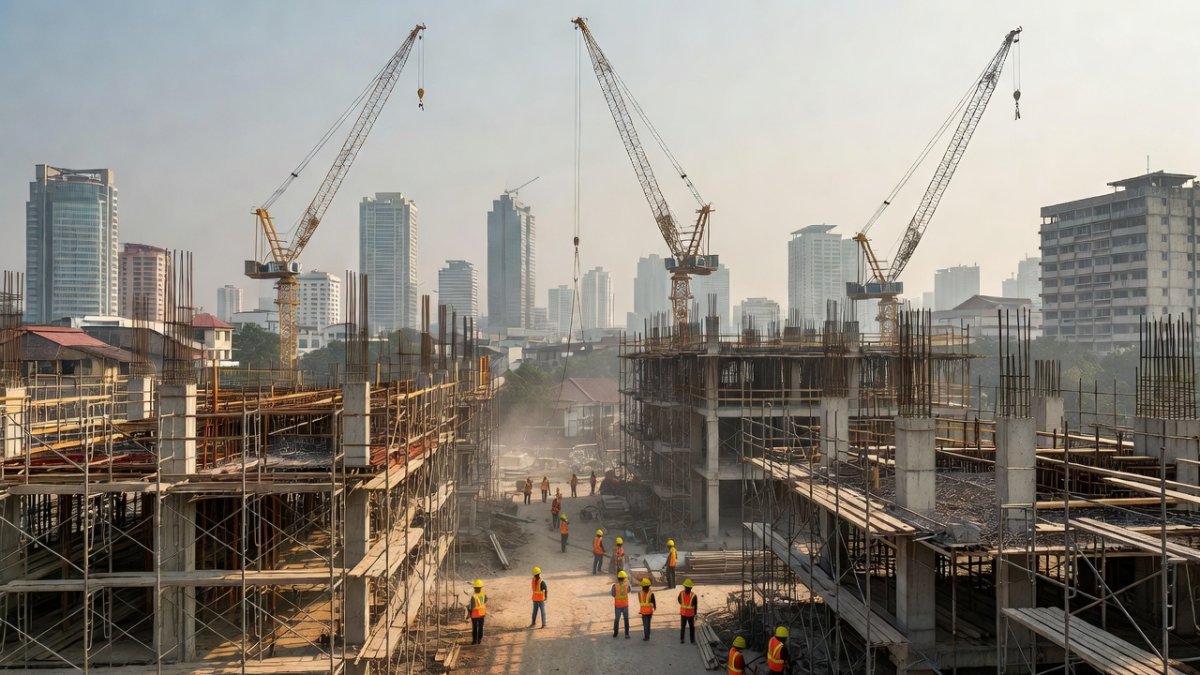
MANILA — The P85 daily wage increase for Metro Manila minimum wage earners has been suspended indefinitely after the Pasig City Regional Trial Court Branch 152 issued a writ of preliminary injunction on Thursday, August 13, blocking its implementation while the case is being decided on its merits.
The injunction, granted to construction firms Readycon Trading and Construction Corp. and R-II Builders Inc., legally prohibits the Regional Tripartite Wages and Productivity Board – National Capital Region and the National Wages and Productivity Board from enforcing Wage Order No. NCR-27. The order, signed on June 23, 2026, had already delivered its first tranche of P60 on July 25, raising the daily minimum wage for non-agricultural workers from P695 to P755, with a second tranche of P25 scheduled for January 2027 that would have brought the rate to P780.
For the more than 1.1 million minimum wage earners and roughly 1.9 million full-time workers in the capital region who were set to benefit from what the wage board described as the largest increase it had ever approved, the news lands like a bucket of cold water on a sweltering August afternoon. For many, the P60 that had already reached their paychecks in late July now hangs in legal limbo, with the court's order raising questions about whether employers who have already paid the increase will be required to claw it back or adjust future payouts.
A blow to the family budget
The suspension hits ordinary workers at the worst possible time. For a factory worker in Valenzuela who had already penciled in the extra P60 a day for school supplies and maintenance medication, the uncertainty is crushing. For a security guard in Pasay who stretched his budget to cover rice and fare, the promise of relief has evaporated overnight. The ripple effect extends to sari-sari store owners, tricycle drivers, and market vendors across Tondo, Quezon City, and Caloocan, who depend on the spending power of minimum wage earners. When workers have less in their pockets, the neighborhood talipapa, the corner carenderia, and the small hardware store that sells plywood and nails to construction workers — the very workers whose employers filed the petition — all feel the pinch.
The court's decision, signed by Presiding Judge Marie Joyce Manongsong, cited the potential loss of employment as a key factor in granting the injunction. "Losing one's employment is graver and irreversible than the temporary inability to receive additional wages," the order reads. The court also set an injunction bond of P10 billion for the "possible damage or burdens" the injunctive order might cause to the millions of workers across Metro Manila who would be affected by the suspension.
Labor groups vow to fight back
The Trade Union Congress of the Philippines (TUCP) did not mince words in its response, issued on Friday, August 14. "We will challenge this injunction by exhausting every remedy available to us. Let us be absolutely clear: we do so not to undermine the courts, but to defend the law and the workers whom that law is supposed to protect," the labor group said in a statement.
TUCP said it will seek the dissolution of the injunction, arguing that the wage order was the product of a lengthy and consultative process involving labor, management, and government representatives. The group also pointed out that the wage board had already considered the capacity of employers to pay when it approved the two-tranche schedule, which was designed to ease the burden on businesses while still providing relief to workers.
Mamamayang Liberal Party-list Representative Leila De Lima expressed frustration over the order and questioned the logic of the P10 billion bond. "Na mas gugustuhin pang mag-post ng bond ng mga Petitioners-Employers na may ganyang napakalaking halaga kesa ibigay sa mga manggagawa ang P85 na umento? Eh 'di ba ang idinadahilan nga sa pagharang sa umento ay hindi raw kakayanin ang hinihinging dagdag pasahod?" De Lima said, roughly translating to: "The petitioners-employers would rather post a bond of that amount instead of granting the P85 wage increase? But wasn't the reason cited for opposing the wage increase that they supposedly couldn't afford the amount of the additional wage?"
Her pointed question captures the central tension of the case: if the construction firms genuinely cannot afford the wage increase, how can they afford to post a P10 billion bond? And if they can afford the bond, does that not undermine their argument of financial hardship?
The legal battle ahead
The preliminary injunction replaces the temporary restraining order (TRO) that the same court had earlier issued, which expired on Thursday. While a TRO is typically limited to a maximum of 20 days, a preliminary injunction can remain in place for the duration of the case, which could stretch on for months or even years depending on the pace of litigation.
The case will now proceed to a full hearing on the merits, where the court will examine whether the wage order was issued with grave abuse of discretion or in violation of the law. The construction firms are expected to argue that the mandated increase would force them to lay off workers or shut down projects, particularly in a sector that operates on thin margins and tight bidding schedules.
Labor advocates, on the other hand, are expected to present evidence of rising living costs in Metro Manila, where a family of five needs significantly more than the minimum wage to meet basic needs. The National Wages and Productivity Commission and the RTWPB-NCR will also have the opportunity to defend their decision-making process, including the public hearings and consultations that preceded the approval of Wage Order No. NCR-27.
The P10 billion bond is a significant hurdle for the petitioners. Under the Rules of Court, the bond is meant to answer for damages that the enjoined party — in this case, the workers — might suffer if the injunction is later found to be improper. The amount, which is among the largest ever set in a labor case of this nature, reflects the court's acknowledgment of the scale of the impact on workers.
What this means for workers and businesses
For workers who have already received the first tranche of the increase, the practical impact of the injunction depends on how their employers choose to respond. Some employers may continue paying the higher rate voluntarily, while others may revert to the old P695 rate to comply strictly with the court order. The wage boards are expected to issue guidance in the coming days, but for now, many workers are left in a state of uncertainty.
For businesses, particularly small and medium enterprises that have already adjusted their payrolls and pricing to accommodate the increase, the situation is equally confusing. Companies that signed contracts based on the new wage rate now face a dilemma: comply with the court order and revert to the old rate, potentially sparking labor unrest, or continue paying the higher rate and risk legal exposure. The uncertainty cuts across sectors, from construction firms that bid on projects with tight margins to food chains and retail outlets that set prices months in advance. Every day without clear guidance is a day of difficult choices for employers who want to do right by their workers while staying within the bounds of the law.
The Department of Labor and Employment has not yet issued an official statement on the injunction, but labor observers expect the agency to explore all legal options to protect the wage order. The Office of the Solicitor General, which represents the government in civil cases, may also intervene to defend the wage boards' authority.
A familiar fight in the Philippine labor landscape
Wage orders have faced court challenges before in the Philippines, and labor disputes over minimum wage adjustments are a recurring feature of the country's labor landscape. The pattern is familiar: employers argue that mandated wage hikes hurt competitiveness and job creation, while labor groups counter that the constitutional mandate to protect workers' welfare must take precedence.
The Philippine Constitution, after all, explicitly directs the State to "protect the rights of workers and promote their welfare." The Labor Code empowers regional wage boards to set minimum wages based on criteria that include the cost of living, the needs of workers and their families, and the capacity of employers to pay. The question now before the Pasig court is whether the wage board properly balanced these competing considerations when it approved the P85 increase.
For ordinary Filipinos, the case is more than a legal technicality. It is about whether a factory worker in Valenzuela can afford to send her child to school, whether a security guard in Pasay can buy enough rice for the week, whether a fast-food crew member in Mandaluyong can pay for the jeepney ride to work and still have something left over. The P85 a day — roughly P1,870 a month for a typical worker on a standard 22-day work schedule — is not a luxury. It is the difference between eating three meals a day and skipping one, between buying generic medicine and going without, between sending a child to school and keeping them home.
The bayanihan spirit that Filipinos are known for is now being tested in a courtroom in Pasig. Labor groups are calling on workers to stay vigilant and organized, while employers' associations are urging their members to comply with the court order while the case proceeds. Both sides say they want what is best for the country, but their visions of what that means could not be more different.
As the legal battle unfolds, the human cost continues to mount. Every day that the injunction remains in place is a day that workers lose the additional income they were promised. Every day is a day that families must stretch their budgets a little thinner, that children must wait a little longer for new shoes, that seniors must delay a trip to the doctor. The court has made its decision, but the fight is far from over.
This article was produced with AI-assisted research and editorial support. Sources: Philippine Star, Associated Press wire reporting.
By Bella Reyes, Staff Writer
What's Your Reaction?
 Like
0
Like
0
 Dislike
0
Dislike
0
 Love
0
Love
0
 Funny
0
Funny
0
 Wow
0
Wow
0
 Sad
0
Sad
0
 Angry
0
Angry
0

Philippines/Southeast Asia Correspondent at Global1.News. Manila-based journalist covering Philippine politics, environment, maritime security, and social issues. Passionate about marine conservation and the communities protecting the Philippines' natural heritage.















Comments (0)