
Death in Ngorongoro: Three Rangers Arrested as Questions Mount Over Conservation Enforcement
Ngorongoro Death: Rangers Arrested, Rights Questions Grow Arusha, Tanzania — The road from Arusha to Babati is a familiar one, a ribbon of tarmac cutting through the heart of northern Tanzania. But for three young men on Wednesday morning, that road became a detour into tragedy.
Ngorongoro Death: Rangers Arrested, Rights Questions Grow
Arusha, Tanzania — The road from Arusha to Babati is a familiar one, a ribbon of tarmac cutting through the heart of northern Tanzania. But for three young men on Wednesday morning, that road became a detour into tragedy. What began as a hurried journey to attend a funeral ended with one of them dead, another fighting for his life in hospital, and a third bearing witness to an ordeal that has reignited a fierce debate about the cost of conservation in one of Africa's most iconic landscapes.
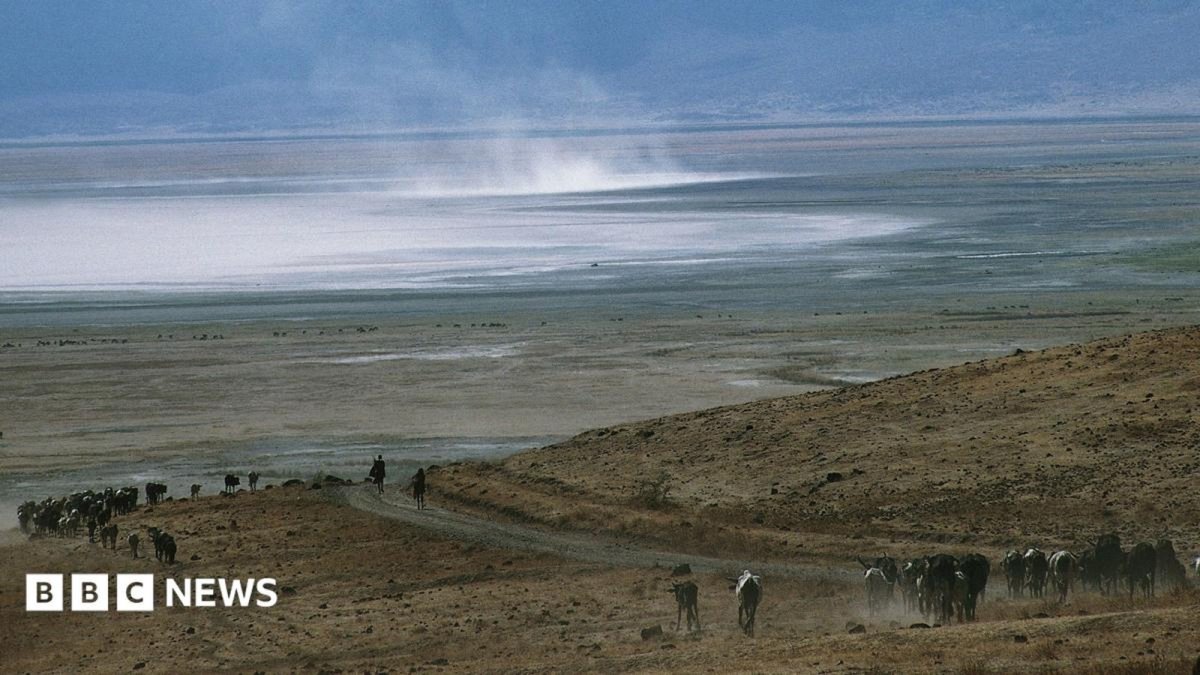
The arrest of three park rangers in connection with the death of 25-year-old Sefu Musa has thrust the Ngorongoro Conservation Area back into the international spotlight. It is a place of breathtaking beauty, where the crater floor teems with wildlife and Maasai herders tend their cattle. Yet beneath that postcard image lies a simmering conflict over land, livelihoods and the enforcement of protected-area regulations—one that rights groups say has too often turned violent.
A Funeral Journey That Went Horribly Wrong
According to a statement from Tanzanian police, the three men were travelling from Arusha towards Babati, roughly 166 kilometres away, when they lost their way. In their haste to reach a funeral, they inadvertently entered the Ngorongoro Conservation Area, a protected zone of roughly 8,100 square kilometres, established in 1959 to balance wildlife conservation, tourism and Maasai pastoralism.
The men were riding a motorcycle, and police say they failed to follow the required procedures for entering the area—a misstep that would prove fatal. The trio passed through the Ngorongoro gate before realising they had taken the wrong route. They decided to turn back, but as they returned through the gate they were stopped by rangers who, according to the survivors, accused them of being poachers.
Despite their explanations that they were simply lost and heading to a funeral, the situation escalated. By the time the ordeal was over, Musa was dead, his companion Salimu Haji was in critical condition in hospital, and the third man, Abdallah Nuru, had made his way back to Arusha.
The Survivor's Harrowing Account
Speaking to local media in Arusha, Nuru painted a chilling picture of what transpired at the gate. He alleged that the rangers, unconvinced by their story of a funeral journey, subjected the three men to a brutal assault. Nuru claimed they were ordered to strip off their clothes and roll on thorny shrubs while the rangers poured water over them. He said they were also beaten.
Nuru said both Musa and Haji lost consciousness amid the ordeal. Despite his own injuries, he helped move his colleagues to hospital, where Musa was declared dead and Haji remains in critical condition, his family keeping a vigil at his bedside.
Police have not commented on the specific allegations, but they have confirmed that the rangers involved have been arrested as part of the investigation. The authorities describe the case as a priority, though the details of what happened at that gate remain shrouded in conflicting accounts.
Police Investigation and the Arrest of Rangers
The arrest of the three rangers signals that the authorities are taking the matter seriously. Police say they are investigating the circumstances in which Musa died, and the rangers remain in custody while the inquiry proceeds. It is a rare instance of enforcement officers being held to account over the death of a civilian inside a protected area.
For rights groups and local communities, however, this is not an isolated incident. It is the latest in a long pattern of allegations involving excessive force, arbitrary arrests and harassment during conservation operations in Ngorongoro. The authorities have consistently maintained that such measures are meant to protect the conservation area and enforce regulations safeguarding the crater's delicate ecosystem.
Yet the gap between official policy and on-the-ground reality appears to be widening. The men were not poachers; they were mourners on their way to pay their respects. Their fatal detour has become a symbol of a broader problem—the treatment of ordinary Tanzanians by those tasked with protecting the country's natural heritage.
A History of Rights Complaints in Ngorongoro
The Ngorongoro Conservation Area has long been a flashpoint for tensions between conservation and community rights. At the heart of the dispute is the forced relocation of Maasai communities who have coexisted with wildlife in the area for generations, their pastoral way of life intricately linked to the land and its rhythms.
In July 2024, Human Rights Watch published a devastating report titled "It's Like Killing Culture," which documented a Tanzanian government plan to relocate approximately 82,000 Maasai people from the Ngorongoro Conservation Area by 2027. It detailed a scheme to move entire communities off ancestral lands, ostensibly to protect the environment and promote tourism, with devastating consequences for those who call the area home.
The report's title captured the essence of the tragedy: for the Maasai, being forced off the land is not merely losing a home; it is the destruction of a way of life, a culture and an identity shaped by the landscape over centuries. The government has defended the relocation plan as necessary for conservation, but rights groups argue that it amounts to a land grab dressed up in environmental rhetoric.
International Pressure and the UNESCO Spotlight
The international community has taken notice. In June 2026, the UN Human Rights Office (OHCHR) published a story highlighting the plight of environmental human rights defenders in Tanzania, including Maasai pastoralists being pushed out of their ancestral lands in the Ngorongoro Conservation Area. It noted that a coalition was building with the UN Human Rights Multi-Country Office in Nairobi to address these concerns.
Then, in July 2026, the Oakland Institute issued a public statement ahead of the 48th session of the UNESCO World Heritage Committee, calling on the Committee to confront the ongoing human rights violations against the Maasai in the Ngorongoro Conservation Area. The statement urged the Committee to pressure the government to halt the relocations and address documented abuses.
The UNESCO designation of Ngorongoro as a World Heritage Site carries an implicit promise of protection—not just for wildlife and landscape, but for the people who live there. The intervention signals that the international community is increasingly unwilling to accept the status quo, and that Tanzania's actions in Ngorongoro are being scrutinised on the world stage.
Conservation Enforcement and Community Rights Across Africa
The tragedy at Ngorongoro is not an isolated incident. Across Africa, that tension plays out in myriad ways, often with devastating consequences for local populations. The Conversation noted in January 2025 that similar land grabs and evictions of marginalised communities under the guise of nature protection are occurring in many places beyond Tanzania.
From the eviction of indigenous peoples from national parks in Kenya to the displacement of communities for mining and logging concessions in the Congo Basin, the pattern is consistent: those who have lived on the land for generations are pushed aside in the name of conservation, often with little regard for their rights.
The case of the three men on the road to Babati is a stark reminder that the enforcement of conservation regulations can have deadly consequences. When rangers are given the authority to detain and punish those who enter protected areas, the line between protecting nature and abusing people can become dangerously blurred. The allegations of forcing men to strip and roll on thorny shrubs suggest a brutality no conservation mandate can justify.
The Broader Stakes: Conservation Economies and Pastoralist Livelihoods
From a West African perspective, the events in Ngorongoro resonate deeply. Across the Sahel and the savannahs, pastoralist communities face similar pressures as governments push for expanded protected areas and conservation corridors. The economic logic is clear: conservation and tourism generate revenue, create jobs and attract investment. But the human cost is often borne by those who are least able to absorb it.
In Senegal, where I am based, we have seen the same dynamics play out in our own national parks and reserves. The tension between protecting biodiversity and respecting local rights is a delicate balancing act requiring genuine consultation, fair compensation and recognition of the traditional knowledge pastoralists bring to conservation.
The death of Sefu Musa is a tragedy that should never have happened. A young man on his way to a funeral, lost and confused, met his end at the hands of those tasked with protecting a natural wonder. His story, and the stories of the Maasai being pushed off their ancestral lands, are a reminder that conservation must never come at the cost of human dignity.
As the investigation into Musa's death continues, and as the international community prepares to scrutinise Tanzania's actions at the UNESCO World Heritage Committee, the question remains: can Africa find a way to protect its natural heritage without sacrificing its people? The answer will determine not only the future of Ngorongoro, but the future of conservation across the continent.
This article was produced with AI-assisted research and editorial support. Sources: BBC News, Human Rights Watch, UN Human Rights Office (OHCHR), Oakland Institute.
By Amara Diop, Staff Writer
What's Your Reaction?
 Like
0
Like
0
 Dislike
0
Dislike
0
 Love
0
Love
0
 Funny
0
Funny
0
 Wow
0
Wow
0
 Sad
0
Sad
0
 Angry
0
Angry
0

West Africa/Sahel Correspondent at Global1.News. Dakar-based journalist covering politics, security, climate, and development across Francophone and Anglophone West Africa. Tells the stories of a region undergoing profound transformation.













Comments (0)