
Palestinian FA Files FIFA Complaint Over Gaza Football Deaths
Palestinian Football Association files complaints with FIFA, UEFA and AFC over unverified Israeli claims against 12 killed football figures. Reports 1,013 athletes and 568 football community members dead, 265 facilities destroyed. Ceasefire since Oct 10 2025 yet 1,214 more killed.
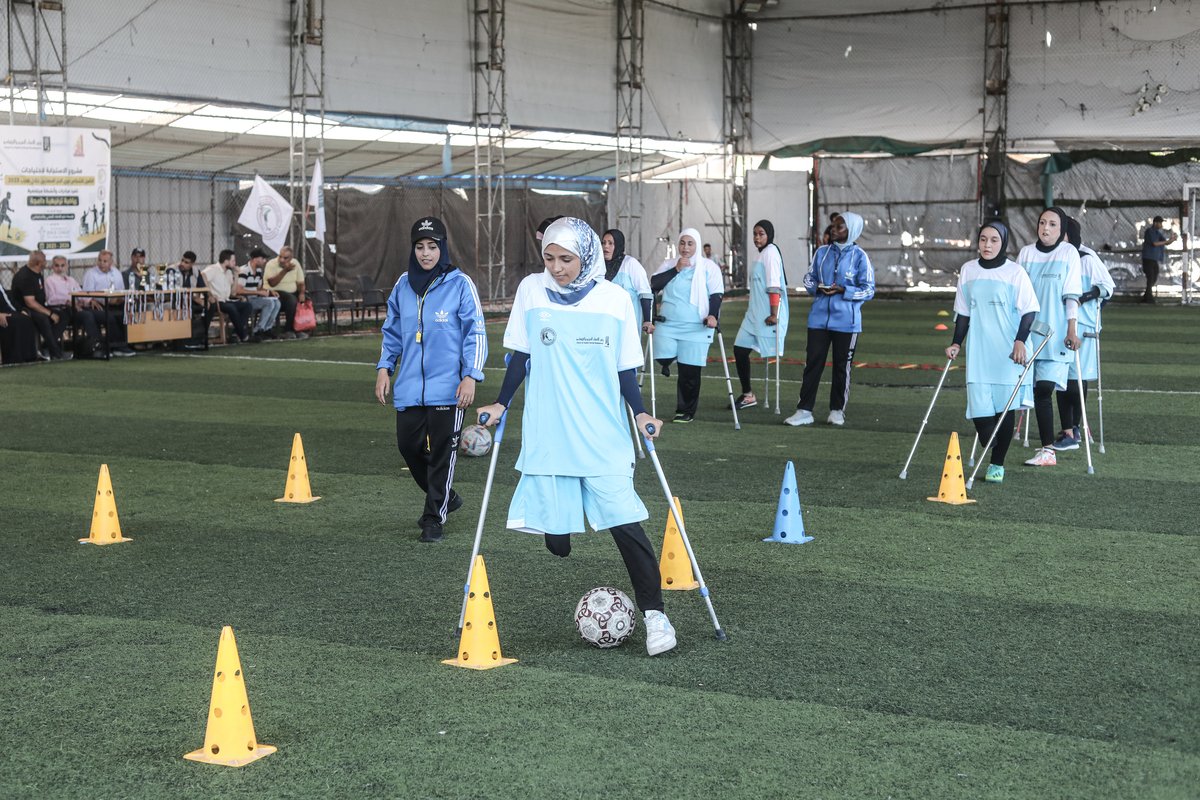
In a significant escalation of its campaign for justice, the Palestinian Football Association has filed formal complaints with FIFA, UEFA, and the Asian Football Confederation over unverified Israeli military claims that 12 slain Palestinian football figures were militants. This unprecedented move challenges global sports bodies to uphold the presumption of innocence amid the destruction of Gaza's athletic community. The action highlights how posthumous accusations without evidence threaten both human dignity and the integrity of international sport.
Deir al-Balah, Gaza Strip — Article continues...
The Palestinian Football Association took formal action on Thursday by submitting complaints to FIFA, UEFA, and the Asian Football Confederation. The move responds to Israeli military claims that 12 Palestinian football figures killed in Gaza were members of Hamas and Islamic Jihad. Among those named was a FIFA-accredited international assistant referee. The association described the accusations as lacking any independently verifiable evidence and made only after the individuals had died.
Details of the Complaints Filed with Football Bodies
The Palestinian Football Association stated that the allegations violated core principles of justice and the presumption of innocence. It emphasized that no legal process or opportunity for defense had been provided to the victims. The complaints urge FIFA to intervene directly, call on UEFA to adopt a clear stance defending fundamental legal norms, and ask the Asian Football Confederation to protect Palestinian football interests. The association noted it may pursue additional measures, including referral to the Court of Arbitration for Sport.
The Palestinian Football Association's decision to lodge formal complaints with FIFA, UEFA, and the Asian Football Confederation underscores a strategic effort to internationalize the issue of unverified accusations against deceased athletes. By highlighting the absence of any transparent evidence or due process, the complaints challenge football's governing bodies to confront how posthumous allegations can erode the presumption of innocence, a cornerstone of both legal systems and sporting ethics. This move transforms a localized conflict into a test case for whether international federations will enforce principles of justice when member associations face existential threats.
These appeals carry particular weight because they arrive at a moment when global sports organizations are under scrutiny for their responses to geopolitical crises. The request for direct FIFA intervention and a clear UEFA stance signals an attempt to leverage the soft power of sporting diplomacy, potentially setting precedents for how similar cases involving athletes in conflict zones are handled in the future. Should the bodies decline meaningful action, the association's mention of possible referral to the Court of Arbitration for Sport introduces a legal pathway that could expose inconsistencies in the application of governance rules across different regions.
Rejection of Allegations Without Verifiable Evidence
Officials from the Palestinian Football Association rejected the Israeli military statements outright. They pointed out that the claims surfaced only after the deaths occurred and offered no supporting documentation or independent review. The association described the approach as an attempt to rewrite events and avoid accountability. It stressed that such post-mortem accusations undermine human dignity and the integrity of sport itself.
Scale of Losses Among Palestinian Athletes and Facilities
Since the start of the war, the Palestinian Football Association reported that 1,013 Palestinian athletes have been killed, including 568 members of the football community. In addition, 265 sports facilities have been destroyed. These figures reflect the broad targeting of sports infrastructure and personnel across Gaza. The losses extend beyond individual lives to the erosion of organized athletic activity that once connected communities and provided outlets for youth.
The reported deaths of 1,013 athletes, including 568 from the football community, alongside the destruction of 265 sports facilities, illustrate a systematic erosion of the physical and social infrastructure that sustains Palestinian sporting life. These losses extend far beyond statistics, dismantling networks of youth development, community cohesion, and psychological resilience that football has historically provided in Gaza under conditions of blockade and repeated conflict. The targeting of training grounds and clubs disrupts generational transmission of skills and identity, leaving a vacuum that compounds the isolation already imposed by movement restrictions.
Rebuilding such capacity will require not only reconstruction of physical venues but also the restoration of institutional knowledge lost with coaches and administrators. International observers note that the scale of destruction risks creating a lost cohort of athletes unable to compete or even train, further widening the gap between Palestinian teams and their regional counterparts. This human and material toll raises questions about the long-term viability of organized sport as a stabilizing force within Gaza's fractured society.
Continued Attacks Following the October Ceasefire
Despite a ceasefire that took effect on Oct. 10, 2025, Israeli attacks have persisted in Gaza. Official figures show 1,214 Palestinians killed and 3,977 others injured in the period since. Palestinian authorities further documented that the military offensive beginning Oct. 8, 2023, has resulted in more than 73,000 deaths and over 174,000 injuries overall. Approximately 90 percent of Gaza's civilian infrastructure has been destroyed in the course of these operations.
The persistence of Israeli military operations in Gaza after the October 10, 2025 ceasefire reveals the fragile and incomplete nature of the truce, with 1,214 additional Palestinian deaths recorded in the ensuing period. These ongoing strikes, occurring despite formal agreements, highlight how ceasefires in this conflict often function as pauses rather than endpoints, allowing for continued attrition of civilian infrastructure. The cumulative toll exceeding 73,000 killed and 174,000 wounded since October 2023, coupled with the near-total destruction of 90 percent of Gaza's civilian facilities, demonstrates the war's transformation into a campaign of comprehensive societal dismantling.
Analysts emphasize that such sustained violence after declared halts in fighting undermines international mediation efforts and erodes trust in negotiated pauses. The data on infrastructure loss points to deliberate prioritization of broad-area destruction over targeted operations, producing long-term humanitarian consequences that extend well beyond immediate combat zones. This pattern suggests that recovery timelines for Gaza will stretch across decades, regardless of any future political settlements.
Human Impact on Gaza's Sports Community
The deaths of athletes and the destruction of facilities have removed vital spaces for physical activity and social connection in Gaza. Football has long served as a source of identity and resilience for Palestinian communities under prolonged restrictions. With hundreds of players and coaches lost and most venues rendered unusable, younger generations face diminished opportunities to train or compete. The Palestinian Football Association highlighted how these conditions compound daily hardships already intensified by displacement and limited resources.
Historical Context of Sport Under Occupation
Palestinian sports have operated for decades amid movement restrictions, limited access to international events, and repeated damage to training grounds. The current scale of losses marks an intensification of pressures that have historically constrained athletic development. International governing bodies have been asked in the past to address barriers faced by Palestinian athletes, yet the recent complaints mark one of the most direct appeals concerning the safety of individuals within the sport.
Calls for Accountability and Protection of Innocence
The Palestinian Football Association framed the accusations as a serious breach of justice principles that extend beyond football. It urged governing bodies to uphold the presumption of innocence and prevent the use of unverified claims to justify loss of life. The association warned that allowing such practices risks normalizing the targeting of civilians without due process. Further legal steps remain under consideration to seek redress through established sports arbitration channels.
The Palestinian Football Association's emphasis on preventing unverified claims from justifying loss of life positions the complaints as part of a broader struggle to uphold international norms within the insulated world of sports governance. By framing the accusations as a breach that extends beyond football, the association seeks to draw governing bodies into a conversation about due process that could influence how other federations respond to similar allegations in politically charged environments. This approach tests the willingness of FIFA and UEFA to move beyond statements of concern toward enforceable protections for athletes.
Potential next steps, including referral to the Court of Arbitration for Sport, offer mechanisms for binding rulings that could establish accountability standards absent from battlefield contexts. International solidarity campaigns among player unions and national associations may amplify these efforts, creating pressure that transcends formal complaints. Ultimately, the outcome will determine whether sports institutions can serve as credible arenas for defending fundamental rights when state actors bypass legal safeguards.
By Fatima Al-Rashid, Staff WriterThis article was produced with AI-assisted research and editorial support. Reporting is based on sources cited in the article.
What's Your Reaction?
 Like
0
Like
0
 Dislike
0
Dislike
0
 Love
0
Love
0
 Funny
0
Funny
0
 Wow
0
Wow
0
 Sad
0
Sad
0
 Angry
0
Angry
0

Gulf/MENA Correspondent at Global1.News. Based in Doha, covering Gulf politics, energy markets, diplomacy, and development across the Middle East and North Africa. Tracks the economic transformation of the Gulf states.













Comments (0)