
Palestine Football Crisis: FIFA Governance Under Fire
Palestinian football stands at a breaking point as the PFA demands FIFA enforce its own statutes against Israel, citing more than 1,013 members of the football community killed since October 2023. From the Aida camp girls' team facing pitch demolition to South Africa's boycott echoes, Dante Williams examines the fight for football in Palestine.
Palestinian football stands at a breaking point this week as the Palestine Football Association demands FIFA enforce its own statutes against Israel, citing the deaths of more than 1,013 players, coaches and officials since October 2023. The crisis hits home for South African fans who remember how sporting isolation helped end apartheid, with Bafana Bafana and Banyana Banyana now carrying the flag at major tournaments while the global game confronts its own governance failures.
Palestine Football Crisis Mirrors South Africa's Apartheid Boycott as FIFA Governance Collapses
Johannesburg, South Africa – this week — The Palestine Football Association has accused FIFA of complicity through silence after more than 1,013 members of the Palestinian football community were killed and multiple stadiums destroyed during Israel's war on Gaza that began on 8 October 2023. PFA leaders stated on 4 August 2026 that complaints about Israeli settlement clubs operating in occupied territory have gone unresolved for over 15 years, with the governing body failing to apply its statutes despite clear evidence of devastation to Palestinian infrastructure.
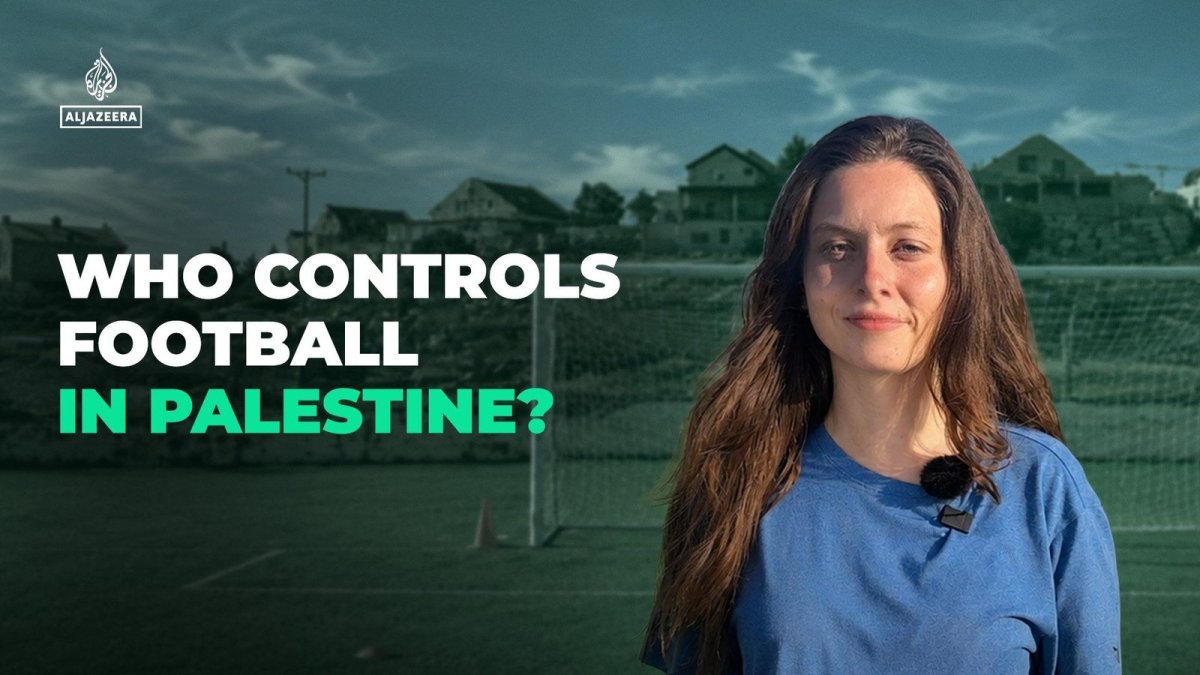
The Fight for Football in Palestine
The PFA statement released on 4 August 2026 highlighted that Israeli army attacks continued in Gaza even after the 10 October 2025 ceasefire, killing at least 1,250 Palestinians and injuring 4,110 more. Reconstruction costs are estimated by the UN at around 70 billion US dollars, with 90 percent of civilian infrastructure affected. PFA president Jibril Rajoub declared that "silence, when a genocide is being committed live, amounts to complicity" and that Palestinian football can no longer accept promises instead of action.
A Village Pitch on the Frontline
In Aida refugee camp, located just over a mile north of Bethlehem in the occupied West Bank, a pitch used by more than 7,000 Palestinian refugees since 1950 faces demolition over alleged lack of building permits. The camp sits between two Israeli settlements deemed illegal under international law and covers less than half a square mile. Munther Amira, head of the Aida Youth Center, reported that Israeli authorities gave residents one week to demolish the facility themselves before military intervention.
The girls' football team launched in 2021 by the Aida Youth Club and Udd Sports Union has grown from a handful of players to over 40 young women who have played friendlies against Beit Sahour and Al-Ubeidiya. Three players from the team were selected for the Palestinian national side and competed at the 2024 West Asian Football Championship for girls in Saudi Arabia. Coach Roweida Al-Azha noted that dedication and performance shattered stereotypes about girls playing football in refugee camps.
Muhannad Abu Srour, sports programme coordinator at the Aida Youth Center and Udd Union, described in a 2025 interview how the girls' team idea took shape in 2021 from a conviction that female participation mattered in every sector, especially inside refugee camps where options remain scarce. It marked the first girls' football side formed in Aida Camp, and possibly any Palestinian refugee camp. Early efforts met community resistance rooted in traditional views that football was not for girls, yet organisers worked steadily to earn family trust.
Rimas Sarhan, an 18-year-old who trains on the threatened pitch, has voiced confusion over why Israeli authorities seek its demolition and has appealed directly to international sports bodies. Italian MEP Mimmo Lucano noted that the facility serves mainly children and young people as one of the few accessible community spaces amid tight movement restrictions, warning that demolition risks harming children's well-being and social cohesion. EU Commissioner Dubravka Šuica called on Israel to stop the demolition so children retain their right to sport and healthy development.
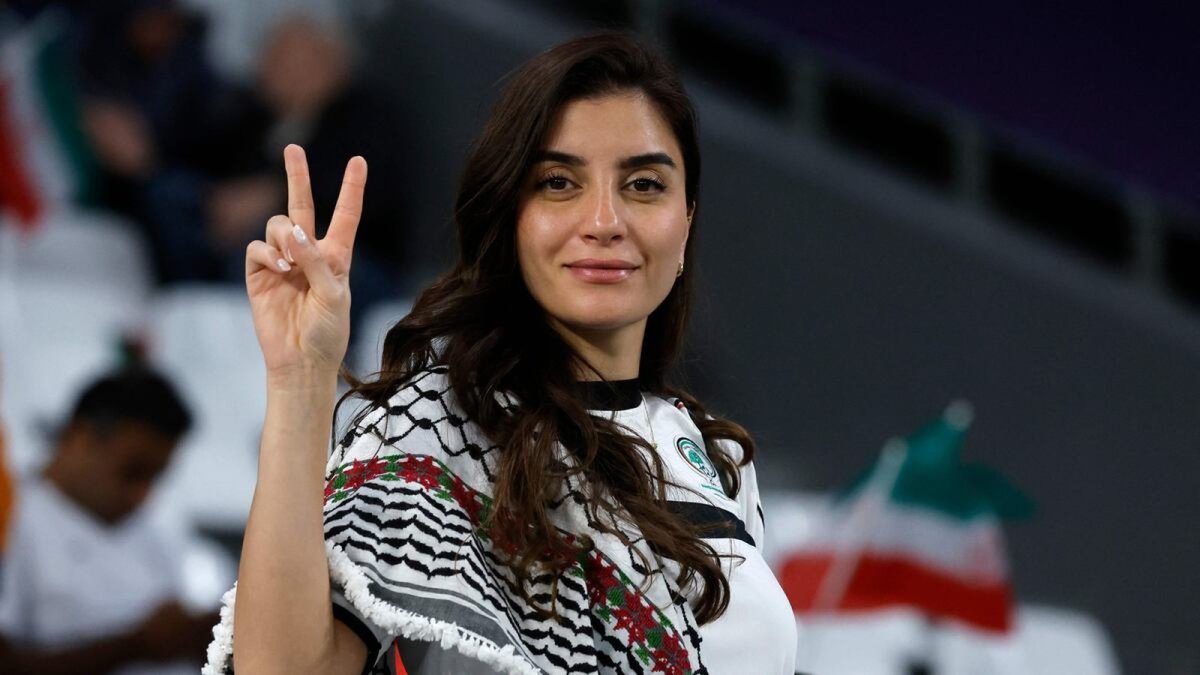
FIFA's Long Silence
FIFA first recognised the Palestine Football Association as a member in 1998 after years of campaigning, yet the organisation has taken no action on settlement clubs playing in Israeli competitions on land taken from Palestinians. At the 76th FIFA Congress in Vancouver from 30 April to 1 May 2026, Rajoub refused to shake hands with Israel FA vice-president Basim Sheikh Suliman and waved off FIFA president Gianni Infantino. The PFA first proposed sanctions against the Israel FA in April 2025, but the FIFA Council took no action after a legal assessment.
The FIFA Monitoring Committee Israel-Palestine, chaired by South African Tokyo Sexwale, produced a 2017 report that failed to deliver a single clear recommendation, allowing Israeli teams from West Bank settlements to continue competing. At the same time, Infantino's plan to sell stakes in the 2026 World Cup through FIFA Forward Enterprise was scrapped in Rabat, Morocco, on 5 August 2026 after UEFA threatened a boycott and European leagues demanded governance reform.
Spain, the Euro 2024 champions, had threatened to boycott the 2026 World Cup should Israel qualify, while Amnesty International pressed FIFA and UEFA to impose a ban on Israel comparable to the measures taken against Russia in 2022. Human Rights Watch documented FIFA's sponsorship of matches played inside Israeli settlements on West Bank land taken unlawfully from Palestinians, with settlement clubs continuing in Israeli domestic competitions.
A planned UEFA emergency meeting on possible suspension of Israel was shelved following the Trump-Netanyahu peace deal announcement. FIFA also denied reports that Infantino had offered Morocco the 2030 World Cup final at King Hassan II Stadium. Inside the governance crisis, Secretary-General Mattias Grafström described the preceding week as a sad and reproachable series of events, senior adviser Carlos Cordeiro resigned, Arsène Wenger distanced himself from the leadership, and COO Kevin Lamour stated that staff had been deceived.
South Africa's Apartheid-Era Precedent
South Africa was expelled from FIFA in 1976 after non-racial sporting bodies campaigned for years against apartheid structures, only regaining readmission in 1992. That international isolation, supported by the global boycott movement, played a documented role in pressuring the apartheid regime. Today the Palestine Solidarity Alliance has staged protests outside SAFA headquarters with "Red card Israeli apartheid" banners, while former Mamelodi Sundowns player Sipho Ndzuzo wrote an open letter to SAFA in September 2025 urging action on the same principles.
The anti-apartheid sporting boycott that ran from 1948 to 1994 stands as the clearest model of sport-driven political pressure, anchored by the Gleneagles Agreement and the expulsion that followed. The Financial Times observed in September 2025 that the growing global boycott of Israel represented "our South Africa moment," echoing the earlier struggle.
Orlando Pirates faced pressure in 2023 to cancel a pre-season friendly against an Israeli side. Tokyo Sexwale, the South African who chaired FIFA's Monitoring Committee on Israel-Palestine, drew Human Rights Watch criticism for the committee's delays that left settlement clubs untouched. SAFA's current stance aligns with South Africa's ICJ genocide case against Israel, reflecting the same principle that sport cannot remain neutral when rights are at stake.
Bafana and Banyana: SA's Football Moment
Bafana Bafana reached the 2026 World Cup for the first time since 2002, beating South Korea through a Thapelo Maseko goal before losing 1-0 to Canada in the Round of 32 at Los Angeles Stadium on 28 June 2026 under coach Hugo Broos and captain Ronwen Williams. Sports Minister Gayton McKenzie publicly praised the squad's achievement. Banyana Banyana qualified for the 2026 Women's Africa Cup of Nations in Morocco by defeating DR Congo 2-1 on aggregate, with the second leg ending 1-0 at Dobsonville Stadium, placing them alongside Nigeria in a tournament where Infantino attended the Malawi versus Zambia match in Rabat on 5 August.
What to Watch For
UEFA maintained its World Cup boycott threat on 6 August 2026 even after the FFE proposal was withdrawn, while Luis Figo called for Infantino to step down and Canada Prime Minister Mark Carney expressed no confidence in the FIFA leadership. Infantino is seeking a fourth term at the March elections. Italian MEP Mimmo Lucano and EU Commissioner Dubravka Šuica have both urged Israel to halt the Aida camp pitch demolition to protect children's access to sport.
South African fans know from their own history that sustained pressure through sport can shift entrenched positions, and the current FIFA governance crisis combined with the Aida camp threat offers a clear test of whether the organisation will apply its rules consistently. Bafana Bafana and Banyana Banyana's recent performances show that transformation and grassroots development remain central to South African sporting identity, making the Palestinian struggle for fair representation a direct echo of battles already won on these shores.
Attention now turns to the March FIFA elections and whether Infantino can secure a fourth term amid the recent governance fallout. UEFA's continued boycott threat raises the prospect of a European walkout that would fracture the 2026 World Cup, while the PFA may table a fresh suspension motion at the next Congress. The immediate fate of the Aida camp pitch and its girls' team remains uncertain under ongoing demolition orders.
Banyana Banyana's WAFCON 2026 campaign in Morocco and Bafana Bafana's next fixtures after their Round of 32 exit will test South African football's momentum. SA fans and SAFA will watch closely for any new FIFA vote on Israel. The Palestinian struggle for recognition on the pitch mirrors South Africa's own journey, where sporting isolation helped dismantle apartheid and where unity through sport remains a living force in the fight for justice.
By Dante Williams, Staff Writer
This article was produced with AI-assisted research and editorial support. Reporting is based on sources cited in the article.
What's Your Reaction?
 Like
0
Like
0
 Dislike
0
Dislike
0
 Love
0
Love
0
 Funny
0
Funny
0
 Wow
0
Wow
0
 Sad
0
Sad
0
 Angry
0
Angry
0

Breaking News and Investigations Correspondent at Global1.News. Based in London, covering global breaking news, security, and investigative stories. Known for digging deeper and connecting the dots across continents.










Comments (0)