
Operation Economic Outcast: US Sanctions Iran's Economy
The United States has launched the most sweeping financial offensive in modern history against Iran, targeting more than 60 individuals, entities and vessels worldwide in a bid to sever every economic lifeline sustaining the Tehran regime. The announcement, made in Washington on Monday, carries profound implications for Britain — not least because Bank Melli, Iran's largest financial institution, operates a designated subsidiary in the heart of the City of London.
The United States has launched the most sweeping financial offensive in modern history against Iran, targeting more than 60 individuals, entities and vessels worldwide in a bid to sever every economic lifeline sustaining the Tehran regime. The announcement, made in Washington on Monday, carries profound implications for Britain — not least because Bank Melli, Iran's largest financial institution, operates a designated subsidiary in the heart of the City of London.
Operation Economic Outcast: Washington's Financial D-Day Aims to Choke Tehran Into Submission
London, UK – 24 August 2026 — US Treasury Secretary Scott Bessent stood in the ornate Cash Room of the Treasury Department on Monday morning and delivered a stark ultimatum to the Islamic Republic of Iran: sever every economic artery, or face total financial isolation. The campaign, dubbed "Operation Economic Outcast," expands secondary sanctions into five critical lifelines — digital assets, technology, gold, aviation and shipping — and threatens to remove any entity facilitating Iranian money laundering from the US dollar system entirely.
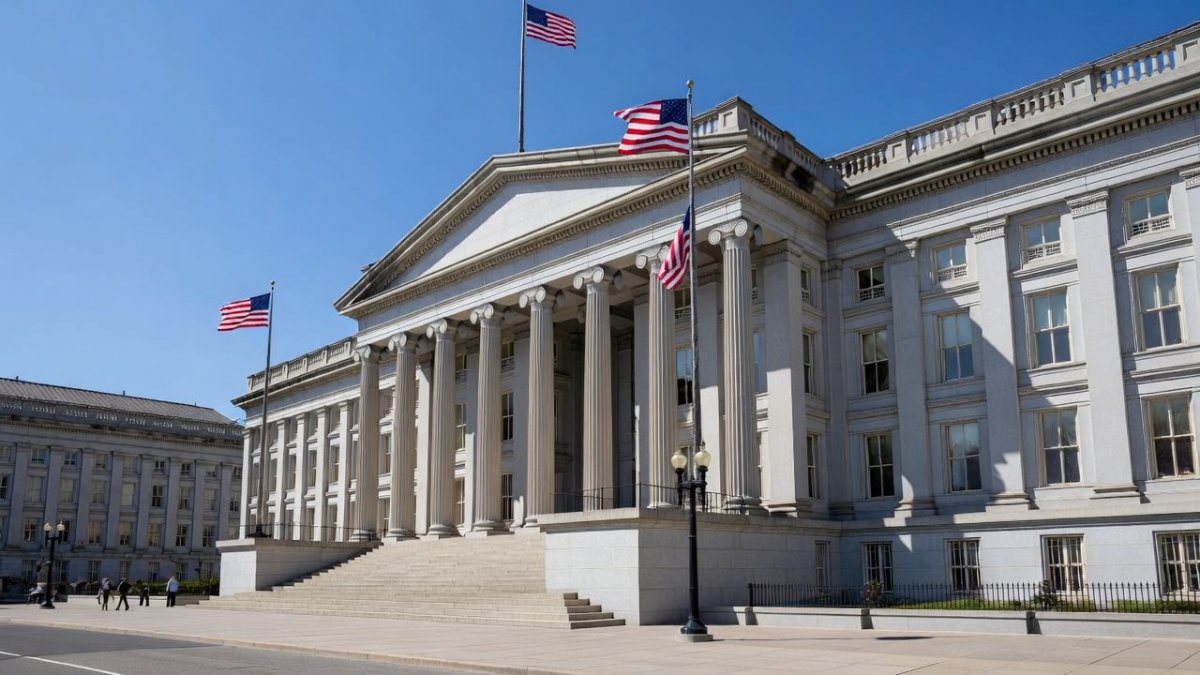
"Our objective is to sever every economic lifeline that sustains this tyrannical regime until Tehran stands alone," Bessent declared, flanked by officials from the Office of Foreign Assets Control (OFAC), the enforcement arm of the US Treasury. The announcement follows a weekend of escalating rhetoric, with Bessent penning a Financial Times guest column on Sunday describing Washington's preparations as "an economic D-Day — the single greatest financial offensive ever marshaled against an adversary."
The timing is no accident. Nearly six months into a conflict that Channel 4 News has described as "the war that won't go away," the White House believes it has reached the endgame. A presidential release stated that after US military action "dismantled Iran's military capabilities and crippled its nuclear program, America is entering the endgame with the single greatest financial offensive ever mounted against an adversary."
Zero Leakage: The Strategy Behind the Sanctions Blitz
Bessent outlined what he termed a "zero leakage approach" — a doctrine designed to close every loophole, every shadowy channel, and every third-country intermediary that has allowed Tehran to generate revenue despite existing sanctions. The five expanded areas represent the Iranian economy's remaining vulnerabilities: digital assets, which have become a favoured vehicle for sanctions evasion; technology transfers, particularly those with nuclear or missile applications; the gold trade, a traditional store of value for sanctioned regimes; aviation, where Iran has long struggled to maintain its ageing fleet; and shipping, the lifeblood of Iranian oil exports.
"Every branch of Bank Melli must be shuttered and dark," Bessent said, delivering a direct threat to Iran's largest bank. "Any entity that facilitates money laundering on behalf of Iran will be removed from the US dollar system." The warning carries particular weight in London, where Melli Bank Plc — Bank Melli's British subsidiary — operates from premises near Moorgate, already designated under the Iran (Sanctions) (Nuclear) (EU Exit) Regulations 2019 and listed on the UK Sanctions List maintained by the Foreign, Commonwealth and Development Office (FCDO).
The US Treasury chief set no precise deadline for compliance, but his warning was unambiguous: "The clock just started ticking. America does not have infinite patience." He revealed that President Donald Trump is personally telephoning world leaders with specific demands to end their dealings with Tehran — a diplomatic offensive that will test alliances from Europe to the Gulf.
Rial Collapses as Markets Digest the Shock
The immediate market reaction was brutal. Iran's rial plunged to a record low of approximately 2.02 million to the US dollar as trading opened on Monday, extending a slide that had already battered the currency before the announcement. The collapse reflects deepening despair among Iranian households, who have watched their savings evaporate as the conflict and sanctions have strangled the economy.
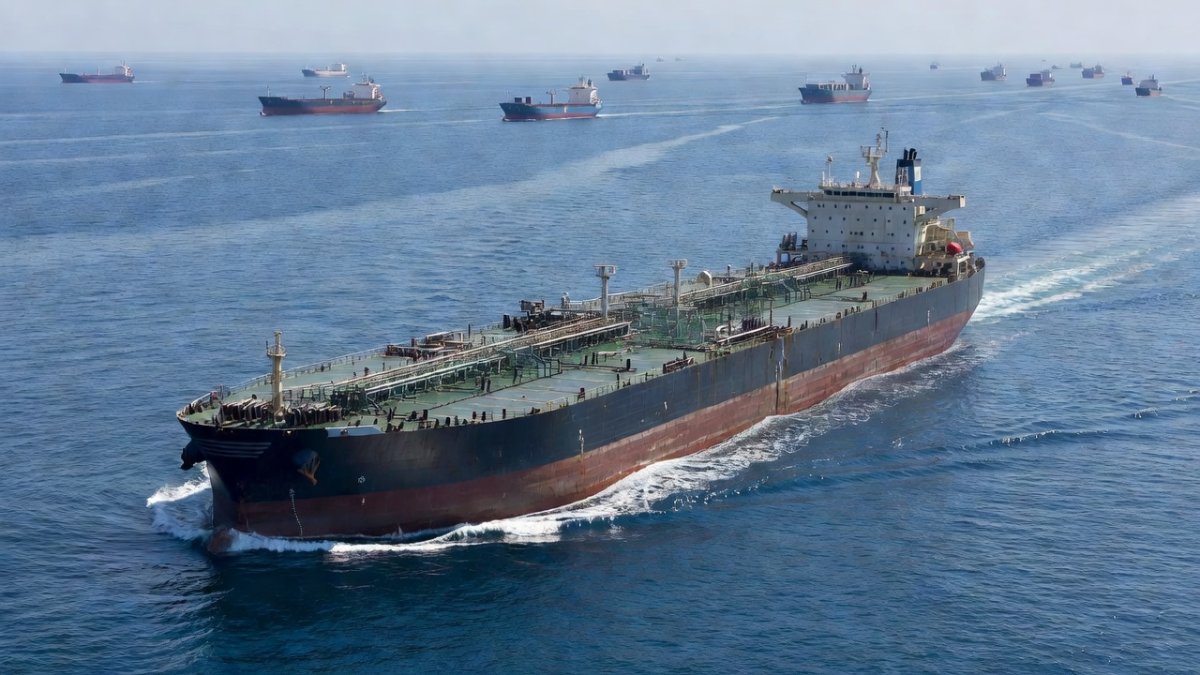
The currency's freefall is compounded by the US naval blockade that has prevented Iran from exporting most of its oil — the lifeblood of the economy — since the conflict erupted in earnest around February-March 2026. With oil revenues choked off and now the financial system itself under siege, Tehran faces an economic squeeze of historic proportions.
Iran's Foreign Ministry spokesperson Esmail Baghaei responded with defiance, warning that "any escalation of this situation will undoubtedly bring about consequences." More ominously, Iran's security chief Mohsen Rezaei threatened that any state joining US sanctions against Iran "will be considered an enemy, and Tehran will target its interests in retaliation." Iran's parliament has already advanced plans to counter what it terms the "economic war," though concrete measures remain unclear.
China's 90 Per Cent Question Hangs Over the Campaign
The most significant test of Operation Economic Outcast lies in Beijing. China purchases roughly 90 per cent of Iran's oil, making it the indispensable customer that keeps Tehran's economy partially afloat. When asked directly whether Washington would confront Beijing over its continued purchases, Bessent was unequivocal: "No one is above the reach of US sanctions."
The timing is delicate. President Trump is preparing to meet Chinese President Xi Jinping next month, and the Iran file is expected to dominate the agenda. The United Arab Emirates has already moved to distance itself from Tehran, announcing on 18 August that it would halt all trade and financial transactions with Iran following missile launches. Bessent described those Emirati actions as "likely causal" and predicted a cascade effect: "You will see a wave of sanctions when you leave this meeting today."
For the Gulf states, the calculus is brutally simple. Iran's threats of retaliation against neighbours who cooperate with Washington are real, but so is the risk of being cut off from the US dollar system — a prospect that would cripple any regional economy. The UAE's decision suggests that, at least for now, the American financial sword outweighs Iranian military threats.
What This Means for the UK: Bank Melli, Burnham and the Price of Petrol
Britain finds itself in an uncomfortable position. The UK already maintains its own autonomous Iran sanctions regime, with Melli Bank Plc designated under the Iran (Sanctions) (Nuclear) (EU Exit) Regulations 2019 — a post-Brexit framework that allows London to act independently of Washington. The FCDO and HM Treasury jointly administer UK sanctions, and the UK Sanctions List already includes numerous Iranian entities and individuals.
However, the British government has not yet formally responded to Operation Economic Outcast. Prime Minister Andy Burnham is currently on his first foreign trip as PM, attending Ukrainian Independence Day commemorations in Kyiv, where he is handing long-range missile blueprints to President Volodymyr Zelenskyy. Britain's foreign policy bandwidth is consumed by Ukraine, and the Iran file has been relegated to secondary status — a strategic choice that may require urgent reassessment.
The domestic implications are equally pressing. Energy market analysts note that the blockade and expanded sanctions will affect global oil supply and prices, with direct consequences for UK fuel prices and household energy bills. The Ofgem energy price cap, already a political flashpoint, could face renewed upward pressure if oil prices spike. British motorists, who have endured volatile petrol prices throughout the conflict, may see further increases at the pump.
The European Dilemma: Allies Caught Between Washington and Tehran
European governments face a particularly acute dilemma. The E3 — Britain, France and Germany — have historically sought to preserve the Joint Comprehensive Plan of Action framework, even after the US withdrawal in 2018. Operation Economic Outcast's secondary sanctions threaten European companies that continue any trade with Iran, creating friction between Washington's maximalist approach and European commercial interests.
Bessent's warning that "no one is above the reach of US sanctions" extends to European banks, trading houses and manufacturers. The extraterritorial reach of US sanctions has long been a source of transatlantic tension, and this campaign — with its explicit targeting of digital assets and gold — will test the limits of European tolerance. French and German companies with historical ties to Iran's energy sector face particularly difficult choices.
The UK's position is further complicated by the presence of Melli Bank Plc in London. While the subsidiary is already designated under UK law, the US campaign raises questions about whether London will be pressured to take additional enforcement actions, potentially including asset freezes or the revocation of operating licences. The Treasury's Office of Financial Sanctions Implementation (OFSI) may face increased workload as it coordinates with OFAC on enforcement.
Digital Assets: The New Frontier of Sanctions Evasion
The inclusion of digital assets in the expanded sanctions represents a recognition that Iran has increasingly turned to cryptocurrency to circumvent traditional financial channels. Tehran has experimented with state-sanctioned crypto mining and digital currency transactions as a means of importing goods and receiving payments for oil exports, particularly from Chinese buyers.
OFAC's expanded mandate will now target cryptocurrency exchanges, wallet providers and mining operations that facilitate Iranian transactions. This marks a significant escalation in the US government's approach to digital assets, extending beyond previous designations of specific Iranian crypto addresses to a broader campaign against the infrastructure that enables such transfers. The message to the global crypto industry is clear: facilitating Iranian transactions, even in digital form, carries the same penalties as traditional sanctions violations.
The technology sector faces similar scrutiny. Iran's efforts to obtain nuclear and missile technology — despite the claimed crippling of its nuclear programme — will now trigger secondary sanctions against any entity, anywhere in the world, that contributes to those efforts. This extends to dual-use technologies, software, and even academic collaboration that could have military applications.
The Bottom Line — What Comes Next
Operation Economic Outcast represents a bet by Washington that economic strangulation can achieve what military action has not: the complete capitulation of the Iranian regime. The campaign's success depends on unprecedented international cooperation, particularly from China, and on the willingness of third countries to absorb significant economic costs in service of American foreign policy objectives.
For the UK, the coming weeks will demand difficult choices. Burnham's government must balance its Ukraine-focused foreign policy against the need to respond to Washington's escalation. The presence of Melli Bank Plc in London, the exposure of British financial institutions to US sanctions enforcement, and the potential impact on UK energy prices all demand attention. The Treasury and FCDO will need to coordinate a response that maintains the special relationship without sacrificing British commercial interests or independent foreign policy judgment.
Iran's threats of retaliation — against neighbours, against Western interests, against anyone who cooperates with Washington — cannot be dismissed. The regime is cornered, and cornered regimes are unpredictable. The rial's collapse will fuel domestic unrest, but it may also harden the resolve of hardliners who see no path to survival except through confrontation.
Bessent's "zero leakage approach" is a declaration of total economic war. Whether it achieves its objective — or whether it simply deepens a conflict that has already lasted nearly six months — will define the Middle East's future and test the resilience of the global financial system. The clock, as Bessent warned, is ticking. For Tehran, for Beijing, and for London, the countdown has begun.
By Erica Thornton, Staff Writer
This article was produced with AI-assisted research and editorial support. Reporting is based on sources cited in the article.
What's Your Reaction?
 Like
0
Like
0
 Dislike
0
Dislike
0
 Love
0
Love
0
 Funny
0
Funny
0
 Wow
0
Wow
0
 Sad
0
Sad
0
 Angry
0
Angry
0

US Politics and Policy Correspondent at Global1.News. Based in Washington DC, covering American politics, policy, elections, and the courts. Knows how the system works and tells you what it actually means.














Comments (0)