
Nigerian Film Star Ogogo Dies at 66
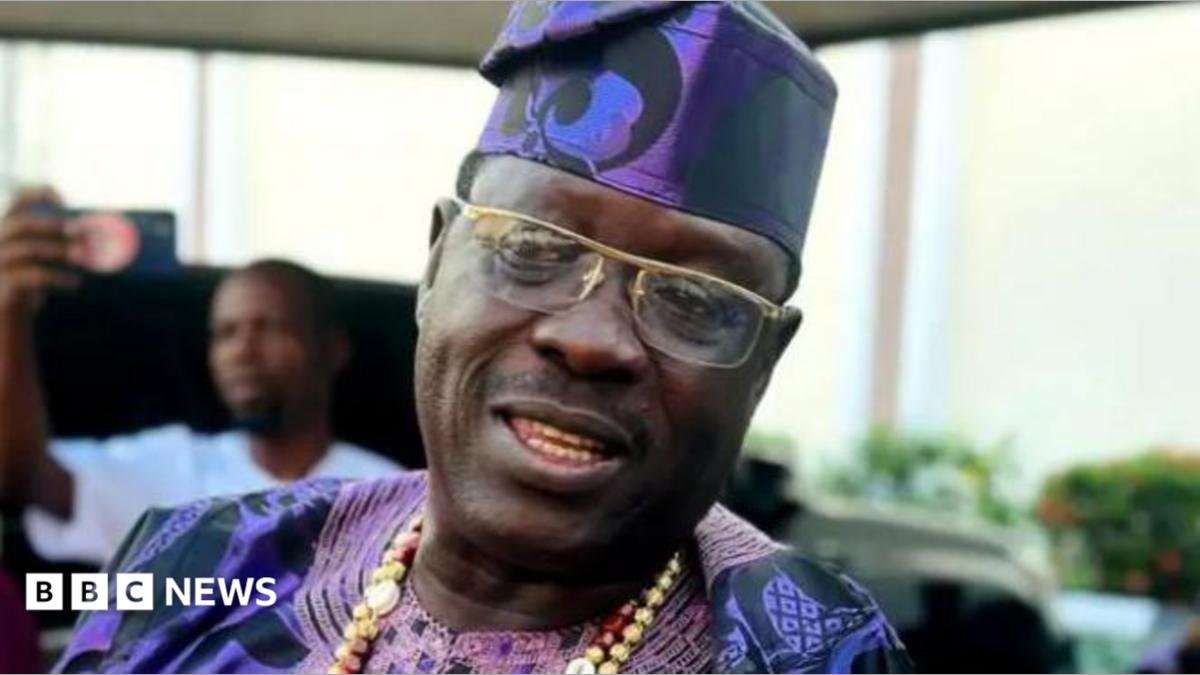
Lagos, Nigeria — Nollywood is in mourning this week after veteran Yoruba cinema actor Taiwo Hassan, known to millions as Ogogo, died of cancer at the age of 66. For millions of fans, Ogogo was more than a performer; he was a fixture of Yoruba-language cinema, a man whose face signalled authority, humour, and deep cultural resonance.
Nigerian Film Star Ogogo Dies at 66
Lagos, Nigeria — Nollywood is in mourning this week after veteran Yoruba cinema actor Taiwo Hassan, known to millions as Ogogo, died of cancer at the age of 66.
A Nollywood Loss
The sprawling, vibrant ecosystem of Nollywood is in mourning this week following the death of Taiwo Hassan, the veteran actor beloved across West Africa as Ogogo. He was 66. His daughter, Kira Hassan, confirmed the news during an emotional Instagram live broadcast on Sunday, sending a wave of grief through the Nigerian entertainment industry and beyond. The actor, who had been battling cancer, is due to be buried on Monday in his hometown in Ogun state, south-west Nigeria, in accordance with Muslim tradition, according to fellow actor Prince Jide Kosoko.
For millions of fans, Ogogo was more than a performer; he was a fixture of Yoruba-language cinema, a man whose face signalled authority, humour, and deep cultural resonance. His passing marks the end of a significant chapter for an industry that has grown from modest local productions into a global cultural powerhouse, with the news resonating from Lagos to diaspora communities across Europe and the Americas.
The Mechanic Who Became a Star
Ogogo's journey to stardom was a testament to perseverance. Before he became one of the most recognisable faces in Yoruba cinema, he spent approximately 13 years working as a mechanic at the Ogun State Water Corporation. This blue-collar background grounded him in a way that defined his everyman appeal on screen — he was not a distant celebrity, but a man of the people.
His foray into acting began in 1981, when he started appearing in films while still maintaining his day job. This dual life—balancing the demands of a government workshop with the creative pull of the movie set—lasted for over a decade. It was a period of immense discipline and dedication, as he honed his craft in his spare time, learning the nuances of performance from the ground up. Finally, in 1994, he made the decisive leap, leaving the security of his mechanic job to focus entirely on the profession he loved.
This transition resonates deeply in an industry built not on formal film schools but on raw talent and hard work. Ogogo's arc proves it is never too late to pursue one's true calling, and that authenticity born from lived experience translates into powerful on-screen presence.
A Praise Name Made Famous
In Yoruba culture, names carry immense weight, telling stories of lineage, circumstance, or aspiration. Many fans assumed that "Ogogo" was a character name, adopted for a memorable role. Contrary to popular belief, the actor did not acquire the name from a film part. It was, in fact, a family praise name — an oriki — which he adopted as his professional identity. He once explained that he took up "Ogogo" long before he became well known, grounding his public persona in a deep sense of heritage.
This revelation adds a layer of depth to his public image. The name was not a costume he wore for the camera; it was an intrinsic part of who he was. In adopting his family praise name, Ogogo carried his ancestry into every role he played, reflecting a broader Yorubaland practice in which oriki celebrate and invoke the essence of a person or family.
It also shows a man who remained connected to his roots even as he achieved national fame. In an industry often associated with glamour and reinvention, using his family name was a quiet act of cultural pride — a reminder that the stories he told were extensions of a living tradition that values heritage and continuity.
The Role That Defined Him
While Ogogo enjoyed a prolific career with numerous awards and critical acclaim, one role stood out as a crowning achievement: his portrayal of the Alaafin of Oyo in the movie Anikulapo. The Alaafin is the most revered king in Yorubaland, a figure of immense historical and spiritual significance. Ogogo's performance was widely praised for its regal bearing, gravitas, and the subtle authority he brought to the screen. It was a role that required not just acting skill, but a deep understanding of Yoruba history and royal protocol.
His interpretation of the Alaafin was more than a performance; it was a cultural event. For many viewers, seeing Ogogo embody this iconic monarch was a moment of pride and validation, and the film — a period piece exploring life, death, and ambition — was elevated by his commanding presence.
This role demonstrated his range. While often celebrated for bringing laughter into homes, his portrayal of the Alaafin showed profound dramatic depth, proving he was not merely a comic actor but a versatile performer capable of carrying a historical epic. The acclaim he received for Anikulapo was a fitting tribute to a career spent mastering his craft, and it introduced his talent to a new generation of viewers.
Tributes From an Industry in Grief
In the wake of the announcement, the Nigerian film community has been united in grief, with tributes pouring in from colleagues who considered him a mentor, a brother, and a pillar of the industry. Popular actor Saidi Balogun shared an emotional tribute, describing Ogogo as a brother: "You can rest now... This is truly painful."
Femi Adebayo, another leading figure in Yoruba cinema, praised Ogogo as a "true pillar of Yoruba cinema" whose impact would live on for generations. In a heartfelt message, he wrote: "Thank you for the years, the stories, the lessons and the moments that made us fall in love with the craft." This sentiment echoes the feelings of many younger actors who grew up watching Ogogo and were inspired to enter the profession. His legacy, they note, is not just in the films he made, but in the doors he helped open for others.
Muyiwa Ademola described his death as "the end of an era," calling Ogogo "one of the biggest the Nigerian film industry ever produced." The tributes also extended beyond the acting community. Atiku Abubakar, presidential candidate of the African Democratic Congress, mourned Ogogo, stating: "Alhaji Taiwo Hassan was more than a gifted actor. Through a remarkable career, he brought laughter into countless homes, told stories that reflected our society, and used his talent not only to entertain but also to educate and inspire social rebirth." This recognition from the political sphere underscores the broad societal impact of his work.
Ogogo and the Power of Yoruba Cinema
The passing of Ogogo brings into sharp focus the vital role Yoruba cinema plays within the larger Nollywood ecosystem. While Nollywood is a global behemoth producing thousands of films a year, its roots are deeply embedded in Nigeria's regional language industries. Yoruba cinema has a rich history that predates the digital age, evolving from travelling theatre troupes into the industry we know today — and Ogogo was a direct link to that powerful storytelling tradition.
His work helped to popularise Yoruba language and culture on a massive scale. Through his films, audiences across Nigeria and the diaspora were exposed to the nuances of Yoruba proverbs, music, fashion, and social customs. He was not just an actor; he was a cultural ambassador. In a country with over 250 ethnic groups, Yoruba cinema's success has fostered a greater appreciation for Nigeria's cultural diversity, creating a shared national conversation through film.
For a Senegalese journalist, the resonance of this loss is clear. Just as our own Wolof-language cinema and the broader Senegalese film tradition have shaped our national identity, Yoruba cinema has been a powerful force in Nigeria. Ogogo's career is a testament to the importance of telling stories in local languages, of celebrating specific cultural identities while reaching universal themes. His success proved that authenticity has a global appeal, a lesson that continues to inspire filmmakers across the African continent.
A Legacy for African Storytelling
As the sun sets on Ogogo's remarkable life, his legacy offers a blueprint for the future of African storytelling. He demonstrated that one could achieve immense commercial success without sacrificing cultural integrity, navigating the shift from the mechanic's garage to the film set and from local theatre to the streaming era while always staying connected to his audience.
For the next generation of filmmakers and actors across Africa, Ogogo's career is a source of inspiration. He showed that the stories of our towns and cities, our kings and our common people, are worthy of the big screen — that a family praise name could become a national treasure, and that a mechanic from Ogun state could rise to become one of the most beloved figures in African cinema. His journey mirrors African cinema itself: from humble beginnings to global recognition.
While the grief is palpable, there is also profound gratitude for a life well-lived. The films remain, the performances endure, and the name Ogogo will continue to be spoken with reverence in homes across Nigeria and the diaspora. He has left an indelible mark on the continent's cultural landscape, and his stories will educate, entertain, and inspire for generations to come. Rest in peace, Ogogo.
By Amara Diop, Staff Writer This article was produced with AI-assisted research and editorial support. Sources: BBC Africa.What's Your Reaction?
 Like
0
Like
0
 Dislike
0
Dislike
0
 Love
0
Love
0
 Funny
0
Funny
0
 Wow
0
Wow
0
 Sad
0
Sad
0
 Angry
0
Angry
0

West Africa/Sahel Correspondent at Global1.News. Dakar-based journalist covering politics, security, climate, and development across Francophone and Anglophone West Africa. Tells the stories of a region undergoing profound transformation.












Comments (0)