
Oman Oil Spill: Shadow Fleet Disaster Threatens Marine Life
Twelve kilometres of oil-blackened shoreline. A tanker still leaking after seven weeks. And a protected marine sanctuary — home to some of the rarest whales on Earth — now caught in the middle of the shadow fleet's latest environmental catastrophe. As Oman's Environment Authority races to contain the Caroline Bezengi spill, the disaster is sending a warning that echoes far beyond the Arabian Sea, all the way to the oil coasts of Latin America.
Twelve kilometres of oil-blackened shoreline. A tanker still leaking after seven weeks. And a protected marine sanctuary — home to some of the rarest whales on Earth — now caught in the middle of the shadow fleet's latest environmental catastrophe. As Oman's Environment Authority races to contain the Caroline Bezengi spill, the disaster is sending a warning that echoes far beyond the Arabian Sea, all the way to the oil coasts of Latin America.
Oman's Shadow Fleet Oil Spill Blackens a Marine Sanctuary — and Warns Latin America
Muscat, Oman – August 16, 2026 — The grounded tanker Caroline Bezengi, carrying an estimated 800,000 barrels of sanctioned Russian crude, has fouled 12 kilometres of coastline in Oman's Ras Madrakah area, threatening fragile marine ecosystems and wildlife habitats inside one of the Arabian Sea's most important protected zones.
A Black Tide on a Protected Sanctuary
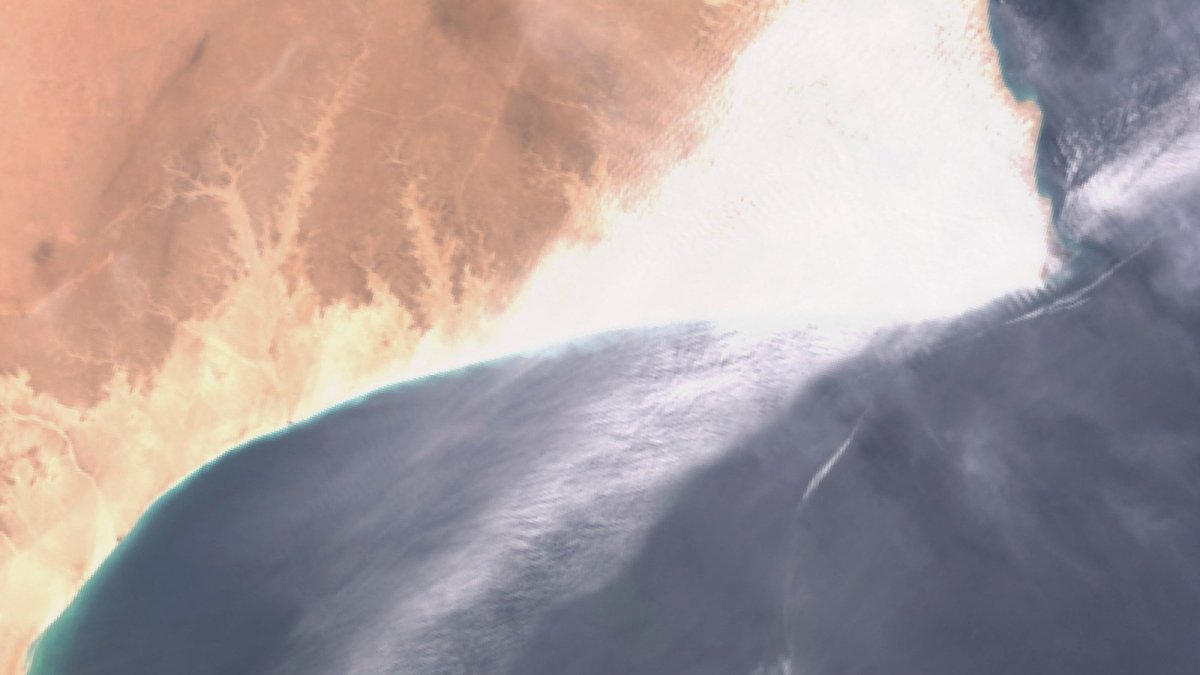
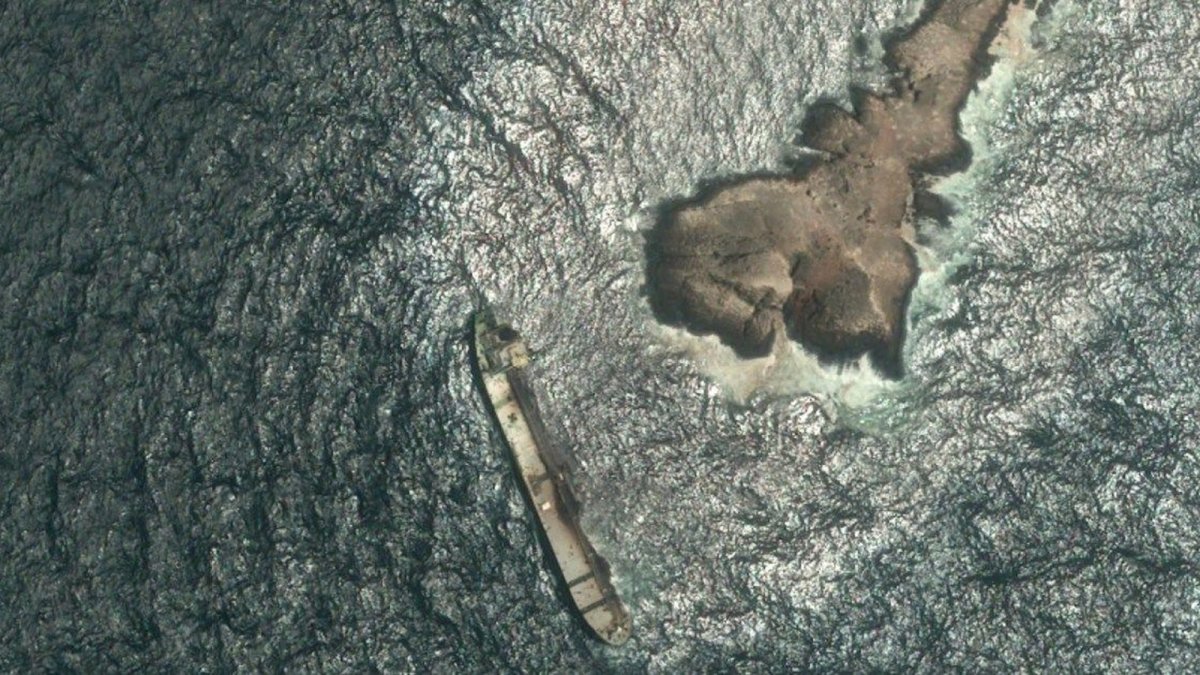
The turquoise waters surrounding the Al Hallaniyat archipelago, a designated marine protected area off Oman’s southern Dhofar governorate, have turned into a mirror of ecological catastrophe. Since June 30, 2026, when the Russian-operated tanker Caroline Bezengi ran aground near the uninhabited island of Al Qibliyah, a slow-motion disaster has been unfolding. The vessel, carrying an estimated 800,000 barrels of sanctioned Russian crude—some maritime tracking reports suggest nearly one million barrels—has been leaking for weeks, transforming a pristine sanctuary into a blackened, toxic zone. What began as a localized grounding incident has metastasized into one of the most significant oil spills in the Arabian Sea’s recent history, with the slick expanding from an initial 390 to 400 square kilometres in late July to a staggering 1,300 square kilometres by mid-August, according to satellite imagery analyzed by Greenpeace and reported to CNN on August 13.
The numbers are not abstract statistics; they represent a direct assault on a biodiversity hotspot. The Hallaniyat Islands reserve is a critical nesting and feeding ground for species found nowhere else on Earth. The spill’s trajectory, driven by seasonal monsoon currents, has pushed the oil slick from the open sea toward the Omani mainland, threatening not only the archipelago’s fragile coral reefs but also the livelihoods of coastal communities who depend on healthy fisheries. The Omani Environment Authority has confirmed the scale of the disaster, but the response has been hampered by the remote location and the sheer volume of crude still trapped in the stricken vessel’s hull. As the slick grows, so does the urgency to contain a leak that has already defied initial containment efforts, turning a regional incident into a global warning about the unchecked risks of the shadow fleet.
The Shadow Fleet's Silent Leak
The Caroline Bezengi is not a rogue operator in the traditional sense; it is a cog in a vast, opaque machinery designed to circumvent international sanctions on Russian oil exports. Maritime security firm Vanguard reported that the tanker experienced an explosion in June 2026 while transiting waters off Yemen, a precursor to the mechanical failures that would later lead to its grounding. The vessel was part of Russia’s so-called “shadow fleet”—aging, poorly insured, and often flagged in jurisdictions with lax oversight—carrying crude bound for India, a major buyer of discounted Russian barrels. The June 30 grounding near Al Qibliyah was not an accident of navigation but a predictable outcome of operating high-risk vessels in high-stakes geopolitical waters, where profit margins trump safety protocols.
The cargo of roughly 800,000 barrels is a ticking time bomb. Unlike conventional tankers, shadow fleet vessels often lack adequate emergency response plans, and their ownership structures are deliberately obscured through shell companies. This makes accountability nearly impossible. The International Maritime Organization (IMO) has acknowledged the incident, but its ability to enforce regulations on these ghost ships is limited. The explosion reported by Vanguard in June should have been a red flag, yet the vessel continued its journey, ultimately running aground inside a protected area. The leak is not a sudden rupture but a persistent, silent discharge, with the slick growing from 600 square kilometres on August 8 to over 1,300 square kilometres by August 13, as confirmed by Greenpeace’s monitoring. Each day of delay in salvaging the remaining cargo increases the risk of a catastrophic hull failure, which would release the entire remaining load in a single, devastating pulse.
12 Kilometres of Coastline, and Counting
The oil has stopped being a distant maritime threat and has become a tangible reality on Oman’s mainland beaches. By August 12 and 13, satellite and on-the-ground reports confirmed that the slick had reached the shores at Ras Madrakah, a remote but ecologically significant stretch of coastline. Initial assessments by Muscat Daily on August 15 documented at least 12 kilometres of fouled coastline, with black, viscous tar balls and sheen coating rocks and sand. However, the situation is deteriorating faster than official tallies can keep pace. The Oman Observer and euronews have reported that the affected stretch could extend up to 40 kilometres, as prevailing winds push the oil further along the shore. This is not a static stain; it is a moving front, advancing with each high tide.
The expansion from 12 to potentially 40 kilometres represents a significant escalation in the environmental damage. Ras Madrakah is a known foraging area for seabirds and a nesting site for marine turtles. The oil’s arrival on land complicates cleanup efforts exponentially, as mechanical recovery is nearly impossible on rocky, remote beaches. The slick’s growth from 390-400 square kilometres in early August to 600 square kilometres by August 8, and then to 1,300 square kilometres by August 13, demonstrates a leak rate that is outpacing all containment strategies. The Omani Environment Authority has deployed booms and skimmers, but the sheer scale of the spill—combined with the logistical nightmare of operating in a protected archipelago—means that the oil is winning. Local fishermen, who have already reported a decline in catches, face an uncertain future as the contamination spreads along the mainland, threatening spawning grounds and mangrove estuaries further down the coast.
Whales, Turtles and the Last of Their Kind
For conservationists, the Caroline Bezengi spill is a nightmare scenario unfolding in real time. The Hallaniyat Islands and the surrounding waters are one of the last refuges for the Arabian Sea humpback whale, a genetically distinct population of which only an estimated 100 individuals remain. These whales, which do not migrate like their counterparts in other oceans, are uniquely vulnerable to localized disasters. A spill of this magnitude can contaminate their feeding grounds, poison their prey, and disrupt the acoustic environment they rely on for communication. The oil slick, now covering 1,300 square kilometres, overlaps directly with critical habitat areas, raising the specter of a population collapse from which recovery would take decades, if not centuries.
The impact extends beyond the whales. The archipelago is a critical nesting site for the critically endangered hawksbill turtle, which returns to these beaches to lay eggs. The oil that has reached Ras Madrakah and other mainland beaches will coat nesting sites, poisoning hatchlings and rendering the sand inhospitable for future generations. Vulnerable seabird species, including several types of petrels, are also at immediate risk, as they dive into the slick to feed and become coated in crude, leading to hypothermia, drowning, and death. The coral reefs within the reserve, already stressed by rising sea temperatures, face a double threat from toxic oil exposure and the chemical dispersants used in cleanup efforts. The Omani Environment Authority, in coordination with the IMO, has acknowledged the ecological stakes, but the response has been reactive, not preventive. The damage to this unique ecosystem is not a future risk; it is a present, ongoing tragedy.
A Salvage Race Against the Tide
The international response to the Caroline Bezengi disaster has been a study in logistical complexity and geopolitical friction. The Omani Environment Authority has taken the lead, declaring a state of environmental emergency in the affected governorate. The IMO has confirmed that oil has reached the shore, validating the severity of the situation and triggering international assistance protocols. A specialized salvage operation, contracted to the maritime security and risk management firm Ambrey, has been mobilized, working alongside an unnamed oil-spill response company. The goal is twofold: to offload the remaining 800,000 barrels of crude from the stricken tanker before the hull breaches completely, and to contain the ongoing leak that has already produced a slick of 1,300 square kilometres.
The challenges are immense. The tanker is grounded on an uninhabited island in a remote archipelago, far from major port infrastructure. The monsoon season, which initially drove the slick toward the mainland, continues to create treacherous sea conditions, hampering the deployment of containment booms and skimmers. Ambrey’s team faces a race against time, as the structural integrity of the Caroline Bezengi deteriorates with each passing day. The salvage operation is not just about environmental protection; it is a high-stakes financial and legal battle. The vessel’s shadow fleet status means that its insurance coverage is questionable at best, leaving the Omani government and the international community to foot the bill for what could be a multi-billion-dollar cleanup. The IMO’s involvement signals a recognition that this is not just Oman’s problem, but a global test case for how the world handles spills from unregulated, sanctioned fleets.
A Gulf in Crisis: Oil and Escalation
The Caroline Bezengi spill does not exist in a vacuum; it is the latest and most visible symptom of a broader regional crisis that has been escalating for months. The 2026 Strait of Hormuz crisis has transformed the world’s most critical oil chokepoint into a war zone. In early August, the Minoan Pioneer, a bulk carrier, was struck by an attack in the strait, leaking fuel across the waterway and further disrupting maritime traffic. These attacks, attributed to regional tensions involving Iran, have sent oil prices soaring, adding a geopolitical premium to every barrel of crude. The economic shockwaves are being felt globally, but the environmental damage is concentrated in the Gulf and the Arabian Sea, where multiple spills are now converging.
Iran has seized on the crisis to make a dramatic claim, asserting that the pollution damage from the various Gulf oil spills amounts to a “trillion-dollar” environmental catastrophe. While the figure is likely inflated for political leverage, it underscores the staggering cost of the ongoing conflict. The Caroline Bezengi, carrying Russian crude bound for India, is a direct consequence of the sanctions regime that has pushed Moscow to rely on shadow fleets. These vessels, operating without proper oversight, are now becoming instruments of environmental destruction. The Minoan Pioneer incident, combined with the Omani spill, paints a picture of a region where oil extraction, transport, and conflict are inextricably linked, and where the environment is the silent casualty. The IMO and regional governments are scrambling to respond, but the sheer number of incidents is overwhelming their capacity, leaving the Gulf’s fragile marine ecosystems exposed to a cumulative assault.
Latin America's Mirror: The Same Risky Math
For those of us who cover Latin America, the Caroline Bezengi disaster is a chilling preview of what could happen in our own waters. The shadow fleet that is leaking oil off Oman is the same fleet that services sanctioned exporters like Venezuela, and increasingly, the same risky math is being applied to new frontiers in Brazil and Mexico. In March 2026, a major oil spill in the Gulf of Mexico reached the mangroves of Tabasco, Mexico, drifting over 600 kilometres from its source near Veracruz. The spill, whose source remains unidentified, killed wildlife and devastated coral reefs and breeding areas, according to reports from CONABIO, Mexico’s national biodiversity commission. The incident was a stark reminder that even without a shadow fleet, the region’s aging infrastructure and lax enforcement create a permanent spill risk.
Brazil is now hurtling toward the same precipice. The government’s push to expand offshore drilling into the Foz do Amazonas basin, near the Amazon Reef, has scientists and environmental groups like IBAMA and Mongabay sounding the alarm. The Amazon Reef is a unique and largely unexplored ecosystem, and a spill there would not only destroy it but could also reach the mangroves of the northern coast and, due to strong ocean currents, even affect neighboring countries like French Guiana and Suriname. The Brazilian oil regulator, ANP, has approved seismic surveys, but the operational risks are immense. Venezuela, meanwhile, is the poster child for shadow fleet dependency. Its oil exports rely on the same unregulated tankers that ran aground in Oman, and its coasts—including the Paria Gulf, Los Roques archipelago, and Margarita Island—carry the same catastrophic spill risk profile. The Caroline Bezengi is not an anomaly; it is a systemic warning that the shadow fleet’s profits are being subsidized by the world’s most vulnerable marine ecosystems, from the Arabian Sea to the Caribbean.
The Bottom Line: Who Pays for the Shadow Fleet?
The Caroline Bezengi oil spill is a stark illustration of a global market failure. The shadow fleet exists to circumvent sanctions, moving Russian and Venezuelan crude to willing buyers in India, China, and elsewhere. The profit margins are enormous, but the externalized costs are borne by developing nations and fragile ecosystems. Oman, a relatively small country with a significant coastline, now faces a cleanup bill that could run into the billions of dollars, a burden it cannot easily absorb. The 800,000 barrels of crude leaking into a marine protected area will have impacts that last for decades, affecting fisheries, tourism, and biodiversity. The IMO’s response has been tepid, and the lack of clear liability for shadow fleet operators means that the polluter pays principle is a fiction.
The structural lesson is inescapable: the shadow fleet is a ticking time bomb, and the Caroline Bezengi is just the first detonation. The same vessels that are leaking oil off Oman are plying the waters off Venezuela, and the same regulatory gaps that allowed this disaster are present in Brazil’s new oil frontier. The international community must act to close these loopholes, mandating insurance, inspection, and liability for all vessels, regardless of their flag or ownership. Until then, we are all living on borrowed time. The oil that is now blackening the beaches of Ras Madrakah is a warning to Mexico, Brazil, and every coastal nation that the cost of cheap crude is often paid in the currency of extinction. The Arabian Sea humpback whale, with only 100 individuals left, may not survive this spill. The question is whether our own ecosystems will be next.
By Elena Vasquez, Staff Writer
This article was produced with AI-assisted research and editorial support. Reporting is based on sources cited in the article.
What's Your Reaction?
 Like
0
Like
0
 Dislike
0
Dislike
0
 Love
0
Love
0
 Funny
0
Funny
0
 Wow
0
Wow
0
 Sad
0
Sad
0
 Angry
0
Angry
0

Latin America Correspondent at Global1.News. Based in Mexico City, covering politics, economics, energy, and culture across the region. Brings an on-the-ground perspective to stories spanning from the Rio Grande to Patagonia.













Comments (0)