
NPFL: Plateau United paid price for carelessness in Doma United draw – Ogunbote
Plateau United’s technical adviser, Gbenga Ogunbote, walked off the Pantami Stadium on Wednesday night with a familiar mix of relief and frustration. For Plateau United, the early goals highlighted a lingering vulnerability in transition play.
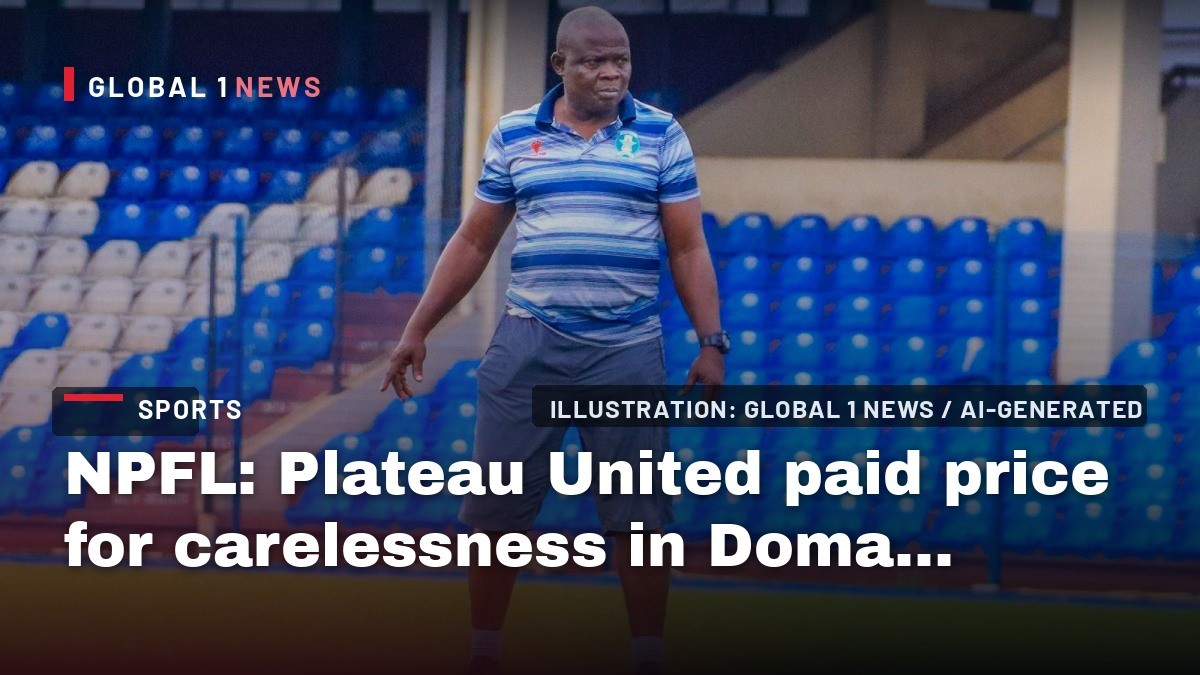
Plateau United’s technical adviser, Gbenga Ogunbote, walked off the Pantami Stadium on Wednesday night with a familiar mix of relief and frustration. The Peace Boys had clawed back from a two‑goal deficit to share the spoils in a 2‑2 draw against Doma United, but the coach’s post‑match remarks made clear that the point felt more like a narrow escape than a triumph. “It was good that we were able to get this one point; it wasn’t an easy one,” Ogunbote said, underscoring the precarious balance between optimism and caution that now defines Plateau United’s campaign.
Early setbacks and the cost of carelessness
The match opened with Doma United asserting dominance through the clinical finishing of Michael Adegbite, who struck twice to give the hosts a comfortable 2‑0 lead. Ogunbote did not shy away from assigning blame for the early lapse, describing the concession of both goals as a product of “carelessness.” The admission reflects a broader pattern in the NPFL where defensive lapses often turn promising fixtures into hard‑earned draws or defeats.
For Plateau United, the early goals highlighted a lingering vulnerability in transition play. While the team’s attacking intent was evident, the defensive organization required refinement, especially when faced with a side that could exploit momentary lapses. Ogunbote’s candid assessment signals that the coaching staff is aware of the thin margin for error that characterises the league’s competitive landscape.
Resilience on display: the comeback
Despite the shaky start, the Peace Boys demonstrated a commendable degree of resilience. Gideon Monday and Paul Samson each found the net, erasing the deficit and restoring parity. Their goals not only salvaged a point but also showcased the emerging chemistry between the club’s newer faces and its seasoned campaigners.
The comeback, however, was not without its own set of challenges. The timing of the goals, the manner of the build‑up, and the need for sustained pressure all pointed to a team still searching for a consistent rhythm. Ogunbote’s acknowledgement that “the synergy between the new and old players is not there yet” captures the transitional phase the squad is navigating.
Coach Ogunbote’s perspective on progress
In the post‑match interview, the experienced coach balanced criticism with encouragement. He praised the players for securing the point, yet he framed it as “like a two‑goal loss,” emphasizing that the margin between success and failure remains razor‑thin. This duality reflects a coaching philosophy that values both accountability and morale.
Ogunbote also called on the club’s supporters to maintain their backing, urging fans to “continue to support us in every capacity.” In a league where fan engagement can sway momentum, the coach’s appeal underscores the symbiotic relationship between the team and its community. By highlighting the club’s status as a “work in progress,” he sets realistic expectations while fostering a collective resolve to improve.
The broader NPFL context: defensive discipline
The episode at Pantami Stadium is emblematic of a wider trend across the Nigerian Professional Football League, where defensive discipline often dictates league standings. Teams that manage to tighten their backlines while maintaining attacking flair tend to climb the table, whereas those that falter defensively find themselves drifting.
Plateau United’s experience serves as a case study for clubs grappling with the integration of fresh talent. The learning curve associated with blending new signings into established systems can lead to early-season growing pains, but it also offers a pathway to long‑term stability if managed judiciously.
Fan involvement and club identity
Ogunbote’s plea for fan support is more than a rhetorical flourish; it taps into the deep-rooted connection between Nigerian clubs and their local bases. In Plateau State, football is a cultural touchstone, and the supporters’ vocal presence at Pantami Stadium can galvanise the players, especially during periods of adversity.
The coach’s emphasis on “support in every capacity” hints at a broader strategy to involve fans beyond matchday cheering—through community outreach, youth development programmes, and social media engagement. Strengthening this bond can translate into heightened attendance, increased revenue, and a more formidable home advantage.
Looking ahead: tactical adjustments
Going forward, Plateau United will need to address the defensive frailties exposed by Doma United. Ogunblet’s admission of carelessness suggests that training sessions will likely focus on positional awareness, set‑piece defending, and communication among the backline. The integration of Gideon Monday and Paul Samson into the attacking framework also offers a template for how the club can balance creativity with defensive solidity.
Strategically, the coaching staff may experiment with a more compact midfield shape to shield the defence, while still allowing the forwards the freedom to exploit spaces. The upcoming fixtures will test whether the adjustments can convert draws into wins, especially against opponents that apply similar pressure.
Conclusion: A work in progress with potential
Plateau United’s 2‑2 draw against Doma United encapsulates the dual narrative of promise and pitfalls that defines many NPFL campaigns. The technical adviser’s frank appraisal of the team’s shortcomings, coupled with his optimism about fan support and player synergy, paints a picture of a club in transition—one that recognises its current limitations while actively seeking improvement.
As the season unfolds, the Peace Boys’ ability to tighten their defence, nurture the bond between new and veteran players, and harness the energy of their supporters will determine whether they can turn narrow escapes into decisive victories. In the ever‑competitive arena of Nigerian football, that journey from “work in progress” to contender is the story that fans across the continent will be watching closely.
This article was produced with AI-assisted research and editorial support. Reporting is based on the source material cited below. Sources: Daily Post Nigeria; dailypost.ng; Global1.News (24 September 2026).
By Sarah Okafor, Staff Writer
What's Your Reaction?
 Like
0
Like
0
 Dislike
0
Dislike
0
 Love
0
Love
0
 Funny
0
Funny
0
 Wow
0
Wow
0
 Sad
0
Sad
0
 Angry
0
Angry
0

Africa Correspondent at Global1.News. Based in Lagos, covering politics, business, technology, and culture across the continent. Focused on telling African stories beyond the headlines — the innovation, entrepreneurs, and communities shaping the region's future.










Comments (0)