
Nigeria Boosts Soldier Pay Up to 80 Percent for Security Push
Nigerian soldiers will receive their second pay rise in a month as the government moves to strengthen forces facing widespread threats from militants and criminal gangs. President Bola Tinubu approved increases reaching 80 percent for lower ranks, with privates seeing their monthly wage climb from $36 to $132 starting in September.
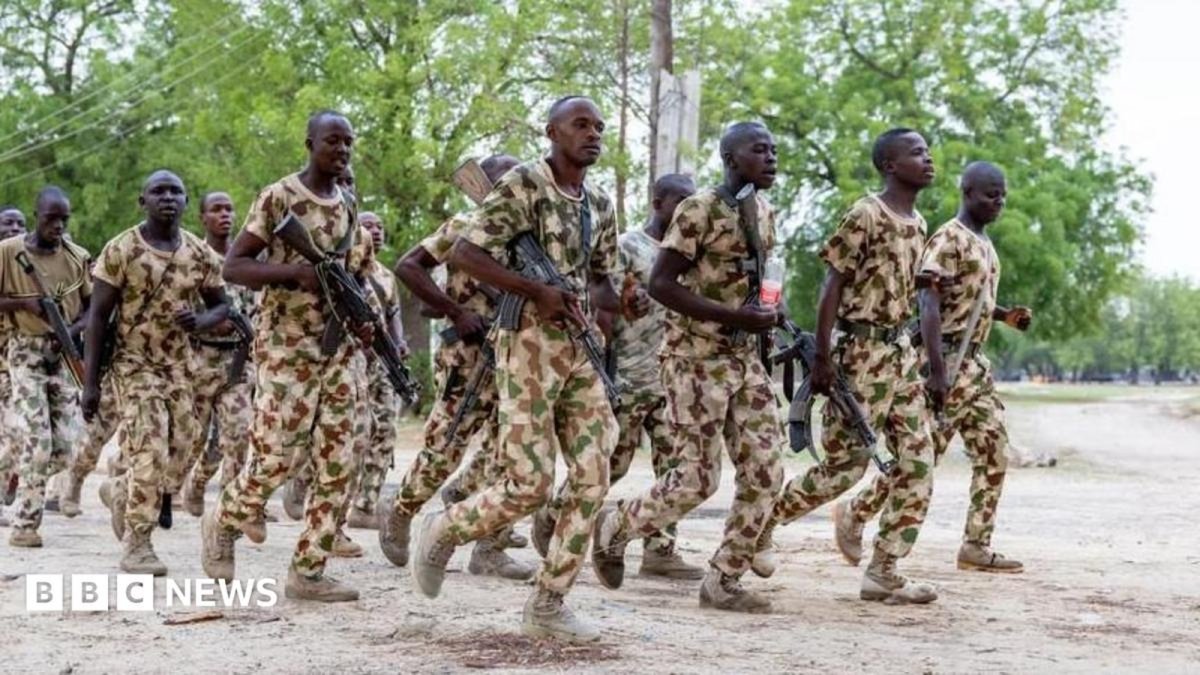
Nigerian soldiers will receive their second pay rise in a month as the government moves to strengthen forces facing widespread threats from militants and criminal gangs. President Bola Tinubu approved increases reaching 80 percent for lower ranks, with privates seeing their monthly wage climb from $36 to $132 starting in September. The move forms part of wider efforts to address insecurity that has grown into a central concern ahead of the 2027 elections.
Tinubu Approves Major Pay Rise for Nigerian Troops
Abuja, Nigeria — President Bola Tinubu has directed salary adjustments for the armed forces that will deliver increases of up to 80 percent for ranks from privates through staff sergeants. The changes build on an earlier adjustment in July when the defence minister lifted privates' wages from $36 to $73 a month. With the latest intervention, those same soldiers will receive $132 monthly from September onward.
Pay Structure Across Military Ranks
The salary tiers reflect different adjustments based on rank. Warrant officers up to colonels will see a 50 percent rise while brigadier generals through full generals receive a 30 percent increase. These layered changes aim to reward personnel at every level who confront daily risks in operations against armed groups.
The overall effect will push the military annual wage bill from $484m to $678m. Officials describe the package as recognition of the heavy demands placed on troops who operate across difficult terrain in multiple regions.
The decision to channel an 80 percent increase toward junior soldiers reflects a clear emphasis on the ranks that bear the heaviest operational load in daily patrols and community engagements. For a private whose monthly wage moves from $36 through an intermediate step to $132, the adjustment arrives at a moment when household expenses in many Nigerian towns continue to climb. That figure, while modest by global standards, can cover staple foods and transport for a small family, easing some of the immediate pressure that previously forced soldiers to seek secondary work or rely on relatives.
By comparison, the absence of equivalent detail for mid-level and senior tiers underscores how the reform targets the base of the force structure first. This approach may strengthen retention among the youngest enlistees who often serve the longest stretches in remote postings, yet it also leaves open questions about how the overall pay ladder will be maintained once the junior adjustments take full effect.
Recruitment Drive and Force Expansion
Last month President Tinubu ordered the recruitment of 28,000 additional soldiers alongside the creation of four new army divisions. These steps form the largest military expansion in recent times and will bring the total number of divisions to 12 spread across the country. The goal is improved coordination, better intelligence sharing and quicker responses to incidents.
Reforms already under way include plans to equip forces with updated weapons and technology. Tinubu has stated that troop welfare and modernisation will remain priorities as the administration works to counter ongoing threats.
The addition of 28,000 new recruits spread across 12 divisions signals an effort to widen Nigeria’s military presence at a time when multiple fronts demand simultaneous attention. Such growth requires careful coordination of training cycles, supply lines, and command structures that stretch from headquarters down to battalion level. In practice, the expanded footprint means more units available for rotation, reducing the strain on existing formations that have shouldered extended deployments in recent years.
Compared with the more concentrated deployments seen only a few years ago, the current scale allows the army to maintain a steadier presence in both urban centers and rural corridors. Logistical demands rise accordingly, from fuel and ammunition distribution to medical support, yet the broader geographic coverage also offers commanders greater flexibility when threats shift between regions.
Presidential Statements on Appreciation
President Tinubu framed the salary adjustments as a direct expression of gratitude. "The men and women who help to keep us safe in our homes must be supported and appreciated in the course of their duties to our nation," he said in a statement. "I urge our servicemen to take our gesture as a sign of our deep appreciation of the services they render to our fatherland. Together we shall prevail over the enemies intent on destroying the fabric of our nation."
The statements come at a time when insecurity continues to affect daily life in many communities. Successive governments have increased deployments and spending yet armed groups remain active in several zones.
Expert Views on Sustainability
Retired Major General Bashir Galma welcomed the pay review as a long overdue step. "This is what we have been calling for a long time," he told the BBC. He noted that future administrations may face challenges sustaining the higher funding levels given the sharp rise in the annual salary bill. Galma also called for similar reviews across other security agencies, stressing that "keeping the country safe is a joint effort".
Beyond pay, Galma highlighted the need to address equipment shortfalls. He pointed to uniforms, boots and especially new rifles as critical areas that still require attention to help personnel carry out their tasks effectively.
Galma’s concern centers on the jump in the wage bill from $484 million to $678 million and the question of whether future budgets can absorb that commitment without crowding out other priorities. Successive administrations will face the same arithmetic: a larger payroll locked in place while revenue streams remain vulnerable to oil-price swings and domestic collection challenges. The debate therefore extends beyond the military itself to the balance between security allocations and spending on infrastructure, health, and education that citizens also expect.
Among serving personnel the prevailing mood remains one of cautious observation. Many are waiting to see whether the new rates reach their accounts on time and whether promised improvements in allowances and equipment follow the pay announcement. That wait-and-see posture reflects hard-won experience with earlier reforms that were announced but only partially delivered.
Security Challenges Across Regions
Islamist insurgents including Boko Haram and Islamic State West Africa Province continue attacks in the north-east. Heavily armed criminal gangs known locally as bandits carry out looting and kidnappings for ransom across parts of the north-west and north-central zones. Additional pressures include separatist unrest in the south-east and clashes between farmers and herders over land.
These overlapping threats have made security a dominant political issue. The government has responded with expanded recruitment and structural changes to the army while seeking to improve conditions for serving personnel.
Nigeria’s security map shows overlapping pressures that pull troops in different directions at once. In the north-east, operations against Boko Haram and ISWAP continue to require sustained presence, while north-west and north-central zones contend with bandit groups that exploit porous borders and difficult terrain. Further south, separatist unrest in the south-east and recurring farmer-herder clashes add layers of complexity that cannot be addressed by a single regional command.
The army therefore finds itself managing simultaneous commitments across a vast territory, a pattern familiar in many West African countries where state forces must respond to both ideological insurgencies and localized criminal networks. This dispersion stretches planning, intelligence sharing, and rapid-reaction capacity, making the recent recruitment and pay measures part of a broader attempt to keep pace with the geography of the threats.
Regional Context and Daily Realities
Across parts of West Africa, low military wages have long complicated efforts to retain skilled personnel amid rising operational demands. A private earning $132 monthly in Nigeria will still face significant cost-of-living pressures, yet the increase marks a notable shift from earlier figures that left many households struggling. Neighbouring countries have held similar debates about balancing defence budgets with broader economic needs while confronting cross-border threats.
Serving personnel contacted for comment said they would reserve final judgment until the new amounts appear in their accounts. The administration has indicated it will continue focusing on both welfare improvements and equipment upgrades to support forces in the field.
By Amara Diop, Staff Writer
===STATS===This article was produced with AI-assisted research and editorial support. Reporting is based on sources cited in the article.
What's Your Reaction?
 Like
0
Like
0
 Dislike
0
Dislike
0
 Love
0
Love
0
 Funny
0
Funny
0
 Wow
0
Wow
0
 Sad
0
Sad
0
 Angry
0
Angry
0

West Africa/Sahel Correspondent at Global1.News. Dakar-based journalist covering politics, security, climate, and development across Francophone and Anglophone West Africa. Tells the stories of a region undergoing profound transformation.














Comments (0)