
UK Antisemitism Surges to Record Levels as CST Logs 1,926 Incidents in First Half of 2026
Channel 4 News has obtained the Community Security Trust's Antisemitic Incident Report for January to June 2026, revealing 1,926 incidents across the UK — the second-highest first-half total on record. The figures, released today, show a 21% increase on the same period last year and surpass the entire annual total for 2022, the last full year before the 7 October 2023 attacks.
Channel 4 News has obtained the Community Security Trust's Antisemitic Incident Report for January to June 2026, revealing 1,926 incidents across the UK — the second-highest first-half total on record. The figures, released today, show a 21% increase on the same period last year and surpass the entire annual total for 2022, the last full year before the 7 October 2023 attacks.
UK Antisemitism Surges to Record Levels as CST Logs 1,926 Incidents in First Half of 2026
London, UK – 5 August 2026 — The Community Security Trust recorded 1,926 antisemitic incidents across the UK in the first six months of 2026, the second-highest total ever reported by the charity for any January-to-June period. Only the 2,019 incidents logged in the first half of 2024 exceed this figure. The data, published today, marks a 21% rise from the 1,598 incidents recorded in the first half of 2025 and surpasses the full-year total for 2022.
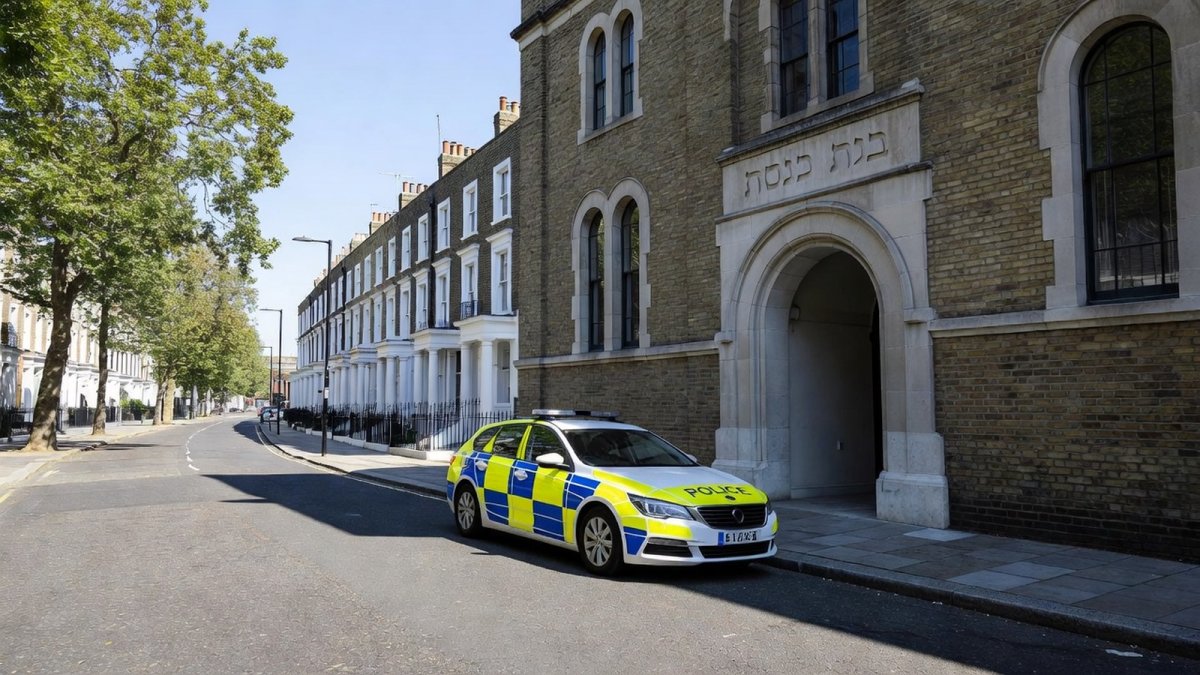
Headline Figures Reveal Sustained National Crisis
The monthly average reached 321 incidents, double the 161 per month recorded in the six months before 7 October 2023. More than 200 incidents were logged every month, with over 300 recorded in March, April, May and June. CST has collected data since 1984. The 2025 annual report already showed 3,700 incidents, the second-highest yearly total ever. The J7 Large Communities' Task Force report last week confirmed the UK recorded the biggest rise in antisemitic incidents of any country with a major Jewish population outside Israel.
Pre-October 2023, CST had recorded monthly totals exceeding 200 on only five occasions and over 300 twice, each instance tied to periods when Israel was at war. In the first half of 2026 every month surpassed 200 incidents, with four months exceeding 300, indicating that the Middle East conflict has shifted from episodic trigger to persistent driver of antisemitic behaviour across Britain.
Of the total, 787 incidents, or 41 per cent, referenced Israel, Palestine, Hamas or the conflict, compared with just 16 per cent in the first half of 2023. This sustained elevation shows how events in the Middle East have become embedded in domestic discourse, normalising hostility toward British Jews long after any immediate flare-up. The pattern suggests antisemitism has stabilised at a far higher rate, reshaping daily life for Jewish communities through constant vigilance rather than temporary spikes.
Long-term, this elevated baseline risks entrenching isolation, with families altering routines and institutions hardening security as standard practice. The data point to a structural change in the threat environment, where international conflict supplies ongoing ideological fuel rather than isolated surges.
Violence and Arson Attacks Target London Jewish Areas
Assaults reached 135 incidents, an 82% increase from 74 in the first half of 2025 and the highest six-month total ever recorded. Physical attacks now account for 7% of all incidents, up from 4% last year. One case of extreme violence occurred on 29 April when two visibly Jewish men were stabbed in Golders Green; the attack was treated as terrorism and suspect Essa Suleiman was charged.
Damage and desecration incidents totalled 77, including five arson attacks claimed by or linked to Harakat Ashab al-Yamin al-Islamia (HAYI). On 23 March, four Hatzola Jewish charity ambulances were set alight in Golders Green on a day that saw 25 antisemitic incidents. Further arson attacks struck Finchley Reform Synagogue on 15 April, former offices of a Jewish charity in Hendon on 17 April, Kenton United Synagogue on 19 April, and a disused synagogue in east London on 5 May. On 13 July the UK Government designated both the IRGC and HAYI under the National Security Act 2023. Two men were charged on 18 March with conducting hostile reconnaissance on Jewish community locations in London for Iranian intelligence.
Of 136 acts of physical violence, 93, or 69 per cent, occurred in the 77 days between the Finchley Reform Synagogue arson on 15 April and 30 June. This concentration reveals that severity intensified as the period progressed, with attacks clustering in north-west London rather than dispersing evenly. The timing aligns with a sequence of arson incidents claimed by or linked to HAYI, underscoring how targeted violence has become a recurring feature in areas with dense Jewish populations.
The 18 March charges against two men accused of hostile reconnaissance for Iranian intelligence, alongside the 13 July National Security Act designations of the IRGC and HAYI, illustrate a state-directed dimension to the threat. HAYI publicly claimed responsibility for seven attacks, extending the risk beyond street-level perpetrators to coordinated efforts backed by foreign actors. This combination places additional strain on communal security arrangements in north-west London, where synagogues, schools and community centres must now account for both ideological extremists and potential state-sponsored reconnaissance.
Residents and organisations in Golders Green, Finchley and Hendon face heightened operational costs and psychological pressure, as routine movements and gatherings require layered protection. The data indicate that physical attacks are no longer outliers but part of a sustained campaign that merges local hostility with external direction.
Schools Face Highest-Ever First-Half Incident Total
School-related incidents reached 178, a 59% rise from 112 in the first half of 2025 and the highest ever for any January-to-June period. Of these, 51 occurred at Jewish schools, 53 involved Jewish schoolchildren often commuting in uniform, and 74 took place at non-faith schools. Assaults accounted for 21 (12%) of the school incidents, a higher proportion than the 7% rate elsewhere. A government-commissioned independent review into antisemitism in schools and colleges, led by Sir David Bell, is expected to report in the autumn.
The fact that a child in a school uniform can become a target while simply travelling to or from lessons marks a particularly insidious turn. Jewish schoolchildren are frequently identifiable by their dress, and the assault rate in the sector — nearly double that recorded elsewhere — positions schools as a distinct front line. For parents, the calculation has shifted from whether their child will encounter hostility to where it will happen: the classroom, the school gate or the bus route.
Sir David Bell's independent review, commissioned by the government in March 2026 and due to report in the autumn, will examine antisemitism across schools and colleges, assessing prevalence, response mechanisms and the effectiveness of existing policies. The elevated figures at both faith and non-faith institutions suggest the review must address how ideological content and visible identity markers intersect to create vulnerability for Jewish pupils nationwide.
By contrast, the 28 university incidents, down 22 per cent from 36, included 17 on campus with 57 per cent referencing Israel. The divergence highlights that while higher education has seen some moderation, primary and secondary environments have become sites of intensified exposure, requiring targeted interventions beyond general campus monitoring.
Online Abuse and Holocaust Rhetoric Drive 35% of Cases
Online incidents totalled 680, the highest ever January-to-June figure and 35% of the overall total. Of these, 588 (86%) presented evidence of political or ideological discourse or conspiracy theories, compared with 55% of offline incidents. Some 416 (61%) referenced events in the Middle East. In total, 420 incidents (22%) referenced Hitler, the Nazis, the Holocaust, Nazi salutes or swastikas, with 85 involving celebration of the Holocaust or calls for mass extermination of Jewish people.
The ideological density of the online caseload — 86 per cent of digital incidents carried conspiratorial or politically charged content, against 55 per cent offline — shows how platforms accelerate conflict-linked narratives far faster than street-level prejudice can spread. This conspiratorial turn is evident in the Holocaust data: perpetrators were more than twice as likely to celebrate the Holocaust (85 cases) as to deny it (39), a distinction that signals glorification rather than historical ignorance.
Forty-eight incidents referenced Jeffrey Epstein, mostly in February following US Justice Department document releases, with 38 alleging a global Jewish elite and 19 claiming Jewish ritualistic child abuse. These patterns reveal a rapid fusion of longstanding antisemitic tropes with contemporary events, allowing fringe theories to gain traction through repeated online circulation rather than isolated expression.
The prevalence of such content indicates that online spaces have become primary vectors for normalising eliminationist rhetoric and elite-conspiracy framing, extending the reach of antisemitism beyond physical incidents and complicating efforts to contain its spread through conventional policing alone.
Regional Breakdown Shows Concentration in London and Manchester
Greater London recorded 994 incidents, up 24% from 800, including 469 in Barnet, 75 in Westminster, 73 in Camden, 55 in Hackney and 25 in Haringey. Greater Manchester logged 222 incidents, up 14% from 194, with 65 in the City of Manchester, 54 in Salford and 49 in Bury. Together these two regions accounted for 63% of the UK total. Scotland recorded 76 incidents, up from 36; Hertfordshire 73, up from 52; West Yorkshire 64; Essex 58, up from 31; and Northumbria 39, up from 20. Specific towns included Leeds with 37, Glasgow with 35, Borehamwood & Elstree with 31, Gateshead with 27 and Liverpool with 22. A further 2,264 potential incidents were reported to CST but not counted, the highest number of non-antisemitic reports ever recorded in a first half-year.
Barnet's 469 incidents reflect its status as the local authority with the largest Jewish population in the UK, and the 63 per cent concentration in London and Manchester aligns with where most British Jews reside. Yet the national spread is notable: Scotland's 76 incidents, up from 36, partly reflect improved police information sharing, while Essex nearly doubled from 31 to 58 and Northumbria rose from 20 to 39. Smaller communities in these areas often lack the dedicated security infrastructure available in the capital or Manchester, increasing reliance on general policing and community vigilance.
This distribution means communities outside the major centres now confront antisemitism as a recurring local issue rather than a distant metropolitan problem. For Jewish families in Leeds, Glasgow, Gateshead or Liverpool, the threat is no longer something that happens in London; it happens on their own streets, in their own school runs. The contrast with Dyfed Powys, Gwent and Northampton — the only mainland police regions with zero incidents — underscores that while the phenomenon is widespread, it is not yet uniform, and sustained national monitoring will be required to prevent further geographic expansion.
Political Reaction and Government Response
Policing Minister Sarah Jones described the numbers as "appalling" and said people were "living in fear just for being who they are." She confirmed the government is investing a record £250m to boost policing in Jewish neighbourhoods. Government independent adviser on antisemitism Lord John Mann said the figures "demonstrate that anti-Jewish racism in the UK remains at an all-time high and continues to pose a significant threat to our democracy," expressing particular concern at the increasingly violent nature of the antisemitism. Shadow Home Secretary Chris Philp called antisemitism "a national emergency" and demanded increased police presence, urgent prosecutions, a moratorium on marches, maximum sentencing, an audit of counter-terrorism cases involving antisemitic motivation, and deportation of foreigners who express antisemitic views.
Sarah Jones stated that antisemitism goes against the country's values and that she would do everything in her power to protect Jewish communities, confirming the record £250 million investment in policing Jewish neighbourhoods and close collaboration with CST to safeguard synagogues, schools and centres. She emphasised that society must never stop fighting to rid itself of this evil, framing the response as both immediate operational support and a broader societal commitment.
Chris Philp's prescription — more police on the streets, urgent prosecutions, a moratorium on marches, maximum sentencing, a comprehensive audit of counter-terrorism cases and deportation of foreigners who express antisemitic views — reflects a push for legislative and enforcement escalation beyond existing funding commitments, and signals that the issue is set to feature prominently in Westminster's political contests.
Mark Gardner noted that the attacks are directed against British Jews but are also attacks on Britain and its society, adding that they should concern everyone who cares about Britain and the threats against it, whether state-directed from Iran or internally driven by Islamist, far-right, far-left or other ideological extremes. The combined statements highlight a cross-party recognition that the threat encompasses both foreign state actors and domestic ideological sources, requiring coordinated measures that address the full spectrum of perpetrators.
The Bottom Line — What Comes Next
The Community Security Trust's data confirm that antisemitism in Britain has not returned to pre-7 October 2023 levels and is now shaped by both international conflict and domestic ideological extremes. With Sir David Bell's review due in the autumn, the £250m policing investment already allocated, and new National Security Act designations in place, the coming months will test whether these measures can reverse the trend that has left Jewish communities from Barnet to Salford living under sustained threat. CST chief executive Mark Gardner stated: "These attacks are directed against British Jews but they are also attacks on Britain and our society."
By Erica Thornton, Staff Writer
This article was produced with AI-assisted research and editorial support. Reporting is based on sources cited in the article.
What's Your Reaction?
 Like
0
Like
0
 Dislike
0
Dislike
0
 Love
0
Love
0
 Funny
0
Funny
0
 Wow
0
Wow
0
 Sad
0
Sad
0
 Angry
0
Angry
0

US Politics and Policy Correspondent at Global1.News. Based in Washington DC, covering American politics, policy, elections, and the courts. Knows how the system works and tells you what it actually means.














Comments (0)