
Diriyah Biennale 2026: African Artists Carry Ancestral Knowledge Across the Sands
When the third Diriyah Contemporary Art Biennale opened in Riyadh earlier this year with a desert procession through the Wadi Hanifah valley, it carried an unmistakable African thread. Nigerian-British artist Yussef Agbo-Ola unveiled a sacred sculpture honouring ancestral knowledge, while South African artist Dineo Seshee Bopape transformed the JAX District into an immersive meditation on wind and memory.
When the third Diriyah Contemporary Art Biennale opened in Riyadh earlier this year with a desert procession through the Wadi Hanifah valley, it carried an unmistakable African thread. Nigerian-British artist Yussef Agbo-Ola unveiled a sacred sculpture honouring ancestral knowledge, while South African artist Dineo Seshee Bopape transformed the JAX District into an immersive meditation on wind and memory. For African artists and curators, this edition of the biennale — titled "In Interludes and Transitions" — became a powerful meeting point where Yoruba cosmology, Southern African earth practices and Gulf traditions exchanged stories across the sands.
Diriyah Biennale 2026: African Artists Carry Ancestral Knowledge Across the Sands
Diriyah, Saudi Arabia — The third edition of the Diriyah Contemporary Art Biennale brought together artists from across the globe at the JAX District near the UNESCO-listed At-Turaif site, exploring how migration, memory and movement shape cultural identity. With African voices at the centre of its story, the biennale underscored the continent's growing presence on the Gulf's expanding cultural stage.
A Desert Procession Opens the Third Edition
The third edition of the Diriyah Contemporary Art Biennale opened with a desert procession through Wadi Hanifah valley in February. Participants walked the ancient valley floor northwest of Riyadh, carrying lanterns and textiles that caught the low winter light. The route led directly to the JAX District, where industrial warehouses had been cleared and reconfigured for the exhibitions.
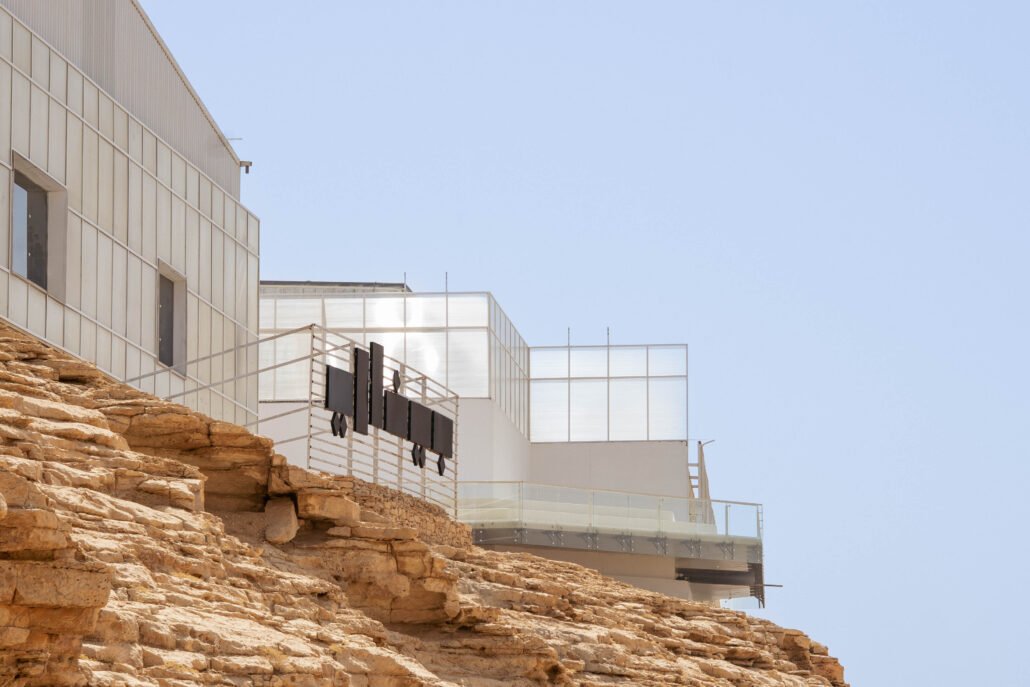
The JAX District sits near the UNESCO site At-Turaif, the historic heart of the first Saudi state. Its brick and concrete halls once stored construction materials. This year they became climate-controlled galleries that sheltered delicate installations from the desert wind and heat.
Sixty-eight artists from thirty-seven nations filled the spaces. More than twenty new commissions anchored the show, many created specifically for the JAX warehouses. The scale allowed curators to place large-scale works side by side without crowding.
Associate Architect and Exhibition Designer Sammy Zarka oversaw the conversion of the raw halls. Temporary walls, raised platforms and subtle lighting turned the former storage areas into sequences of intimate rooms and open plazas. Visitors moved from one commission to the next along wide corridors that preserved the industrial character of the site.
The opening procession set the tone for the entire event. Artists and local residents walked together, their footsteps echoing the nomadic routes that once crossed the peninsula. By the time the group reached JAX, the connection between movement, memory and place had already been established.
Inside the transformed warehouses, the first works visitors encountered were the African commissions. These pieces immediately linked the Gulf setting to practices from Nigeria, South Africa and beyond, making the African thread impossible to miss from the opening day.
'In Interludes and Transitions': A Curatorial Vision of Movement and Memory
The title "In Interludes and Transitions" (في الحِلّ والترحال) draws directly from the cycles of encampment and journey that define nomadic life across the Arabian Peninsula. Curators chose the phrase to frame migration not as crisis but as a continuous human rhythm that connects people across deserts and seas.
Artistic Directors Nora Razian and Sabih Ahmed led the team. They worked with Maan Abu Taleb, May Makki, South African curator Kabelo Malatsie and Lantian Xie. The group met repeatedly in Diriyah and Dakar to shape a programme that would feel rooted in both regions.
Scenography by Formafantasma created pathways that echoed caravan routes. Low platforms and fabric screens guided visitors through the JAX halls in a deliberate rhythm of pause and movement. The design made the theme of transition physically felt rather than merely described.
Aya Al-Bakree, CEO of the Diriyah Biennale Foundation, said the Biennale "places transmission and the movement of cultures at the forefront, welcoming audiences from near and far to JAX, which has become a vital site of creative exchange". Her words captured the foundation's intent to turn the industrial site into a permanent hub for cross-cultural dialogue.
The curatorial approach deliberately placed African artists at key points in the sequence. Their works on Yoruba cosmology and Southern African earth practices sat alongside pieces from the Gulf, creating conversations that felt organic rather than forced.
This structure allowed visitors to experience migration as a shared language. The biennale became a place where stories from Lagos, Johannesburg and Riyadh could meet without hierarchy, each one enriching the other through proximity and careful placement.
AGBA: 8 Stone Cave — Yussef Agbo-Ola's Sacred Bridge Between Yoruba and Saudi Worlds
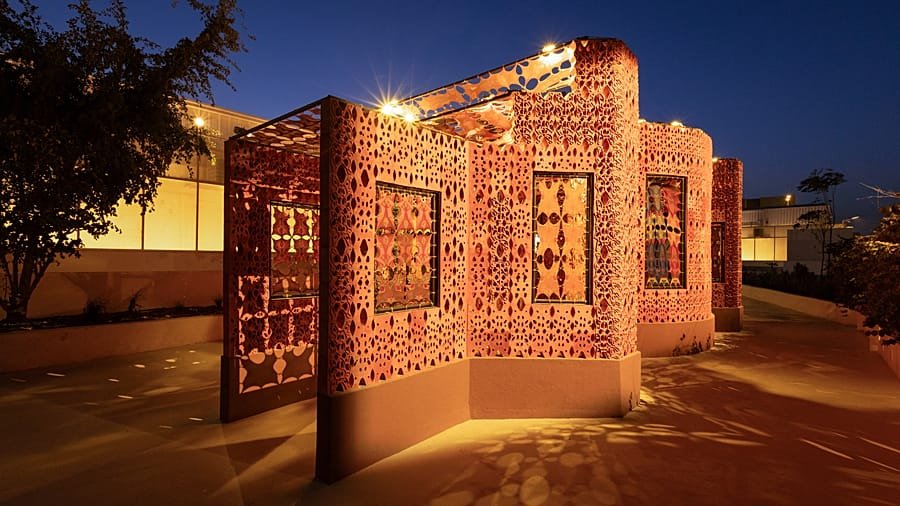
Nigerian-British artist Yussef Agbo-Ola of Olaniyi Studio created the commission "AGBA: 8 Stone Cave". The work occupies a dedicated pavilion inside one of the JAX warehouses and draws on the Yoruba concept of agba — elders as vessels of wisdom and continuity.
Agbo-Ola blended Yoruba cosmology with Al-Qatt Al-Asiri geometric wall art created by women of the Aseer region. The patterns on the pavilion walls combine traditional Saudi motifs with symbols from Nigerian shrines, forming a single visual language that honours both traditions.
A pavilion of medicinal plants stands at the centre. Visitors walk among living herbs that reference the Flower Men's practices of the Aseer mountains. The plants are arranged in patterns that also evoke the hawksbill turtle and weaver birds, creatures that carry ancestral significance in Yoruba stories.
Clay bricks inspired by insect exoskeletons form the structural elements. Each brick carries embedded seeds and minerals that will eventually return to the earth. The construction method itself becomes part of the meditation on continuity and return.
Agbo-Ola stated: "For me, I feel like our ancestors are not just human. You know, a river can be an ancestor, a mountain, a plant... all of these ancestors that are always all around us that we can communicate with". The quote appears on a small plaque near the entrance, inviting visitors to reconsider their own relationship to the living world.
The installation creates a quiet sanctuary within the larger biennale. People enter, sit on low benches and listen to recorded sounds of wind and water. The space offers a moment of stillness that connects the desert setting to the forests and rivers of West Africa.
Dineo Seshee Bopape: Wind, Memory and the Curative Power of Earth
South African artist Dineo Seshee Bopape presented an immersive installation that explores wind, migration and memory. The work fills an entire warehouse hall with suspended fabrics, recorded sounds and projected images that shift with the movement of visitors.
Bopape references "go fiela mogotha" — sweeping the yard — where women create wave patterns on the ground. She frames this daily practice as a curative act of earth stewardship that has been passed down through generations in Southern African communities.
The installation includes works by Noria Mabasa and Andrew Tshabangu. Mabasa's ceramic figures and Tshabangu's photographs sit within Bopape's larger environment, creating a layered conversation between three generations of South African artists.
Bopape explained: "The work has references to rain-making practices of Southern Africa, beings that are known to be related to those practices, beings in the celestial skies, and also beings that have incarnated in human forms". The statement appears in the exhibition guide and guides visitors through the symbolic layers of the piece.
Sound recordings of wind moving across the Highveld play alongside footage of dust storms in the Saudi desert. The pairing makes visible the shared ecological realities that connect distant landscapes and the communities that live within them.
Visitors often spend long periods inside the installation. The combination of moving fabrics, projected light and layered sound creates a meditative atmosphere that echoes the healing intent of the original yard-sweeping practice.
African Artists and Curators on a Gulf Stage
The broader African presence at Diriyah 2026 extended beyond the two highlighted commissions. Nigerian artist Rahima Gambo showed new photographic work that documents everyday life in Abuja and its surrounding landscapes. Her images sat near pieces from Egypt and Morocco, forming a North and West African corridor within the exhibition.
South African curator Kabelo Malatsie served on the curatorial team. His participation ensured that Southern African perspectives shaped the overall narrative and that artists from the region received thoughtful placement and support.
The biennale connects directly to Africa's own art institutions. Several participating artists had previously shown at Dak'Art in Senegal. The Diriyah platform offers a similar scale and seriousness while opening doors to Gulf audiences and resources that remain difficult to access from the continent.
Venice Biennale African pavilions have long served as meeting points. Diriyah adds another regular gathering place where artists can develop work without the constraints of European funding cycles. The result is a growing network that strengthens contemporary practice across the continent.
Afrobeats and African visual culture continue to reshape global creative exchange. The biennale's emphasis on ancestral knowledge arriving through contemporary forms mirrors the way musicians from Lagos and Accra now influence sound across the Gulf and beyond.
Artforum described the biennale as finding "urgency in migration, dispersal, and artistic invention shaped by instability". The review highlighted how African artists used the platform to speak directly about movement and belonging without mediation.
What to Watch For: The Biennale's Legacy for African Art
The 2026 edition signals new possibilities for African artists seeking international platforms. The Diriyah Biennale Foundation has committed resources that allow large-scale commissions to be realised without the usual compromises. This support model is being watched closely by artists in Dakar, Nairobi and Johannesburg.
The foundation's expanding role in Saudi Arabia's cultural transformation creates sustained opportunities. Regular editions mean artists can plan long-term projects that unfold across multiple sites and years rather than single events.
Intergenerational dialogues emerged naturally during the run. Younger artists met elders whose work they had studied, while established figures encountered fresh approaches from emerging voices. These exchanges happened in the JAX courtyards and continued in informal gatherings across Riyadh.
African artists can build on this momentum by proposing projects that treat ancestral knowledge as living material rather than historical reference. The Diriyah commissions demonstrated that such approaches resonate strongly with international audiences when presented with clarity and care.
Upcoming biennales and cultural events across the continent will benefit from the connections made in Diriyah. Artists who met here are already planning collaborations that will appear at Dak'Art and other African gatherings in the coming seasons.
The clearest lesson for African creatives is that ancestral knowledge remains a contemporary artistic language with global resonance. The Diriyah Biennale showed that when this knowledge travels with intention, it creates bridges that strengthen communities on both sides of the exchange.
By Amara Diop, Staff Writer
This article was produced with AI-assisted research and editorial support. Reporting is based on sources cited in the article.
What's Your Reaction?
 Like
0
Like
0
 Dislike
0
Dislike
0
 Love
0
Love
0
 Funny
0
Funny
0
 Wow
0
Wow
0
 Sad
0
Sad
0
 Angry
0
Angry
0
West Africa/Sahel Correspondent at Global1.News. Dakar-based journalist covering politics, security, climate, and development across Francophone and Anglophone West Africa. Tells the stories of a region undergoing profound transformation.











Comments (0)