
Nigeria arrests alleged Mexican drug kingpin at international airport
In September 2026, Nigeria’s National Drug Law Enforcement Agency (NDLEA) announced the arrest of a man they identified as Arturo Carrera Loaiza, a 40‑year‑old Mexican national, at Lagos International Airport.
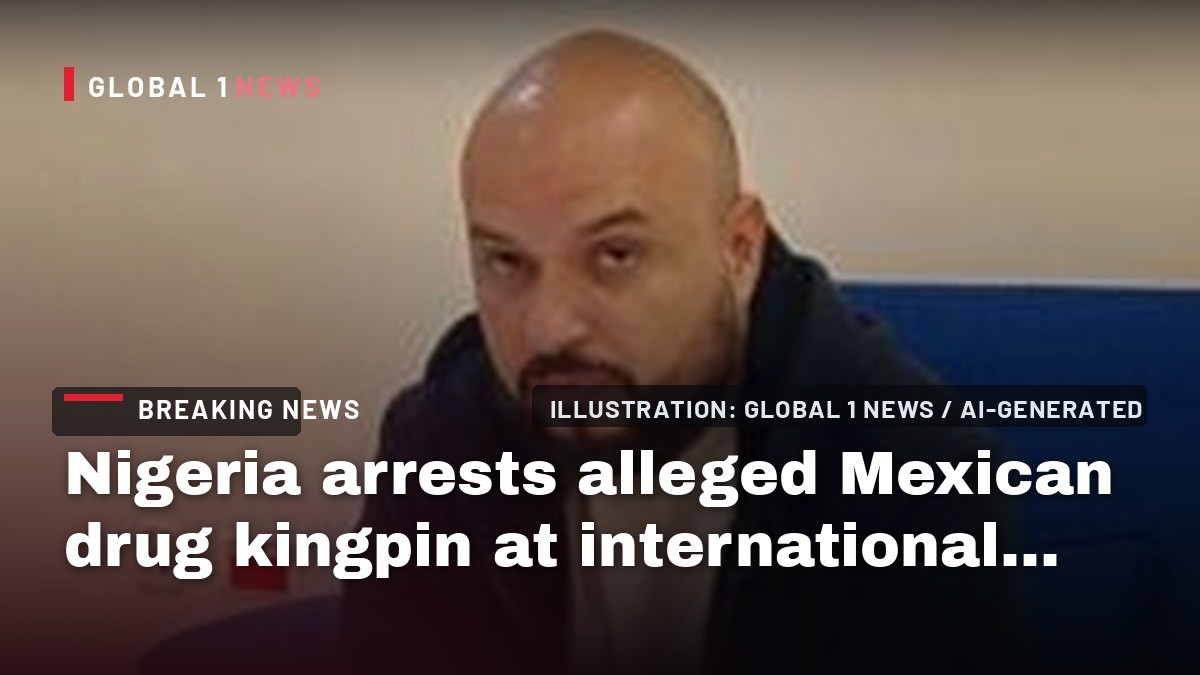
In September 2026, Nigeria’s National Drug Law Enforcement Agency (NDLEA) announced the arrest of a man they identified as Arturo Carrera Loaiza, a 40‑year‑old Mexican national, at Lagos International Airport. The agency says the detention uncovered a suspected industrial‑scale methamphetamine laboratory in Ebonyi state, marking the third such find allegedly linked to Mexican actors in the past four months. This development underscores a growing trend: Mexican drug cartels increasingly turning to West Africa’s remote forests and rural communities to set up synthetic drug production sites.
From Lagos Airport to an Isolated Laboratory
According to the NDLEA, officials detained Loaiza as he attempted to leave Nigeria. During the airport check, investigators allegedly discovered digital images on his device showing him in a laboratory coat beside equipment that matched meth‑production tools. The location metadata embedded in those images reportedly guided officers to a property in Ebonyi state, where they found chemicals, dehydrators, condensers, a reaction pot, weighing scales, mixers, drums, gas burners and a sieve containing traces of methamphetamine.
Loaiza has denied any involvement in drug manufacturing, claiming he was in Nigeria at the invitation of a local contact to explore a restaurant business venture. The agency’s statement reflects this denial, yet the physical evidence—photographs, a CCTV memory card showing a figure resembling Loaiza in a blue laboratory coat, and the seized equipment—forms the core of the authorities’ case.
Evidence Linking the Suspect to the Site
The NDLEA’s investigators say a CCTV memory card recovered from the Ebonyi property captured footage of a man who looked like Loaiza wearing a blue laboratory coat. In the same recording, a Nigerian individual was seen directing people as they moved chemicals and equipment from the location. NDLEA chairman Gen Mohamed Buba Marwa highlighted that this visual evidence, combined with the digital images found on Loaiza’s device, points to a coordinated operation involving both foreign and local actors.
While the agency has not released an estimate of the laboratory’s production capacity, the array of equipment recovered—particularly the reaction pot and condensers—suggests a set‑up capable of manufacturing methamphetamine on an industrial scale. The presence of a sieve with meth traces further indicates that the operation had already processed the precursor chemicals into the final product.
Pattern of Mexican‑Linked Meth Labs in Nigeria
The Ebonyi find follows two earlier raids that the NDLEA described as industrial‑scale methamphetamine laboratories linked to Mexican nationals. In June, a forest‑hidden lab in Oyo state was raided after investigators alleged that Loaiza had recruited a fellow Mexican to work there. Four Nigerians were arrested in that operation. A month before the Lagos arrest, NDLEA officers seized three Mexican nationals and seven Nigerians at another forest‑based lab in a different part of the country.
These successive busts illustrate a pattern: Mexican syndicates appear to be outsourcing meth production to Nigeria, exploiting the country’s forested and rural landscapes to conceal large‑scale operations. The NDLEA’s chairman warned that such transnational groups are seeking to relocate their laboratories from other jurisdictions into Nigeria’s secluded areas, a move that could transform parts of the country into new hubs for synthetic drug manufacturing.
Why West Africa Attracts Mexican Cartels
According to the NDLEA, West Africa offers “swathes of forested land which serves well for secluded production sites.” The region’s dense forests provide natural cover, making it difficult for law‑enforcement agencies to detect clandestine labs. Moreover, the synthetic nature of methamphetamine means it can be produced anywhere with the right chemicals and expertise, unlike plant‑based drugs that depend on specific agricultural conditions.
This flexibility allows organised crime groups to establish production facilities quickly, adapting to local conditions and evading detection. The NDLEA’s observations suggest that Mexican cartels are capitalising on these advantages, establishing a foothold in Nigeria’s rural communities while leveraging local collaborators to manage logistics and secure sites.
Local Collaboration and the Role of Nigerian Actors
The footage recovered from the Ebonyi laboratory identified a Nigerian individual directing the removal of chemicals and equipment. While the NDLEA has not named this person, the agency’s statements indicate that local actors are instrumental in facilitating the establishment and operation of these labs. In the Oyo state raid, four Nigerians were arrested alongside the Mexican participants, underscoring a pattern of collaboration between foreign syndicates and domestic networks.
This partnership reflects a broader challenge for Nigerian authorities: dismantling not only the foreign leadership of drug operations but also the domestic support structures that enable them. The NDLEA’s ongoing investigation aims to trace the financing and logistical assistance that underpin these labs, seeking to cut off the supply chain at multiple points.
Implications for Nigeria’s Security and Public Health
The emergence of industrial‑scale meth labs poses a dual threat. On the security front, the presence of well‑equipped drug production sites can attract further organised‑crime activity, potentially destabilising rural communities and prompting violent confrontations over control of lucrative operations. On the public‑health side, methamphetamine’s synthetic nature and high potency raise concerns about increased local consumption and the associated social harms.
While the NDLEA has not disclosed the quantity of methamphetamine that could be produced at the Ebonyi site, the range of equipment suggests a capacity far beyond small‑scale, clandestine batches. If such facilities proliferate, Nigeria could face a surge in meth availability, compounding existing drug‑related challenges and stretching the capacity of health and law‑enforcement services.
Looking Ahead: Nigeria’s Stance Against Transnational Drug Networks
Gen Mohamed Buba Marwa asserted that Nigeria “will not be allowed to become a haven for transnational drug cartels seeking to relocate their laboratories from other jurisdictions into our forests and rural communities.” This strong statement signals a commitment to intensify surveillance, intelligence gathering, and inter‑agency cooperation to dismantle these networks.
As the NDLEA continues its investigation into the financing and facilitation of the suspected labs, the agency’s efforts will likely focus on disrupting the supply of precursor chemicals, tracking the movement of equipment, and strengthening border controls to prevent further infiltration by foreign syndicates. The recent arrests, including that of Arturo Carrera Loaiza, demonstrate both the challenges and the resolve of Nigerian authorities as they confront a new frontier in the fight against illicit drugs.
This article was produced with AI-assisted research and editorial support. Reporting is based on the source material cited below. Sources: BBC News Africa; bbc.co.uk; Global1.News (16 September 2026).
By Amara Diop, Staff Writer
What's Your Reaction?
 Like
0
Like
0
 Dislike
0
Dislike
0
 Love
0
Love
0
 Funny
0
Funny
0
 Wow
0
Wow
0
 Sad
0
Sad
0
 Angry
0
Angry
0

West Africa/Sahel Correspondent at Global1.News. Dakar-based journalist covering politics, security, climate, and development across Francophone and Anglophone West Africa. Tells the stories of a region undergoing profound transformation.













Comments (0)