
Alaska Is the Last Senate Race in America, and the Other Dan Sullivan's 4,027 Votes Could Decide It
Alaska's Senate race is the only one left uncalled in America. Mary Peltola leads Sen. Dan S. Sullivan by 4,250 first-choice votes, with a ranked-choice tabulation set for Nov. 18 — and the 4,027 ballots cast for a retired teacher who shares the incumbent's name sitting at the centre of it.

Alaska's Senate race is the last one in America. Eight days after Election Day, with the Senate majority already decided and Mississippi called for the Democrats on Wednesday evening, one contest remains uncalled — and sitting at the center of it are 4,027 ballots cast for a retired teacher from Petersburg who shares the incumbent's name.
Alaska Is the Last Senate Race in America, and the Other Dan Sullivan's 4,027 Votes Could Decide It
Anchorage, Alaska — Mary Peltola leads Senator Dan S. Sullivan by 4,250 first-choice votes. She has not won. He has not lost. And the thing standing between them and a result is an official ranked-choice tabulation that does not begin until November 18.
The Last Senate Race in America
The national picture resolved before Alaska did. On Wednesday evening, The Associated Press called Mississippi for Democrat Scott Colom, and Senator Cindy Hyde-Smith conceded in a video posted to social media. Colom's win gives Democrats 55 Senate seats, and it leaves Alaska as the only Senate contest in the country still uncalled, according to NBC News and NPR. If Peltola holds on, the Democratic majority reaches 56.
Eight days after polls closed, the Alaska Division of Elections is still feeding ballots into a statewide tally. The count released Tuesday night added almost 25,000 ballots, according to the Alaska Beacon, and it widened Peltola's lead by 1,733 votes.
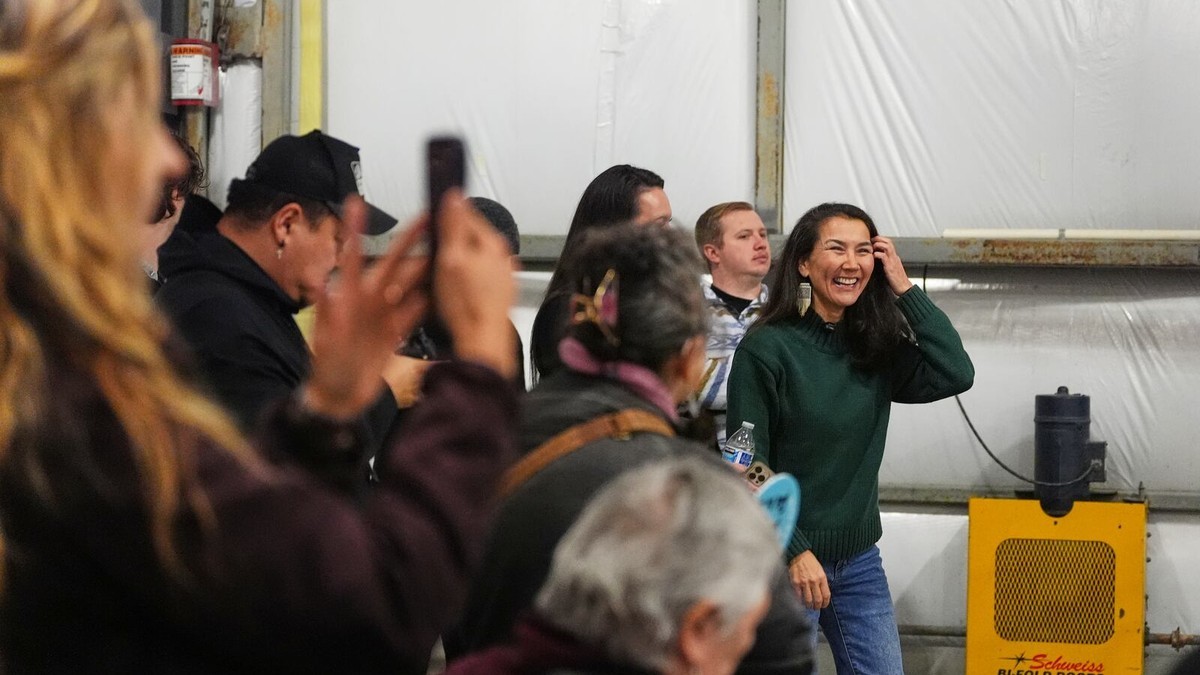
Four Thousand Two Hundred Fifty Votes
With 245,470 first-choice ballots counted, Peltola leads Sullivan by 4,250 votes, the Beacon reported. The Anchorage Daily News tallied 245,476 ballots and gave the same vote counts: Peltola 118,926, Sullivan 114,676, Gerald Heikes 5,318, and Dan J. Sullivan 4,027.

The percentages attached to those numbers move depending on which outlet you read and which ballots sit in the denominator. The Beacon reports Peltola at 48.8 percent and Sullivan at 47.1. The Daily News and Alaska Public Media both report 49 to 47.2. The vote totals do not disagree; the arithmetic used to express them does.
What is not in dispute is direction. Her lead was 2,517 votes out of 219,342 ballots on Monday, the Beacon reported, and 636 votes at the close of Election Day. The Associated Press estimates about 84 percent of all ballots have now been counted.
Why There Is No Winner Yet
Alaska does not count the way most states do. Voters rank up to four candidates. A candidate who clears 50 percent of first-choice votes wins outright. If nobody does, the last-place candidate is eliminated and that candidate's ballots flow to whichever name those voters ranked next. The process repeats until two candidates remain.
No one is close to 50 percent of first-choice votes in the Senate race, so the official tabulation is all but certain. The Division of Elections is scheduled to run it on November 18 — after the last absentee ballots arrive. Ballots mailed from within the United States must be in by Friday, November 13. Ballots sent from outside the country can arrive as late as November 18, the Division's own filing deadline.
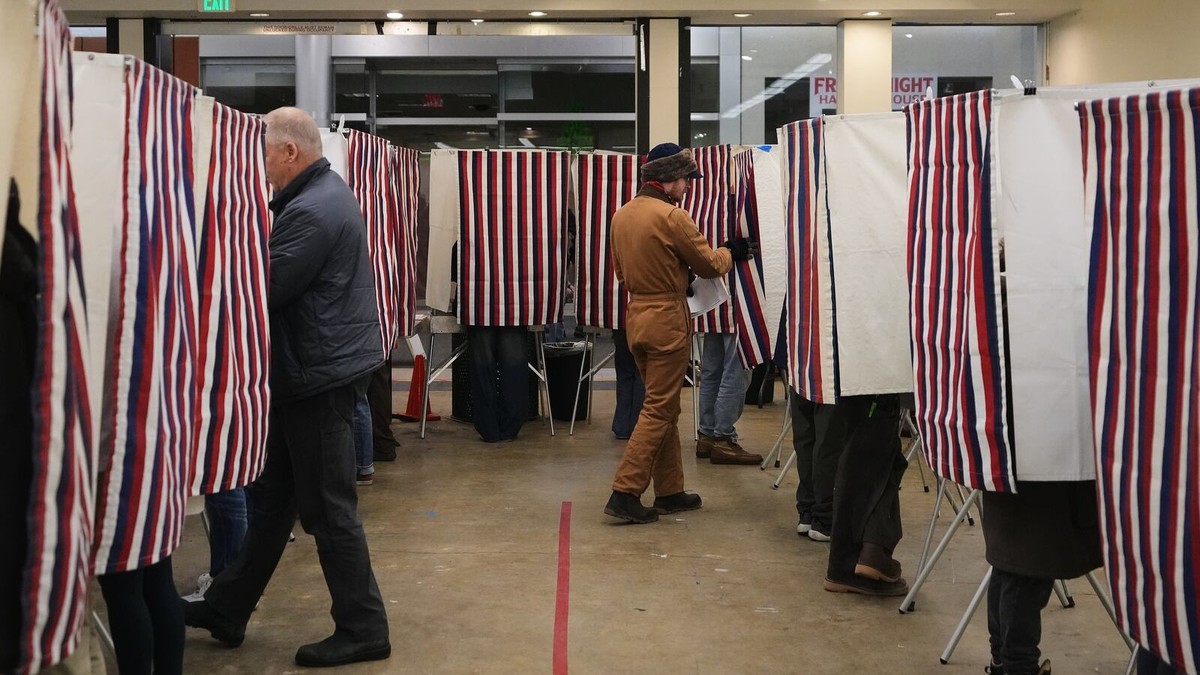
The state's target date for certifying the election is November 25.
What the Rankings Already Show
Preliminary, partial tabulations published by the Division and analyzed by the Alaska Beacon point the same way the first-choice count does. In that data, Sullivan picks up 3,066 redistributed votes and Peltola picks up 2,160 — a net gain of 906 for the incumbent, nowhere near enough to erase a 4,250-vote deficit.
Those numbers carry an asterisk large enough to drive a truck through. The ranking data does not yet include 9,909 ballots from rural Alaska precincts where ballots are initially counted by hand. Two-thirds of the first-choice votes on those ballots went to Peltola, according to summary data the Division published separately.
The Anchorage Daily News went further, processing raw Division data through ranked-choice tabulation software and reviewing 235,561 tabulated ballots. Its finding: voters who put the challenger Sullivan first were nearly twice as likely to rank Peltola second as they were to rank the incumbent.
The Man in Fourth Place
Dan J. Sullivan — Daniel J. Sullivan Jr., of Petersburg, a retired educator — finished fourth with 4,027 votes. That is roughly 200 fewer votes than the number currently separating the two front-runners.
His place on the ballot was litigated. The Alaska Supreme Court affirmed in June that he was eligible to appear against the senator who shares his name, and the Division listed him with no party affiliation while marking Senator Sullivan as the Republican incumbent.
In the preliminary data analyzed by the Daily News, of the 3,896 voters who ranked the Petersburg Sullivan first, 1,141 ranked Peltola second and 632 ranked the incumbent second. More than 708 ranked Heikes second. Another 1,388 ranked only the Petersburg Sullivan.
Ian Hartman, director of the University of Alaska Anchorage's Institute of Social and Economic Research, read those numbers as evidence that voters knew exactly which Sullivan they were choosing. "I would take people at their words," he told the Daily News. He added that a small bloc with an outsized effect is not unusual: "It isn't unusual for that to have a potentially seismic consequence on the election."
The Cheating Allegation and the Denials
The senator's campaign and his allies say the challenger was recruited to confuse voters. A New York Times report published less than a week before Election Day alleged that the Democratic Senatorial Campaign Committee coordinated with Peltola's campaign staff to recruit both the Petersburg Sullivan and Heikes, a perennial Republican candidate from Palmer.
Peltola and Dan J. Sullivan have both denied any involvement in a coordinated recruitment effort. Legal experts quoted by the Daily News have said that while the tactic known as ballot stacking may be dishonest, it does not appear to be unlawful.
Sullivan has not softened his language. In a CNN interview on Election Day he called it "the biggest cheating scandal in Alaskan history," and said: "There could be thousands of Alaskans who throw away their vote and that was the scheme that Peltola and Chuck Schumer put together by design." On Saturday the president claimed on social media that Sullivan had already won, arguing that adding the challenger Sullivan's and Heikes' votes to the senator's total put him ahead. Alaska Public Media reported that the reasoning runs contrary to how the state's ranked choice system and election law work.
Two Investigations and a Records Suit
Governor Mike Dunleavy directed the state Department of Public Safety to open a criminal investigation into the ballot-stacking allegations. A separate federal investigation brought what the Daily News described as a surge of federal investigators to Alaska, with agents interviewing donors in Petersburg. Neither Dunleavy nor U.S. Attorney for the District of Alaska Michael Heyman has said which laws they believe may have been violated.
The Peltola campaign opened its own front on November 6, suing the Division of Elections under the Alaska Public Records Act for the daily register of absentee ballots marked for acceptance or rejection. The state Department of Law answered that the records are preliminary and not yet available to the voters themselves, and that Alaska law does not require their release. "The Division has protected this information for years and will ask the court to protect it too," the department said.
Peltola's campaign manager, Cheryl Bruce, said after Tuesday's count that the team is "exceptionally confident," and that there "is not a viable path to reelection for Senator Sullivan." Sullivan's spokesman Nate Adams countered on Wednesday morning that tens of thousands of ballots remain and there is "a long way to go before every Alaskan's voice is heard."
The Case That Will Arrive Too Late
The most consequential lawsuit in this race was filed by the Justice Department at the president's direction, and it is already behind the calendar. It asked a federal judge to stop Alaska from certifying the result if Sullivan narrowly lost, and to segregate ballots cast for Dan J. Sullivan for an investigation into whether those voters meant the incumbent — a step the Division of Elections told the court was "not even possible."
U.S. District Judge Sharon Gleason dismissed the suit two days before Election Day. The Justice Department filed a notice of appeal, and the Ninth Circuit Court of Appeals has set a schedule with arguments due by January 11 — days after new senators are sworn in, and more than a month after the state's November 25 certification target.
Hartman questioned whether Washington still has the same appetite. Before the election, Alaska was one of a handful of races that could decide Senate control. It no longer is. "Now, it's no longer the case that this will decide the Senate," he said.
Alaska's Other Races, and the Measure That Would End This System
The Senate race is not the only one running through ranked-choice math. According to the Alaska Beacon, Democrat Jonathan Kreiss-Tomkins holds 49.7 percent of first-choice votes in the governor's race, ahead of Republican Bernadette Wilson at 28.7 percent, Dave Bronson at 13.9 percent and Treg Taylor at 7.3 percent. Bronson said last week he did not see a path for a Republican to win.
In the U.S. House race, Republican incumbent Nick Begich has 48.8 percent to independent Bill Hill's 40.9 percent, with Democrat Eric Hafner — an inmate in a New York prison serving time for threatening federal officials — at 7.5 percent and Libertarian Jim McDermott at 2.7 percent. Hill, who was endorsed by the Alaska Democratic Party, campaigned on the argument that Hafner was a sham candidate; the preliminary tabulations show him winning less than half of Hafner's second-choice votes. Alaska Public Media, working from the same count, has Kreiss-Tomkins at 49.9 percent and Begich at 48.9.
And the system itself is on the ballot. Ballot Measure 2, which would repeal ranked-choice voting and the other 2020 election reforms, is failing with 53 percent voting no and 47 percent yes.
What Happens Between Now and November 25
The next hard date is Friday, when absentee ballots mailed from inside the United States must arrive. Division officials have said to expect a significant update then. The remaining overseas and military ballots come in through November 18.
The official ranked-choice tabulation runs on November 18, and the Division declares its unofficial winners that day. Certification follows by November 25, and with it the result Alaska will send to Washington.
Charles Stewart, who leads MIT's Election Lab and has worked network decision desks, told Alaska Public Media he expects news organizations to stay cautious until the state runs its own tabulation. "My experience with the media organizations is that they're very, very conservative in this regard," he said. The Associated Press says it calls a race only when it is "unquestionable" that the trailing candidate cannot catch up.
That is the standard Alaska has to meet, and it is why a race with 245,470 ballots counted and a 4,250-vote margin is still, officially, nothing at all. The count resumes Friday. The rankings decide it on the eighteenth. And a retired teacher from Petersburg, fourth with the same name as the man he may have beaten, stays on the page until then.
By Jessica Ali, Staff Writer
This article was produced with AI-assisted research and editorial support. Sources: Alaska Beacon, Anchorage Daily News, Alaska Public Media, The Associated Press via Alaska Public Media, Alaska Division of Elections, Alaska Department of Law, NBC News, NPR, MS NOW, Mississippi Free Press, CNN via the Anchorage Daily News. Cover: Global 1 News editorial image. Photographs: AP/Lindsey Wasson via the Anchorage Daily News.
What's Your Reaction?
 Like
0
 Dislike
0
 Love
0
 Funny
0
 Wow
0
 Sad
0
 Angry
0

Editor-in-Chief at Global1.News. Atlanta-based journalist who cuts through the BS and tells it like it is. Lead anchor, host, and the voice you hear when the spin stops and the truth starts.















Comments (0)